Castrum Novum: A Roman Maritime Colony in Italy
Site at a Glance
- Popularity
- Medium
- Country
- Italy
- Primary era
- Classical
- Eras represented
- Iron Age, Classical
- Civilizations
- Etruscan, Roman
- Site type
- City
On this page15 sections
History
Etruscan activity and Roman foundation
Before Rome established Castrum Novum near present-day Santa Marinella, Italy, the area saw activity during the ninth century BC and in the archaic Etruscan period. The Etruscans were an ancient people of central Italy, and the nearby anchorage was already in use in their time. Founded around 264 BC, Castrum Novum was a Roman maritime colony, probably established over an earlier Etruscan settlement. It served as a port for Caere, the Etruscan city now known as Cerveteri, and helped defend Caere’s coastal territory alongside Pyrgi and other settlements.
The Republican colony
In its early years, settlers received plots of two Roman land units, about half a hectare in total. The small allotments suggest that the chance to own land drew relatively poor Romans to the colony. From the third century BC, Castrum Novum shared responsibility for protecting the coast with Pyrgi and Gravisca. A small harbor nearby is thought to have served a few ships.
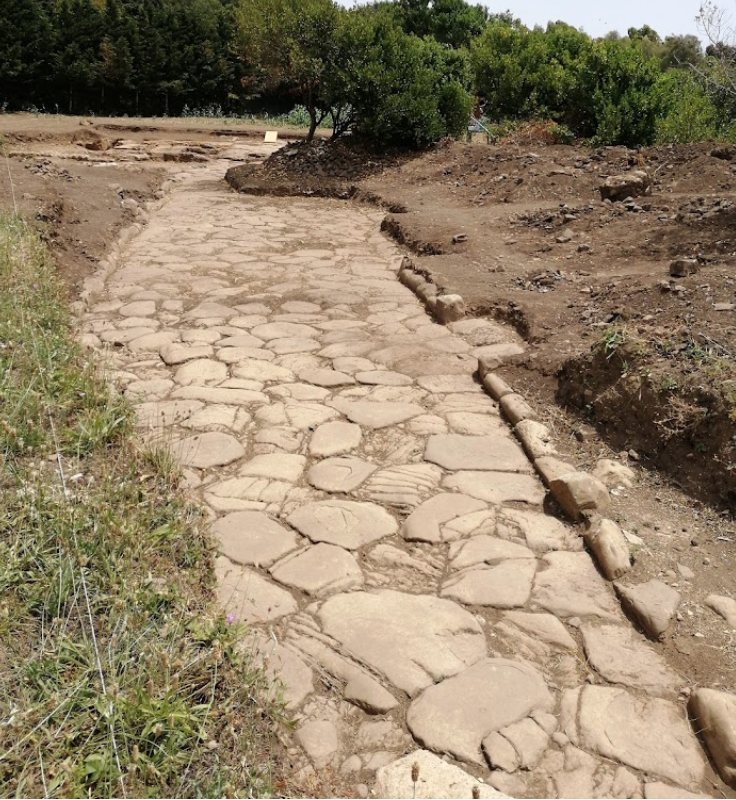
Around 241 BC, the Via Aurelia was built north from Rome along the western coast. It connected Castrum Novum with Rome and the Roman colonies of Cosa and Pyrgi, supporting communication and quicker army movements as Roman power expanded. The colony also resisted efforts to take away its privileges. After the Carthaginian general Hasdrubal Barca invaded Italy, Castrum Novum apparently sent no representatives to Rome in 207 BC to defend its exemption from military service. In 191 BC, it joined a revolt against the praetor Gaius Livius over proposed naval levies on maritime colonies. Rome was then seeking soldiers for its war with the Seleucid Empire, a Hellenistic kingdom centered in western Asia.
Imperial development
Castrum Novum may have been settled again under Julius Caesar as Colonia Iulia Castronovo(rum), a name preserved in inscriptions. Gold coins dating from Nero to Marcus Aurelius indicate that the town became wealthy. In the Imperial period, it developed public buildings and infrastructure. During the Augustan age, the rule of Augustus, Rome’s first emperor, the municipal official Ateius Capito restored the town council building and archive, donated a theatre and its arcades, and built an altar to Apollo, an aqueduct, and a sewer system. Inscriptions also connect public works, including a portico, theatre, and temple, with the Statilii and Ateii families.
Inscriptions name several civic roles and institutions. These include decuriones, members of the town council; duumviri quinquennales, paired senior magistrates who conducted a census every five years; Augustales, priests associated with public worship of the emperors; and magistri vici, local administrators.
Coastal villas
Roman patricians, members of Rome’s hereditary aristocracy, built seaside villas along the nearby coast from the Republican period onward. Construction phases at these residences continued into the early third century AD, under the Severan dynasty.
Rediscovery and investigation
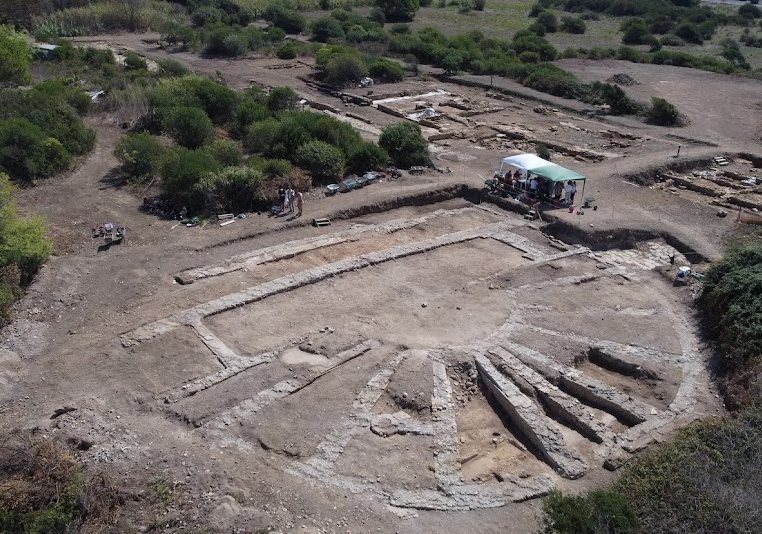
The location of Castrum Novum had been recognized since the sixteenth century. Excavations from the late eighteenth through the nineteenth century confirmed the site. By 1954, almost all the ruins lay underwater, and the remaining parts had not yet received scientific excavation. Archaeological investigations began again in 2010, bringing new evidence about the site’s layout and past. A large theatre from the Imperial period was uncovered in 2022.
Remains
The town
Plan and enclosure
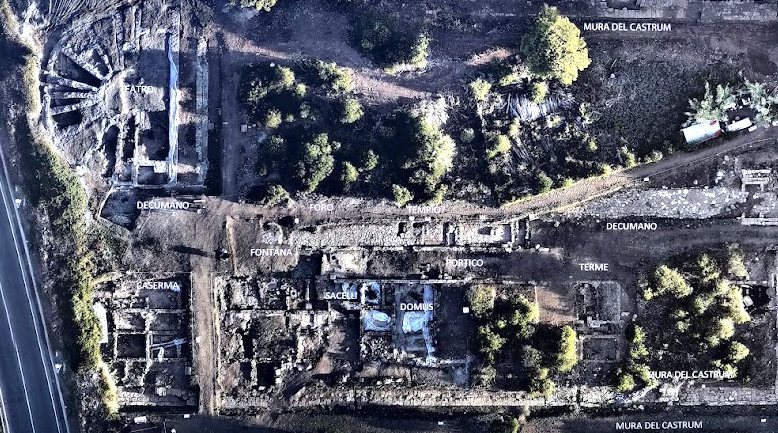
The ancient settlement occupied the plain of Torre Chiaruccia, about 1.5 km from the coast, near Mount Guardiole and north of Cape Linaro. Its rectangular plan measured 120 by 63 m and followed the form of a fortified camp, enclosed by walls.
Surviving structures and finds
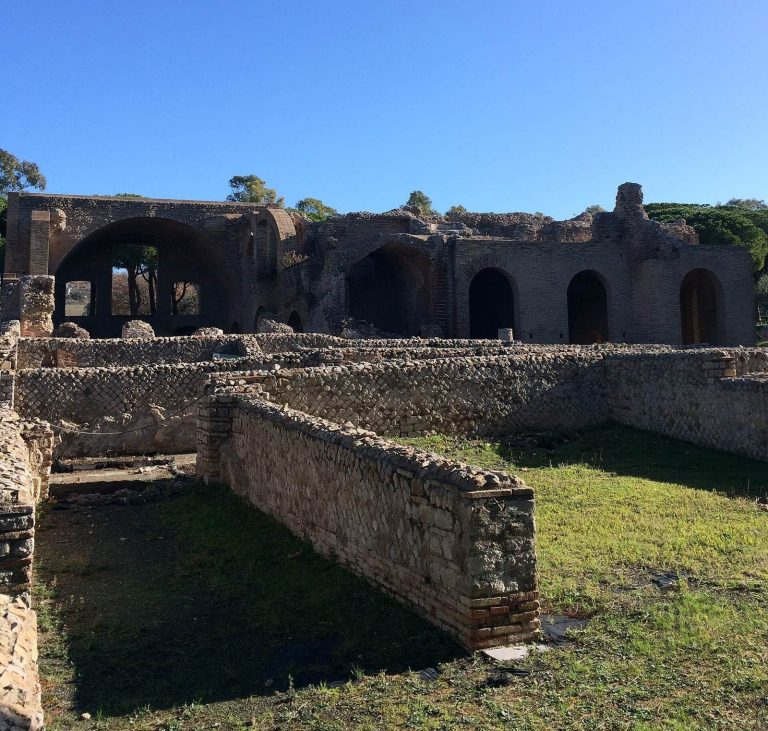
Remains from the Imperial period include numerous walls, marble mosaic floors, basins, and colonnades. Coastal erosion has revealed stretches of Roman masonry built with net-patterned stone facing and brick, as well as floors and sewers beneath modern stilt houses. A large theatre overlooks the Tyrrhenian Sea. Finds recovered over the past three centuries include a sculpted head on a square pillar depicting the veiled Aspasia, statues of emperors, a small statue of Bacchus, and a reclining mastiff. In 1778, a casket containing 122 gold coins from the first and second centuries AD was found.
Villa delle Guardiole
Beside the Via Aurelia at its 64.6 km point, the Villa delle Guardiole includes remains of a Roman seaside residence, including baths and other structures. Its fishponds extend along almost 400 m of coast. The largest is a single rectangular basin with a semicircular curve on its seaward side; the complex is now almost entirely submerged and visible only from the air. The villa opened directly onto the road, which measured 5.3 m wide here. Excavation revealed rooms from two main building phases, at the end of the first and beginning of the second century AD. One room retains part of a black-and-white mosaic made from small pieces.
Punta della Vipera
Fishpond tanks and breakwater
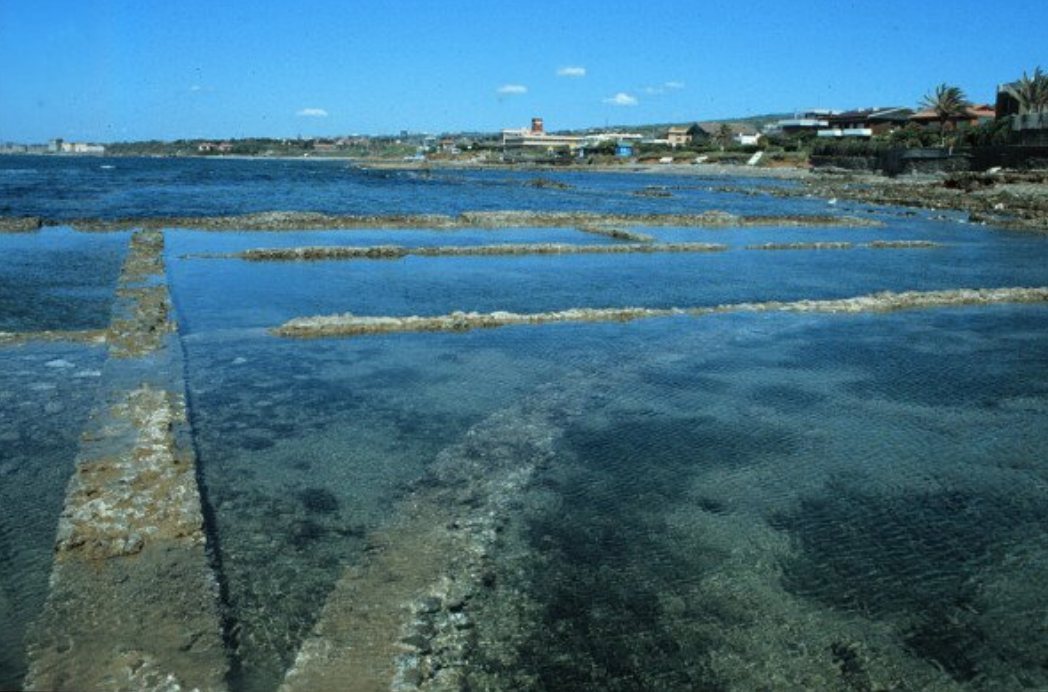
At the 66 km point of the Via Aurelia, the partly submerged fishponds at Punta della Vipera remain in good condition on stone banks projecting into the sea. Probably built in the late first century BC to raise fish and shellfish, the complex consists of rectangular tanks arranged around a circular basin more than 20 m across. A rectangular basin measures 48 by 30 m, and a concrete breakwater with three arms set at right angles protected it from the sea. Concrete forms the structure, faced mainly with net-patterned stonework; brick was used for the arches between tanks and the outer wall of the central basin. Water now reaches depths of up to 2 m in some tanks, which were probably deeper originally.
Water management
Openings and hydraulic fittings distributed water through the fishponds and controlled its outflow. Three long channels beneath the water extended from the seaward side, supplying fresh water, helping to keep it clean, and regulating its temperature. Two symmetrical pockets extend landward from the upper eastern corners of the complex between coastal rocks. They may have been used to keep moray eels.
Seaside villa
Walls of mixed stone and brick, traces of mosaic floors, capitals, and marble decoration mark a seaside villa beside the fishponds. It was connected to the ancient Via Aurelia and overlooked the water tanks. Remains of baths with underfloor heating lie in the basement of the private Villa Galliano at 510 and 512 Via Aurelia.