Castles of Manderscheid: Medieval Fortresses Between Trier and Luxembourg


Site at a Glance
- Rating
- 4.6
- Popularity
- Medium
- Country
- Germany
- Primary era
- Medieval
- External website
- Open
- Eras represented
- Medieval
- Civilizations
- Duchy of Luxembourg, Holy Roman Empire
- Site type
- Military
- Remains
- Castle
On this page10 sections
History
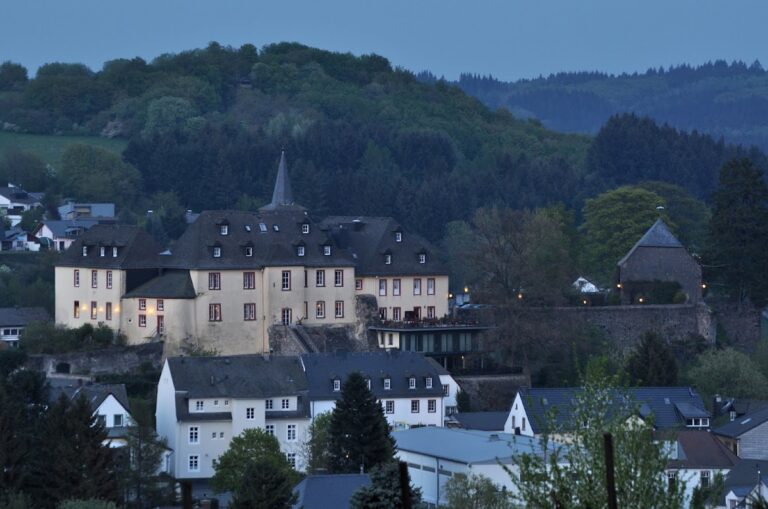
The Castles of Manderscheid are two medieval fortress ruins near Manderscheid, Germany, whose history reflects the conflict between the Electorate of Trier and the Duchy of Luxembourg. The Oberburg and the village belonged to Trier from 1174, while the Niederburg stood within Luxembourgish territory. Their positions made the two castles part of a strategically divided landscape in which control of the Lieser valley was closely connected to territorial power.
Early references and rival jurisdictions
The name Manderscheid first appears in a deed of gift issued by Otto II, a tenth-century Holy Roman Emperor, to the Archbishop of Trier in 973. This reference does not establish when the Oberburg was built. The castle is known in connection with the feud over St. Maximin’s Abbey between Count Henry the Blind of Namur and Luxembourg and Archbishop Albero of Trier, a conflict fought between 1141 and 1146. The noble freemen of Manderscheid first appear in 1142.
The Niederburg was first documented in 1173, although 1133 has also been proposed as a possible date. It became the centre of the Manderscheid lordship and later county, as well as the ancestral seat of the Lords of Manderscheid. The family acted as advocates of Echternach Abbey, meaning that they served as lay protectors and administrators who exercised secular authority over the abbey’s property and interests in Luxembourgish territory.
Expansion and the Trier bridgehead
Under Wilhelm V of Manderscheid, the Niederburg’s fortifications and associated holdings were substantially enlarged. The castle’s area was extended over Niedermanderscheid, strengthening its position within the settlement and valley. The fortress withstood a siege by troops of Baldwin, the archbishop-elector of Trier, from 1346 to 1348.
In the fourteenth century, Obermanderscheid gave its name to the Electoral Trier Amt of Manderscheid. An Amt was a territorial administrative district, and this one continued until the late eighteenth century. Its administrative seat was not the Oberburg, but the Kellerei in the neighbouring settlement, an office responsible for administration and revenue. That settlement received town rights from Elector Baldwin in 1332, although another attribution gives them to King Louis the Bavarian.
The Trier possessions around Manderscheid formed a strategic bridgehead surrounded by Luxembourgish sovereign territory. The Oberburg remained under Electoral Trier control until French troops destroyed it in 1673.
The Manderscheid family and its divisions
The original Lords of Manderscheid died out in 1200 and were succeeded by the Lords of Kerpen. A division around 1250 created separate Kerpen and Manderscheid lines. Through marriage and inheritance, the family acquired Alten-Daun in 1421 and Schleiden in 1445. The Schleiden inheritance brought Blankenheim, Gerolstein, Jünkerath, and Kronenburg in 1469, while Neuerburg followed in 1487. In 1457, the family became imperial counts, a status indicating direct political dependence on the Holy Roman Emperor rather than on another territorial lord.
After the death of Dietrich III of Manderscheid, his three sons founded the lines of Manderscheid-Kail, Manderscheid-Schleiden, and Manderscheid-Blankenheim. The Niederburg remained with the Manderscheid-Blankenheim line. A division in 1498 assigned the county of Manderscheid to the senior Manderscheid-Schleiden branch, but that branch became extinct in 1593. The resulting inheritance dispute led to Manderscheid passing to the Löwenhaupt family before returning to the Manderscheid-Kail branch in 1645.
The Manderscheid-Kail branch acquired Manderscheid and other territories through marriage, although its legal position remained uncertain because many possessions were subject to Luxembourg or Electoral Trier. In 1672, the Imperial Chamber Court ruled that the counts were directly subject to the Empire. The branch died out in 1742. Its possessions then passed to Manderscheid-Blankenheim through the marriage of Maria Francisca Maximiliane, daughter of the last count, to Jan Willem of Manderscheid-Blankenheim.
Abandonment and restoration
The Niederburg was no longer inhabited by the Manderscheid-Blankenheim family and was allowed to decay. In 1794, Countess Augusta, the last ruler of that line, fled with her family before the advancing French troops to the Bohemian lands of her husband, the Count of Sternberg. The partly ruined castle was abandoned, and the French later auctioned it for demolition.
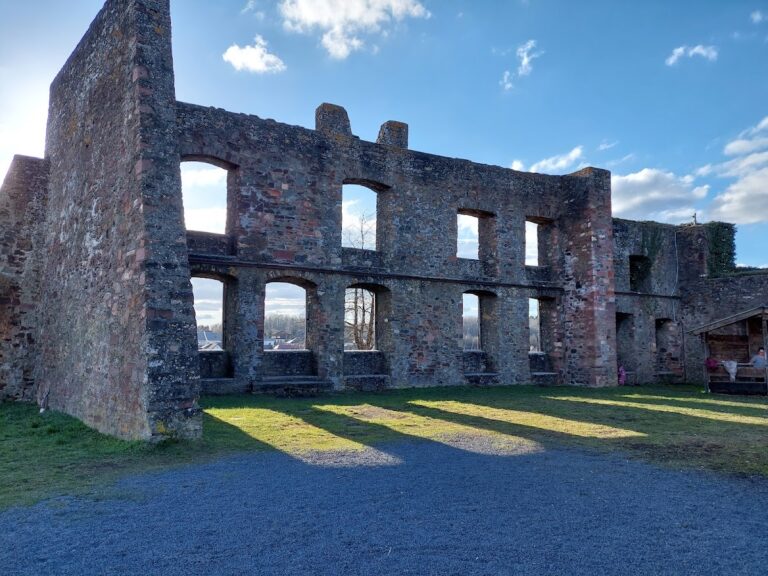
The Oberburg ruins underwent thorough restoration by the municipality of Manderscheid in 1921. The Niederburg has been restored gradually and continuously by the Eifel Club. Since 1 January 2018, the city of Manderscheid has owned the Niederburg, while the Manderscheid Castle Association operates and administers both castles under a lease from the city.
Remains
Fortified positions in the Lieser valley
Oberburg
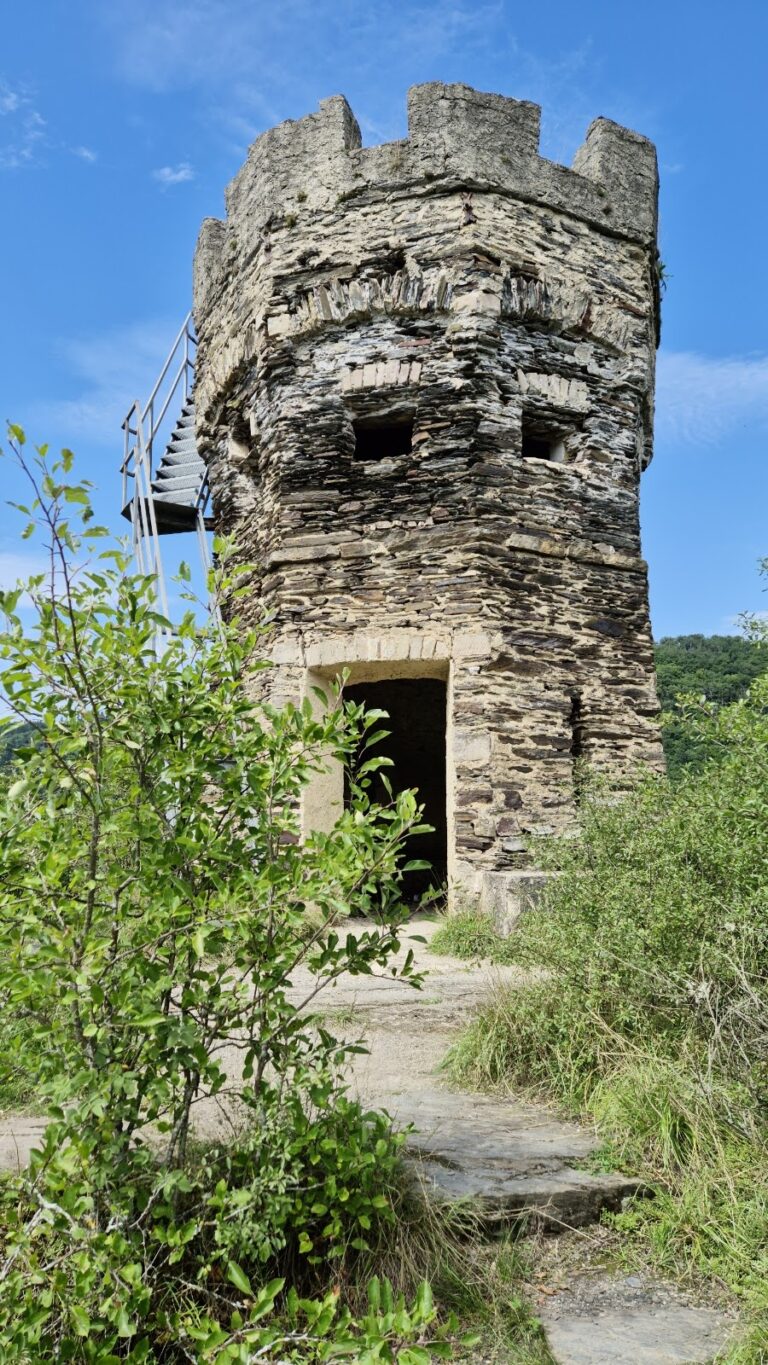
The Oberburg occupies a hilltop that was levelled for construction. Its outer fortified enclosure follows an almost triangular plan. The ruins retain a five-storey bergfried, the principal fortified tower of a medieval castle, used chiefly for defence and refuge rather than as an ordinary entrance tower. The tower has been made accessible again and provides views toward the Niederburg, Manderscheid, and the landscape of the Lieser valley.
Niederburg
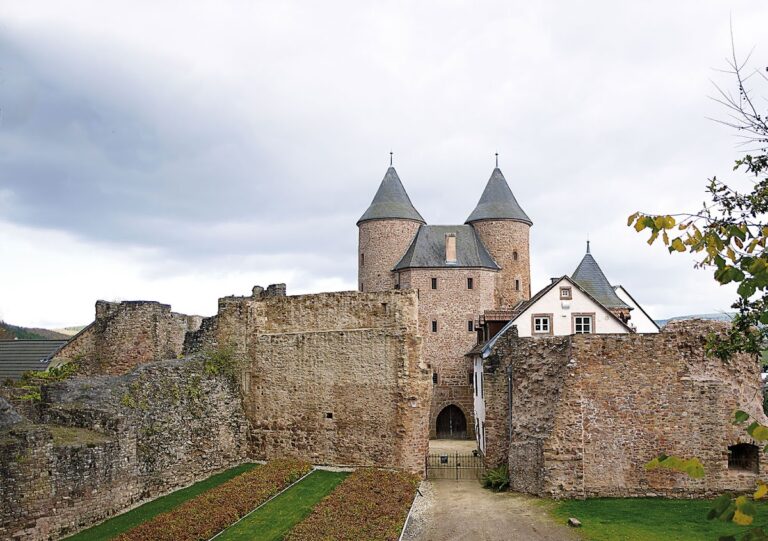
The Niederburg stands on a rocky outcrop in the Lieser valley below the Oberburg, within short throwing distance of the upper castle. The Lieser surrounds the outcrop on three sides, separating the lower fortress from the Oberburg. This position enabled the Niederburg to control movement through the valley and to close the route during conflict.
The castle’s defensive works were enlarged under Wilhelm V of Manderscheid, including an extension over the settlement of Niedermanderscheid. The surviving ruins reflect the later abandonment and deterioration of the fortress. Their form preserves the physical consequences of the castle’s decline after it ceased to serve as the residence of the Manderscheid-Blankenheim family.
Artistic representations
The two fortresses have also entered the history of regional representation. Eugen Bracht painted each castle separately, while Frans Hogenberg produced an engraving of the Niederburg in 1576.
Nearby sites