Castle of San Servando: A Medieval Fortress in Toledo


Site at a Glance
- Rating
- 4.1
- Popularity
- Medium
- Country
- Spain
- Primary era
- Medieval
- External website
- Open
- Eras represented
- Medieval, Modern
- Civilizations
- Crown of Castile
- Site type
- Military
- Remains
- Castle
On this page11 sections
History
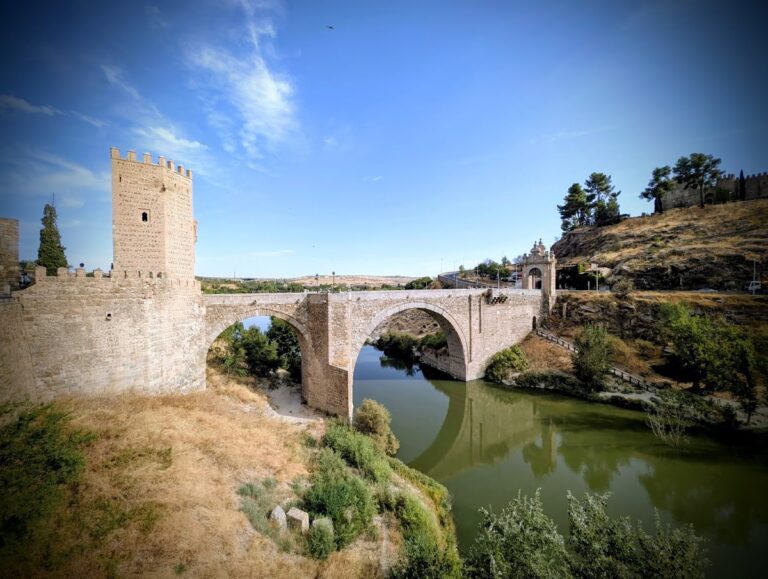
Castle of San Servando is a medieval fortress in Toledo, Spain, rebuilt in the fourteenth century on a strategically important hill above the Tagus. The site faced Toledo’s Alcazar, the city’s fortified royal palace and citadel, and controlled routes toward the Alcantara Bridge, the river, and the aqueduct. Its earlier history included a Roman fort, a Visigothic church, and an Arab fortress, while its institutional story began with a fortified monastery.
Roman, Visigothic, and Arab Foundations
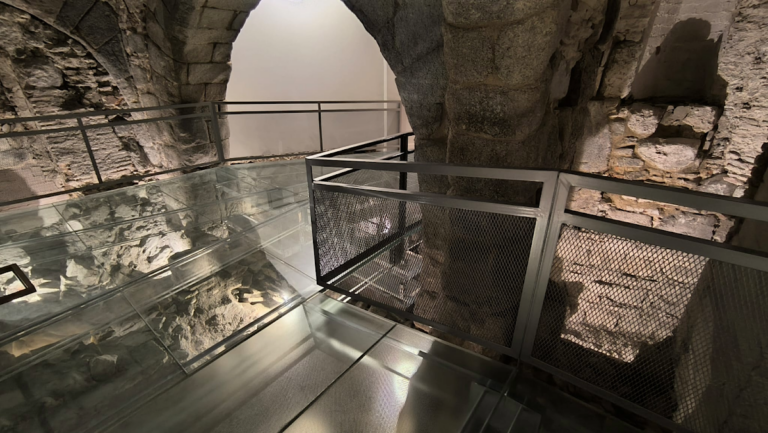
Fortifications occupied the hill soon after Toledo’s foundation. A Roman fort was followed by a Visigothic church and then an Arab fortress. The foundations of that earlier fortress, including its rectangular towers, remain buried beneath the present ground level. The later medieval castle therefore stands within a much longer sequence of military and religious occupation.
The Monastery under Alfonso VI
After Alfonso VI, king of Castile, regained Toledo in 1085, he and his wife, Constance of Burgundy, restored the monastery on the site. They made it smaller and less formidable than its Arab predecessor and dedicated it to Saints Servando and German, Christian martyrs, in gratitude for Alfonso’s survival at the Battle of Sagrajas, an important eleventh-century conflict between Alfonso’s forces and Muslim armies in the Iberian Peninsula. The institution’s name later appeared in forms including San Servan, San Servantes, and San Cervantes.
On 11 March 1088, Alfonso VI placed the monastery under papal authority on the condition that it remain controlled by Saint Victor’s Abbey in Marseille. Pope Urban II accepted the arrangement and appointed Cardinal Richard, a member of that abbey, as administrator. French monks subsequently took responsibility for the monastery. Alfonso viewed San Servando as a means of preserving Christianity in the region.
On 13 February 1099, Alfonso made a donation to the monastery of Santa Maria of Alfizen and its associated institution. He later founded a Benedictine nunnery beside San Servando. The two monasteries were charged with assisting poor people and travelers in the surrounding region.
Destruction, Templar Control, and Decline
Muslim forces attacked and destroyed the monastery in 1110. The monks left for Marseille, and the institution passed to the Archdiocese of Toledo. Further attacks followed during the succeeding decades. Alfonso VIII later transferred the monastery to the Knights Templar, a medieval military-religious order that combined monastic life with the defense of Christian territories and routes. The Templars converted it into a fortress intended to protect the Alcantara Bridge from possible Muslim attacks.
The site’s military importance declined after the Muslim threat was reduced and Christian forces won the Battle of Las Navas de Tolosa in 1212. The abolition of the Templars in 1312 further weakened its purpose and contributed to its abandonment.
Fourteenth-Century Rebuilding and Modern Preservation
The fortress regained military importance during the fourteenth-century conflict between Peter I of Castile and Henry II, rival Castilian kings. Archbishop Tenorio, Toledo’s leading ecclesiastical official, ordered its reconstruction, which was completed in 1386. The surviving medieval structures belong to this rebuilding.
A powder magazine was installed in 1857. After the property was sold at auction for 3,000 pesetas in 1873 and faced possible destruction, the Monuments Commission declared it a national historic-artistic monument in 1874. It was the first castle in Spain to receive that status. A major reconstruction followed in 1959, after which the building served as a college, a university residence, and the residence of the Cortes of Castile–La Mancha, the regional legislative assembly. The castle is also depicted in El Greco’s View of Toledo.
Remains
Fortress Layout
The castle occupies a hill descending toward the Tagus and has a rectangular plan. Three round towers stand at three corners, while a fourth intermediate tower on the southern wall protects a small gate. The main gates face the city. Immediately behind them is the keep, which projects eastward and forms the largest element of the fortress.
Principal Towers
The Keep
The keep, or Torre del homenaje, is the principal fortified tower of a European castle and generally served as its strongest defensive and residential element. At San Servando it has an elongated oval plan and projects eastward behind the main gates. It contains three projecting embrasures, openings in a defensive wall for observation or weapons. Its upper defensive openings have rectangular crenellations covered with lead.
Corner and Southern Towers
Similar embrasures occur on the southeastern tower. The tower windows are framed with brickwork and reliefs, while the walls include ornamental dentils, small tooth-like projections, upper embrasures, and narrow defensive openings at lower level. Together, these features express the defensive arrangement of the surviving medieval fortress.
Construction and Later Alterations
The fortress is built of stone, with joints treated with lime mortar and a darkened material or scale-like coating, a technique characteristic of Arab buildings. The earlier Arab fortress survives below ground through its foundations and rectangular towers. The castle’s moat and rampart have not survived.
Before the major reconstruction of 1959, the building was in poor condition. Its floors had collapsed, and the wall facing the river had fallen. The work added another tower and created a new entrance from the highway. The castle is currently in good condition.