Castle of Salona: A Medieval Fortress in Greece



Site at a Glance
- Rating
- 4.5
- Popularity
- Low
- Country
- Greece
- Primary era
- Medieval
- Eras represented
- Classical, Medieval
- Civilizations
- Ancient Greek, Crusader
- Site type
- Military
- Remains
- Castle
On this page11 sections
History
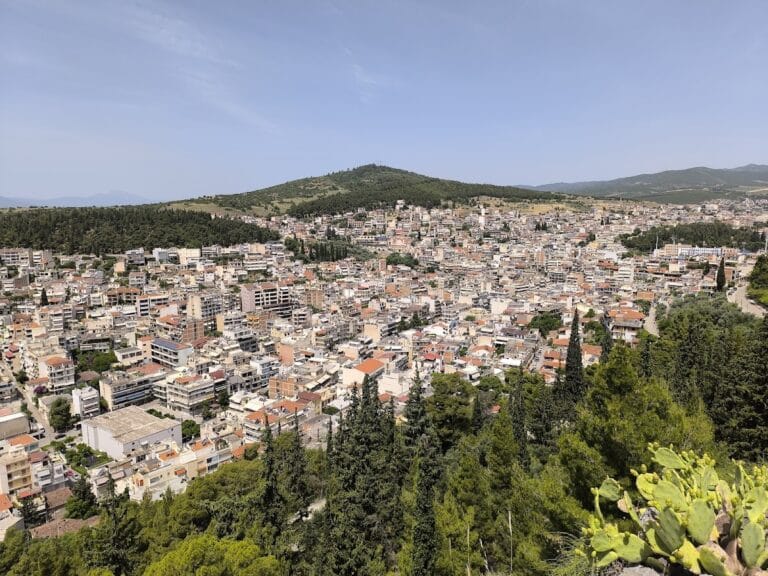
The Castle of Salona in Greece is a medieval fortress built by Frankish rulers on the ancient acropolis of Amphissa, principally during the thirteenth century. Its position above Amphissa gave it control over an important mountain route between the Malian Gulf and the Gulf of Corinth, and the stronghold remained active through successive periods of foreign and Greek rule.
Ancient Amphissa
Amphissa appears to have been inhabited from the Geometric period, and its elevated acropolis formed the city’s principal defensive position. The ancient fortifications were constructed during the Classical and Hellenistic periods. In 338 BC, Philip II of Macedon captured and destroyed the city. Amphissa was later rebuilt, while parts of its earlier defensive system remained incorporated into the hilltop site.
Frankish and Catalan rule
During the Fourth Crusade, the 1202–1204 expedition that led Latin Christian powers to conquer and divide Byzantine territories, Amphissa passed to Latin rulers. It was assigned to the Picard barons of Autremencourt and became the center of the Frankish County of Salona. The new rulers built a fortress over the ancient acropolis, creating the medieval stronghold that gives the site its present character.
After the Catalan Company, a group of mercenaries that took control of the Duchy of Athens in the early fourteenth century, conquered the duchy in 1311, the fortress changed hands repeatedly. It nevertheless remained one of the duchy’s principal strongholds.
Ottoman, Byzantine, and Hospitaller control
The Ottomans captured the fortress in 1394. It was later retaken by the Byzantines of the Despotate of the Morea, the Byzantine province centered on the Peloponnese during the later Byzantine period. In 1403, the fortress was transferred to the Hospitaller Knights, a military religious order also known as the Knights of Saint John, in exchange for Corinth.
A further settlement in 1404 returned Salona in exchange for Corinth after Theodore Palaiologos, a Byzantine ruler associated with the Despotate of the Morea, faced opposition from the population of Mistra and pressure from the sultan. The Hospitallers also abandoned Kalavryta and their claims to Mistra. They definitively lost the fortress to the Ottomans in 1410.
Greek War of Independence and later use
During the Greek War of Independence, Greek forces liberated the castle on 10 April 1821 after a siege led by Panourgias, a Greek revolutionary leader. It was the first castle captured by the Greeks. The fortress continued in use until the Second World War.
Remains
The fortress occupies Elatos hill, about 180 metres above sea level northwest of Delphi. It overlooks the Crisaean Plain and commands the route through the mountains of Central Greece that links the Malian Gulf with the Gulf of Corinth. Its irregular plan follows the natural shape of the hill and reflects the development of a medieval stronghold over the ancient acropolis.
Terraces and citadel
The castle is arranged on two terraces. A lower terrace extends to the southwest, while a higher terrace to the northeast contains the upper citadel, a fortified stronghold within or overlooking a settlement. A transverse wall separates the citadel from the rest of the castle and incorporates ancient building material.
Upper citadel
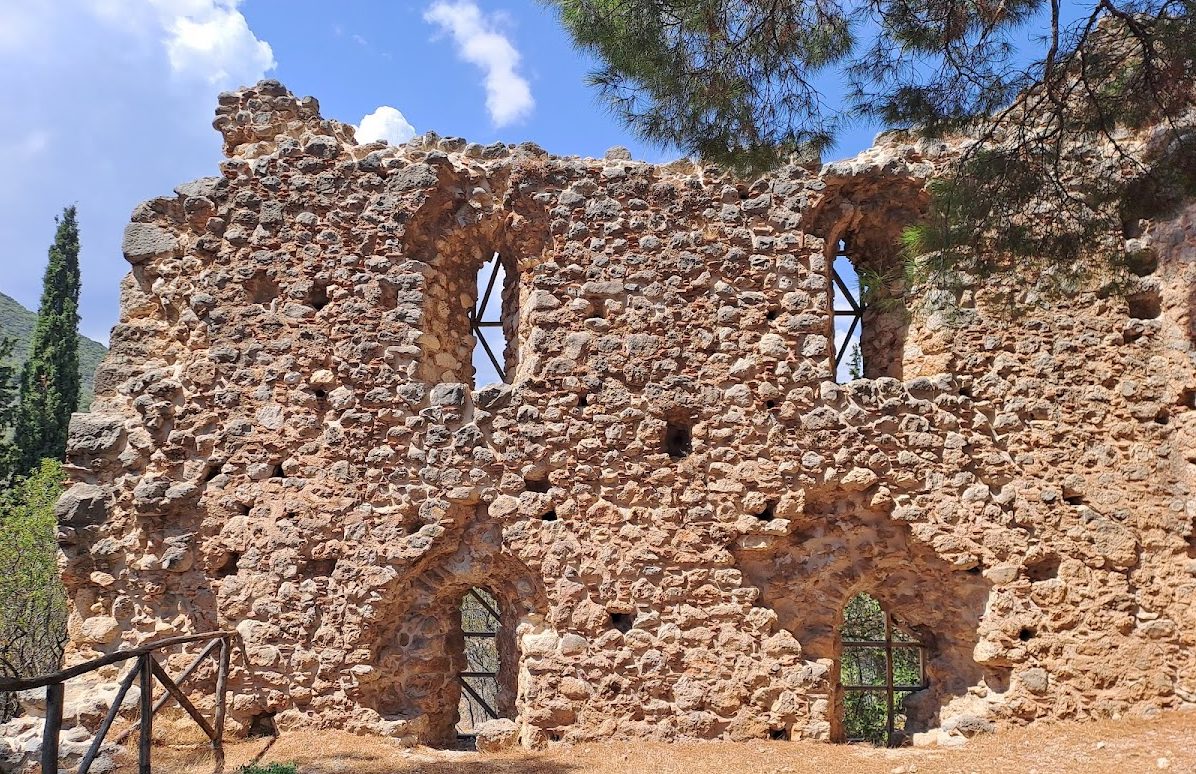
The upper citadel contains the ruins of buildings and a circular tower. Local tradition identifies this area as the site of the palace of the Counts of Salona. The citadel’s entrance is separate from the main entrance defenses, preserving the distinction between the wider castle and its highest fortified enclosure.
Walls and entrances
Western entrance
The main entrance lies on the west side of the fortress and is protected by a rectangular tower. Additional fortifications guard the approach, while another entrance leads into the upper citadel. These surviving entrance structures form part of the castle’s identifiable defensive system.
Ancient and medieval masonry
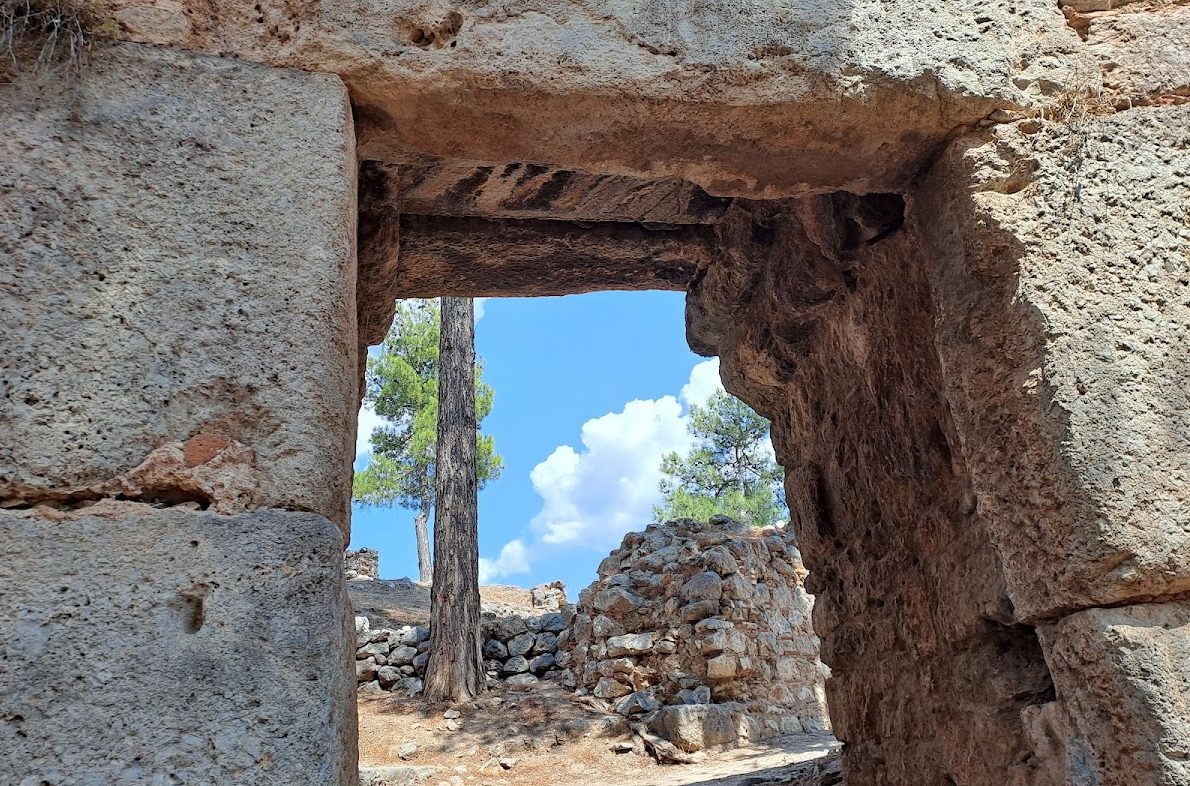
Ancient walls survive in the southwestern and southeastern parts of the fortifications. They use large stone blocks. The medieval walls were built with smaller stones and fragments of roof tiles bonded with sand-and-lime mortar, creating a visible contrast between the earlier defensive fabric and the thirteenth-century fortress. The circular tower, transverse wall, upper-citadel entrance, and entrance fortifications remain recognizable elements of the surviving castle.
Nearby sites