Castle of Koskina: A Byzantine Fortress on Ikaria


Site at a Glance
- Rating
- 4.8
- Popularity
- Very Low
- Country
- Greece
- Primary era
- Medieval
- Eras represented
- Medieval
- Civilizations
- Byzantine, Genoese
- Site type
- Military
- Remains
- Castle
On this page9 sections
History
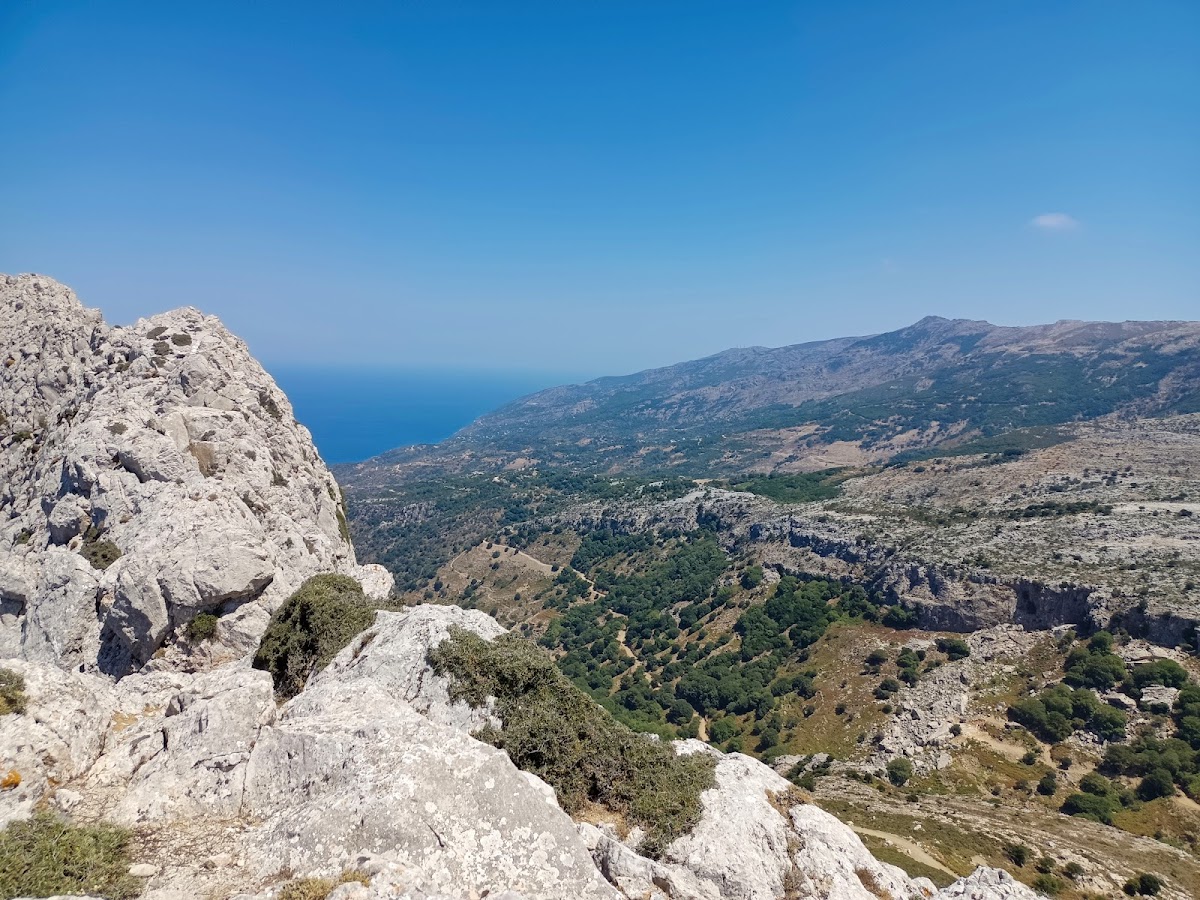
The Castle of Koskina is a Byzantine fortress in Greece, built in the tenth century on the summit of Koskinas Mountain on Ikaria. Its elevated position allowed a small military unit to watch the surrounding area and nearby sea routes. During the Byzantine period and later under Frankish rule, the castle was the island’s strongest fortress.
Byzantine and Frankish periods
The Byzantines established the castle as a hilltop stronghold with both military and administrative importance. Its position provided broad visibility across the island and the sea, supporting surveillance of movement around Ikaria. The fortress later continued to serve this defensive role under Frankish rule, a term for the authority of western European powers in parts of the Byzantine world after the Fourth Crusade.
Genoese control and later rulers
Ikaria came under Genoese control from 1362 to 1481. The Genoese, merchants and naval powers from the Italian city-state of Genoa, reinforced the castle during their rule. After they left the island and withdrew to Chios, the fortress was abandoned.
Ikaria then came under the authority of the Knights Hospitaller of Rhodes, a military-religious order that ruled Rhodes and other territories during the medieval and early modern periods. Their authority continued until the middle of the sixteenth century, when the Turks took control of the island.
Legends and religious tradition
The castle’s history remains part of local tradition through legends and medieval folk songs, especially the “Riva of the Castle of Nikaria,” which describes the Genoese conquest of the island’s castles. Another tradition holds that the fortress was impregnable except on one occasion, when treachery allowed it to be captured.
On the feast of Saint George, the church within the castle is used for a service, and local people gather there to honor the saint.
Remains
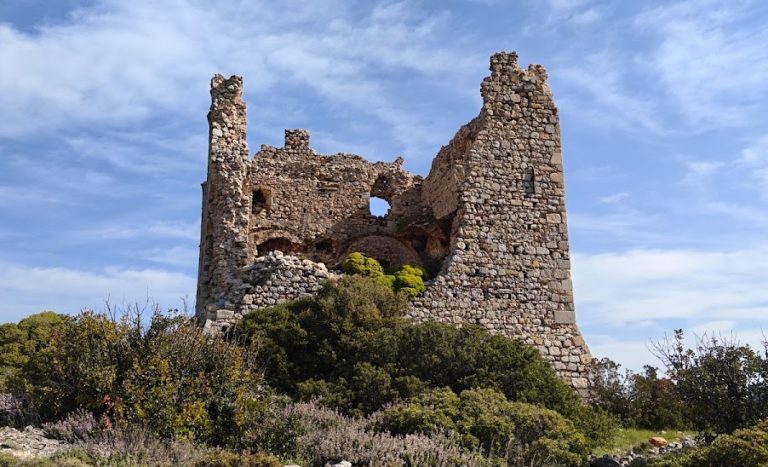
The fragmentary remains occupy the summit of a conical hill on Koskinas Mountain, in Kosoikia village near Evdilos in northern Ikaria. A wall encloses the hilltop, and its entrance lies on the northern side. Below the fortified summit, traces of a settlement survive on the hill’s smooth northwestern slope.
Hilltop structures and settlement
Enclosing wall
The surviving wall follows the summit area and encloses the castle’s hilltop position. Its northern entrance provided access through the defensive enclosure, while the elevated setting supported the fortress’s role in observing the surrounding landscape and sea routes.
Church of Saint George
The Church of Saint George stands within the castle area. Columns taken from ancient buildings were incorporated into its interior, linking the later church to earlier architectural material found on the island.
Settlement below the castle
Remains of a settlement extend below the castle on the smooth northwestern side of the hill. These traces form part of the physical setting associated with the fortified summit.