Castle Hill: French and British Fortifications in Newfoundland
Site at a Glance
- Rating
- 4.6
- Popularity
- Low
- Country
- Canada
- Primary era
- Early Modern
- External website
- Open
- Eras represented
- Early Modern
- Civilizations
- British, French
- Site type
- Military
- Remains
- Fort
On this page13 sections
History
Castle Hill is an archaeological site of French and British fortifications in Canada, overlooking Placentia, formerly the French settlement of Plaisance. Established in the seventeenth century and developed through the eighteenth century, the defenses protected French fishing interests in Newfoundland and the approaches to the French colony of Canada before continuing in British military use.
French foundations and early conflicts
Fort Plaisance, also called Vieux Fort, was established between 1662 and 1690. On 25 February 1690, during King William’s War, a conflict between England and France that extended into their North American colonies, 45 British freebooters from Ferryland led by Herman Williamson attacked Plaisance overland. They killed two soldiers, wounded Governor Louis de Pastour de Costebelle, captured the settlement, and destroyed the fort. The English held Plaisance until 5 April, removing the colony’s supplies when they withdrew.
France replaced Fort Plaisance with Fort Saint-Louis in 1691. English ships attacked the new fort during the Battle of Placentia in 1692, but the French resisted successfully. Fort Royal was then built on Castle Hill in 1693, with a garrison of about 60 soldiers by the end of that year. The position protected the colony from British warships and provided a base for French attacks on British settlements in Newfoundland.
Governor Jacques-François de Monbeton de Brouillan organized a campaign against English Newfoundland settlements with a frigate and eight ships. The force captured fishing boats and prisoners and seized fish. Pierre Le Moyne d’Iberville, a prominent French colonial military commander and explorer, joined the operation after marching overland from Plaisance and led attacks during the Avalon Peninsula Campaign.
Queen Anne’s War and French military operations
During Queen Anne’s War, another conflict between England and France that affected their North American colonies, Governor Daniel d’Auger de Subercase reorganized the soldiers, supplied uniforms, strengthened the garrison with Mi’kmaq allies, and used privateers for maritime defense. French forces based at Plaisance attacked English settlements in 1705 and in later operations.
England blockaded Plaisance in 1708 in an attempt to starve the capital, which also held 500 English prisoners. In January 1709, Joseph de Monbeton de Brouillan de Saint-Ovide, the king’s lieutenant to Philippe Pastour de Costebelle, led 170 French, Canadian, and Indigenous troops in the capture of St. John’s. The expedition took 800 prisoners and destroyed the town’s defenses.
The garrison numbered 250 in 1711, although Governor Brouillan had estimated that at least 300 soldiers were required for effective defense. French and allied operations from Plaisance continued to connect Castle Hill with the wider struggle for control of Newfoundland’s settlements and fisheries.
British occupation and later military use
The 1713 Treaty of Utrecht, the peace settlement that transferred France’s Newfoundland settlement rights to Britain and redirected French Atlantic power toward Louisbourg, ended France’s formal position on the island. Britain took over the fortifications at Plaisance, and the settlement became known as Placentia. British forces occupied the defenses until 1811.
The British briefly used Fort Saint-Louis, also called Fort Louis, before building Fort Frederick. From 1721 to 1746, Fort Frederick served as Newfoundland’s military headquarters. Construction of New Fort began in the 1740s over the remains of Fort Saint-Louis. A Mi’kmaq raid on Plaisance during Father Rale’s War, a conflict involving British colonists, their Indigenous allies, and the Wabanaki Confederacy, was alleged to have killed 200 English people, but Governor Drummer did not accept the allegation.
The garrison included French and British Army forces, British Independent Companies of Foot from 1713 to 1718, an Independent Company of Artillery from 1713 to 1726, and Ordnance Engineers from 1714 to 1870. Phillip’s Regiment of Foot and its successor formations served from 1718 to 1764, while the 1st Battalion Royal Artillery was present from 1726 to 1756. These units reflect the changing organization of the defenses under British control.
Abandonment and archaeological investigation
The British abandoned the fortifications in 1811, after which the site gradually decayed. Large-scale archaeological investigations of the works on and around Castle Hill began in the mid-twentieth century. The ruins are now managed by Parks Canada, and Castle Hill was designated a National Historic Site of Canada in 1968 under the official name Castle Hill National Historic Site of Canada.
Remains
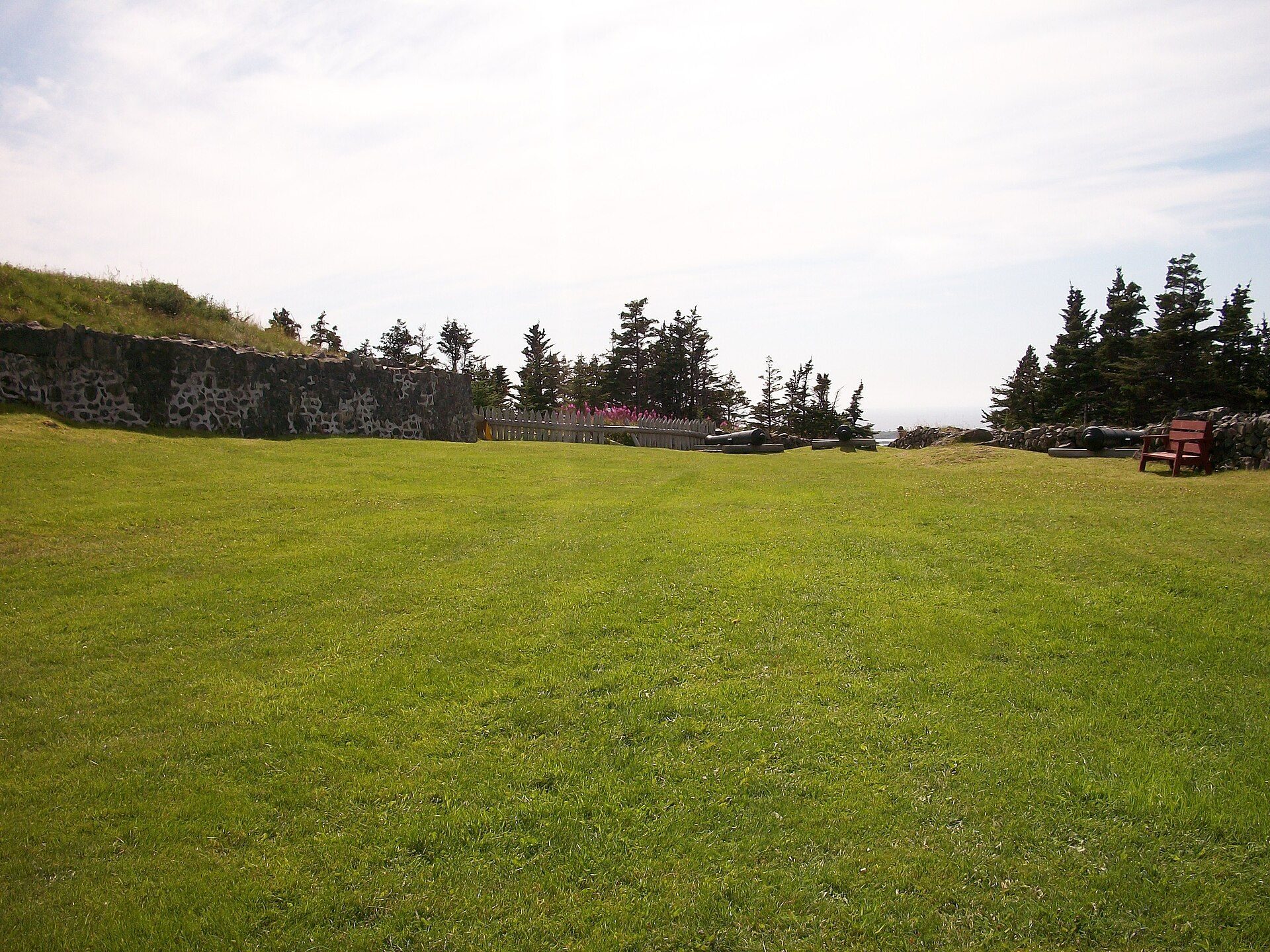
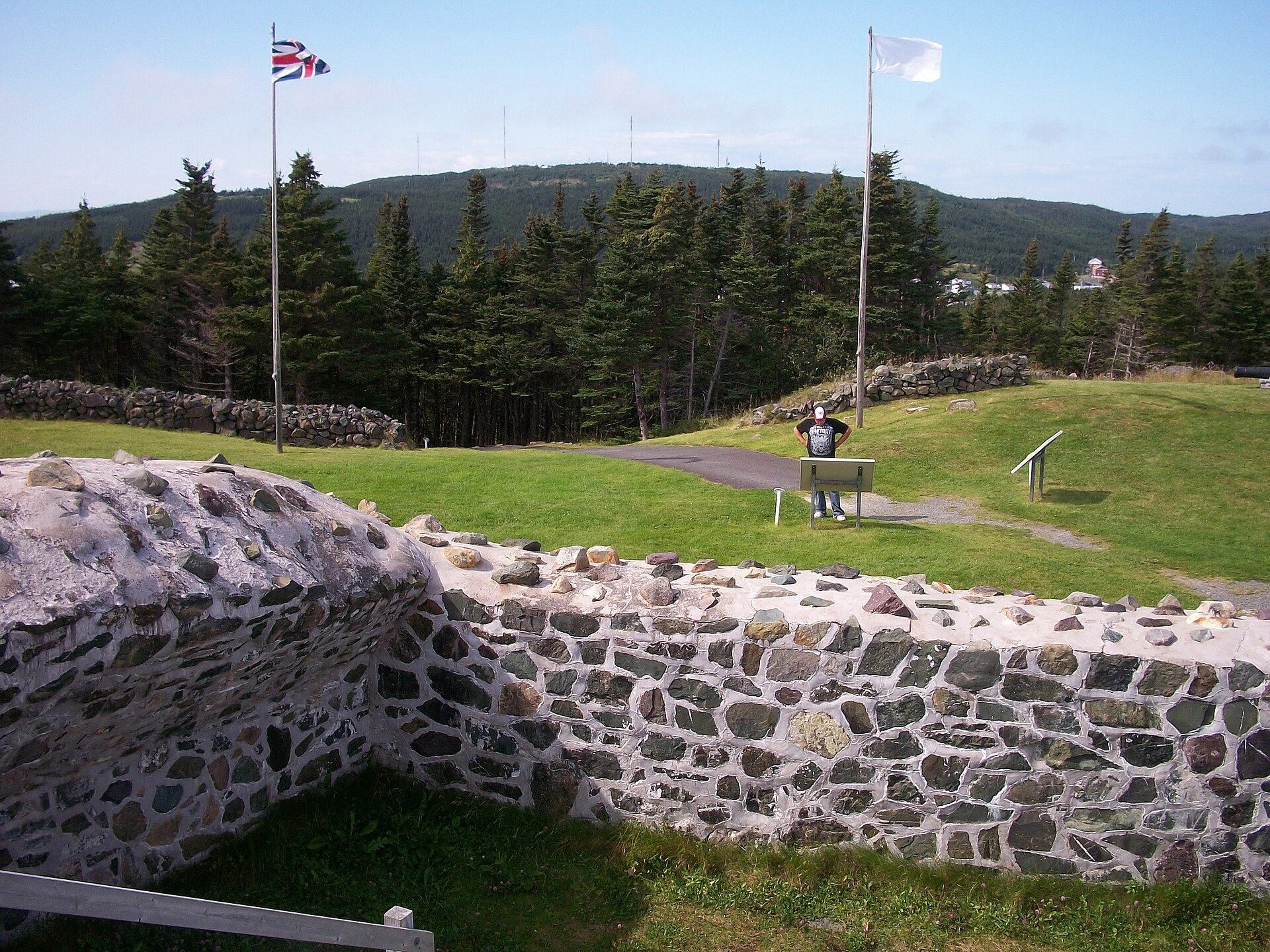
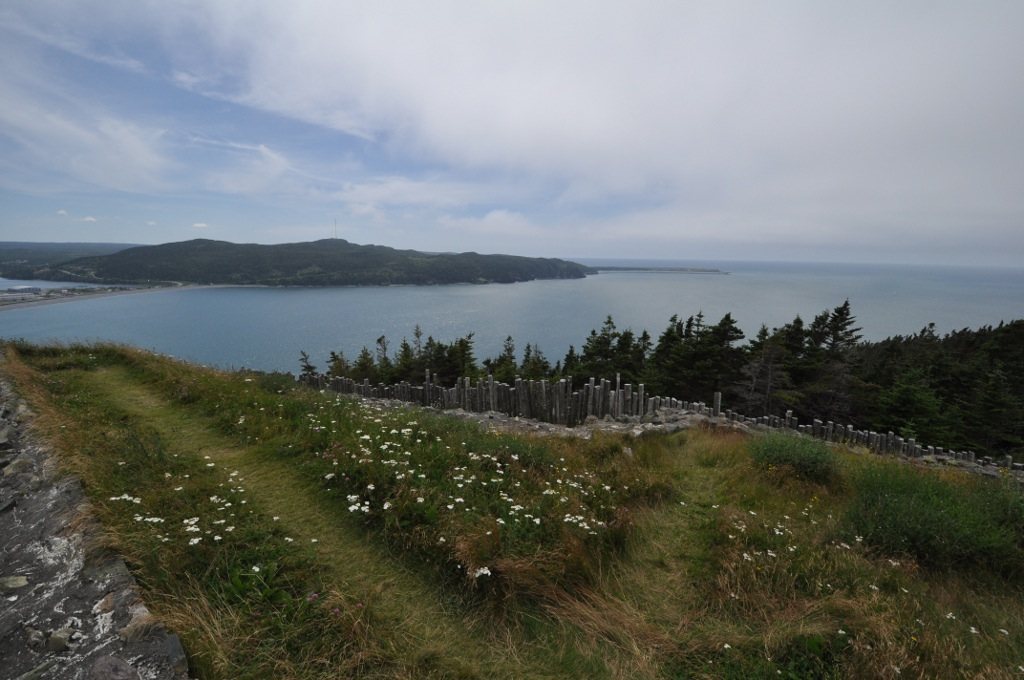
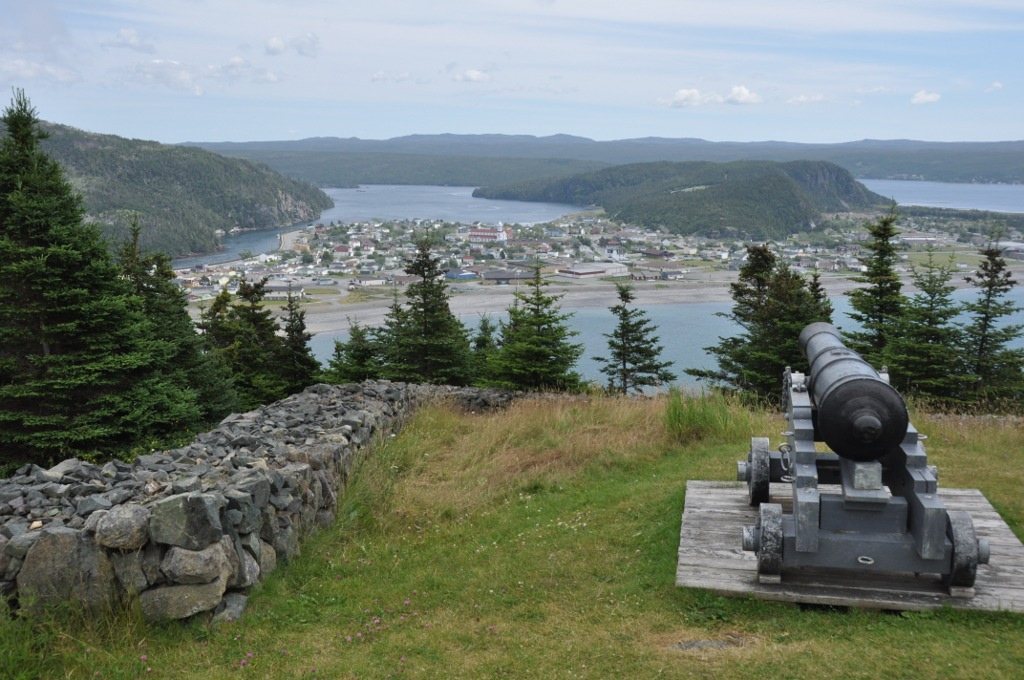
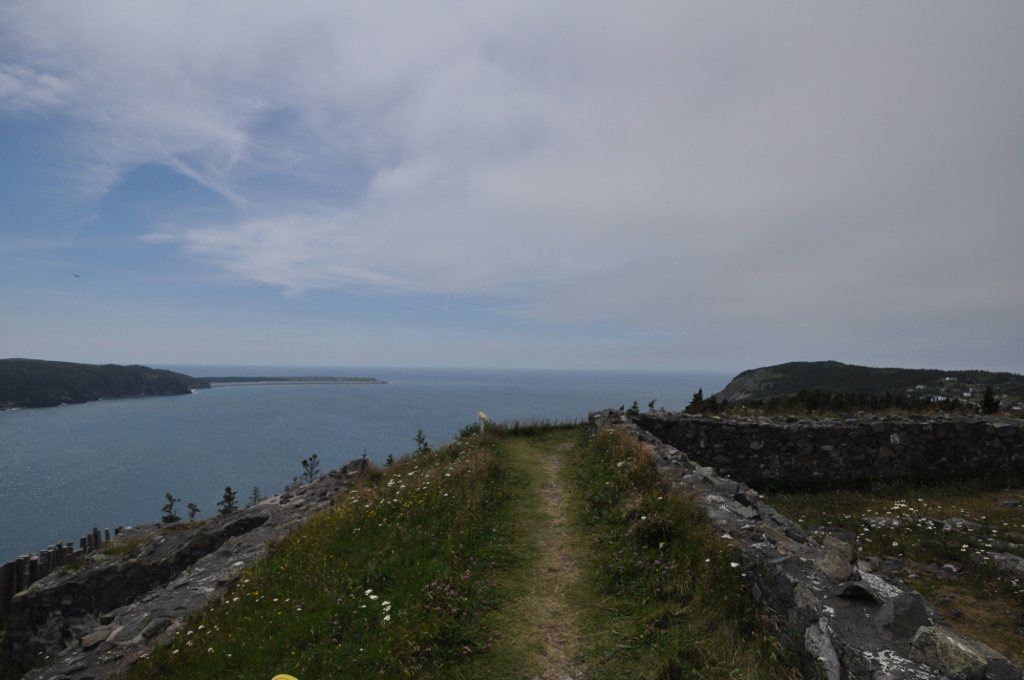
The archaeological site is centered on the summit of 103-metre-high Castle Hill, above Placentia and the coastal waters of Placentia Road and Northeast Arm. Additional defensive remains extend around the foot of the hill. Walls and other fortification structures preserve elements of both French and British military works from the seventeenth and eighteenth centuries.
French defensive works
Fort Royal and Gaillardin Redoubt
Fort Royal was built on Castle Hill in 1693 and remained in use through 1703. Its remains form part of the French defensive complex on the summit. Gaillardin Redoubt, a small fortified position, dates from 1692. A detached redoubt was added in 1697, extending the defensive system beyond the principal fortification.
La Fontaine Battery
The La Fontaine Battery, a defensive position designed to hold artillery, also dates from 1697. Its remains lie within the archaeological site but have not been excavated.
British defensive works
British blockhouse
A British blockhouse, a fortified building used for defense and sometimes accommodation, dates from 1762. It survives among the later military remains and represents the continued adaptation of Castle Hill under British control.
Horseshoe Battery
The Horseshoe Battery survives as unexcavated remains. Its form identifies it as an artillery work within the British defensive landscape, alongside the other walls and structures distributed across the hill and its lower ground.
Interpretive features
Six smoothbore cannons were added to the site in the 1930s. The visitor center contains exhibits about the history of the fortifications and about the fishing families and soldiers who lived at Castle Hill. Together, the surviving structures and interpretations present the site as a layered French and British military complex connected to the settlement at Placentia.