Castillo de Tájara: A Muslim Frontier Fortress in Granada, Spain

Site at a Glance
- Rating
- 3
- Popularity
- Very Low
- Country
- Spain
- Primary era
- Medieval
- Eras represented
- Medieval
- Civilizations
- Unclassified
- Site type
- Military
- Remains
- Fort
On this page8 sections
History
Castillo de Tájara was a Muslim frontier fortress and settlement in Spain, located at the present-day hamlet of Las Torres in the municipality of Huétor-Tájar, Granada. It formed part of the Kingdom of Granada and occupied a fertile irrigated area whose agricultural production helped supply nearby Loja. Its position beside a ford of the Genil and at the meeting point of routes between Loja and Granada, and between Alhama and Montefrío, gave Tájara an important defensive and logistical role.
Tájara in the Islamic period
The place was known by several forms of its name, including Tájara, Tahara, and Tajarja. The eleventh-century geographer and historian al-Udri described an al-Taŷarat district within the cora of Elvira, a large territorial division of al-Andalus, and listed settlements called Tájara of the Mountain, Tájara of the River, and Tájara of the Plain. Several scholars have associated Tájara of the Mountain with the settlement at Las Torres, although the locations of the three settlements remain uncertain.
Later historical interpretations connected Tájara with a rural settlement in the Granada district described by Ibn al-Khatib, a fourteenth-century Granada-born historian, geographer, and statesman. The same district included Sikanb, identified with Agicampe. The precise identification of the places mentioned in these texts has been debated. Malpica argued that an editorial reading had confused Yamal with Yabal and that a reference thought to concern Tájara of the Mountain might instead refer to Tajarilla. Seco de Lucena identified the rural settlement with the hamlet near Loja where the fortress ruins survive.
A fortified agricultural settlement
Tájara prospered in a well-watered agricultural zone. Christian accounts sometimes described it as a village or as a fortified suburb, while its fortress served as a substantial defensive stronghold. Cereal production was especially important because it contributed to the supply of Loja. The settlement’s location also allowed it to influence movement across the western Vega of Granada, where troops and provisions travelled between the surrounding strongholds.
Castilian attacks in the fifteenth century
After the Truces of Majano in 1430, King John II of Castile planned a raid into Granada and placed Álvaro de Luna, his leading favorite and constable, in charge. During the operations preceding the Battle of La Higueruela, Castilian forces attacked Tájara and burned the settlement and nearby hamlets. They did not besiege the fortress because the army needed to cross a dangerous river the next day, and the stronghold was not considered worth occupying.
A campaign led by Fernando Álvarez de Toledo, lord of Valdecorneja, in early November 1430 may also have involved Tájara. The distance from Granada raises the possibility that this episode concerned the castle of Tajarja instead, so the identification remains uncertain. In 1458, Miguel Lucas de Iranzo, a Castilian constable active in campaigns against Granada, led a punitive expedition through the lands of Loja. After burning fields, his forces moved toward the western mountains. The place called Tanxora in the campaign account is identified with the Fortress of Tájara.
Capture during the Granada War
The fortress was taken by the forces of Ferdinand the Catholic in 1483, during the Granada War, the final Christian conflict that brought the Muslim Kingdom of Granada under Castilian rule. The campaign followed the Christian capture of Alhama in 1482 and the Battle of Lucena in April 1483. Ferdinand sought to supply Alhama by crossing the western Vega of Granada and captured Tájara with difficulty. Rodrigo Ponce de León, Marquis of Cádiz, is said to have intervened to complete the operation.
The capture was regarded as strategically important because of Tájara’s proximity to Loja. Loja did not fall until Tájara had been taken, and the destruction of the settlement affected the movement of soldiers and supplies through the Vega. The Books of Distributions of Loja later provided information about the human settlement around Tájara. Modern archaeological survey by Jiménez Puertas identified remains that may belong to the fortress.
Remains
Fortress and agricultural landscape
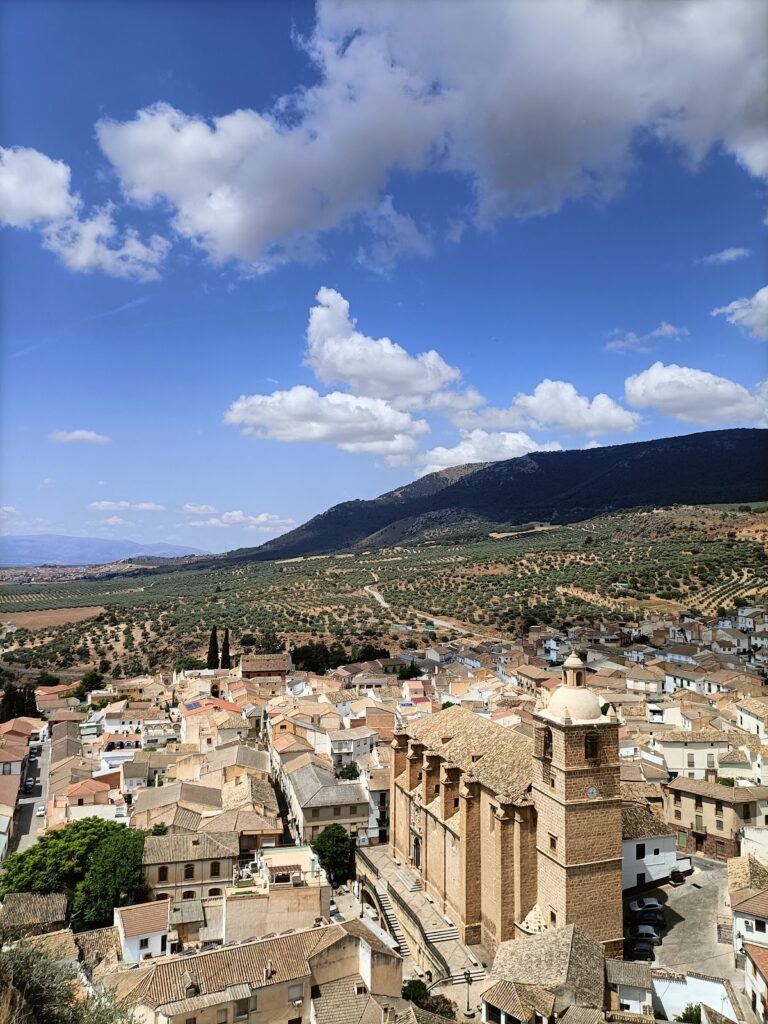
Castillo de Tájara occupied a landscape shaped by the Genil and by irrigation. An irrigation canal derived from the Cacín River still runs parallel to that river before reaching the Genil valley. It watered the area around Tájara and supported the agricultural prosperity associated with the settlement. The Genil probably had a much wider channel in the medieval period than it does today and was subject to uncontrolled flooding. Its banks were likely covered by river vegetation, while irrigated fields occupied the surrounding cultivated land.
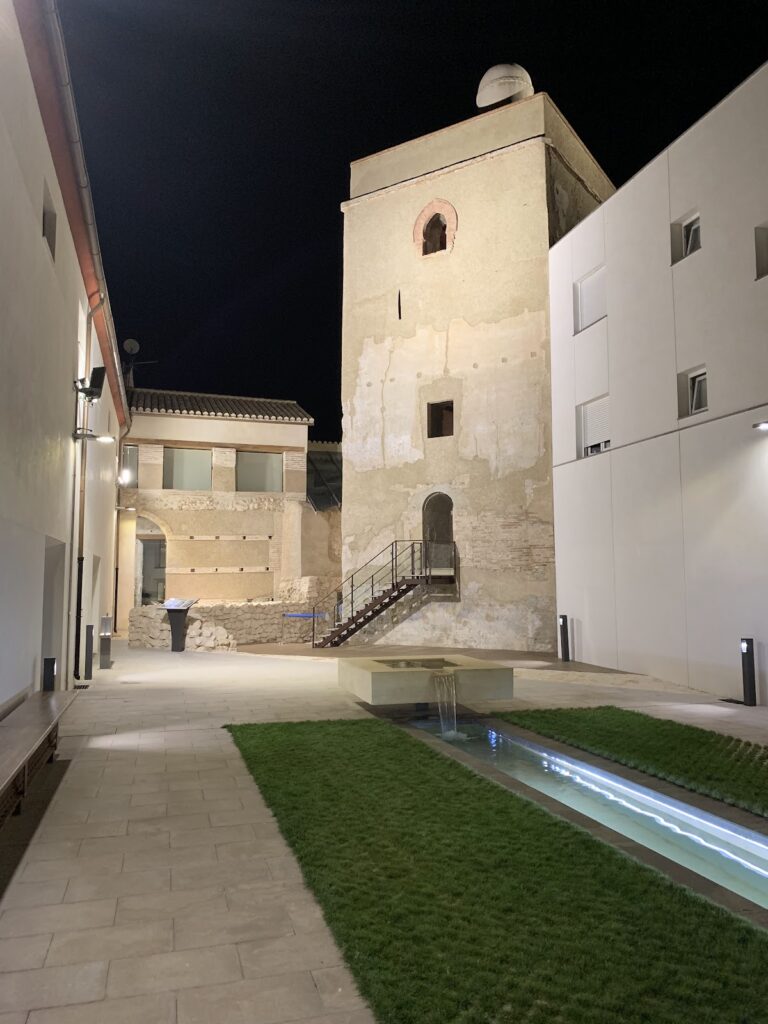
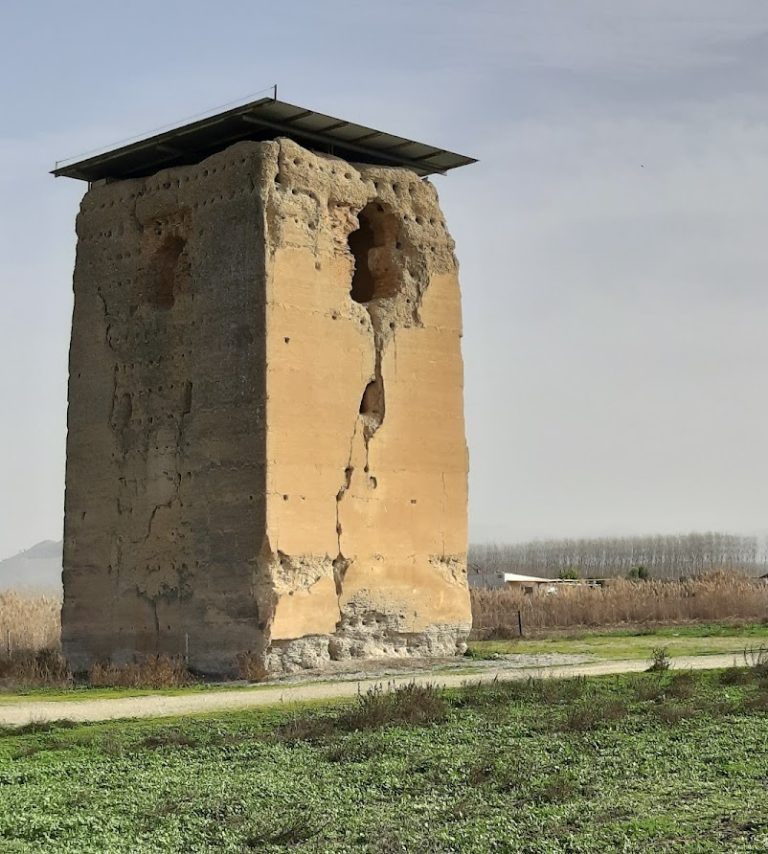
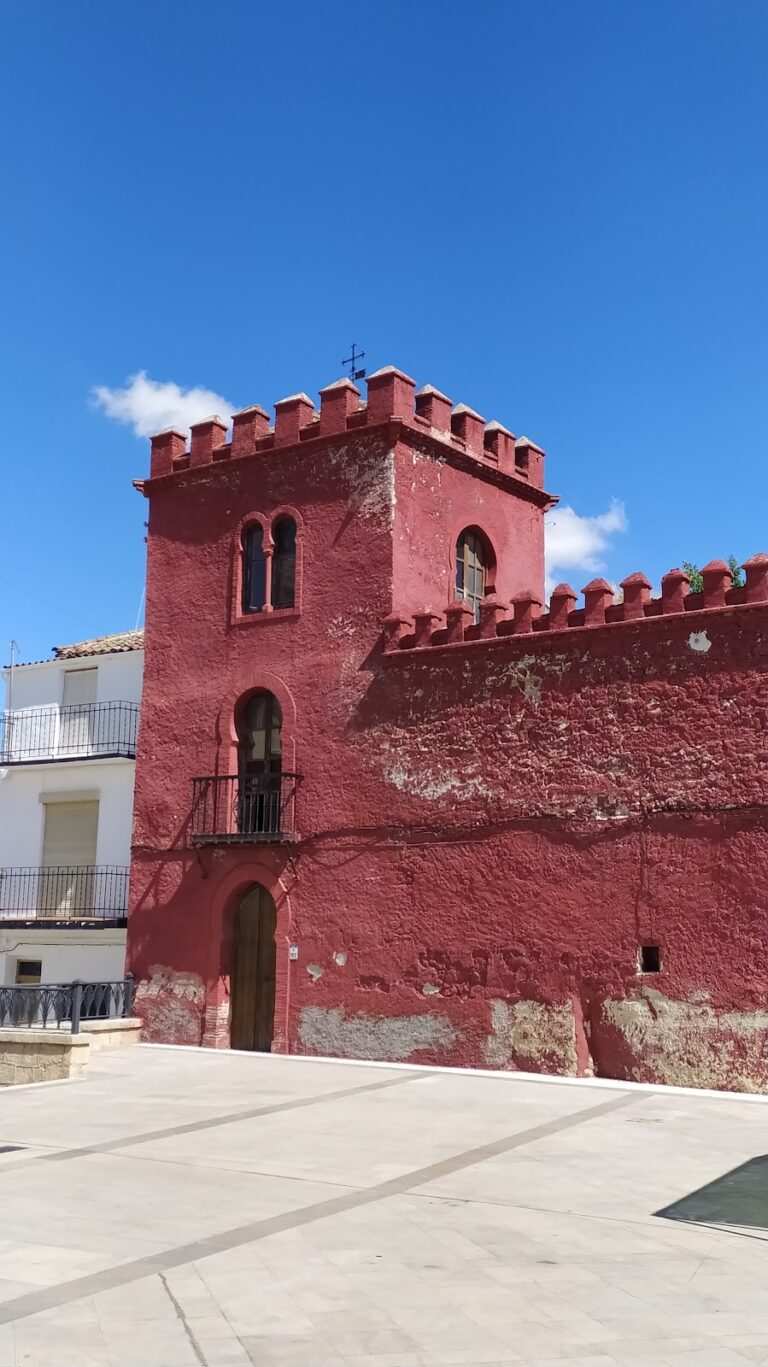
Possible fortress remains lie on the northern side of Las Torres. They consist of masonry walls bonded with local mortar, although their identification with the Fortress of Tájara remains provisional. The site stood opposite a ford of the Genil and at the junction of routes linking Loja with Granada and Alhama with Montefrío, relationships that help explain the fortress’s defensive and strategic function.
Archaeological materials
Archaeological survey recovered ceramics from the Almohad and Nasrid periods. The Almohads were a North African dynasty that ruled parts of the Iberian Peninsula during the twelfth and early thirteenth centuries, while the Nasrids governed the Kingdom of Granada until 1492. The finds include glazed ataifores, Islamic serving dishes or bowls, with honey-colored or green finishes; cooking pots with honey-colored glaze; small jars decorated in green-and-manganese ware; and glazed alcadafes, large earthenware or wooden basins. These materials place activity at Tájara within the medieval Islamic phases associated with the settlement and fortress.
Nearby sites