Castillo de San Pedro de la Roca: A Spanish Colonial Fortress in Cuba
Site at a Glance
- Rating
- 4.6
- Popularity
- Low
- Country
- Cuba
- Primary era
- Early Modern
- Eras represented
- Early Modern
- Civilizations
- Spanish
- Site type
- Military
- Remains
- Fort
On this page11 sections
History
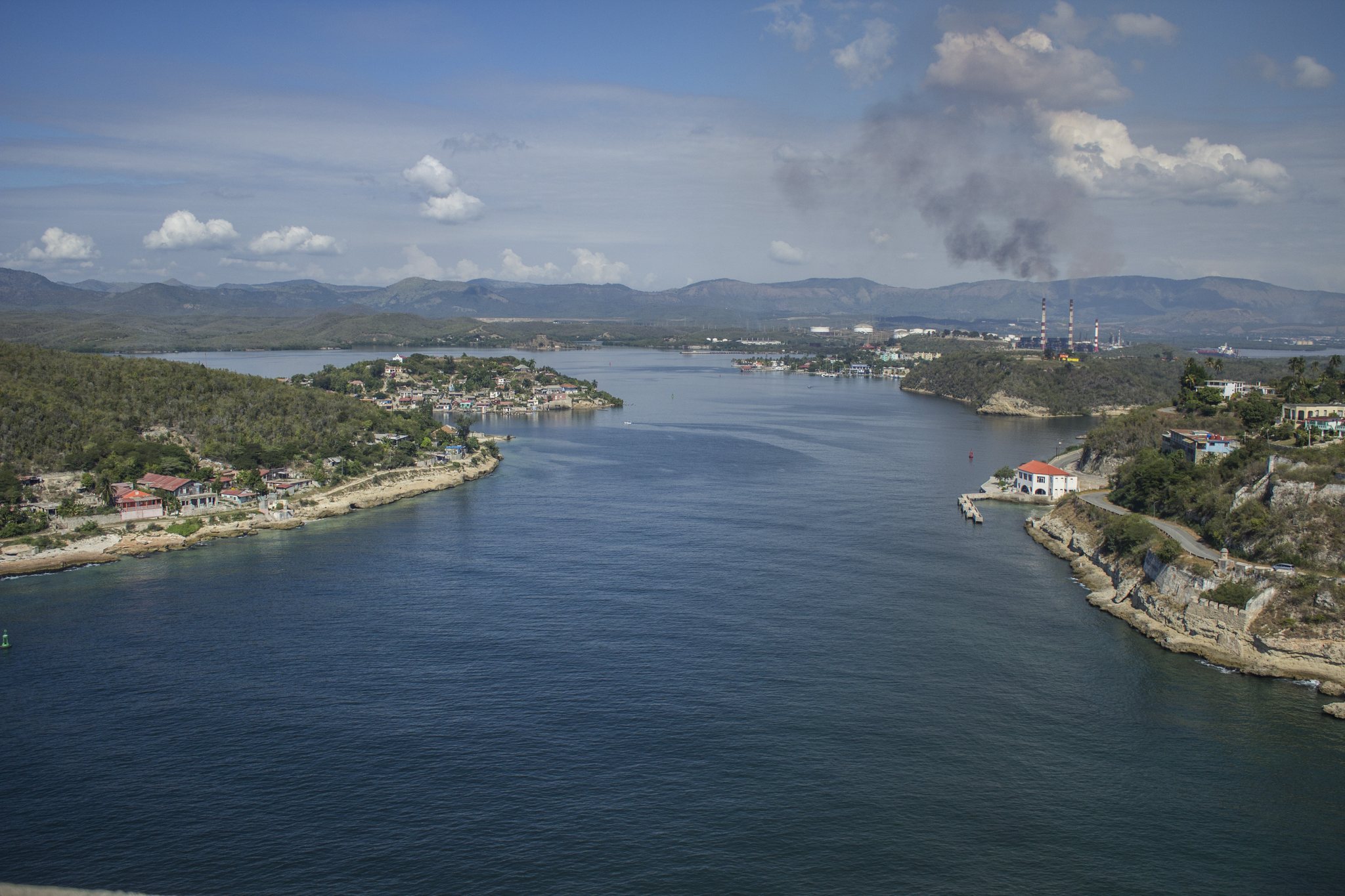
Castillo de San Pedro de la Roca is a Spanish colonial fortress in Cuba, overlooking the bay at Santiago de Cuba. Designed in 1637 under the military engineer Giovanni Battista Antonelli, it was intended to protect the city and harbor from pirate attacks and replace an earlier fortification built between 1590 and 1610. Construction began in 1638 and continued intermittently through the seventeenth century, creating a major defensive complex on the coast.
Foundation and seventeenth-century defenses
Antonelli designed the fortress for Pedro de la Roca y Borja, the governor of Santiago de Cuba, and remained associated with the project until leaving in 1645. Parts of the earlier fortification were incorporated into the new works. The completion date is uncertain, with construction described as continuing until about 1670 or 1700.
In 1662, English freebooters led by Christopher Myngs captured Santiago de Cuba for two weeks. They damaged part of the unfinished fortress and seized its artillery. The Spanish government ordered reconstruction and increased the garrison to 300 men. Between 1663 and 1669, Juan Císcara Ibáñez, Juan Císcara Ramirez, and Francisco Perez repaired the damage, strengthened the flanks, and added an artillery platform. The fortress resisted a French squadron in 1678 and an attack by 800 men led by Franquesma in 1680.
Earthquake repairs and military changes
Earthquakes damaged the fortress between 1675 and 1692. Francisco Perez directed reconstruction from 1693 to 1695, while engineer Antonio de Arredondo enlarged the citadel and completed unfinished platforms in 1738–1740. Further earthquake damage between 1757 and 1766 led Juan Martín Cermeño and Francisco Calderín to make additional changes.
As the pirate threat declined, the sections known as the Rock and the Star were converted into a prison for political prisoners in 1775. The remainder continued to function as a military base. The fortress was used again during the Spanish–American War, the 1898 conflict between Spain and the United States, when the United States fleet attacked Santiago de Cuba.
Restoration and heritage recognition
During the twentieth century, the fortress fell into disrepair. It was restored in the 1960s under Francisco Prat Puig and became a museum in 1978. Cuba recognized it as an official national monument in 1979. In 1997, it was inscribed on the UNESCO World Heritage List as an exceptionally well-preserved and complete example of Spanish-American colonial military architecture. Its museum interpretation also presents the history of piracy.
Remains
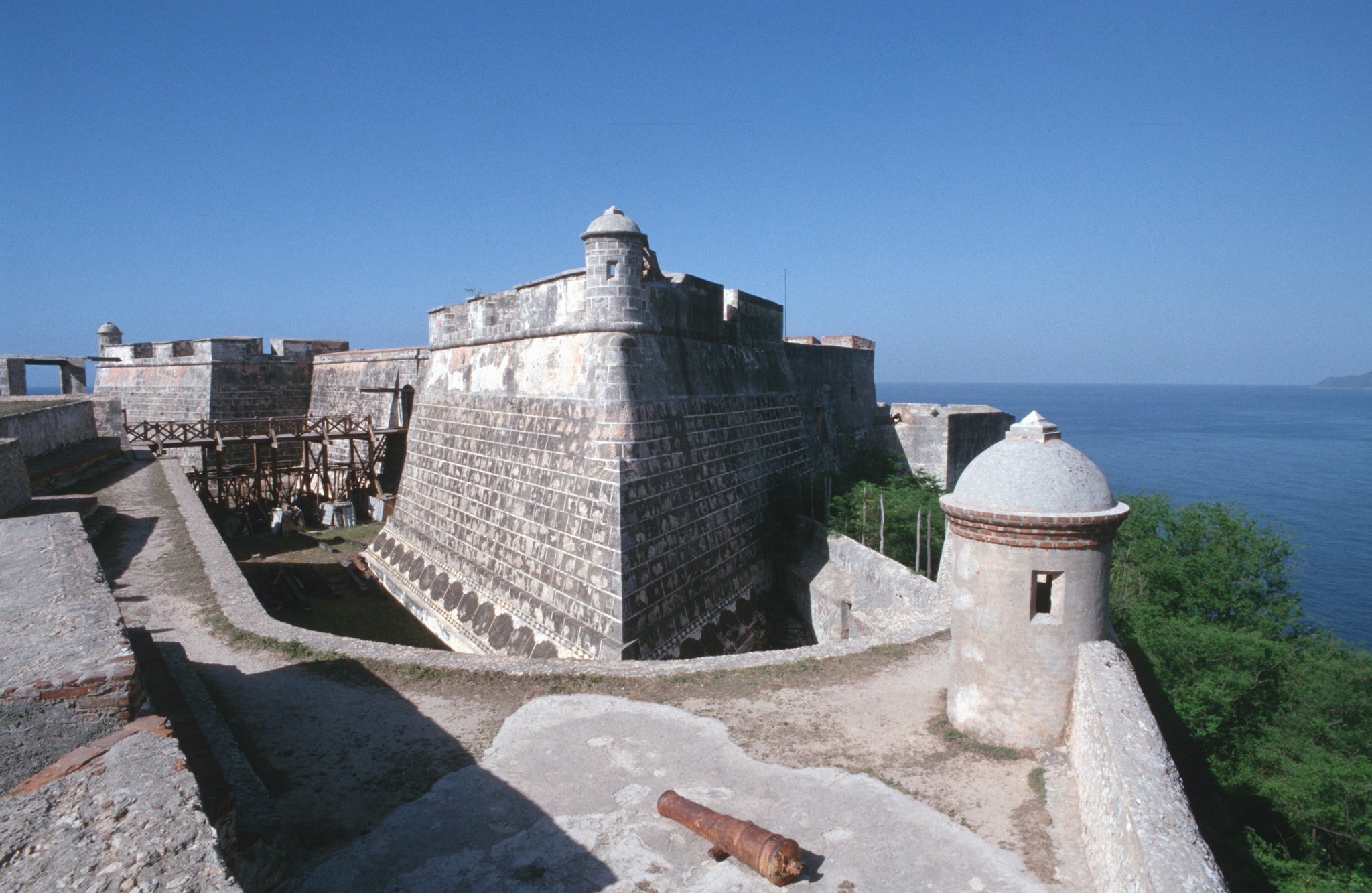
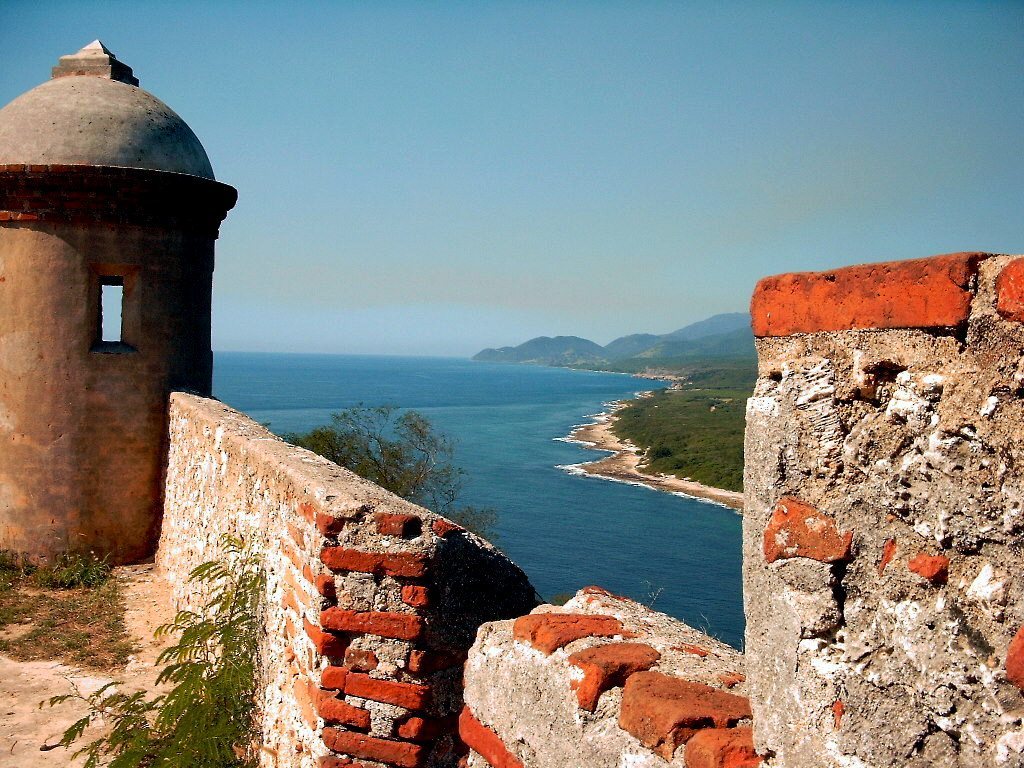
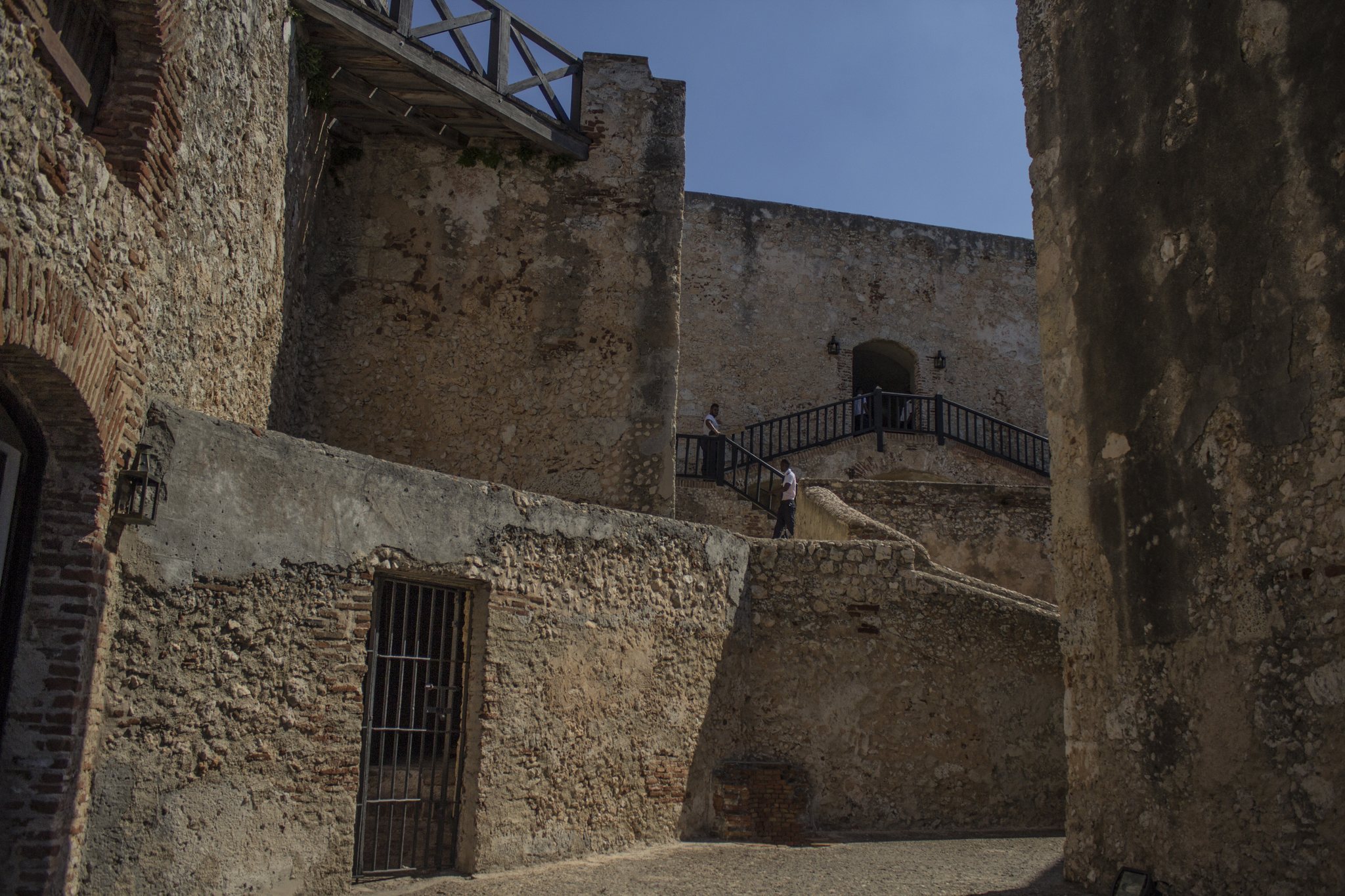
Castillo de San Pedro de la Roca occupies the steep sides of a rocky promontory projecting into the bay. This type of headland is known as a morro. The fortress is arranged as a series of terraces on four principal levels, with three major bulwarks, or projecting artillery platforms that allowed defenders to cover nearby walls and approaches.
Terraced fortress and supply areas
Citadel and warehouse
The uppermost level contained the citadel. Supplies reached the fortress by sea or land and were carried upward or stored in a large warehouse cut directly into the rock. The steep terrain and terraced arrangement shaped the fortress’s organization and linked its defensive levels to the bay below.
Bulwarks and artillery platforms
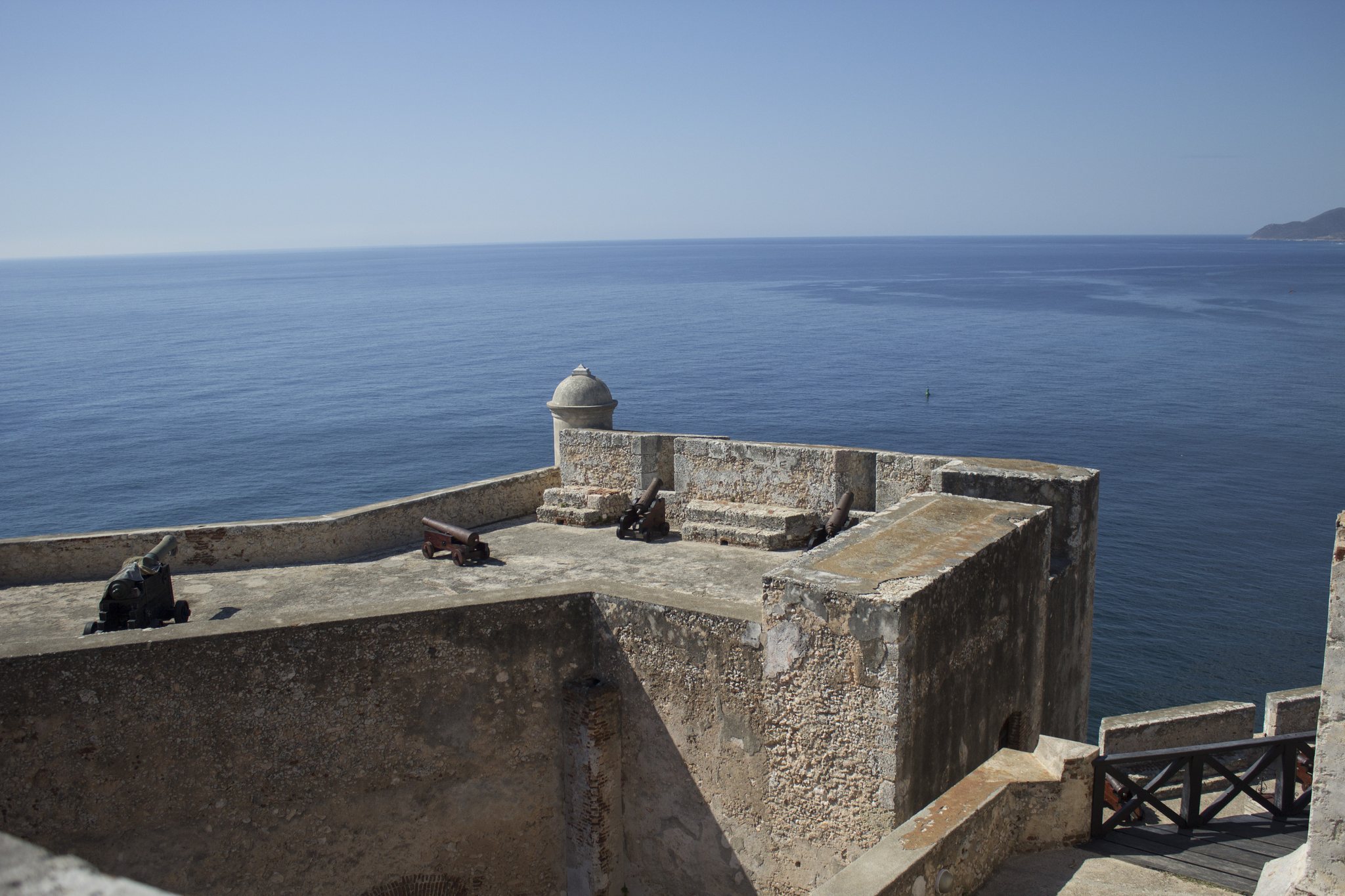
The fortress includes three principal bulwarks, strengthened flanks, and a later artillery platform. Eighteenth-century enlargement works extended the citadel and completed platforms that had remained unfinished during earlier construction. These additions formed part of the fortress’s successive adaptation to changing defensive needs.
Earlier works and adapted sections
Ravelin and battery
Elements of the defensive works built between 1590 and 1610 survive within the later complex. They included a ravelin, an outer defensive work positioned beyond the main walls, and a battery for artillery. Their incorporation connected the earlier defenses with the expanded fortress constructed from 1638 onward.
The Rock and the Star
The Rock and the Star were identifiable sections of the fortress. In 1775, both were adapted as prison facilities for political prisoners, while other parts of the complex retained their military function.