Castillo de los Duques de Alba: A Medieval Castle-Palace in Spain

Site at a Glance
- Rating
- 4.4
- Popularity
- Medium
- Country
- Spain
- Primary era
- Early Modern
- External website
- Open
- Eras represented
- Medieval, Early Modern
- Civilizations
- Crown of Castile, Kingdom of León, Spanish
- Site type
- Military
- Remains
- Castle
On this page12 sections
History
Castillo de los Duques de Alba is a medieval castle-palace in Alba de Tormes, Spain, whose origins reach back to the twelfth century. Ferdinand II of León ordered a simple watchtower on elevated ground overlooking the Tormes River, and Sancho IV of Castile converted it into a castle in the thirteenth century. The site later became the principal ancestral residence of the House of Alba, a major Spanish aristocratic lineage whose titles and estates included Alba de Tormes.
Early Fortifications and the Lords of Alba
Before the present castle was built, Alba de Tormes possessed an earlier fortified residence known as an alcázar. Beatriz of Portugal, Countess of Arundel, reportedly lived there. Sections of the town wall and the street called Descent to the Alcázar preserve the memory of that earlier stronghold. The earlier residence has sometimes been confused with the later Castle of the Dukes of Alba, although the expression “castle of Alba” first appears in a document signed by John II of Navarre in 1426.
Gutierre Álvarez de Toledo, regarded as the first lord of Alba de Tormes, ordered a new fortress at the highest point of the town for use as his residence. In 1448, John II of Castile held the castle for nine years. Henry IV of Castile later transferred it to García Álvarez de Toledo y Carrillo de Toledo, who became the second count and the first Duke of Alba of Tormes. García rebuilt the fortress and changed it into a private palace.
Renaissance Palace of the Alba Family
During the rule of Fernando Álvarez de Toledo y Pimentel, the third Duke of Alba, the complex was developed into a Renaissance palace. A watchtower was added, and the interiors were richly furnished with marble, paintings, and tapestries. Construction was completed in the sixteenth century, after which the palace served as a residence of the Alba family.
Fernando Álvarez de Toledo was a Spanish military commander and imperial nobleman who played a prominent role in the Battle of Mühlberg. The palace’s frescoes later commemorated that 1547 conflict, fought between the forces of Charles V and Protestant members of the Schmalkaldic League. Charles V was both king of Spain, as Charles I, and Holy Roman Emperor.
The palace was also a setting for theatrical and literary activity. Juan del Encina’s Villancico de la toma de Granada was performed there between 1492 and 1500. Lope de Vega stayed at the palace from 1591, after the fifth Duke of Alba, Antonio Álvarez de Toledo y Beaumont, supported him following his exile from the court. In 1614, during celebrations for the beatification of Teresa of Jesus, the dukes opened the palace to Carmelite religious. A literary prize was awarded to Miguel de Cervantes for a poem dedicated to Teresa.
Pedro Calderón de la Barca lived at the palace from 1646 to 1649, serving as secretary to the sixth Duke of Alba, Fernando Álvarez de Toledo y Mendoza. This period followed the closure of Madrid’s theatres. Calderón wrote works including El secreto a voces, Guárdate del agua mansa, La segunda esposa, and El jardín de Falerina, regarded here as the first zarzuela.
War, Destruction, and Decline
The castle was devastated during conflicts in the reign of Henry IV of Castile and again during the Revolt of the Comuneros, an early sixteenth-century uprising against royal and political authority in Castile. It later suffered damage attributed to the Lisbon earthquake of 1755, particularly in the form of cracks in its walls.
French troops occupied the castle in 1809 during the Napoleonic Wars. After withdrawing following their defeat at the Battle of Salamanca, they reoccupied it after Spanish resistance between 14 and 24 November 1812. During their retreat in 1813, French forces dismantled the castle. Julián Sánchez, known as El Charro, then set it on fire as a defensive measure. A Spanish guerrilla leader associated with resistance to Napoleonic forces during the Peninsular War, he contributed to the destruction that left the castle in prolonged disuse and decline.
Restoration and Archaeological Interpretation
Restoration of the surviving tower and the paintings in the Armoury Hall began in 1960 on the initiative of Luis Martínez de Irujo, eighteenth Duke Consort of Alba. Archaeological excavations begun in the second half of 1991 uncovered buried foundations and other remains of the castle-palace. They clarified its successive construction phases and supported the restoration and adaptation of the site for public visitation.
The remains received generic state protection under the 1949 decree that protected Spanish castles regardless of their condition of ruin. The site now has the status of a Bien de Interés Cultural, or Property of Cultural Interest, and functions as an archaeological park and museum. In 1991, the House of Alba ceded the castle to the municipality for public and tourism-related use.
Remains
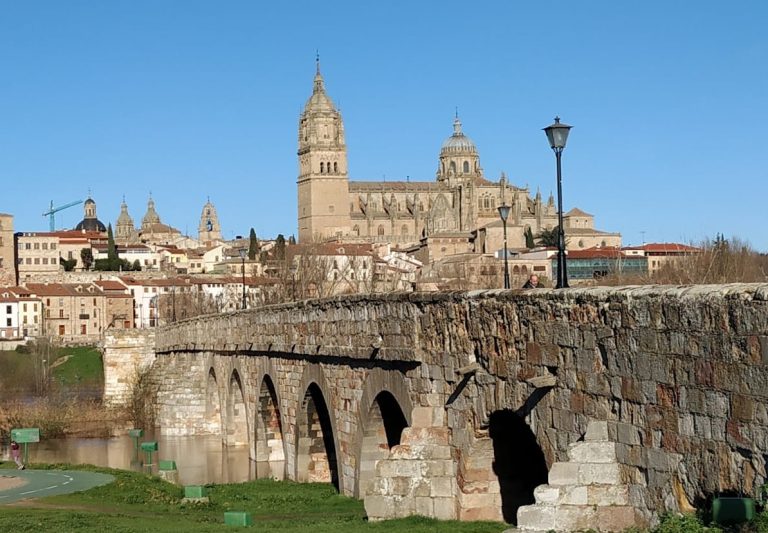
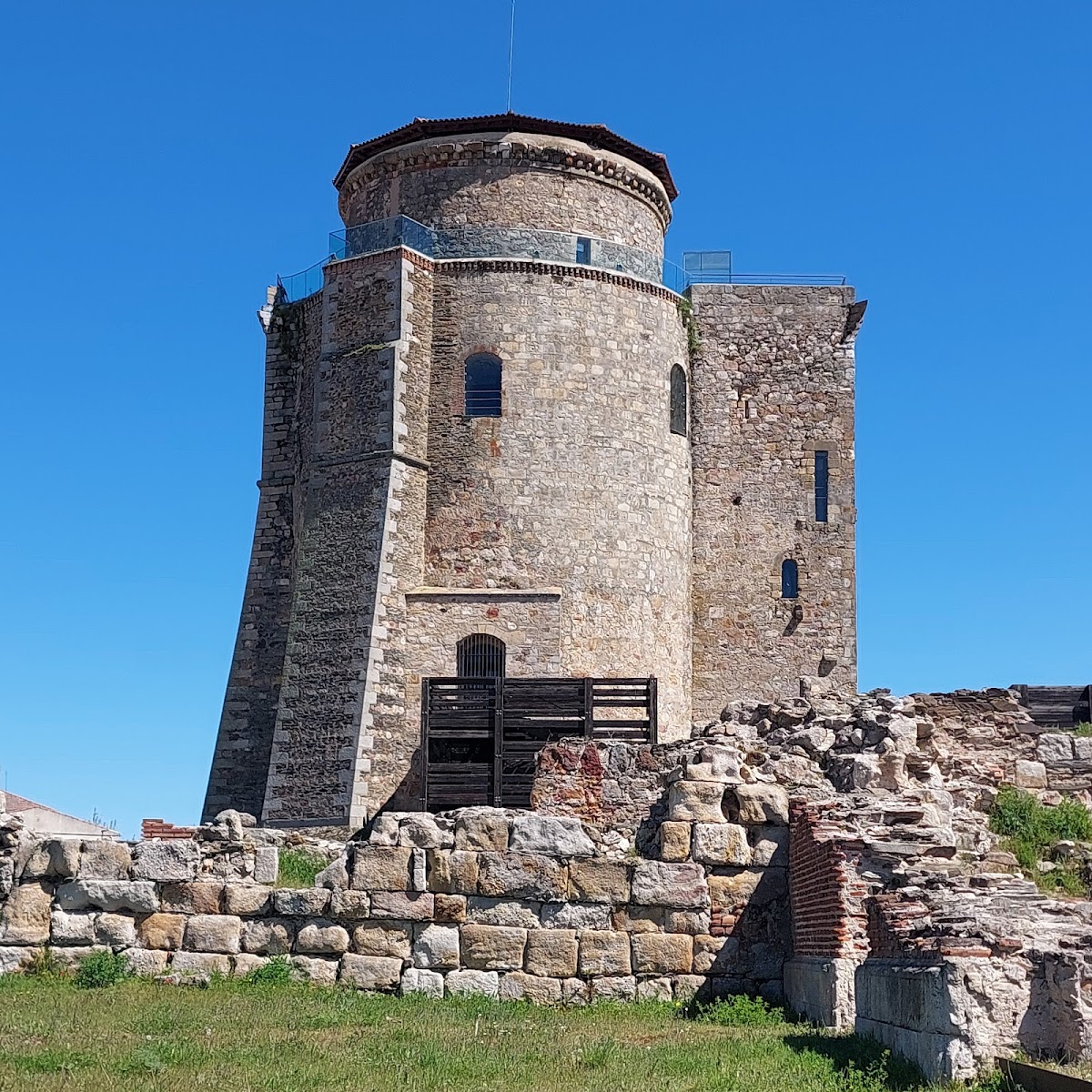
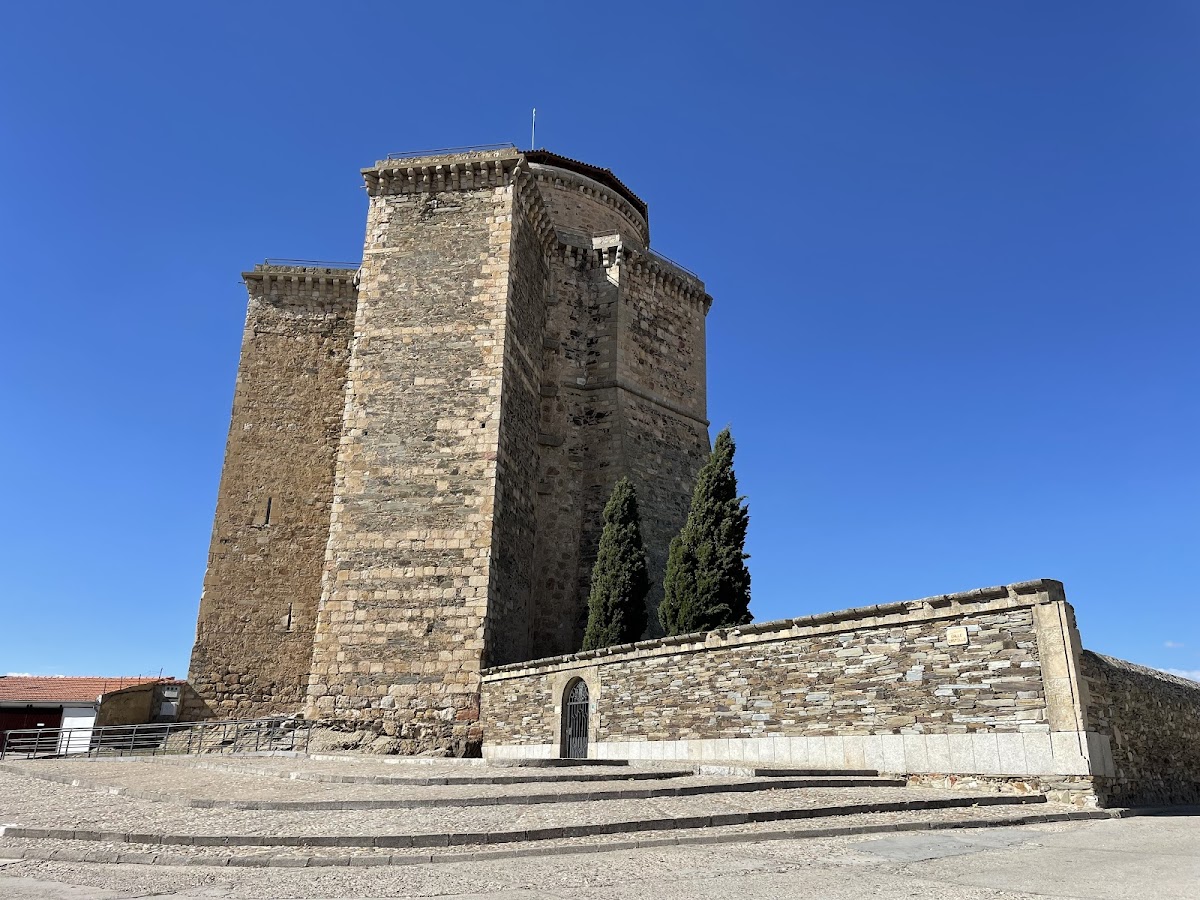
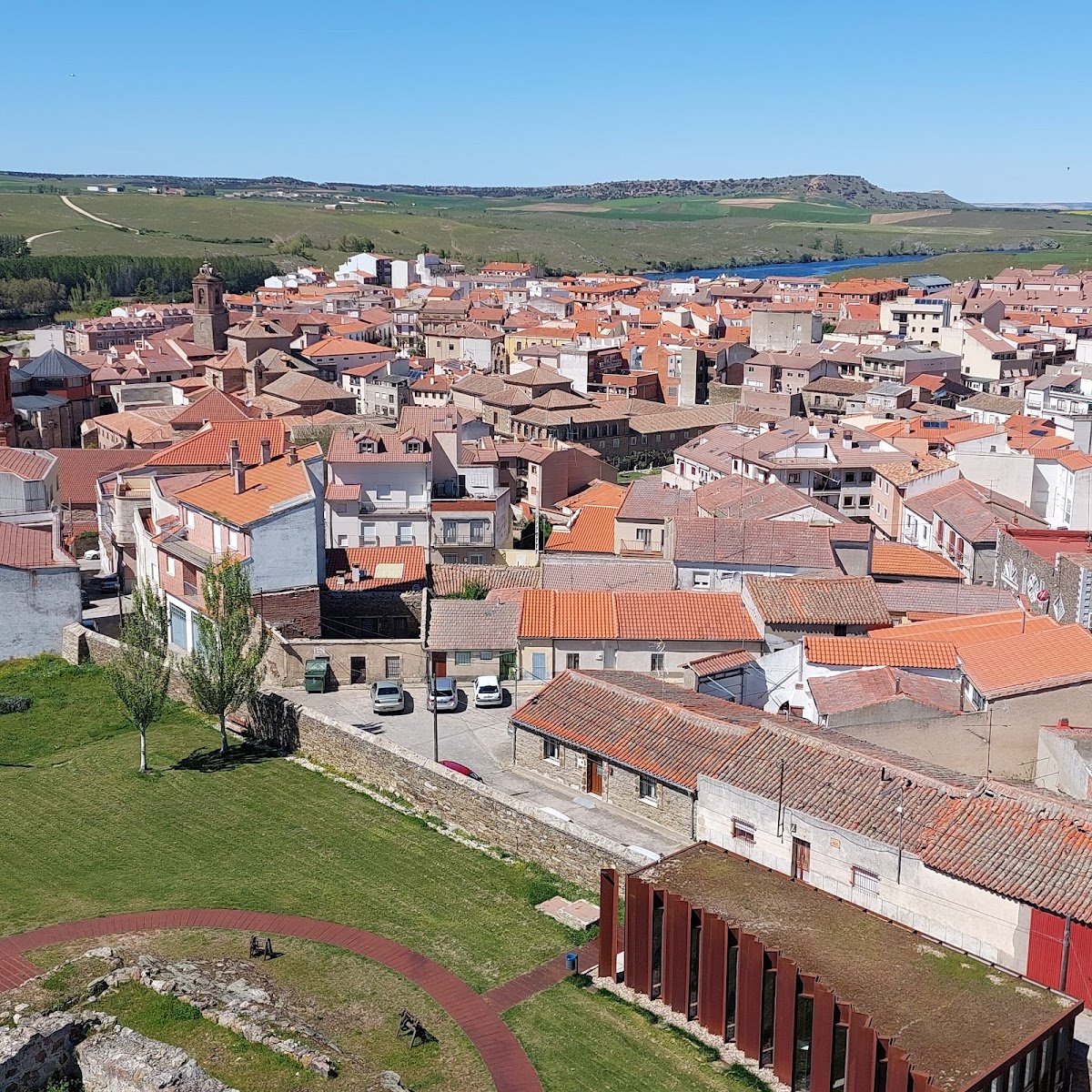
The castle-palace originally had six towers, but only the principal fortified tower survives above ground. Known as the Tower of Homage, the Keep, or the Armoury Tower, it contains four rooms and two independent entrances. Its exterior is austere, while the interiors reflect the rich decoration introduced when the medieval fortress was transformed into a Renaissance palace. Most of the remainder survives as excavated ruins beside the bridge over the Tormes River.
The Surviving Tower and Interior Rooms
Tower of Homage
An interior staircase rises to a viewing platform at the highest point of the Tower of Homage. From there, the surviving ruins, the town, and the banks of the Tormes River can be seen. Together, the tower and the bridge form a visual symbol of Alba de Tormes.
Armoury Hall
The former Armoury Hall was used by the dukes to store arms and trophies and now serves as a museum room. Archaeological objects recovered during the excavations begun in 1991 include ceramics, coins, and fragments of busts. The room also contains a marble bust of the third Duke of Alba made by the Italian sculptor Pompeo Leoni, who was active in Spain during the sixteenth century.
Fresco Hall
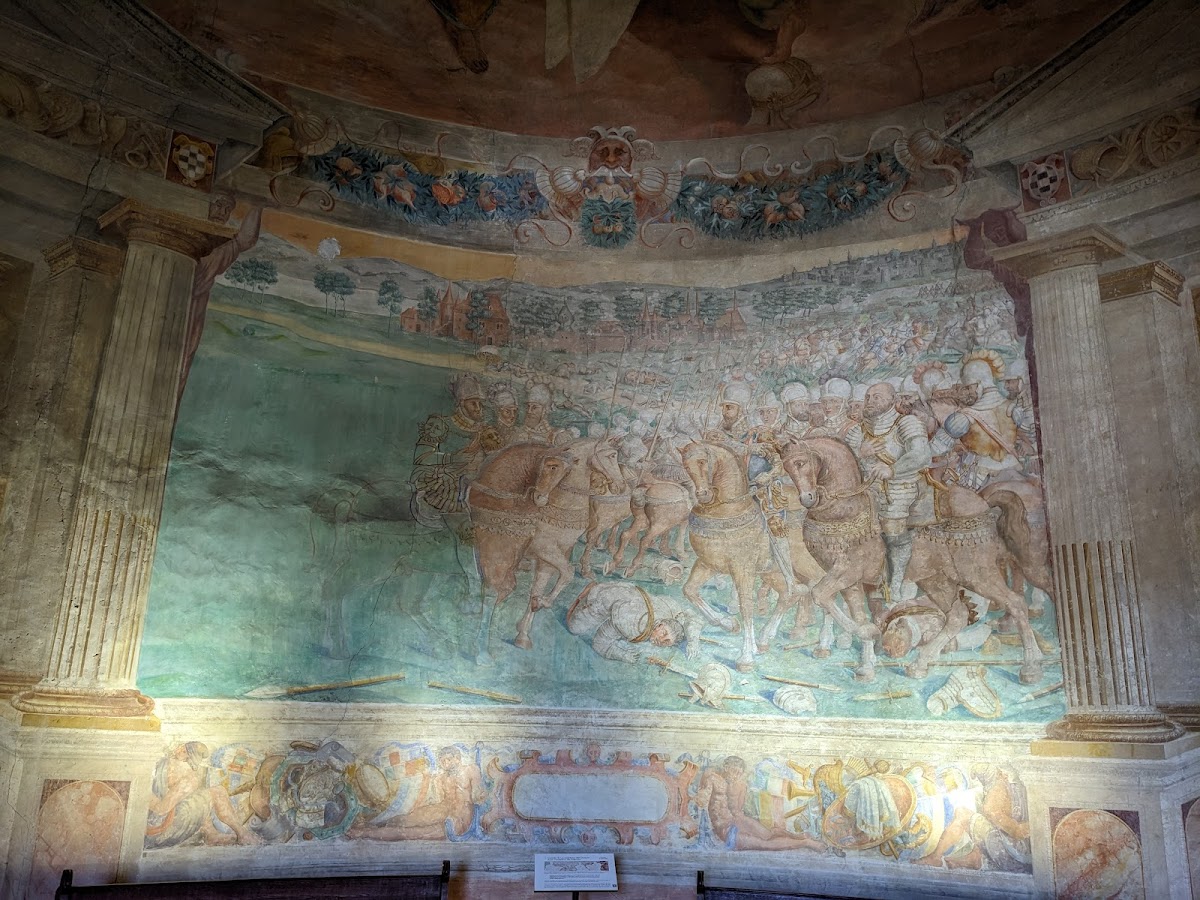
The Fresco Hall contains Renaissance historical paintings created by the Italian artist Cristóbal Passini between 1567 and 1571, with assistance from Miguel Ruiz de Carvajal and possibly Passini’s brother Juan Bautista. Successive layers of whitewash had concealed the paintings until they were found during twentieth-century restoration. Their rediscovery was assisted by Patrocinio Gómez Barrado, a tower keeper employed by the House of Alba during the 1950s.
The fresco cycle presents three episodes from the Battle of Mühlberg. One scene shows the third Duke of Alba’s Spanish infantry formations, or tercios, crossing the Elbe and entering Mühlberg. Fernando Álvarez de Toledo, Antonio de Toledo, imperial cavalry, Spanish arquebusiers, Charles V and his army, a miller, and a rural crucifix struck by an arquebus shot appear in the composition. Some of the arquebusiers are shown removing their armour and swimming across the river.
A second scene depicts Fernando Álvarez de Toledo attacking Protestant forces with a lance, followed by Antonio de Toledo and the duke’s son Hernando. Charles V and his entourage appear in the background, while a soldier carrying a banner with the Virgin points to the conflict’s Catholic and Protestant dimensions. In the third scene, the defeated Duke of Saxony is presented to Charles V by the Duke of Alba. The duke of Saxony places one hand on his chest and appears with his head uncovered as signs of humiliation. Torgau Castle and Wittenberg form part of the background, although a section of this scene has been lost.
Allegorical figures occupy the vault and other parts of the room, with the Álvarez de Toledo family coat of arms at the centre of the vault. The hall also had a cultural function, since it was used for theatrical performances including Juan del Encina’s Villancico de la toma de Granada.
Exhibition Room
A separate Exhibition Room houses Castles and Walls in Western Castile and León, an exhibition devoted to the history of castles in the region.
Excavated Palace Layout
The archaeological project begun in 1991 exposed as much of the castle-palace’s final occupied layout as possible. The visible remains include the perimeter of that final phase, the former parade courtyard, and an aljibe, a cistern or underground reservoir used to collect and store rainwater. These excavated elements establish the relationship between the surviving tower and the buried parts of the palace complex.