Castello di Montefiore: A Medieval and Renaissance Fortress in Italy
Site at a Glance
- Rating
- 4.3
- Popularity
- Very Low
- Country
- Italy
- Primary era
- Medieval
- External website
- Open
- Eras represented
- Medieval
- Civilizations
- Papal States
- Site type
- Military
- Remains
- Castle
On this page9 sections
History
Castello di Montefiore is a medieval and Renaissance military fortification in Italy, located at Montefiore near Recanati and begun in the late thirteenth century. It developed from a watchtower into a fortified complex connected with the Free Commune of Recanati and the Papal States.
A Frontier Settlement and Communal Castle
Around the tenth century, the site was known as Fundus Florie and lay on the frontier between the Lombards of the Duchy of Spoleto, a Lombard political territory, and the Byzantines of the Pentapolis, a Byzantine-administered region of central Italy. Recurrent conflict between these powers affected the area and helped give Montefiore a strategic setting.
At the end of the thirteenth century, the Free Commune of Recanati ordered the construction of a castle at Montefiore. The purpose was to contain the expansionist ambitions of Osimo, a longstanding enemy of Recanati. The central high tower probably served to detect danger and signal approaching attacks.
Fifteenth-Century Fortification
The castle was enlarged and strengthened throughout the fifteenth century. In 1429, the central keep was raised as a watchtower. In 1445, during the struggles between the pope and Francesco Sforza, an Italian condottiero and ruler, the defenses were reinforced against powerful lordships and mercenary commanders whose armies had become increasingly sophisticated.
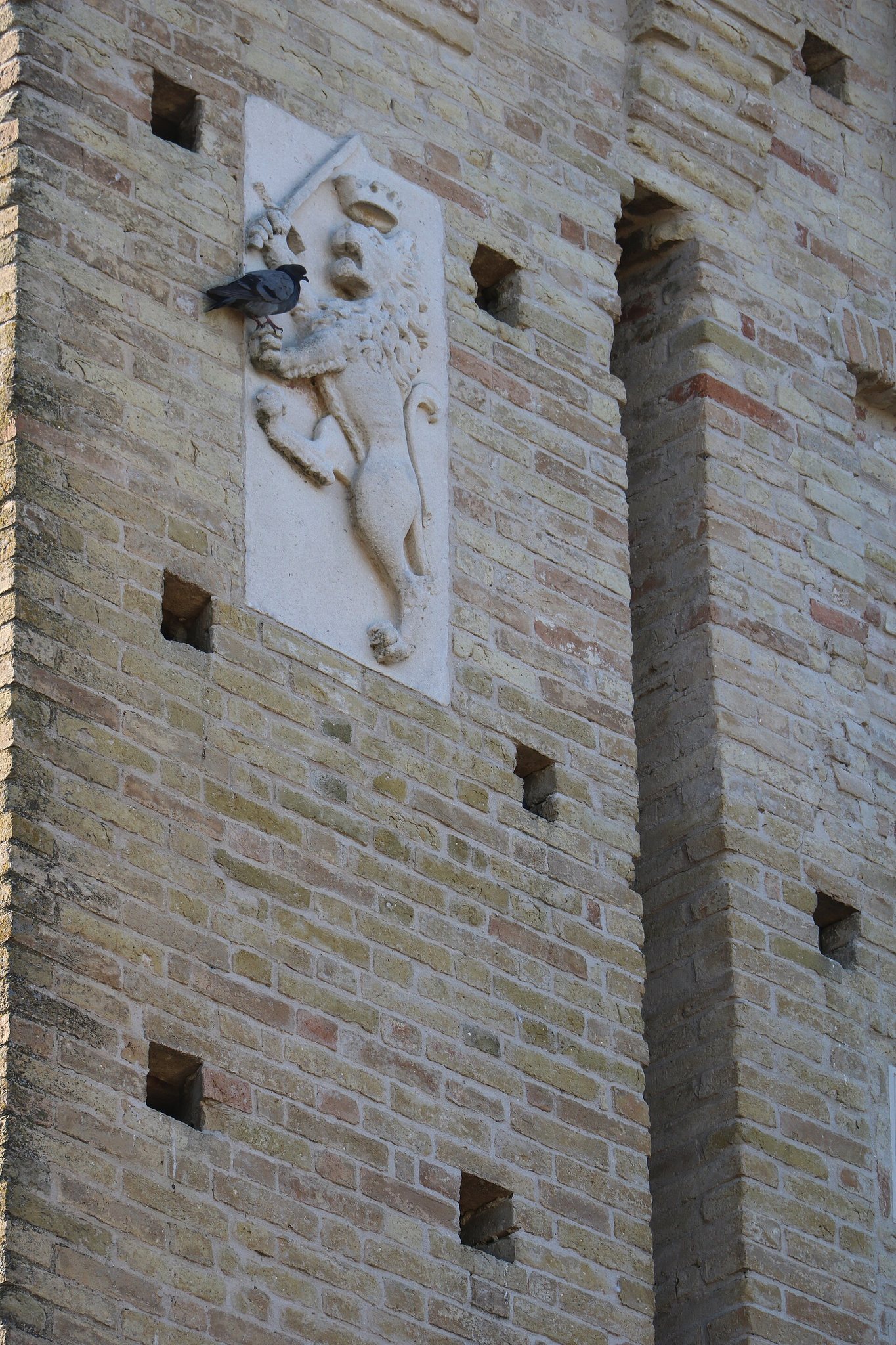
A stone plaque above the entrance to the keep records a wider intervention in 1467 by the duumvirs Antonio Politi and Tommaso Gabrielli. A duumvir was one of two officials who jointly held an office.
Major works began in 1486, when the papal governor of the March of Fermo established his headquarters at Montefiore while fighting Boccolino Guzzoni, the military leader who had seized Osimo. The Papal States were territories governed by the pope, and their governor combined territorial administration with military responsibility. The campaign strengthened the walls, rebuilt the keep, and added a ravelin, an angular detached defensive work placed before a fortification. These changes gave the complex a more complete defensive role and enabled it to resist firearms. Repairs were ordered in January 1492.
Decline, Damage, and Restoration
During the seventeenth century, Montefiore lost its leading military role and gradually changed from a fortress into a rural settlement. The complex suffered heavy damage during the Second World War and was restored in the following years. A major restoration campaign began in 2000, partly because of structural-stability problems. The castle is now owned by the Municipality of Recanati and is described as well preserved and restored.
Remains
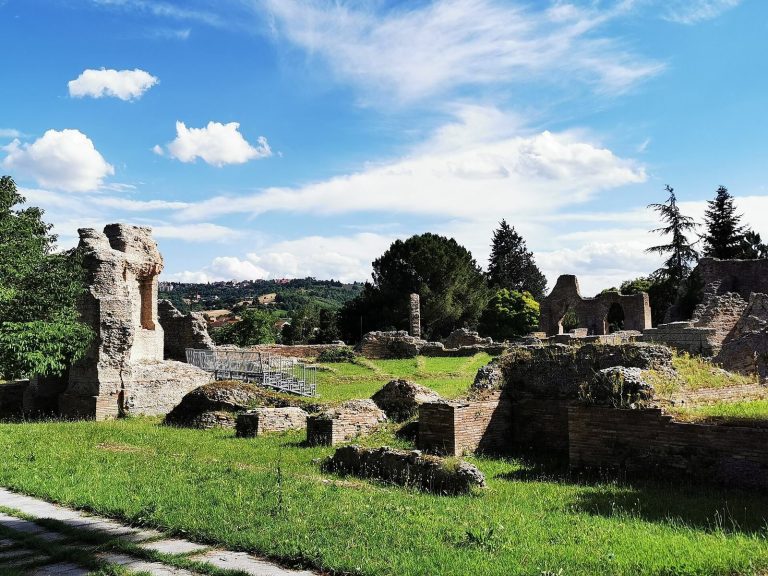
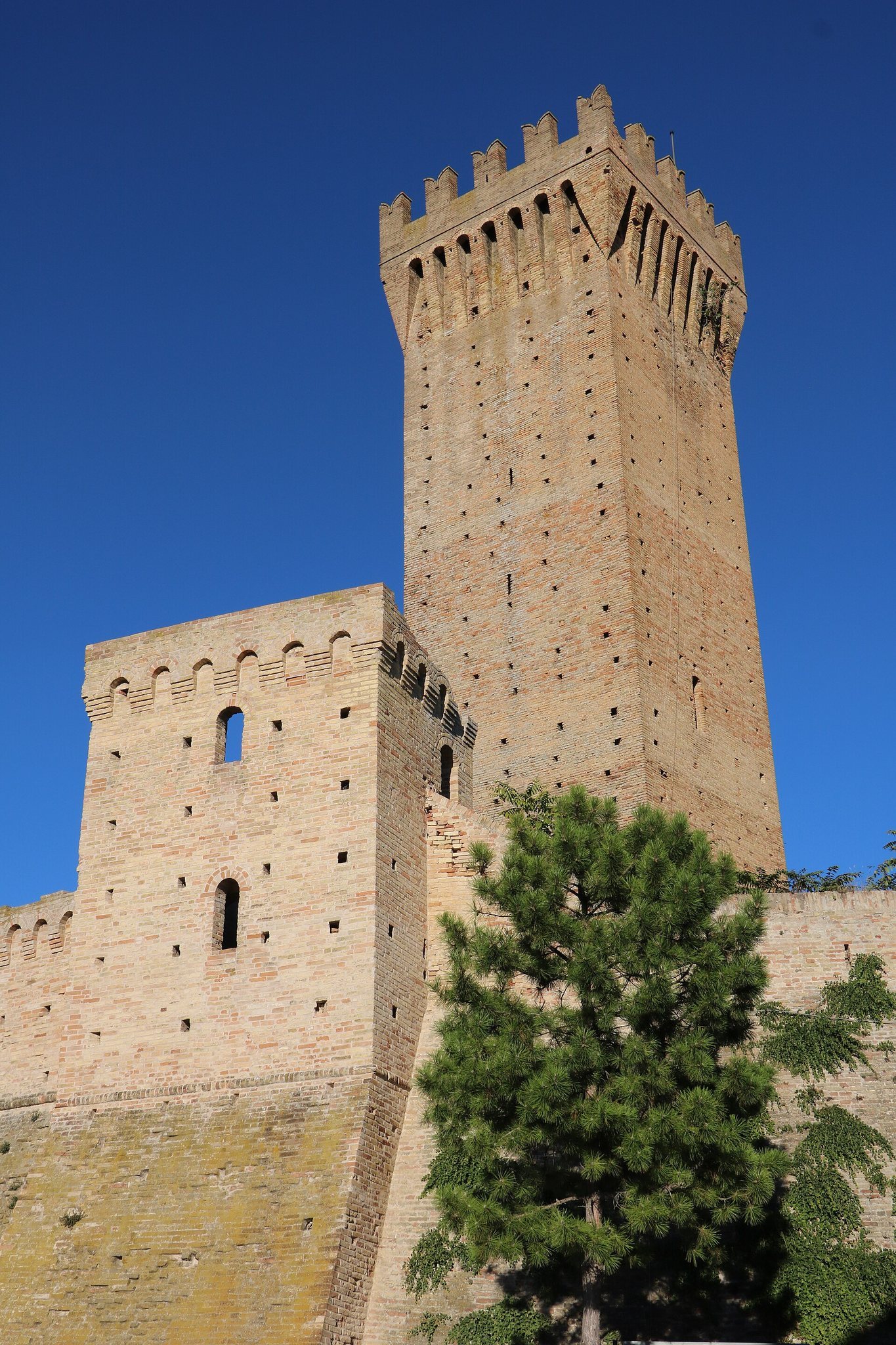
Castello di Montefiore occupies a hill overlooking the western parts of the Musone and Potenza valleys. Its elevated position makes it visible from Recanati, Osimo, and the surrounding countryside, with views extending toward the sea, Monte Conero, and the hill towns around it. The complex has a Renaissance character and was built primarily in brick.
Central Tower and Defensive Works
Central Keep
A tall keep stands at the centre of the castle. In its present reconstructed form, it rises 40 metres and preserves the tower that first served as a watchtower before becoming part of the final defensive system. Its entrance bears the stone plaque associated with the intervention of 1467.
Enclosure and Ravelin
The castle also contains a fortified enclosure whose walls were consolidated in the late fifteenth century. A ravelin was erected during the works of 1486, forming a detached angular outwork in front of the fortification and contributing to its resistance against firearms.
Historical Representation
Castello di Montefiore is represented in frescoes in the Council Chamber of Recanati’s municipal building. Matteo Tassi of Perugia executed these paintings in 1889.