Saint Roch Chapel: A Baroque Catholic Chapel in Machico, Portugal
Site at a Glance
- Popularity
- Very Low
- Country
- Portugal
- Primary era
- Early Modern
- Eras represented
- Early Modern
- Civilizations
- Portuguese
- Site type
- Religious
- Remains
- Chapel
On this page10 sections
History
Origins and rebuilding
Saint Roch Chapel, a Catholic place of worship in Machico, eastern Madeira, Portugal, is an 18th-century building in the Baroque style, an artistic style prominent in Europe during the 17th and 18th centuries. Its history is linked to a traditional account of a plague epidemic on Madeira and the dedication of an earlier chapel to Saint Roch, venerated as a protector against plague.
Tradition holds that Captain Tristão Vaz Teixeira, a Portuguese captain associated with Madeira’s early settlement, ordered the predecessor built in 1489. The chapel was intended to give thanks for the end of an epidemic that had begun on Madeira the year before, and to fulfil a vow. At its inauguration, it was dedicated to Saint Roch.
After the older chapel became dilapidated, it was demolished and a replacement was built nearby between 1739 and 1751.
Later religious and civic uses
The chapel remains the destination for Machico’s annual São Roque festival, held on the first Sunday of September. It was also formerly a pilgrimage destination. After the Carnation Revolution of 1974, which ended Portugal’s authoritarian regime and was followed by the independence of its colonies, some Portuguese returnees were temporarily housed in Machico at the chapel. On 26 September 1940, it received Portugal’s Property of Public Interest designation, a heritage-protection status.
Remains
Plan and exterior
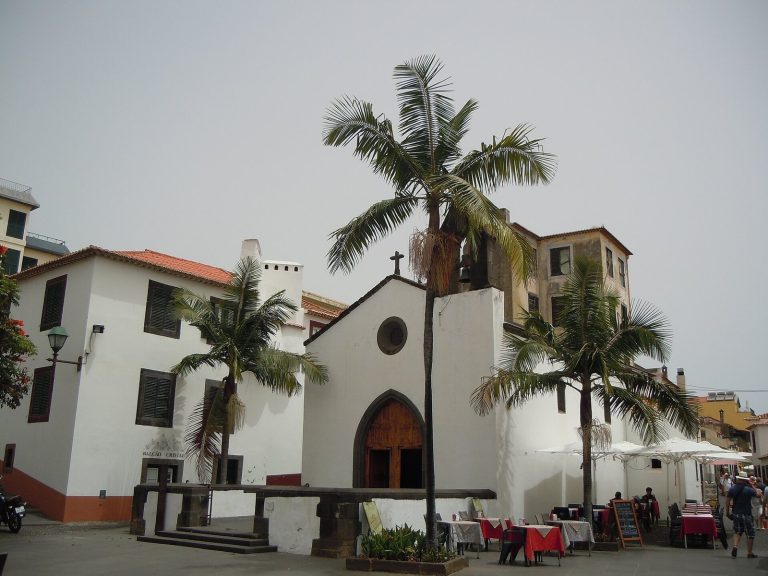
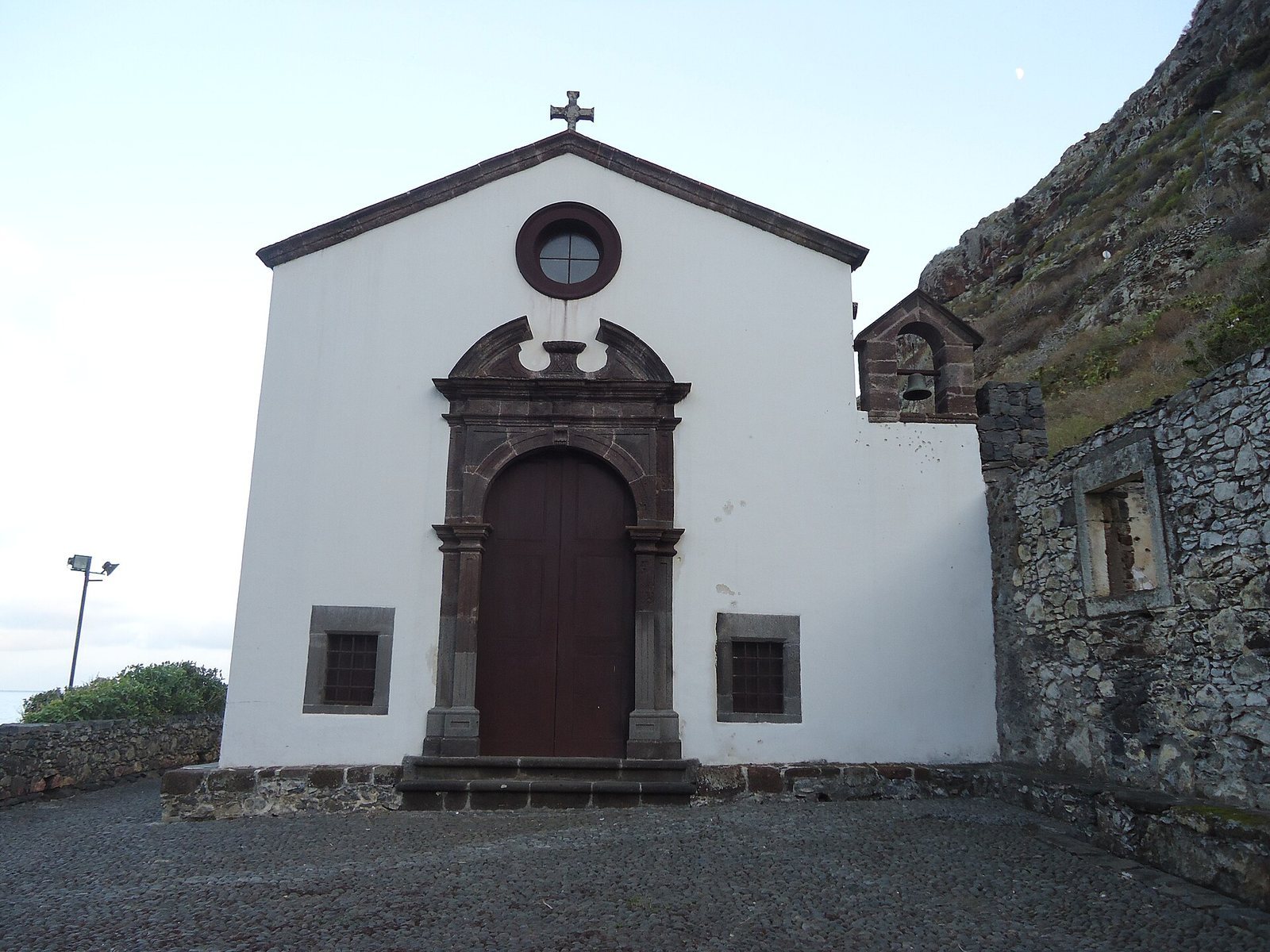
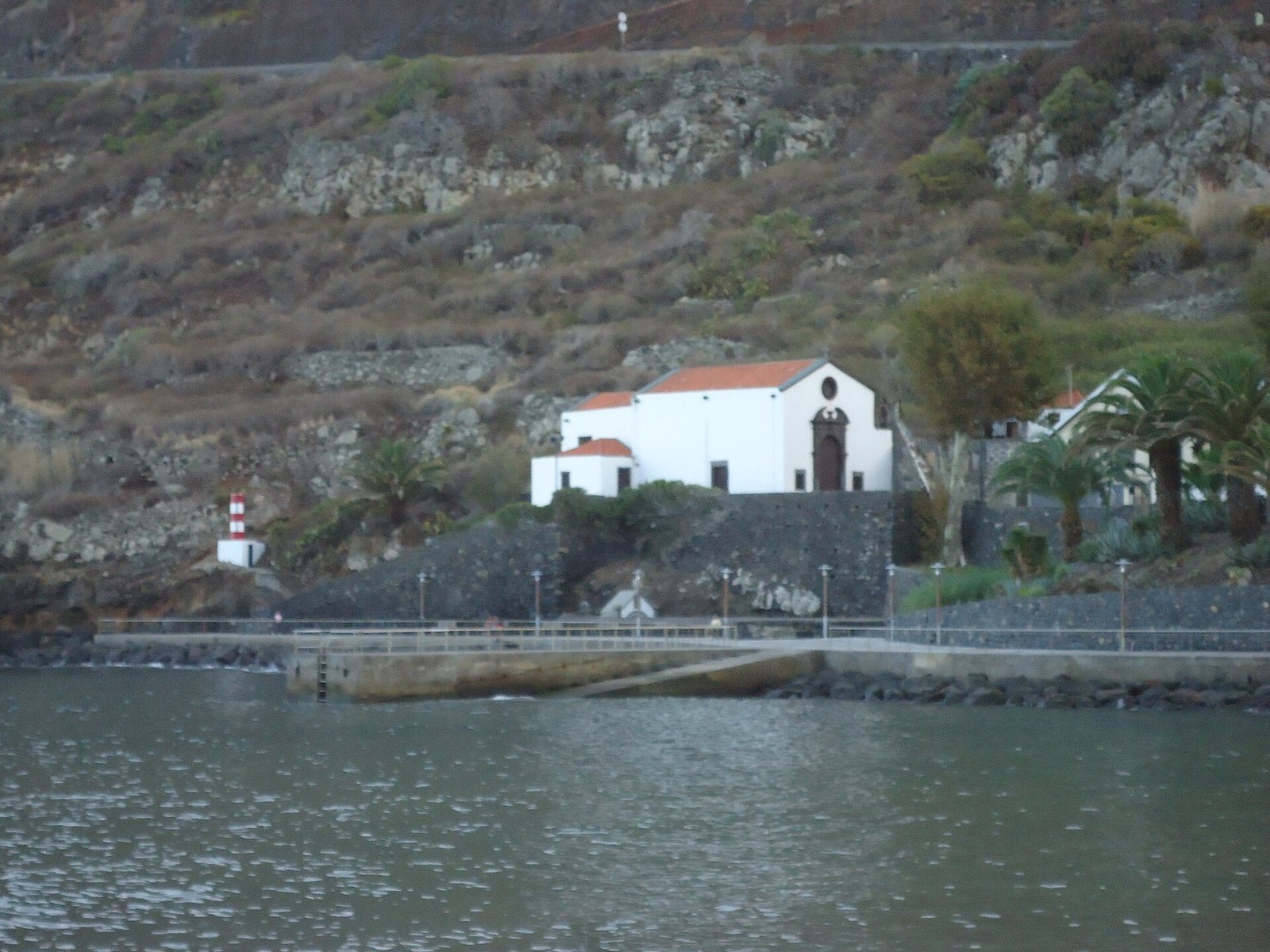
The chapel and its east-side sacristy, a room for storing worship vessels and vestments, have rectangular plans. The building stands at the western or southwestern edge of Machico, parallel to the rocky coast. Its choir faces south, while the entrance facade faces north toward the access road. The north facade is symmetrical, with a central double door between two windows. Shallow attached columns frame the doorway, beneath a curved top and a round window. A red masonry bench runs across the facade; on the uphill side, a structure holding a single bell interrupts its symmetry.
Interior decoration
Nave and choir gallery
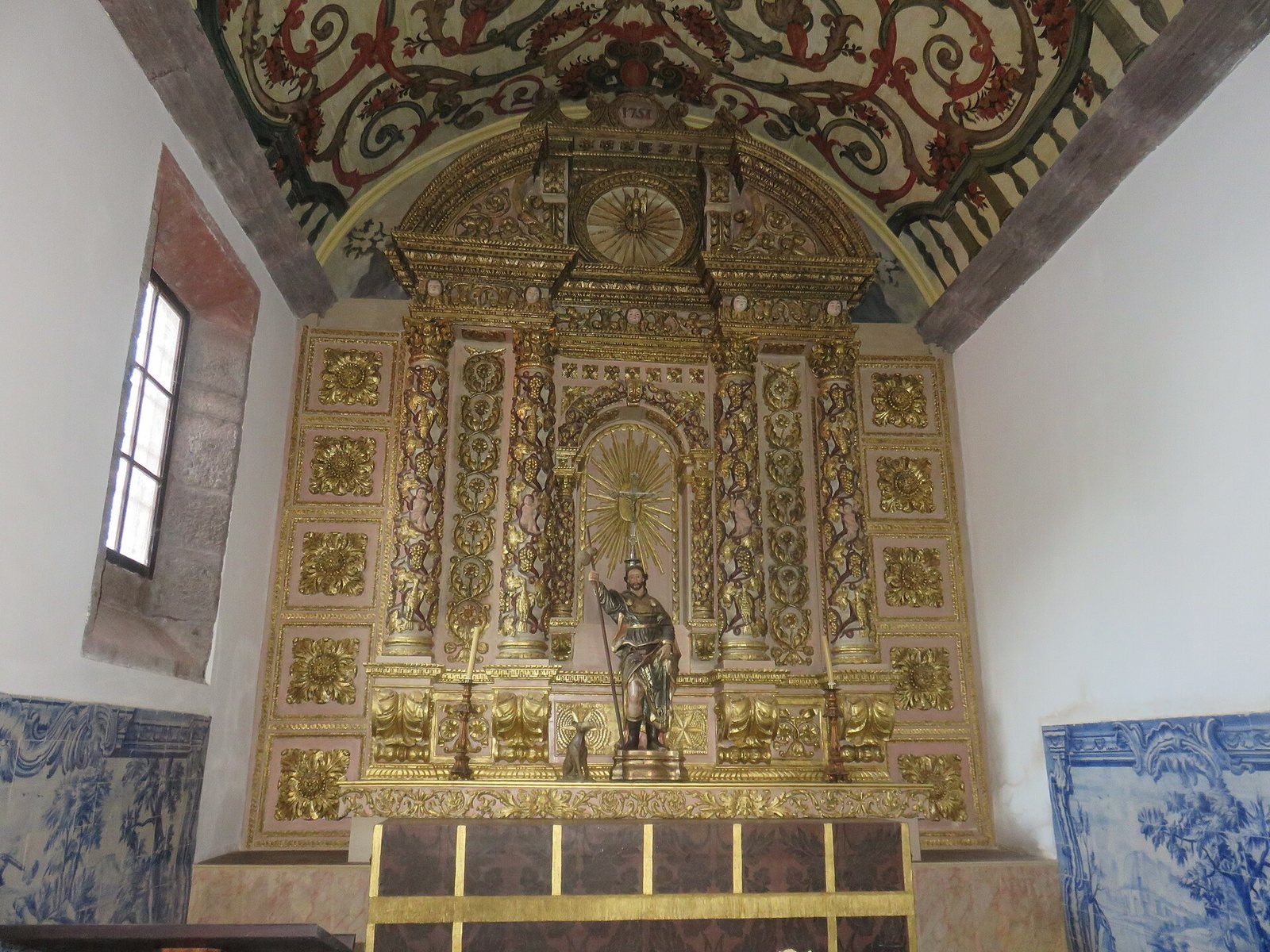
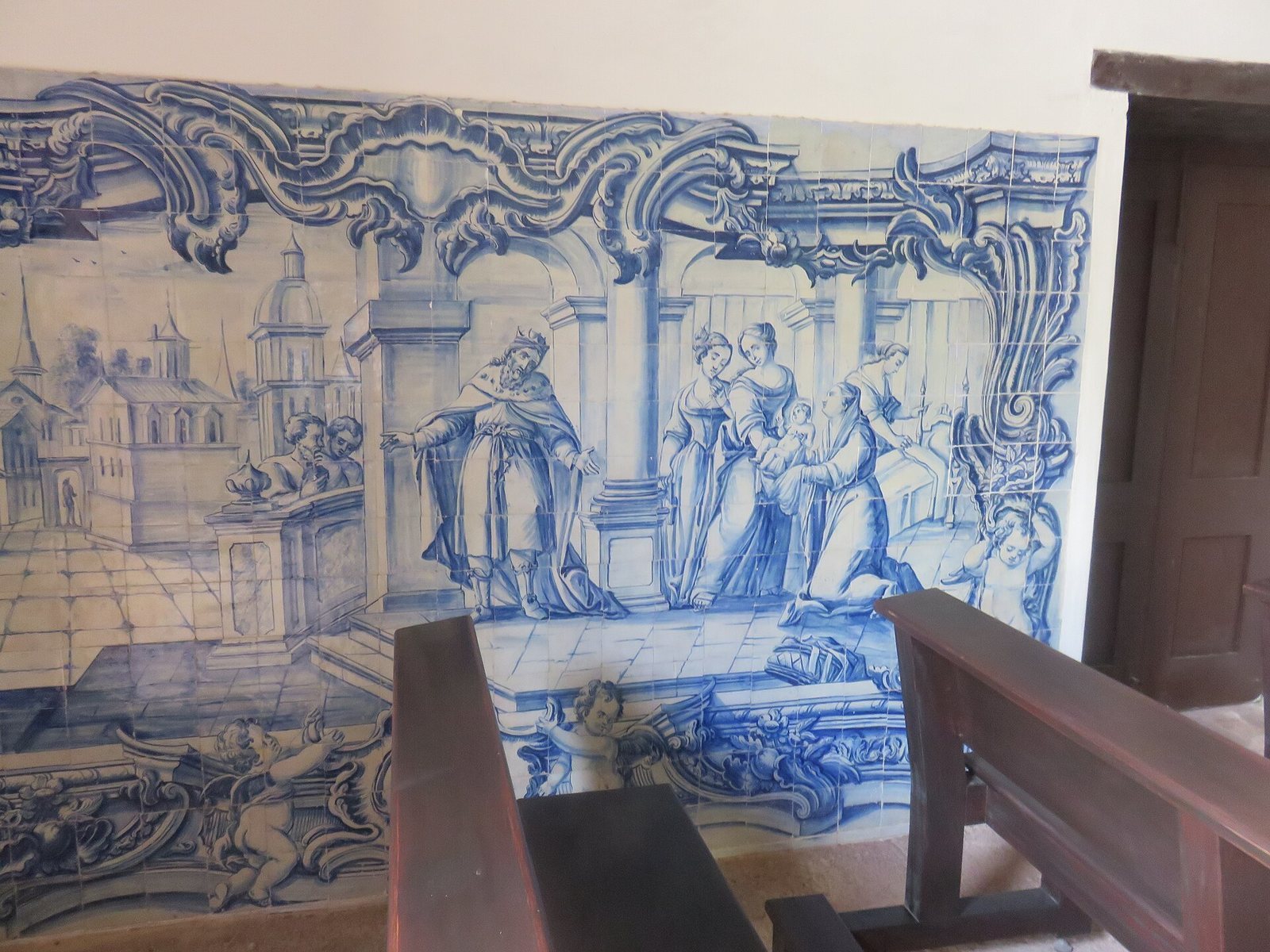
The nave, or main worship space, is lined with 18th-century glazed ceramic tiles showing episodes from the life of Saint Roch. Such tiles are unusually rare on Madeira. Above, an elevated wooden choir gallery rests on two square columns with bases. Its tunnel-shaped wooden ceiling is painted with flowing, interlaced patterns.
Altar area
The altar area contains a carved wooden structure dated to 1751 and painted in several colors. Its surface imitates fabric. The curved wooden ceiling above it has floral decoration and bears the inscription "ERIS IN PESTE PATRONUS" ("You shall be a protector during plague").
Sacristy
A fragment of a 17th-century Maçaroca, a type of glazed ceramic tile, remains on the sacristy wall.
Associated features
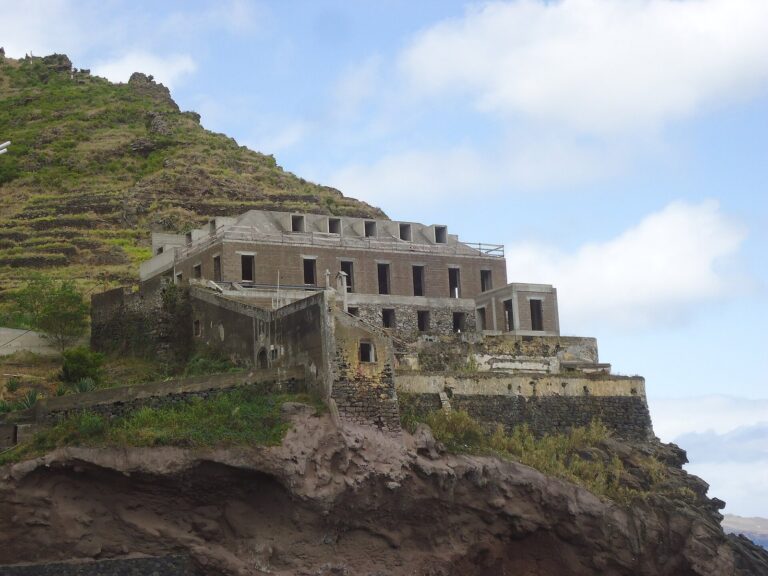
The former chapel ensemble also included a ship landing place, a hostel for pilgrims and a public fountain. The hostel survives as a ruin, while the fountain remains.