Canteen Kopje: An Open-Air Archaeological and Diamond-Mining Site
Site at a Glance
- Rating
- 4.1
- Popularity
- Very Low
- Country
- South Africa
- Primary era
- Stone Age
- Eras represented
- Stone Age, Iron Age, Modern
- Civilizations
- Unclassified
- Site type
- Economic
- Remains
- Mine
On this page9 sections
History
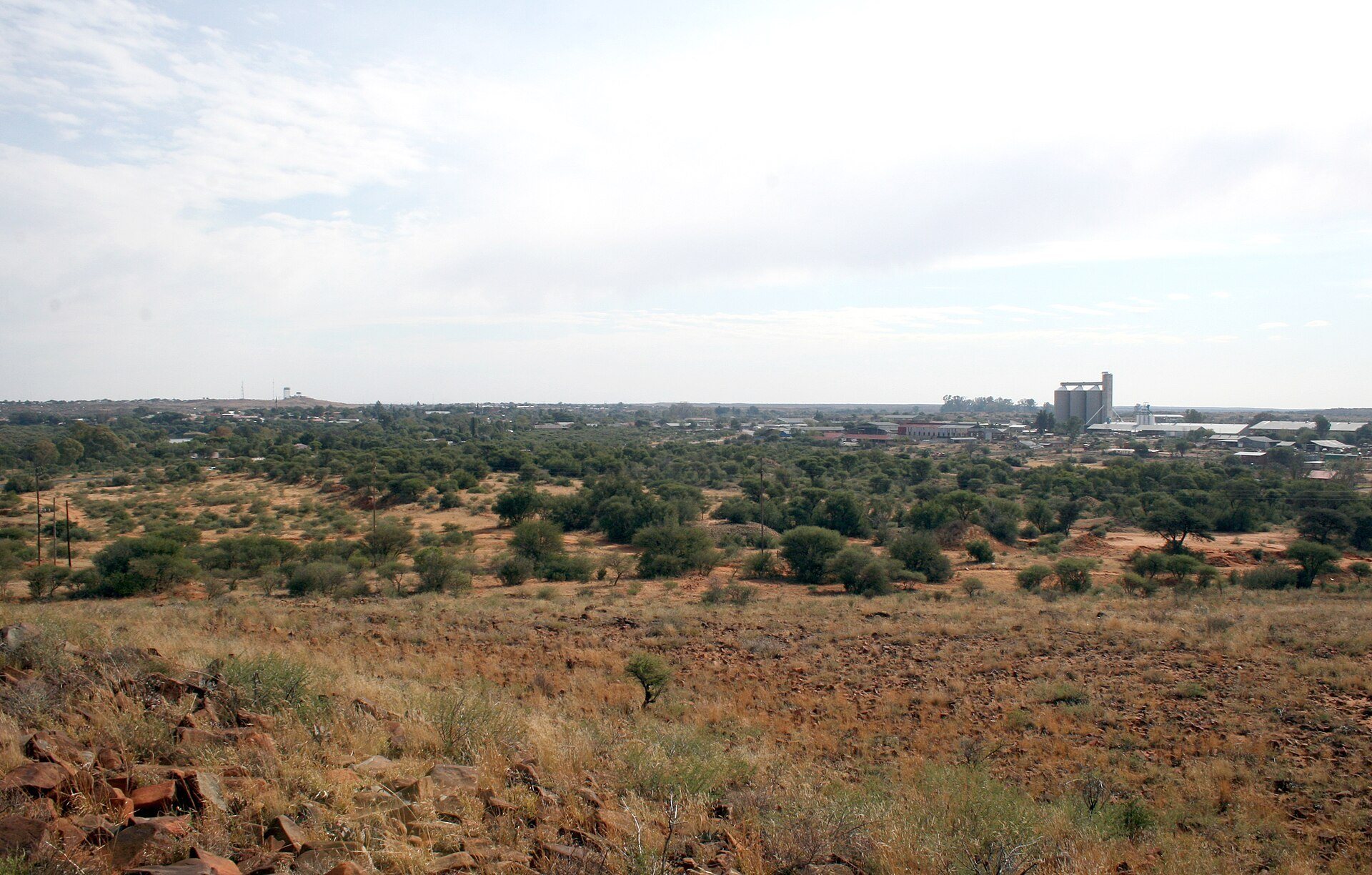
Canteen Kopje is an open-air archaeological site on R31 outside Barkly West in South Africa’s Northern Cape. Its deposits preserve an Earlier Stone Age sequence extending from approximately 1.7 million to more than 0.5 million years ago, alongside later prehistoric material and the remains of diamond mining. The place was formerly known as Klipdrift, a name derived from an earlier !Ora expression meaning “stony drift.”
Stone Age occupation
Canteen Kopje contains an exceptionally rich record of early stone-tool production. The upper part of its gravel sequence includes a Victoria West Acheulean horizon, a regional form of Acheulean technology characterized by shaped handaxes and related tools. Simpler and older Acheulean technology occurs lower in the sequence. Higher deposits contain Fauresmith material, associated with the transition between Earlier and Middle Stone Age technologies, followed by Middle Stone Age, Later Stone Age, and late Iron Age remains.
The site’s long archaeological sequence developed within river gravels and windblown sands. The Vaal River first cut down north of the site and later to its southwest, processes that helped shape the deposits containing stone artefacts. Current research has produced an unpublished basal date of approximately 2.3 million years, while the established Earlier Stone Age sequence is generally described as spanning approximately 1.7 million to more than 0.5 million years ago.
The diamond rush at Klipdrift
Canteen Kopje lies within the area where the first alluvial diamond diggings of the South African Diamond Fields began. One of the nearby hills became an early centre of diamond working and helped trigger the regional diamond rush in 1870. The diamonds had entered river gravels after kimberlite brought upward by volcanic pipes near Kimberley was broken down and transported by erosion.
Batlhaping Kgosi Jantjie Mothibi, a traditional chief, controlled the arrival of white diamond seekers for as long as possible. Prospectors could search with sharp sticks, but they were not allowed to disturb the ground with picks and shovels. By January 1870, diggers from KwaZulu-Natal were working at Klipdrift on the Old Koppie, upslope from Canteen Kopje. Their use of picks and shovels helped precipitate the diamond rush.
By the end of 1870, roughly 5,000 people were at Klipdrift. The diggers formed a Mutual Protection Association under Stafford Parker, renamed the settlement Parkerton, and proclaimed a Diggers’ Republic in July 1870. From 1873 the settlement was known as Barkly West. Mining continued at Canteen Kopje and in its surroundings until the early 1940s.
Mining and preservation
Diamond recovery depended on methods suited to the local gravels. Water-powered cradle sieves called Long Toms separated material, while Jerome Babe developed the Yankee Baby, a dry sifter that required less water. Later rotary washing machines separated heavy, diamond-bearing concentrates from lighter waste. Because the diamond-bearing gravels lay beneath silt and sand, early workings produced deep pits and vertical shafts.
Earlier Stone Age artefacts attracted attention during the first diamond workings. Colonel James Henry Bowker and Mary Elizabeth Barber recognized their importance, and Clarence Van Riet Lowe, Henri Breuil, and J. Desmond Clark later visited and described the site. Breuil visited in 1929 and again during the 1940s, emphasizing the quantity of archaeological material.
Mining history and the discovery of Acheulean artefacts led to the protection of approximately 9 hectares, also described as 10 morgen, in 1948. The site became a National Monument, a former South African heritage designation, and has been a provincial heritage site since 2000. Approval was given in 2017 for re-grading to national status.
Gideon Retief, Mining Commissioner of Barkly West from 1942 to 1951, helped preserve Canteen Kopje and establish its first open-air exhibit. Renewed mining in the 1990s nearly destroyed the site, but the local community, the former National Monuments Council, and the McGregor Museum supported its preservation. The site was subsequently developed as an open-air museum, while the Barkly West Museum was established during the same period.
Recent archaeological investigation
Peter Beaumont of the McGregor Museum excavated at Canteen Kopje in the late 1990s, and John McNabb of the University of Southampton analysed its Acheulean technology. Later work involved archaeologists from the University of the Witwatersrand and the University of Toronto, including the use of cosmogenic-nuclide burial dating, which estimates how long sediments have been shielded from cosmic radiation.
An excavation from 2007 to 2009 examined a 7-metre sequence of Hutton Sands and gravels for dating and detailed study of the stone-tool record. Students from Sol Plaatje University have investigated the late nineteenth-century contact-period archaeology, including material probably associated with interaction between local communities and colonial diamond diggers.
Renewed mining directly threatened the protected area in 2016. A permit had been issued for part of the site without a heritage permit from the South African Heritage Resources Agency. Mining began in March, and fencing blocked access to part of the area. The Northern Cape Division of the High Court issued an urgent interdict on 19 March 2016, which was made final on 19 April.
Remains
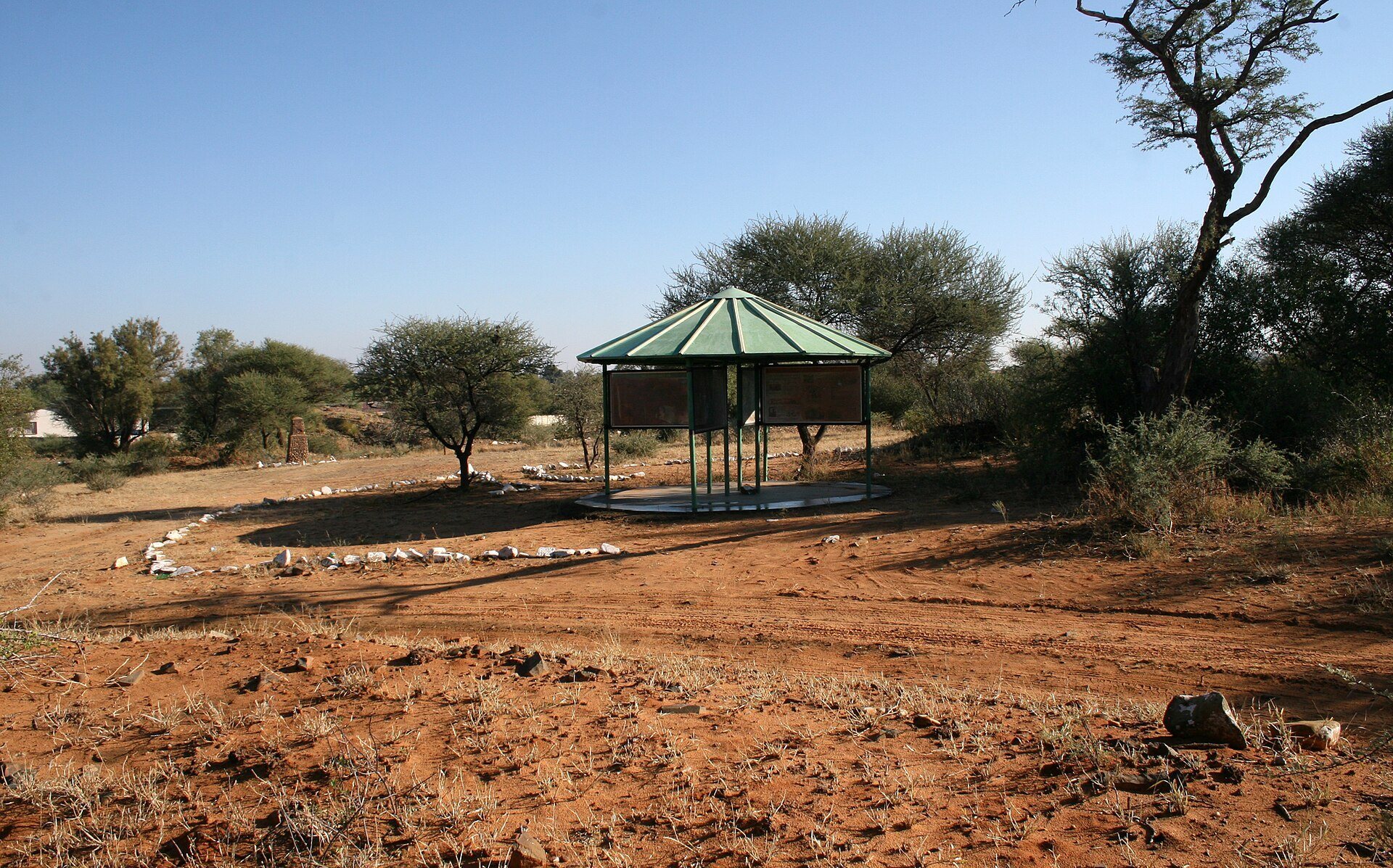
Canteen Kopje is organized around former diamond workings and the geological deposits that contain its archaeological sequence. Open pits, vertical shafts, excavation areas, exposed gravels, Hutton Sands, an adjacent hill, and the Vaal River together reveal how mining and river processes shaped the site. The preserved mining and archaeological areas are linked by a walking trail, with information panels installed in 2000 and refurbished in 2016.
Geological and archaeological deposits
Resistant andesitic lavas of the approximately 2.8-billion-year-old Ventersdorp Supergroup lie beneath the area. Local remnants of basal Karoo sediments, about 280 million years old, also survive. Older Gravels dating to approximately 19 to 17 million years ago occur on nearby hilltops and upper slopes, while Younger Gravels more than 0.5 to 1.7 million years old form the principal early archaeological deposits.
The Younger Gravels reach approximately 10 metres in thickness. They are overlain by reddish Hutton Sands, wind-deposited sediments laid down during relatively dry intervals from approximately 0.3 to 0.5 million years ago, which reach approximately 4 metres. The archaeological sequence occurs mainly within these gravels and sands. The upper gravels contain the Victoria West Acheulean horizon, and higher deposits contain Fauresmith, Middle Stone Age, Later Stone Age, and late Iron Age materials. Later Stone Age artefacts occur at and just below the surface.
Mining workings and museum material
The buried diamond-bearing gravels were excavated through large open pits and vertical shafts. Alluvial gravels, deposits laid down by flowing water, preserved both transported diamonds and stone artefacts. The nearby hill and the changing course of the Vaal River are important to interpreting how these deposits formed, while the mining cuts expose parts of the sequence that was once concealed beneath silt and sand.
Late Iron Age and contact-period material occurs among the higher deposits and includes evidence probably connected with interaction between local communities and colonial diggers. Excavations by archaeologists from the University of the Witwatersrand and the University of Toronto have examined the Later Stone Age deposits. Excavated material is held principally by the McGregor Museum in Kimberley, the approved archaeological repository for the Northern Cape.
The Canteen Kopje Skull
The Canteen Kopje Skull was found in 1925 by diamond digger Kenneth Kemp at an unrecorded locality, approximately 2.4 metres below the surface. Kemp gave fitting fragments to magistrate J. G. van Alphen, who donated them to the McGregor Museum. Robert Broom described the specimen in 1929 and initially interpreted it as archaic.
Reassessment in 2011 and 2012 placed the skull within the variation of Holocene Khoe-San populations. The Holocene is the geological epoch that began approximately 11,700 years ago and continues today. The skull was associated with the Hutton Sands rather than the Younger Gravels. Stone artefacts from Canteen Kopje and a replica of the skull are presented at the Barkly West Museum.