Uprode Castle: A Ruined Hilltop Castle in Germany
Site at a Glance
- Rating
- 4.4
- Popularity
- Very Low
- Country
- Germany
- Primary era
- Medieval
- Eras represented
- Medieval
- Civilizations
- Holy Roman Empire
- Site type
- Military
- Remains
- Castle
On this page7 sections
History
Uprode Castle, also known as Burgruine, is a ruined medieval hilltop castle in Germany above Oppenroth, now part of Weißdorf in Bavaria. The Knights of Sparneck built it around 1320 to secure their ancestral territory. It formed part of a network of Sparneck strongholds that included the moated castle at Weißdorf, seats at Sparneck, Stockenroth, Hallerstein, and Gattendorf, and castles on the Waldstein.
Ownership and medieval use
Uprode first appears in written records in 1373, when the Sparnecks sold it to the Burgraves of Nuremberg. A burgrave was a medieval governor or military commander responsible for a castle or fortified territory. Heinrich von Kotzau was among the witnesses to the transaction. The property later passed to the related Lords of Lüchau. During their ownership, the Hussites, followers of the religious reformer Jan Hus and a major reform movement centered in Bohemia, are suspected of having destroyed the castle.
At the end of the fifteenth century, the Kotzau and Reitzenstein families moved into Uprode. The Reitzenstein share briefly passed by sale to Georg Blassenberger, but the Sparnecks regained the castle in 1494. The site belonged to the knightly estate, a class of territories and rights held by the lower nobility.
Destruction in 1523
On 11 July 1523, the Swabian League destroyed Uprode during a campaign against numerous small castles in central Germany. The Swabian League was a late-medieval military and political association of imperial estates in southwestern Germany. Its campaign targeted nobles accused of helping the robber knight Thomas von Absberg by holding kidnapped Nuremberg merchants captive.
Melchior von Sparneck, a canon of Regensburg Cathedral and co-owner of the castle, received a small financial compensation for its destruction. A cathedral canon was a cleric who held a position in a cathedral chapter. The responsibility of his brothers was considered undisputed, however, and the destruction of their castles weakened the Sparnecks’ influence in their ancestral territory. Uprode has remained a ruin since 1523.
Later record of the ruin
The cartographer Johann Christoph Stierlein made a particularly precise map of the castle area in 1816, recording the remains that survived at that time. No structural stabilization or archaeological excavation has been carried out. The ruin suffered further damage during Storm Kyrill on 18 January 2007.
A woodcut by Hans Wandereisen, a sixteenth-century German woodcut artist, depicts Uprode after its destruction while troops were still blowing up the keep, the castle’s principal fortified tower. The keep is shown burning, and a wagon approaching the castle carries barrels marked “Bulfer,” meaning gunpowder. The image also shows a route leading toward the castle.
Remains
Hilltop setting and surviving structures
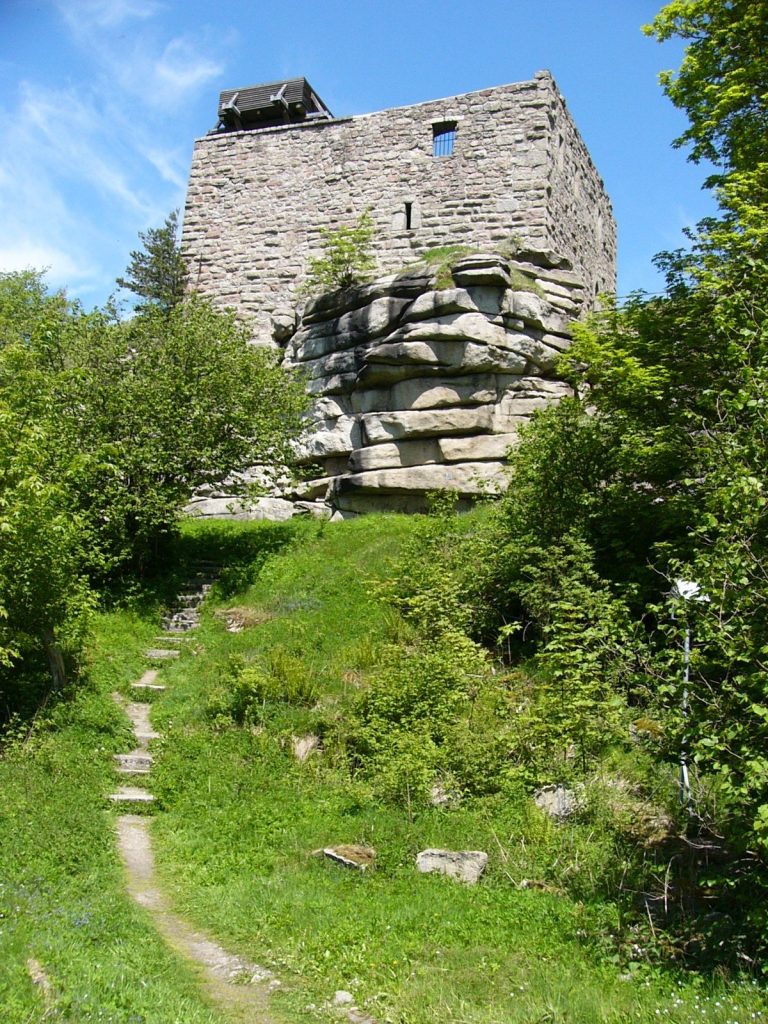
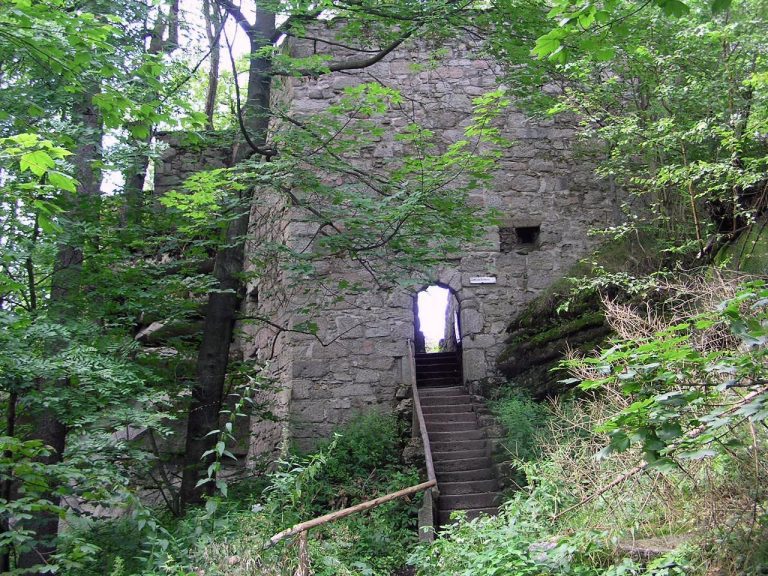
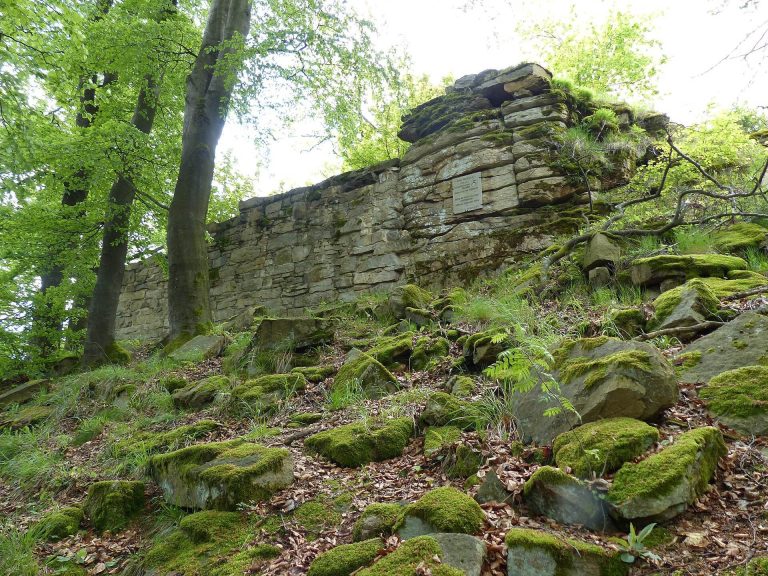
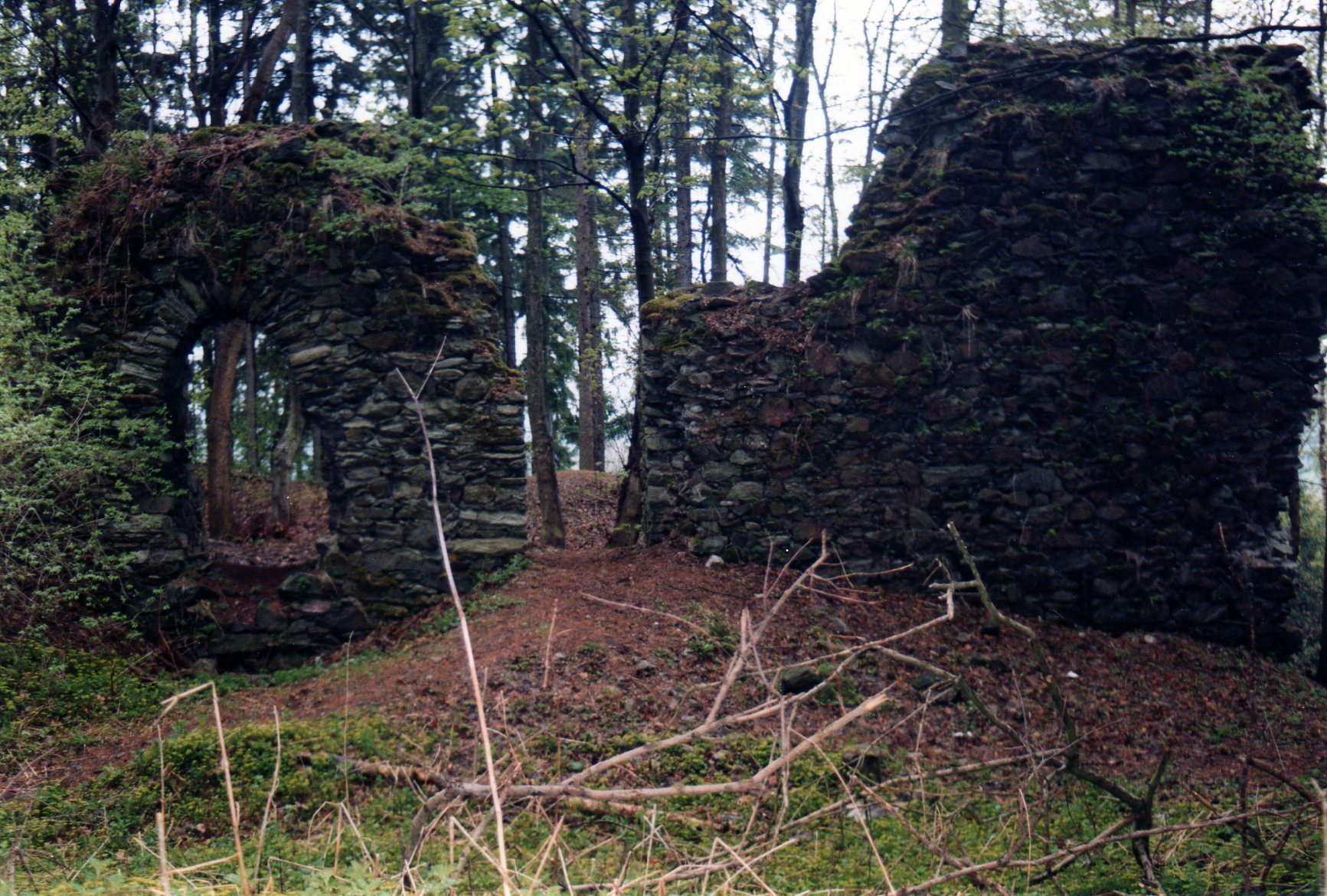
Uprode stands at approximately 603.6 metres above sea level on a summit above Oppenroth. The castle occupied a hilltop position, while visible traces in the surrounding forest include wall sections, foundations, and ditches. Scattered fragments of the demolished keep remain recognizable among the woodland remains.
Related defensive earthwork
A motte stood on the opposite Bugberg. A motte is a raised earthen mound that usually carried a timber or masonry defensive structure. Its position forms part of the wider defensive landscape associated with Uprode.