Hunolstein Castle: A Medieval Hilltop Castle in Germany
Site at a Glance
- Rating
- 4.3
- Popularity
- Medium
- Country
- Germany
- Primary era
- Medieval
- Eras represented
- Medieval
- Civilizations
- Holy Roman Empire
- Site type
- Military
- Remains
- Castle
On this page7 sections
History
Medieval origins
Hunolstein Castle is a 12th-century hilltop castle in Hunolstein, a district of Morbach in Germany’s Hunsrück, a low mountain range in western Germany. It served as the seat of the bailiffs of Hunolstein, officials who exercised secular authority or protection on behalf of a territorial lord or religious institution. Local legend connects the castle with Hunold, a figure from Germanic heroic tradition, but does not establish him as a historical occupant.
Capture and abandonment
German knight and military leader Franz von Sickingen captured the castle in 1522. During the Thirty Years’ War, a major European conflict fought from 1618 to 1648, the castle suffered such severe damage that it began to be abandoned in 1637.
Remains
Walls and towers
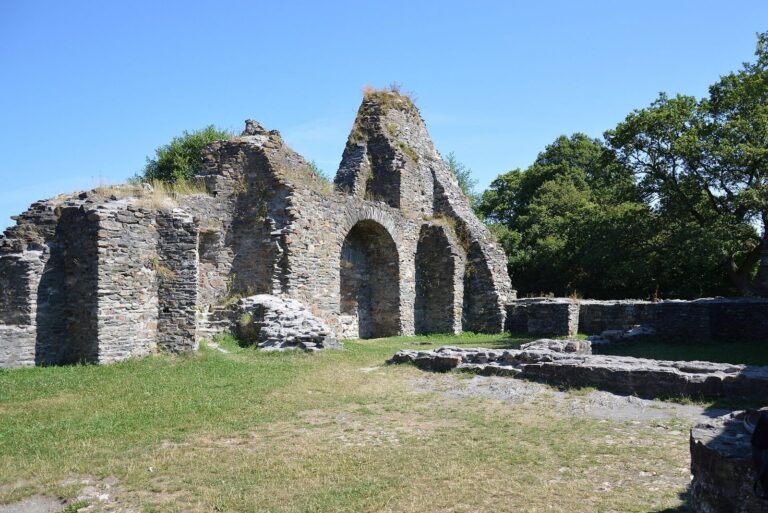
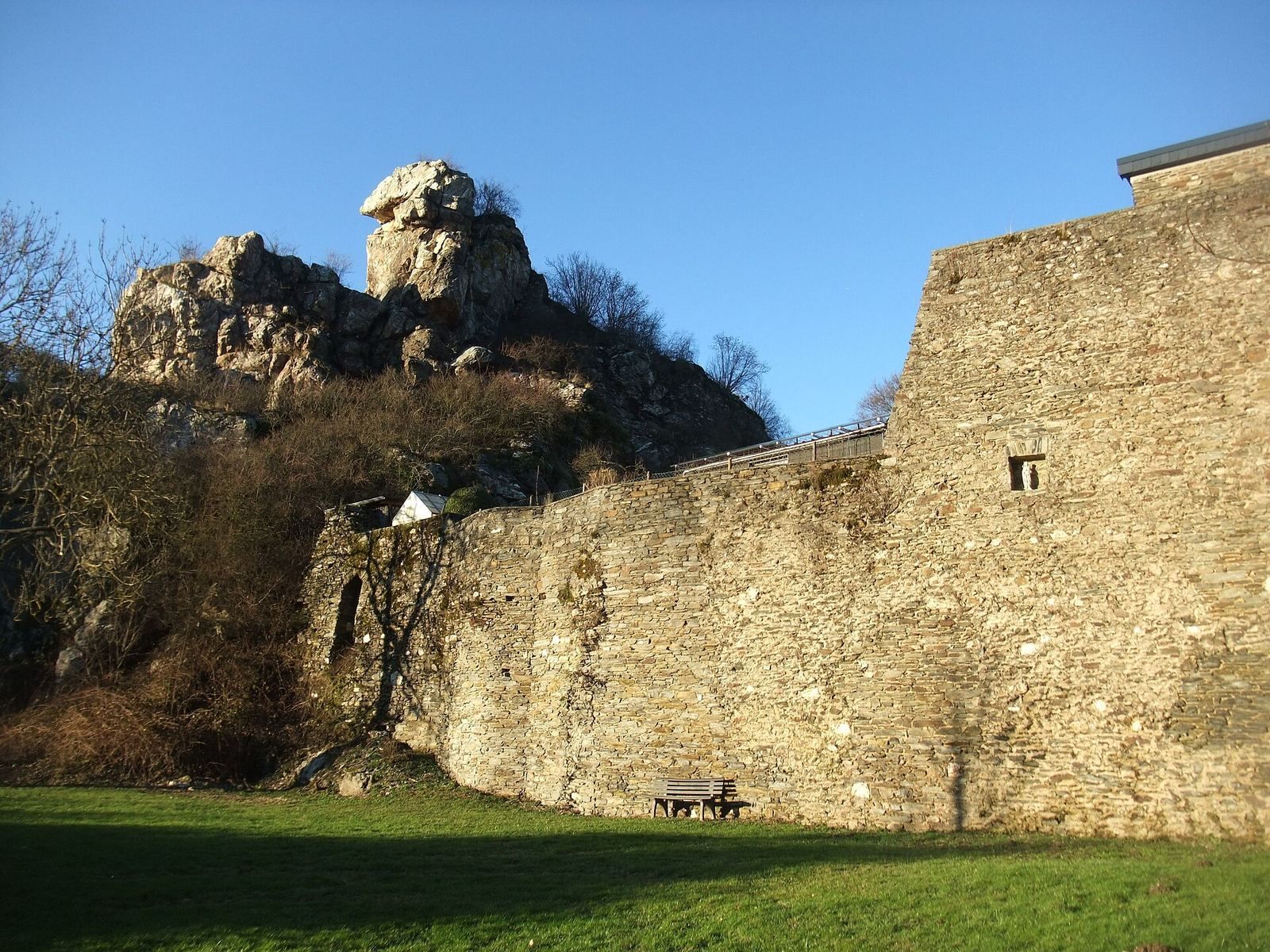
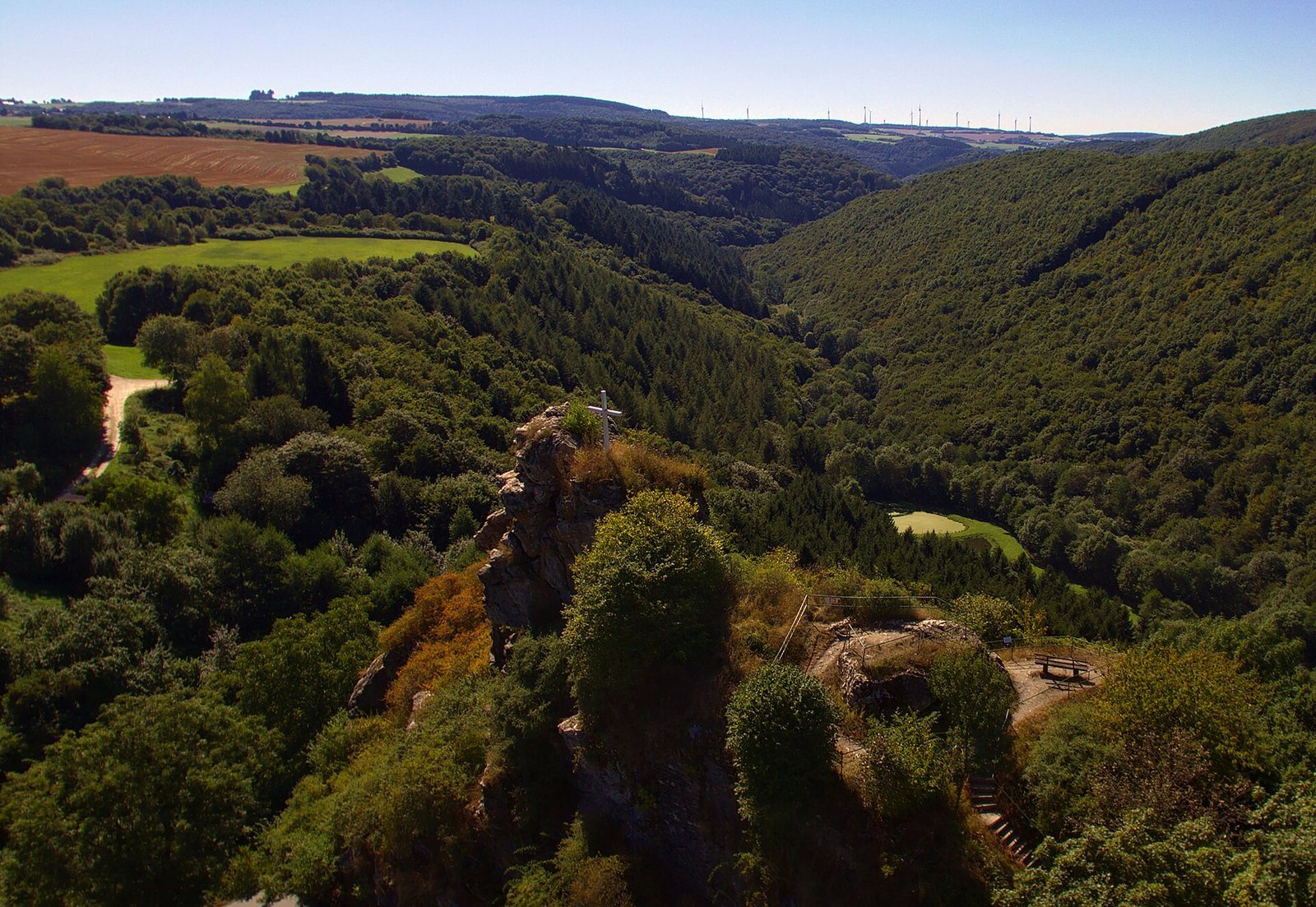
The hilltop site stands at an elevation of 395 metres and is about 40 metres long. Its surviving features include sections of the enclosing wall, a round corner tower, and masonry from the former main defensive tower.
Enclosing wall and corner tower
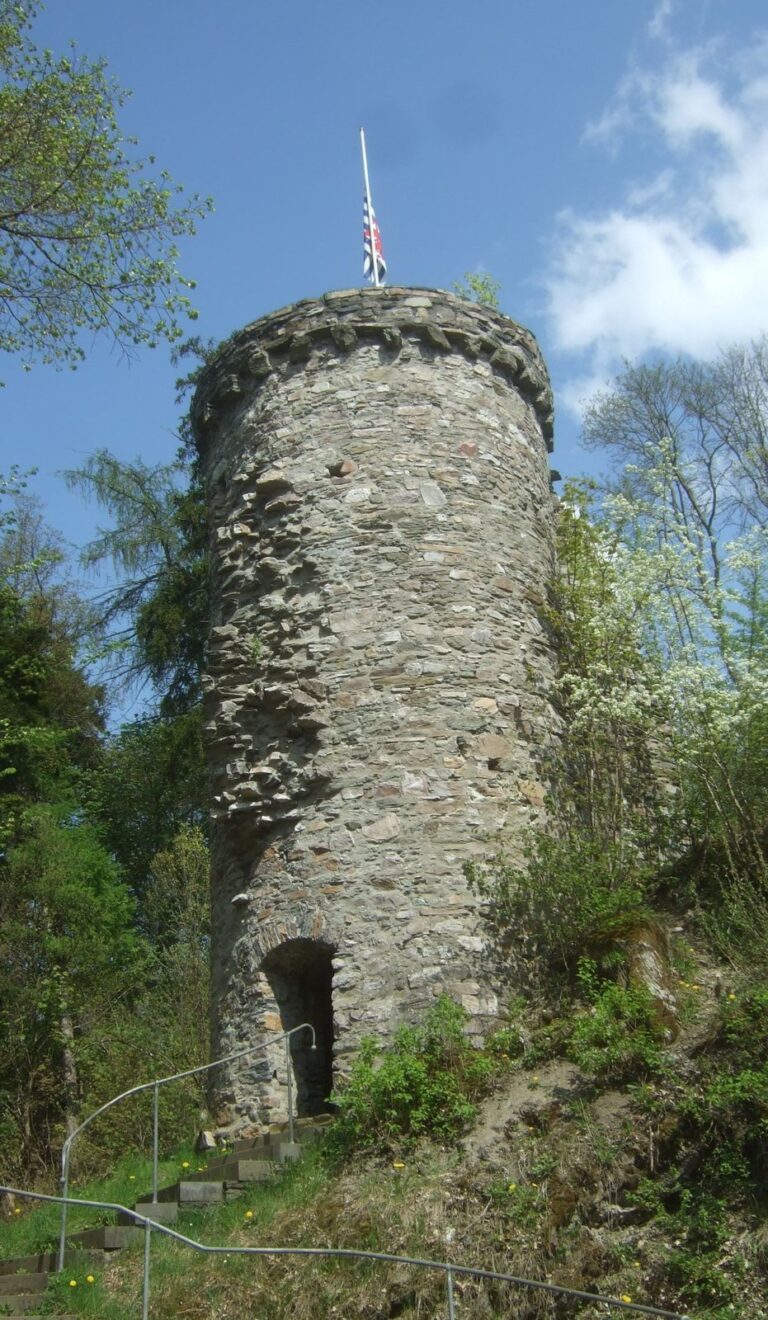
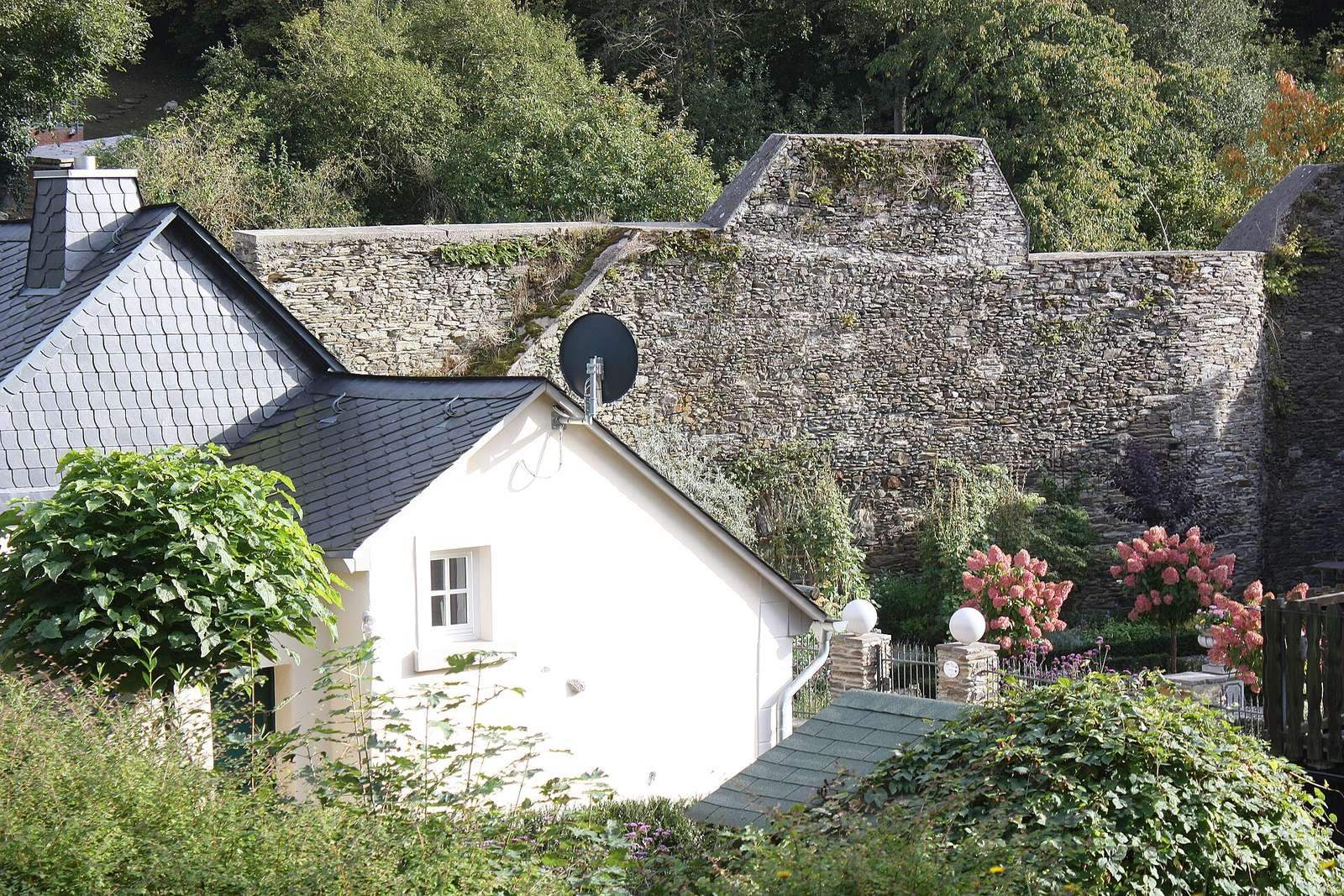
The ring wall is about 1.3 metres thick. On the south side, it survives to a height of up to eight metres. A round corner tower also remains.
Main defensive tower
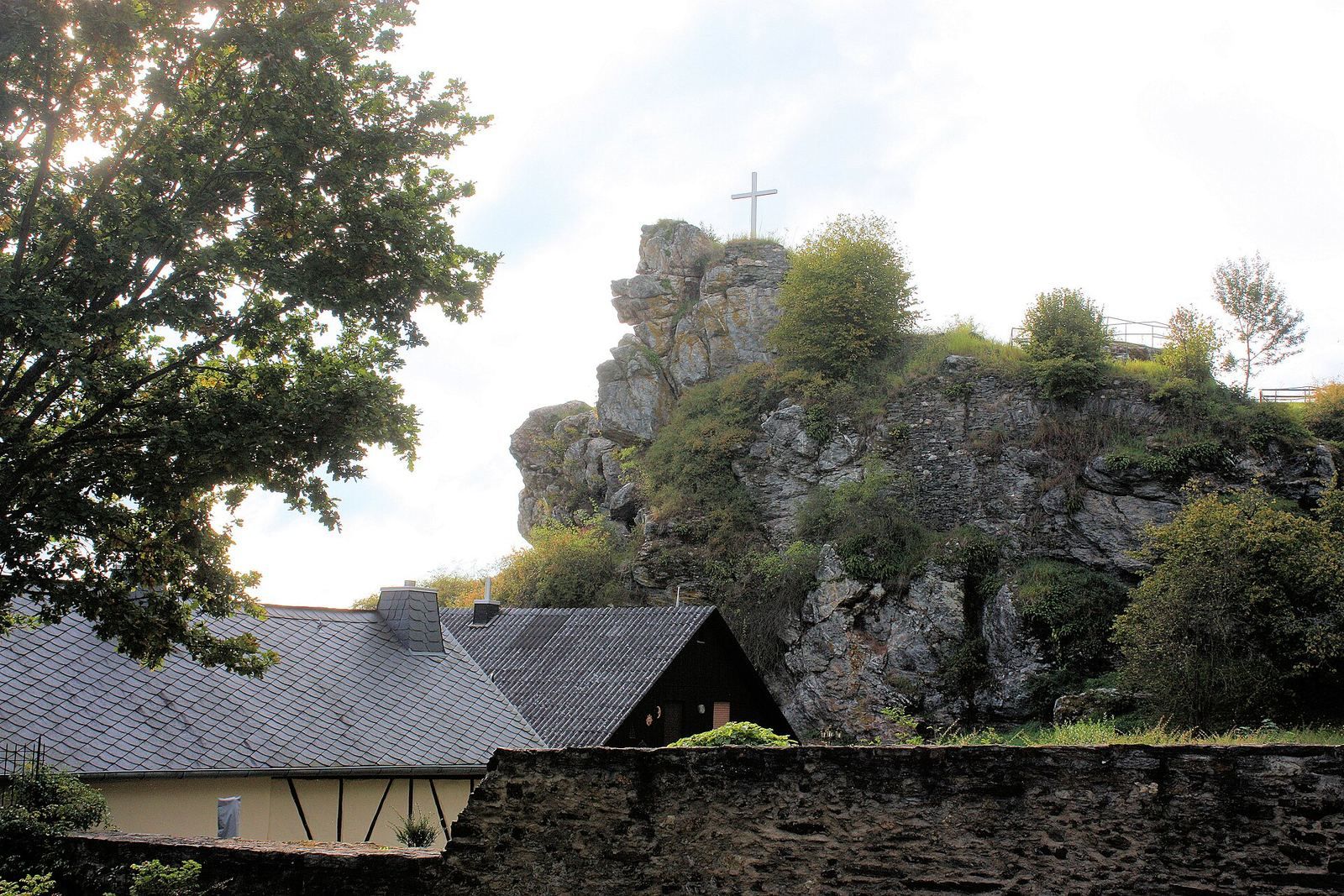
The main defensive tower stood on a quartzite rock. A roughly three-metre-high, square section of its masonry survives there. From the former tower site, the view extends west into the Dhron valley and north toward Haardtkopf, which rises to 658 metres near Gornhausen.