Hohenfels Castle: A Medieval Noble Seat in Germany


Site at a Glance
- Rating
- 4.1
- Popularity
- Very Low
- Country
- Germany
- Primary era
- Medieval
- Eras represented
- Medieval
- Civilizations
- Holy Roman Empire
- Site type
- Military
- Remains
- Castle
On this page11 sections
History
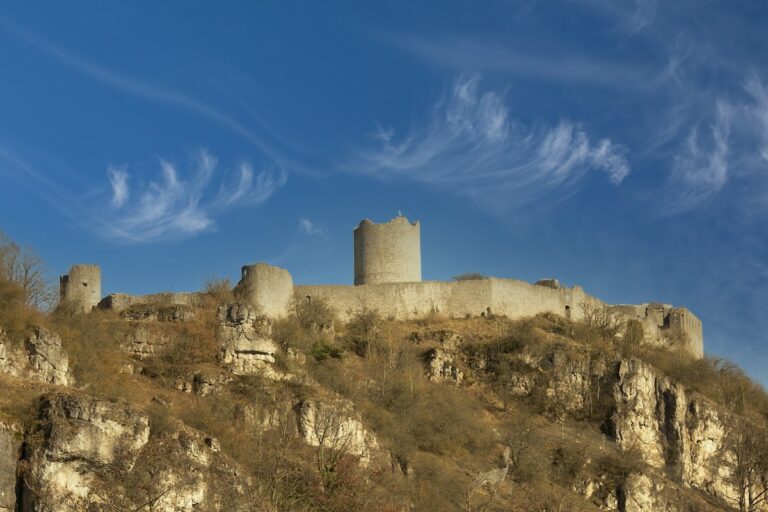
Hohenfels Castle is a medieval castle ruin in Hohenfels, Germany, probably built in the early twelfth century in the Romanesque style by the Lords of Hohenfels. The family belonged to the Raitenbucher lineage and served the Bishop of Regensburg as ministerials, dependent nobles who carried out military and administrative duties. The castle was their allodial ancestral seat, meaning it was held as a hereditary family estate rather than as a feudal fief.
The Lords of Hohenfels
The castle served as the hereditary centre of the Lords of Hohenfels. Its position on an elongated ridge and its integration into the settlement formed the setting for a hilltop residence and fortified seat. The early complex was Romanesque, a medieval architectural style characterized by massive masonry and rounded forms.
Royal Conflict and Rebuilding
On 28 December 1250, Konrad von Hohenfels attempted to assassinate King Conrad IV on behalf of the Bishop of Regensburg. Conrad IV was a thirteenth-century German king of the Hohenstaufen dynasty. The attempt failed, Konrad fled, and the king ordered Hohenfels Castle destroyed. The castle was later rebuilt.
In 1427, officials of the Palatine branch of the Wittelsbach dynasty occupied the castle. The Wittelsbachs were a major German ruling family whose Palatine branch governed territories in the region. The castle was later destroyed by Bohemian Hussites, followers of the reformer Jan Hus who took part in the religious and military conflicts of fifteenth-century Bohemia. It was rebuilt once more, but subsequently lost its importance.
Demolition and Protection
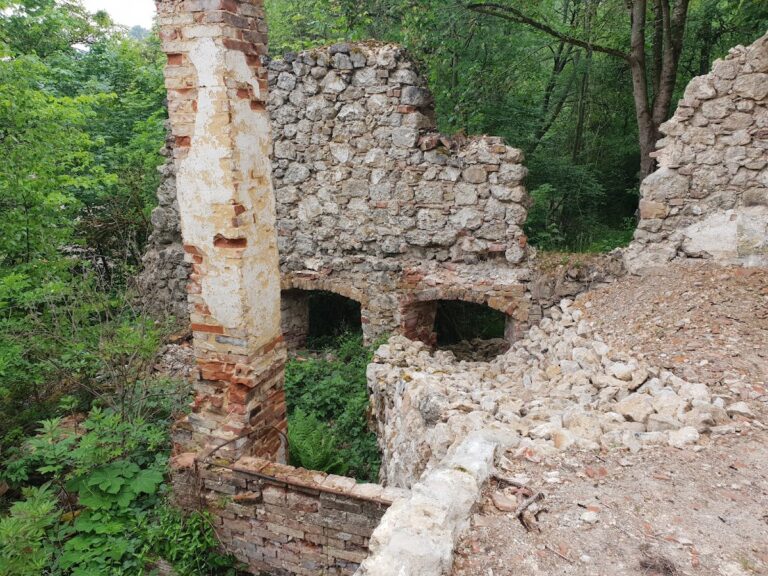
During the nineteenth century, the castle was sold for demolition and used as a quarry for building stone. The surviving ruin is now protected as an architectural monument in Bavaria. Archaeological protection also covers the remains in the area of the medieval castle ruin.
Remains
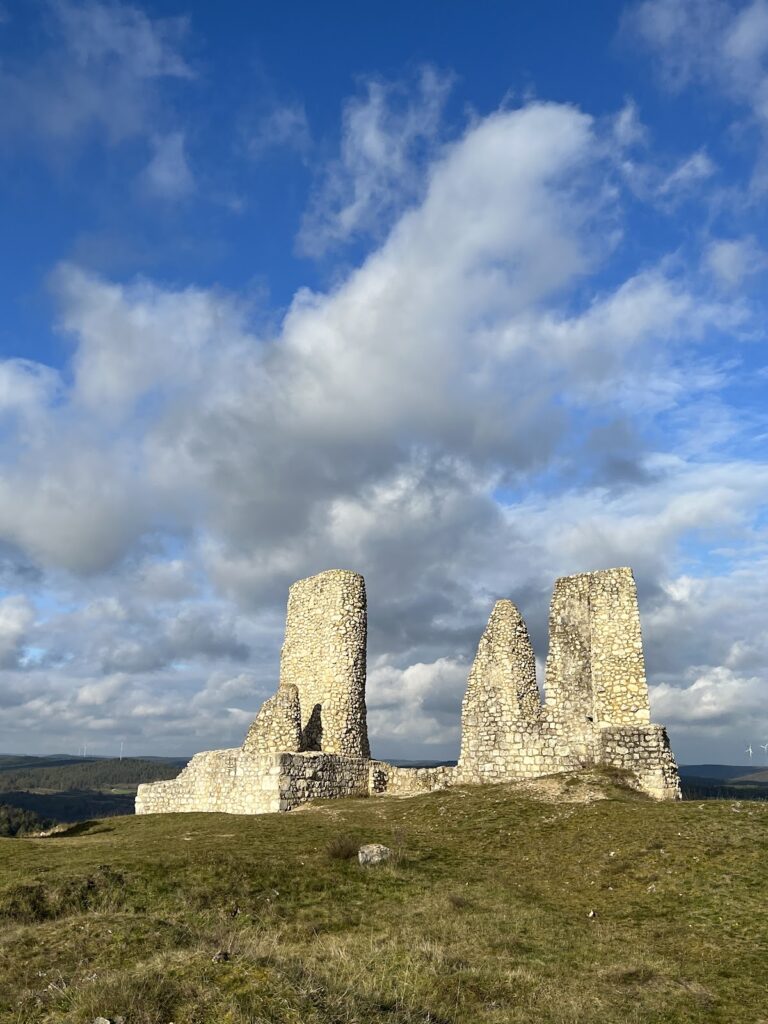
Hohenfels Castle occupies an elongated ridge at 428 metres above sea level in Hohenfels, in Bavaria’s Upper Palatinate district of Neumarkt. The former Romanesque complex was approximately 100 metres long and formed a hilltop castle integrated into the settlement. Its documented remains include a surviving keep, a tithe barn, a fortified space between defensive walls, and a ring wall.
Defensive Towers
Eastern Round Keep
The round eastern keep stands on a rocky point that protected the castle entrance. Built of rubble stone, it has an elevated entrance more than 10 metres above ground level. It is the only surviving castle building and is the principal standing remnant of the medieval complex.
Square Keep
A second keep had a square plan with sides measuring 9 metres. Only its lower stump survives. Its walls were faced with bossage ashlar, masonry finished with raised, roughly worked stone surfaces. The tower dates from the late twelfth century, although the construction sequence of the square and round keeps remains uncertain.
Castle Buildings and Enclosure
Inner Castle Buildings
Several angular buildings dating from between 1250 and 1427 were arranged around the square keep. That tower protected the entrance to the inner castle, placing the buildings within a defended central area.
Chapel and Service Structures
A Gothic vault found in the building rubble probably belonged to the castle chapel. Gothic architecture followed the Romanesque style and is associated with vaulting and more vertically oriented designs. The documented complex also included a tithe barn, a building for storing agricultural dues, together with a fortified outer space between walls and a ring wall.
Nearby sites