Botkyrka Church: A Medieval Parish Church in Sweden
Site at a Glance
- Popularity
- Medium
- Country
- Sweden
- Primary era
- Medieval
- Eras represented
- Medieval, Early Modern, Modern
- Civilizations
- Swedish
- Site type
- Religious
- Remains
- Church
On this page21 sections
History
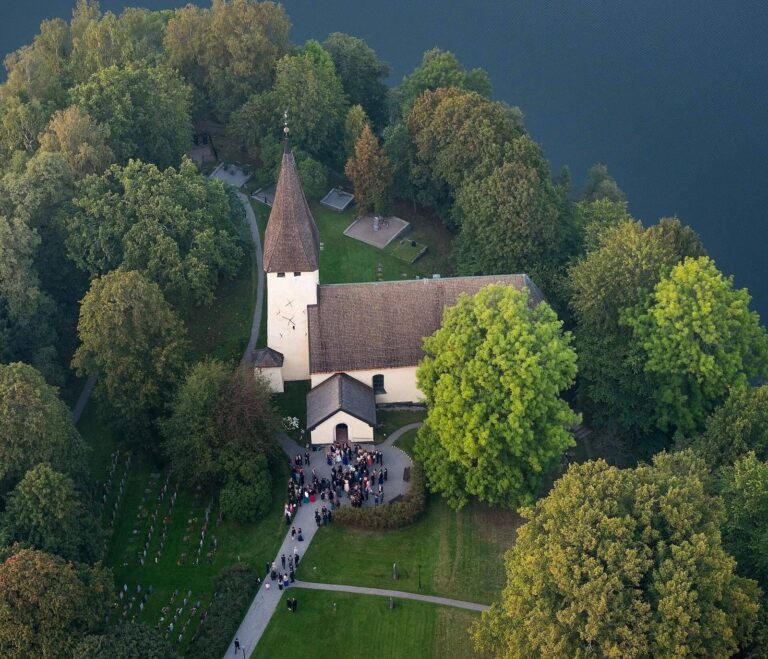
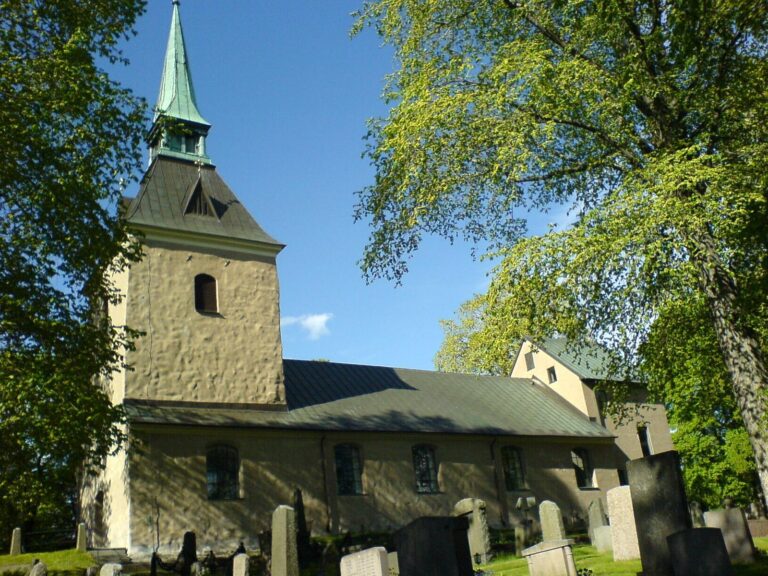
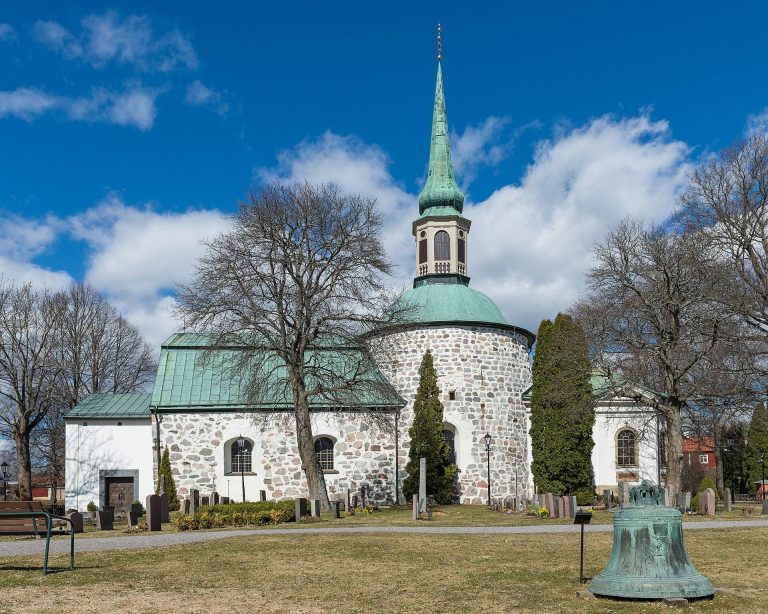
Botkyrka Church is a medieval parish church in Norsborg, Sweden, whose present stone building was consecrated in 1176. Its Romanesque architecture belongs to a medieval style marked by features such as rounded arches. The church’s beginnings are closely connected with Botvid, a Christian martyr venerated as a saint.
Origins and medieval development
Botvid died sometime in the 1120s. According to legend, he grew up at Hammarby farm, and Botkyrka takes its name from him. In 1129, his brother Björn built a wooden stave church on the Hammarby estate near Lake Aspen. A stave church is a timber building supported by upright posts. The building probably stood where the present church stands. That same year, Botvid’s relics, physical remains or objects associated with a saint and kept for veneration, were brought from Salem Church, where he had first been buried.
The stone church was consecrated in 1176 by Stefan, the first Archbishop of Uppsala, and Vilhelmus, Bishop of Strängnäs. An archbishop is a senior bishop with authority over an ecclesiastical province, while a bishop leads a diocese. The church was initially named Bothwidiia Kirkia, after Botvid.
During the Middle Ages, the church was extended eastward and its original choir was replaced. A sacristy and porch were probably added in the same period. Although a tower had been part of the initial building plans, it was constructed sometime between 1180 and 1249. Four brick vaults were added in the 15th century.
Later changes and continuing use
In 1624, King Gustav II Adolf gave the church its largest bell. The bell had originally been intended for Riga Cathedral and was probably taken as war booty from Riga. The tower spire was rebuilt in 1735 after it fell and remained down for a time. The present portal through the tower dates to 1763.
Botkyrka Church serves as the parish church of Botkyrka Parish in the Church of Sweden’s Diocese of Stockholm, a regional church jurisdiction. An older road to Södertälje passed the church; it is now called Sankt Botvids väg. The church also serves as a rest stop for pilgrims. A 7.5-kilometre route between Botkyrka and Salem churches was formally opened on 10 September 2017, recalling the transfer of Botvid’s relics in 1129. The route follows only part of the historic road between Salem and Botkyrka, known in the Middle Ages as Göta landsväg. Work on a cemetery expansion to the south and southwest began in 2017.
Remains
The church
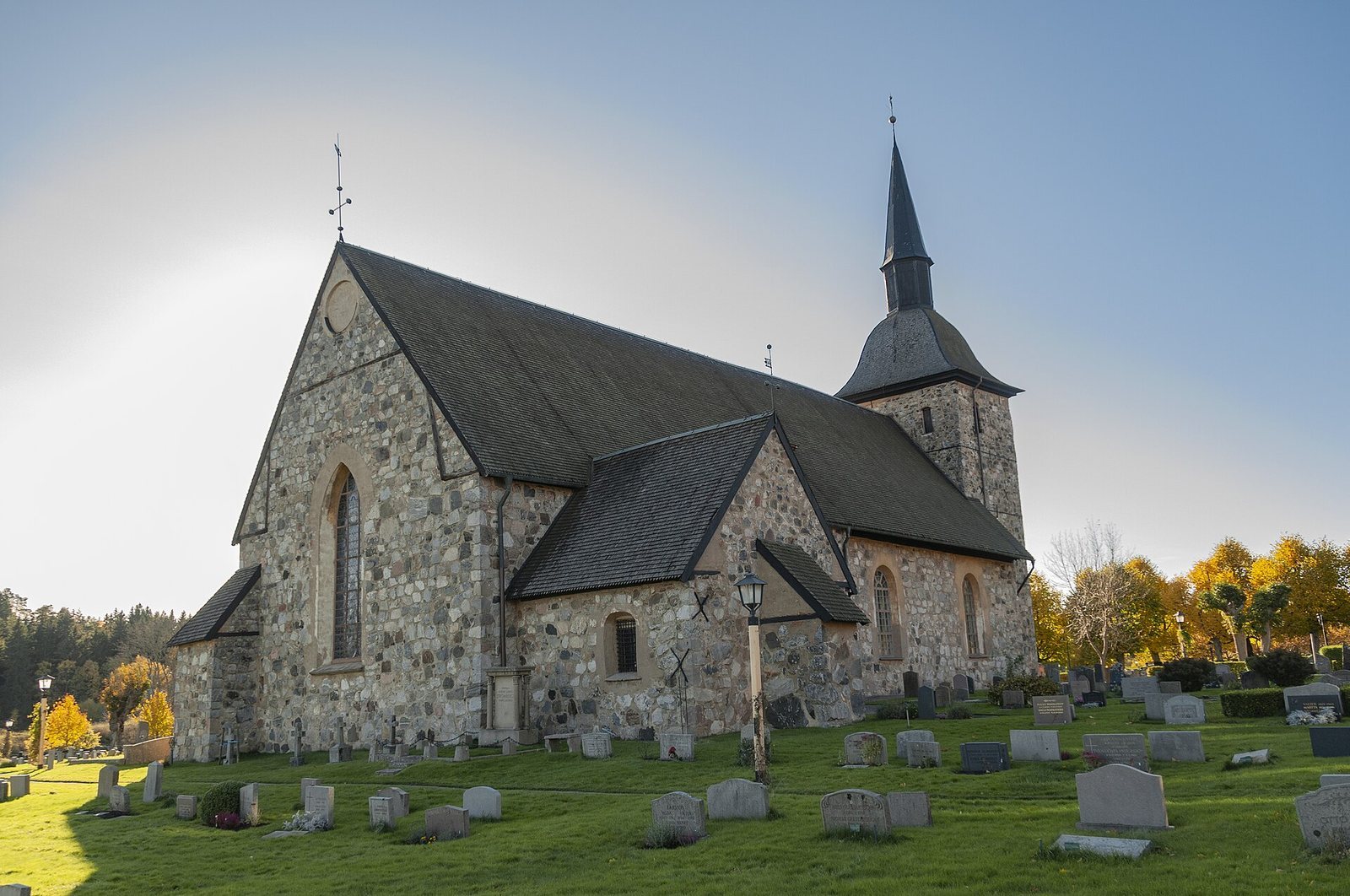
The stone church is arranged around a nave, the main body of the building, a tower, and a choir at its eastern end. The earliest form had round-arched windows and an apse, a projecting church end often placed to the east. The present choir ends in a straight wall. A sacristy, used to prepare for worship and store church furnishings, and a porch complete the main plan. The church stands in northern Botkyrka, between Södertäljevägen (E4/E20) to the south and Eriksbergsåsen to the north.
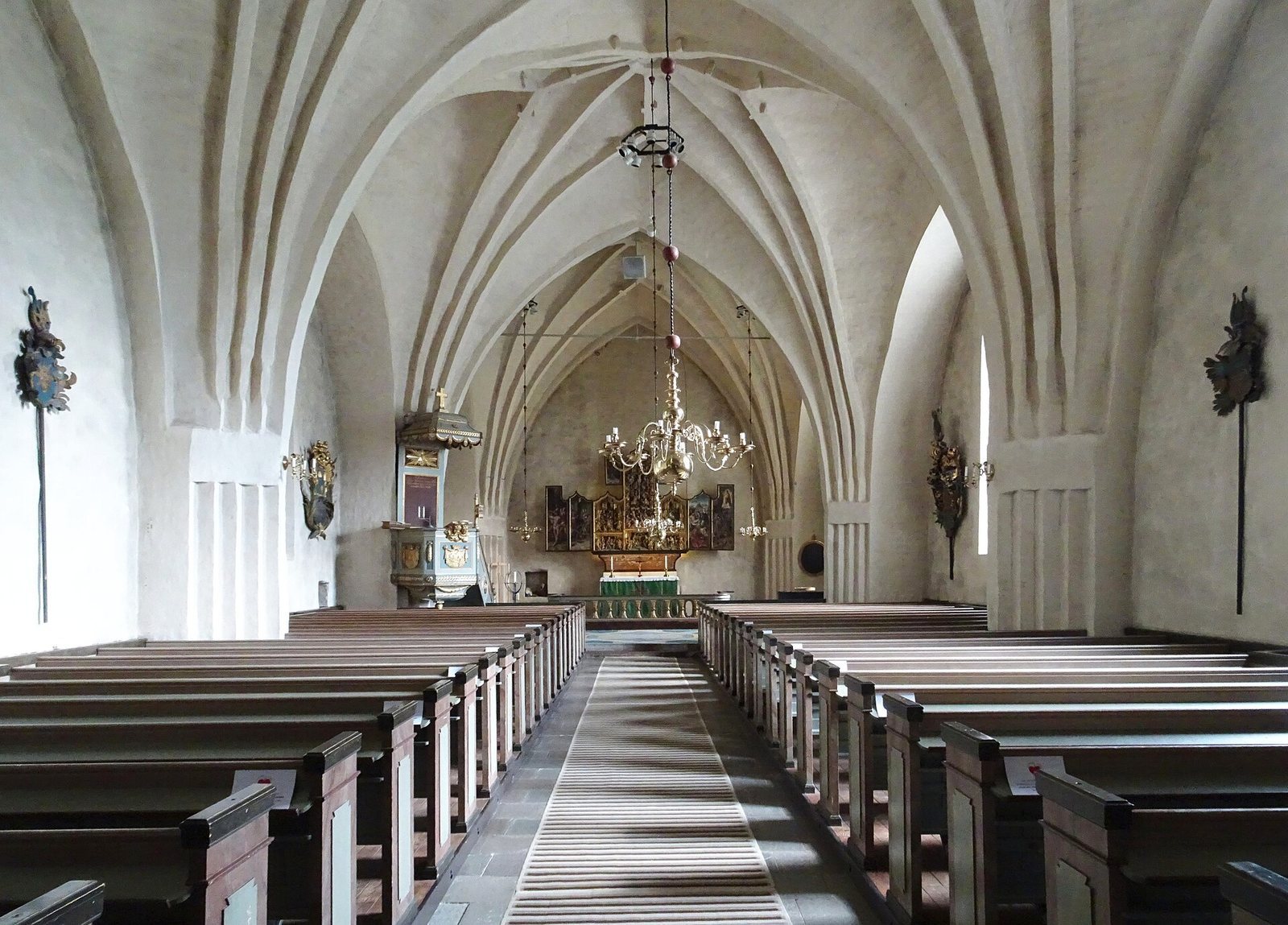
The nave survives from the earliest building phase. Two stones projecting from the western gable above ground level indicate that a wider tower was originally intended than the one that was built. Inside, four brick star vaults cover the church. A star vault is a ribbed vault whose ribs form a star pattern. The church received a new roof in July 2021.
Churchyard and chapels
Enclosure and grounds
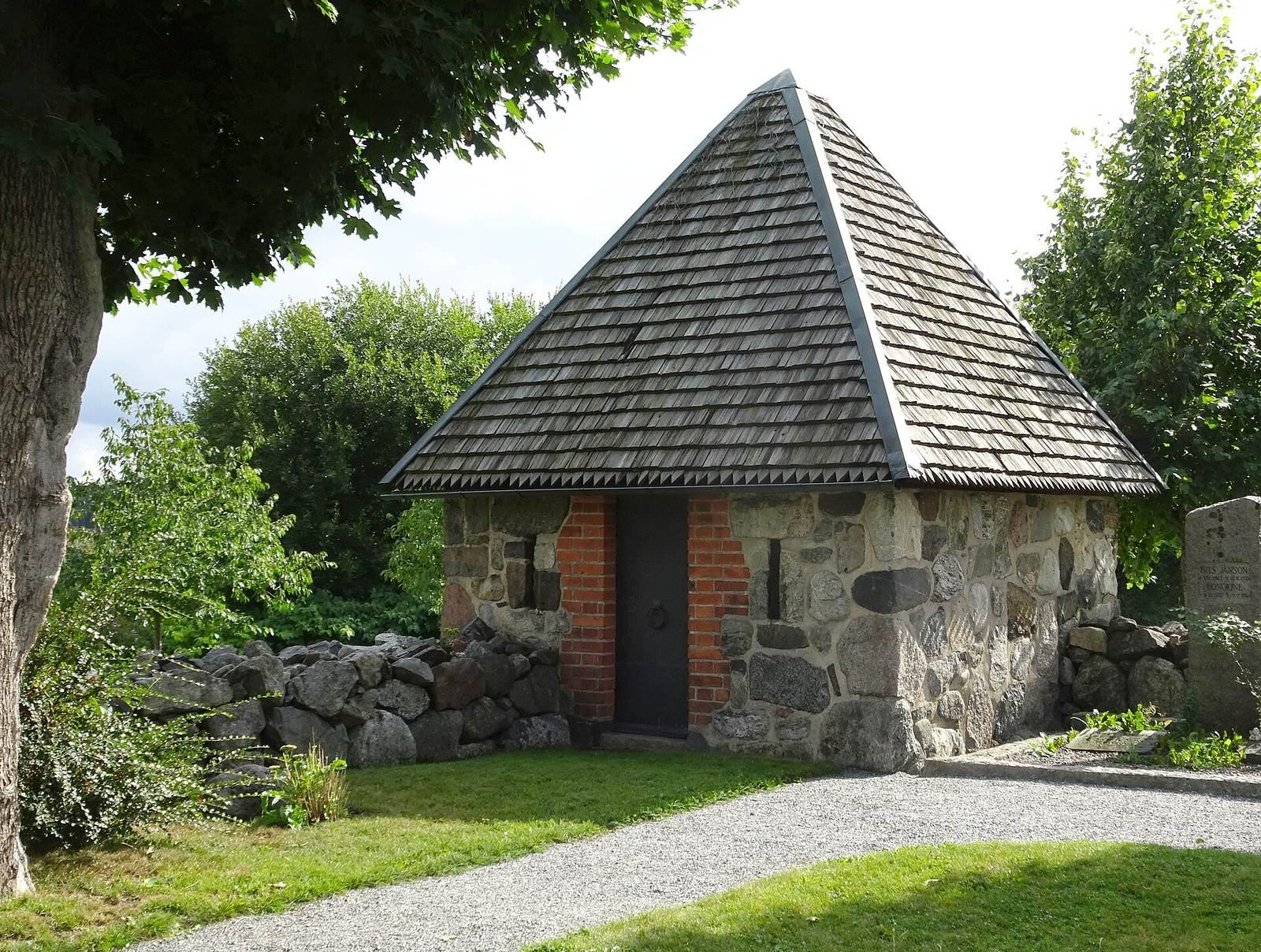
The churchyard surrounds the church. A late 18th-century dry-stone wall encloses its older section, with entrances on the north and west; an eastern section of the cemetery wall is also identified. Elm, ash, and maple trees grow in the grounds.
Liljencrantz Chapel
Standing in the northwest part of the churchyard, the Liljencrantz Chapel was designed in 1807 by Carl Christoffer Gjörwell the Younger for Johan Liljencrantz. It was converted into a columbarium in 1943, a place for keeping cremated remains.
Piper Chapel
The Piper Chapel stands in the southeast part of the churchyard. It was built in 1843 for Carl Clas Piper.
Wåhlin Chapel
Farther southeast is the Wåhlin Chapel, designed by Erik Lundberg and built in 1953 for Tora and Per Wåhlin of Hallunda estate.
Other churchyard features
A restored cellar pit belonging to a church tavern and an Estonia memorial stone are also in the churchyard.
Pilgrimage oak
An oak planted south of the church in 2015 was the ninth of 58 oaks planted during an environmental walk from Uppsala via Lund to Paris. The tree marks the starting and finishing point of the Sankt Botvid pilgrimage route.
Memorials and inscriptions
Botkyrka Monument
The Botkyrka Monument is a grave marker for Björn, Botvid’s brother and the builder of the wooden church. Dating to around 1150, it is shaped like a church and carries inscriptions in Latin and runic script. The original is held at the Swedish History Museum, Sweden’s national museum for archaeology and history. A copy stands outside the south side of the porch.
Runic inscriptions
Three other Södermanland runic inscriptions are associated with the church. The inscription catalogue number Sö 283 is beneath the tower, Sö 284 is built into the north side of the nave, and Sö 285 is near the church’s southeast corner. Sö 286 identifies the copy of the Botkyrka Monument by the porch.
Interior furnishings
Altarpiece
The principal altarpiece was made in Antwerp around 1525. Its sculpted sections are attributed to the Antwerp sculptor Jan de Molder.
Triumphal crucifix
A wooden triumphal crucifix from the mid-14th century is held at the Swedish History Museum, where it has been kept since the early 20th century. It was probably installed in the church during the eastward extension. A triumphal crucifix is a large crucifix traditionally displayed above the chancel arch.
Baptismal font
The grey sandstone baptismal font dates to 1904 and has the form of a medieval shell-bowl font, whose basin is shaped like a shell.
Bells
Three bells hang in the tower. The largest weighs 550 kilograms.
Organs
An organ donated in 1774 preceded the construction of a new organ gallery and façade during a major renovation in 1810. An organ acquired in 1782 came from S:t Olof’s Chapel in Stockholm, the predecessor of Adolf Fredrik Church. It had been given to that chapel in 1698 and rebuilt in 1748 by Jonas Gren and Petter Stråhle, when it had eight stops. Stops control sets of organ pipes. The instrument was sold to Huddinge Church in 1810, later went to Havdhem Church, and its façade is now at Gotlands Fornsal.
Olof Schwan built an organ between 1812 and 1814, with 12.5 stops and one manual, or keyboard. Schwan died before the instrument was finished, and Johan Ewerhardt the Younger and Zacharias Liljefors completed it. An organ dated 1912/14, built by Åkerman & Lund, had 16/17 stops, two manuals, and a pedal keyboard. The same firm rebuilt it in 1941, increasing it to 26/28 stops. Kemper & Sohn rebuilt it again in 1955, producing an instrument with 42 stops, three manuals, and a pedal. Improvements in 1992 included a five-stop positive, a small organ, made by Nye Orgelbyggeri. The instrument has 36 stops, three manuals, and a pedal.
The gallery organ was installed in two stages. In 1977, Åkerman & Lund Orgelbyggeri AB of Knivsta built the first-stage mechanical instrument, with 31 stops behind the historic early 19th-century façade.