Bolkhov Kremlin: A Fortified Settlement in Russia
Site at a Glance
- Popularity
- Low
- Country
- Russia
- Primary era
- Unclassified
- Eras represented
- Unclassified
- Civilizations
- Unclassified
- Site type
- Military
- Remains
- Citadel
On this page15 sections
History
The early settlement
Bolkhov Kremlin was the fortified center of Bolkhov in Russia, established in the 12th century and later serving as the residence of the appanage princes, who governed an allotted territory within a larger realm. In the 15th century, the town was abandoned as its princes departed to serve in Moscow.
Re-establishment and defense
A new town was built on the old settlement site in the mid-1550s. Mikhail Repnin became its first voivode, a military and administrative commander, while Grigory Nagoy directed construction. In 1562, forces near Bolkhov defeated a Crimean Tatar detachment led by Divey-Murza. Three years later, an army of several thousand under Crimean khan Devlet Giray besieged the town and used artillery. Voivodes Vasily Kashin and Ivan Zolotoy-Obolensky repelled the attacks and defended the unfortified settlement outside the Kremlin until the main Russian force arrived. Ivan the Terrible ordered further strengthening in 1571.
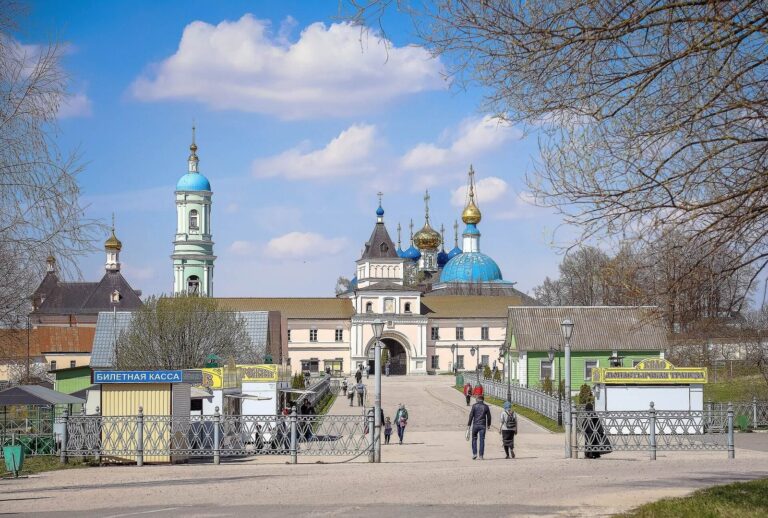
Two monasteries were established in the town during the second half of the 16th century: the men’s Optin Monastery of the Nativity of the Mother of God and the women’s Monastery of the Mother of God of All Saints.
Conflict during the Time of Troubles
The Time of Troubles was a period of political and dynastic crisis in Russia in the late 16th and early 17th centuries. In 1606, Bolkhov’s inhabitants joined Ivan Bolotnikov’s uprising against Tsar Vasily Shuisky and opened the gates to the rebels, who killed several townspeople. By the end of the year, the inhabitants had returned to Shuisky’s side and killed or captured many rebels. In 1607, the pretender False Dmitry II seized the town, but voivode Tretyak Seitov drove his forces out later that year.
In May 1608, False Dmitry II’s forces defeated a numerically stronger royal army near Bolkhov. After taking its baggage train and heavy artillery, they besieged the town, whose garrison was led by Seitov and Grigory Valuev. Bolkhov fell after three days. Lithuanian forces repeatedly occupied and ravaged the town in 1611. Late that year, voivode Fyodor Yeletsky drove them out and began rebuilding the burned Kremlin, but Lithuanian troops burned the new fortress in 1613.
In 1615, a detachment commanded by Alexander Lisovsky attacked and nearly captured Bolkhov. A small force of servicemen under voivode Stepan Volynsky repelled it after fierce fighting. Crimean Tatar forces failed to take the town in two sieges in 1616; a Russian-Lithuanian battle nearby that year ended without a decisive result. Bolkhov’s defenders repelled five attacks by Lithuanian detachments in 1618.
Loss of military importance
Bolkhov’s military importance declined in the 18th century. Its fortifications remained for several more decades, but fires in 1744 and 1748 destroyed them. The former Kremlin is recognized as a cultural heritage site of federal significance in Russia.
Remains
Site and outer settlement
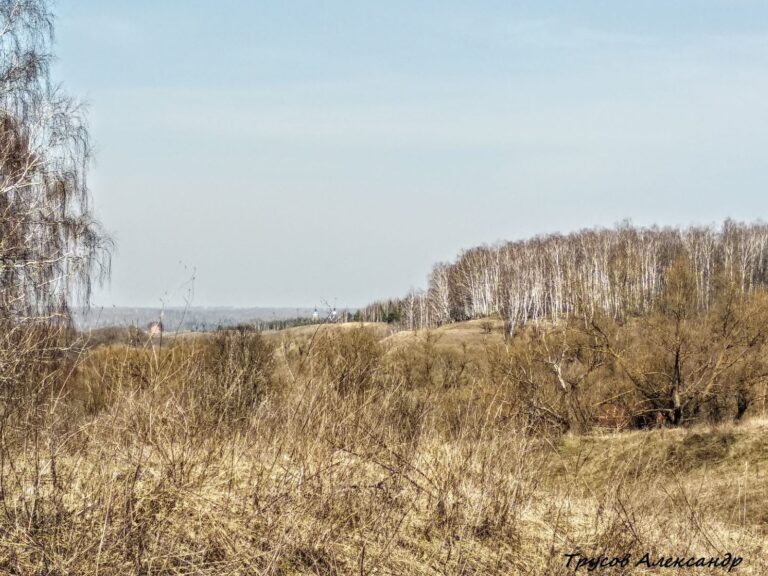
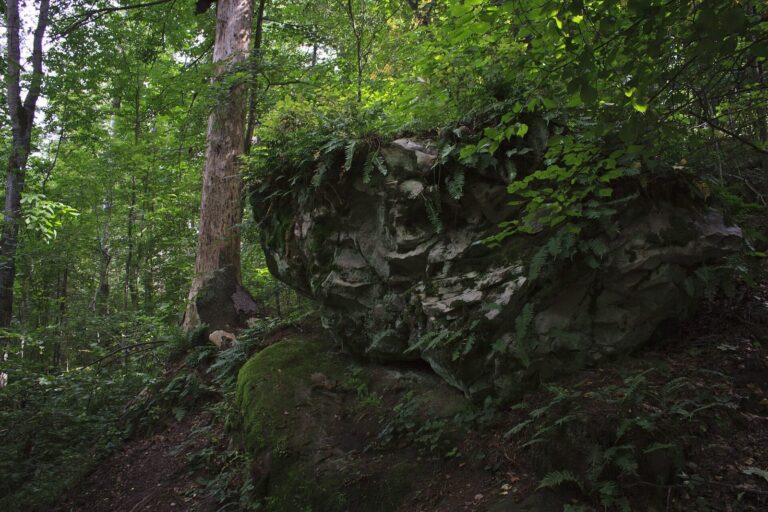
The early fortified center occupied a promontory where the Bolkhovka and Nugr rivers meet. The rivers protected its eastern, southern, and western sides. The hill where the later Kremlin stood is now called Red Mountain. A narrow isthmus to the north linked the hill with a neighboring rise occupied by the settlement outside the main fortifications. Suburbs extended around both fortified areas. After 1571, the outer settlement was probably enclosed by a timber palisade with towers.
Kremlin walls
In the second half of the 17th century, the Kremlin had an irregular pentagonal plan and a 954-metre timber wall fitted with projecting defensive galleries, overhanging platforms used to help defend the walls. A close-set timber palisade followed the ditch at the foot of the hill. The fortress was smaller than it had been in the late 16th and early 17th centuries. When it was rebuilt after the Time of Troubles, the triangular cape on the south, the location of the ancient settlement, remained outside its defenses. The wall around the northern outer settlement, known as the old stockade, was not rebuilt.
Gates and towers
Three gates provided passage into the Kremlin: St Nicholas, Pyatnitsky, and St George. The tallest tower, St Nicholas, carried a watch turret and a signal bell. Seven other towers had no gates.
Buildings within the Kremlin
Cathedrals
The Kremlin contained wooden Transfiguration and St Nicholas cathedrals. In 1671, a stone Transfiguration Cathedral was built in their place.
Administrative and storage buildings
A large governor’s courtyard, enclosed by a timber fence, occupied the northwest corner. The administrative office and prison stood opposite it. Elsewhere inside were priests’ courtyards, a salt storehouse, grain granaries, and a state cellar for gunpowder, lead, and weapons.
Later fortification work
In 1690, the defenses were rebuilt and strengthened. The timber palisade was replaced by a log-built wall with projecting defensive galleries. The work was not completed, and the new defenses soon fell into disrepair.
Later churches
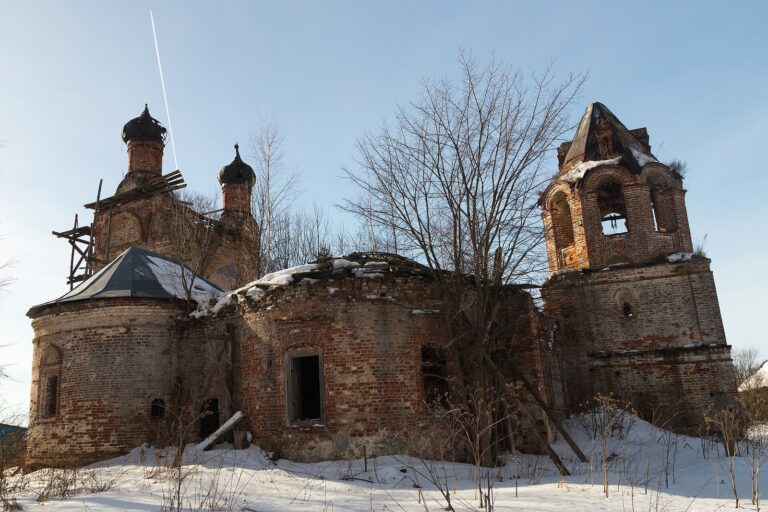
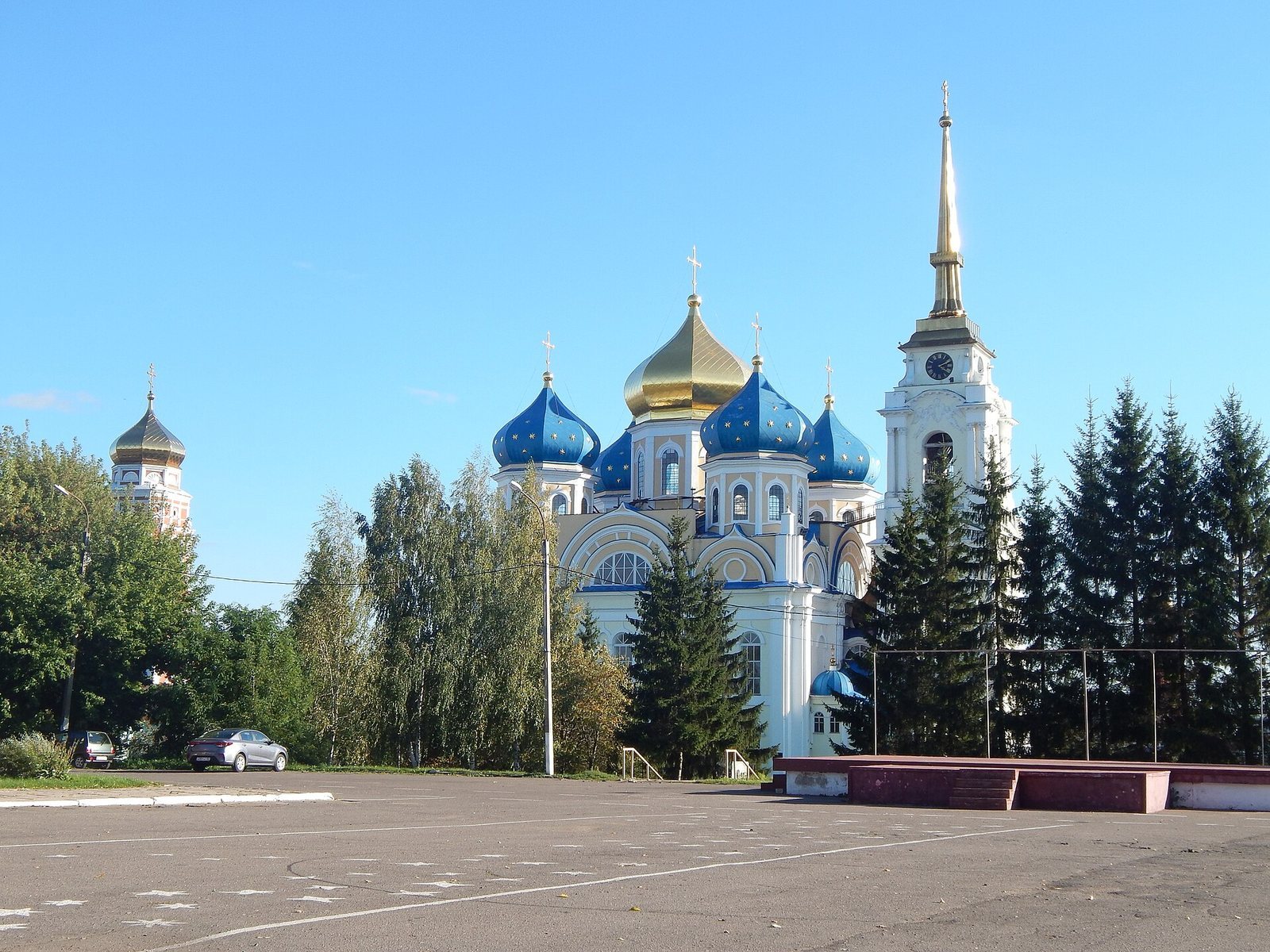
The area now known as Gorodok includes the Holy Trinity Church, built in 1708, and a new Transfiguration Cathedral, built between 1842 and 1851.
Surviving earthwork
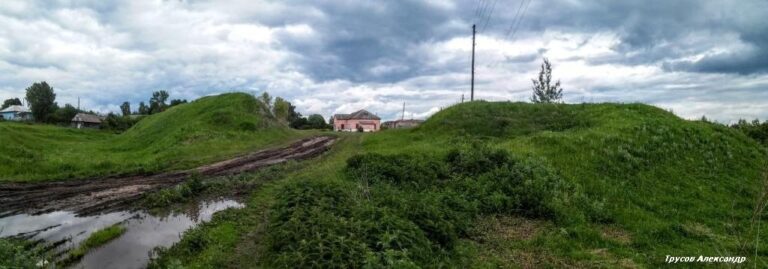
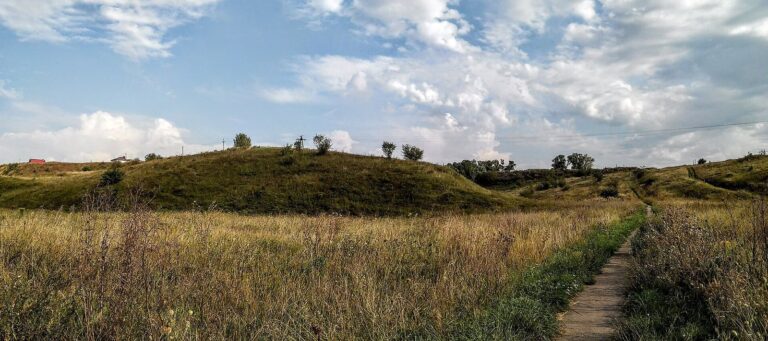
The Kremlin itself no longer survives. A heavily eroded earthwork remains on the south side of the Gorodok town garden.