Bobovac: Medieval Royal Capital and Fortress of Bosnia


Site at a Glance
- Rating
- 4.8
- Popularity
- Low
- Country
- Bosnia and Herzegovina
- Primary era
- Medieval
- External website
- Open
- Eras represented
- Medieval
- Civilizations
- Kingdom of Bosnia
- Site type
- Military
- Remains
- Castle
On this page11 sections
History
Bobovac is a fortified royal capital and residence in Bosnia and Herzegovina, built during the rule of the medieval Bosnian rulers in the fourteenth and fifteenth centuries. It developed under Stjepan II Kotromanić, Ban of Bosnia, a high-ranking medieval Balkan ruler, and was first mentioned in 1349, although its exact construction date is uncertain. Bobovac shared the seat of government with the court at Kraljeva Sutjeska and served as the repository of Bosnia’s crown jewels.
Royal Capital and Medieval Conflicts
Bobovac was more heavily fortified than the court at Kraljeva Sutjeska. In 1349 and 1350, it withstood an unsuccessful siege by the Serbian emperor Stefan Dušan during his war against Stjepan II Kotromanić. Its position, defenses, and royal functions made it an important center of the Bosnian state during a period when the ruling house was the Kotromanić dynasty.
The fortress changed hands during conflicts involving Bosnia and Hungary. A Hungarian army captured Bobovac in June 1404 and transferred it to Stjepan Ostoja, who was imprisoned there on 27 October 1406. Hungarian control returned in 1410.
Transfer of the Royal Seat and Destruction
In 1461, King Stjepan Tomašević moved the royal seat to Jajce during his war with the Ottoman Empire. Ottoman forces captured Bobovac in 1463. They burned and destroyed the city, an event that hastened the Ottoman conquest of Bosnia. By 1626, Bobovac had lost its strategic importance and had become depopulated.
The site also held the burial chapel of the Bosnian royal family. Its mausoleum contained the burials of several kings and queens, linking Bobovac’s political role with the dynastic memory of medieval Bosnia.
Excavation and Protection
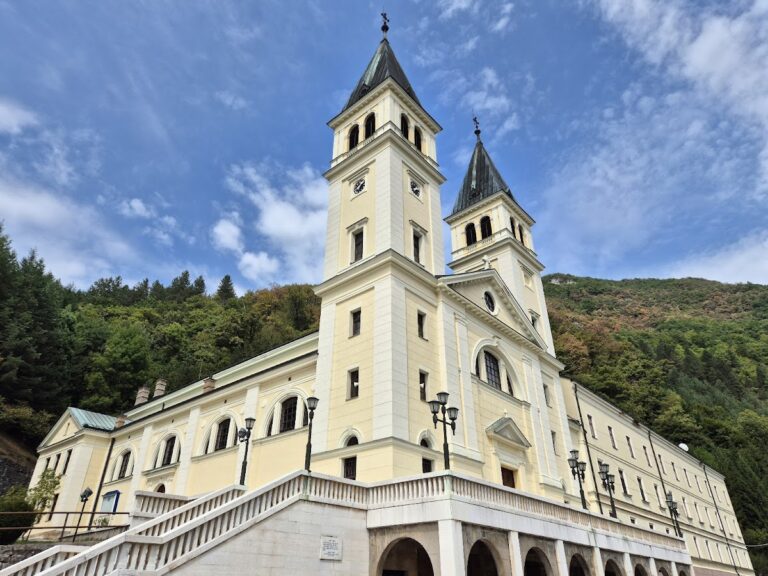
Major archaeological excavations took place between 1959 and 1967 under the organization of the National Museum of Bosnia and Herzegovina. Bobovac is protected as the Medieval Royal Castle of Bobovac, a national monument and archaeological site of Bosnia and Herzegovina. The protection was designated on 6 November 2002. The site remains associated with historically and religiously important observances, including commemorations of Bosnia and Herzegovina’s Statehood Day on 25 November and a Prayer Day for the Homeland and pilgrimage on 22 October.
Remains
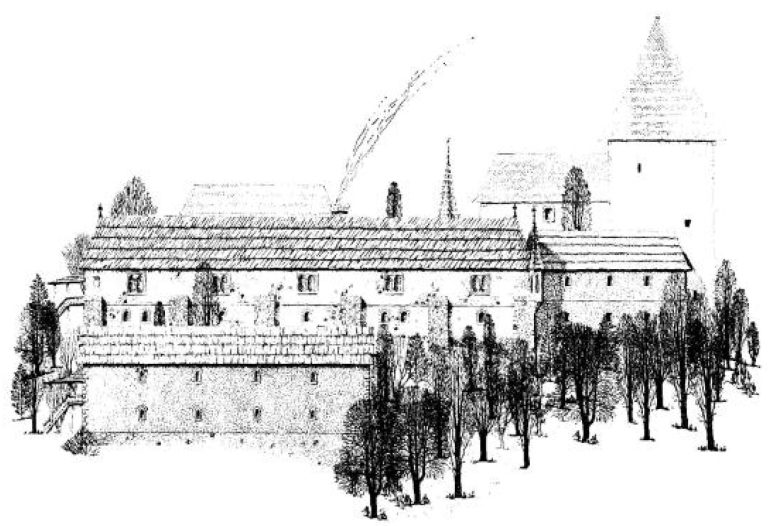
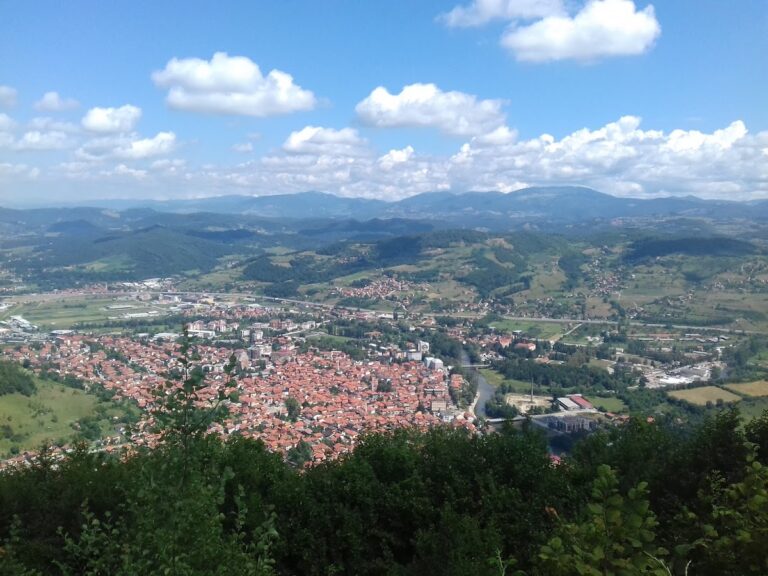
Bobovac occupies a defensible hilltop near present-day Vareš and the village of Borovica. The hill, called Bobovačka kosa, was bordered by the Bukovica and Mijakovska rivers, whose confluence is known as Sastavci. The ruins extend across the northern summit of Vis, which rises about 30 metres above the surrounding terrain, and a rocky southern area containing the main fortress and royal court. The Church Terrace extended south from Vis and ended at a southern precipice. Fortification walls, royal buildings, religious structures, and the settlement known as Grad formed a connected defensive and residential complex.
Fortifications and Settlement
Bobovac had 11 towers, while its walls extended for approximately 1,100 metres and were about 100 to 110 centimetres thick. The main fortress enclosed a large residential area, a religious complex, and the Royal Court. Nearby terraces and the surrounding terrain strengthened the defensive setting. Grad, the settlement outside the northern gate, formed the settlement area beyond the principal fortifications.
The Church Terrace lay south of Vis, while the principal fortress and court occupied the rocky southern part of the hill. This arrangement placed the northern summit, the terrace, and the fortified royal complex within the wider defensive organization of the site.
Royal Court Complex
The Royal Court occupied five karst ridges, limestone landforms shaped by the dissolution of soluble rock, arranged on three levels descending from north to south. Inner walls separated the court from the rest of the town. The complex contained two principal gates, two keeps, two forecourts, three palaces, service buildings, and staircases. Representative elements used Gothic and Romano-Gothic forms, including distyle arrangements with two columns or supports.
Lower or Grand Palace
The southern first gate opened into a forecourt with a lookout tower or keep and smaller buildings, including a smithy. A roofed staircase connected this area with the second gate and the forecourt of the Lower or Grand Palace. The palace was an irregular quadrilateral measuring approximately 25 by 10 metres. Its partly preserved walls indicate at least four storeys. The southern wall stood on a limestone ridge, while the northern wall was formed entirely by a stone cliff.
Second Gate and Forecourt
The second gate had a representative Gothic portal decorated with the coat of arms of King Tvrtko II and lanterns. Its forecourt contained buildings arranged across three terraces, including a granary, battlements, a large water cistern, a smithy, a lime-pit, and a small residential building.
Upper Palace and Annex
The Upper Palace and its forecourt occupied the highest level beside a keep and cistern. The elongated palace measured approximately 18 to 19 metres by 5 to 5.6 metres. Wooden stairs and a gallery led to its upper storey, while the northern room contained an interior vault. That room probably served as a court chapel for Dorothy Garai, the wife of King Tvrtko II.
An annex was later built east of the Upper Palace. This two-storey structure measured approximately 18 by 6 metres, touched the Upper Palace on one side and the Lower or Grand Palace on the other, and contained the court’s precision metalworking and woodworking workshops.
Royal Burial Chapel
The royal burial chapel comprised a chapel, mausoleum, and burial chamber. Five tombs containing nine skeletons were found in the mausoleum. The remains identified within the tombs were attributed to Kings Dabiša, Ostoja, Ostojić, Tvrtko II, and Thomas. Another skeleton is assumed to belong to King Tomašević, who was decapitated at Jajce on the order of Mehmed the Conqueror, the Ottoman sultan Mehmed II who led the conquest of Bosnia. The only female skeleton was found beside the remains attributed to Tvrtko II and is thought to belong to his wife, Queen Dorothy. The chapel, mausoleum, and burial chamber have been restored.