Bhongir Fort: A Hilltop Stronghold in India
Site at a Glance
- Popularity
- Very High
- Country
- India
- Primary era
- Medieval
- Eras represented
- Medieval
- Civilizations
- Chalukya
- Site type
- Military
- Remains
- Fort
On this page6 sections
History
Bhongir Fort is a hilltop fort in India, built in 1076 by the Western Chalukya ruler Vikramaditya VI. He named it Tribhuvanagiri in his honor. The name later developed into Bhuvanagiri and, during the British colonial period, Bhongir.
Successive rulers
The Kakatiyas took control of the fort in the 12th or 13th century. Its history is associated with Queen Rudramadevi and her grandson, the Kakatiya ruler Prataparudra II. In the mid-14th century, Bahman Shah, first ruler of the Bahmani Sultanate, captured it. The fort later became part of the Golconda Sultanate and was held by the Qutb Shahi rulers.
After the Mughal conquest of Golconda in 1687, the fort came under Mughal power. Sarvai Papanna, a regional leader in Telangana, took control of Bhuvanagiri after capturing Orugallu in 1708. The fort was also restored under the Musunuri Nayaks, the Bahmani sultans, and the Qutb Shahis.
Remains
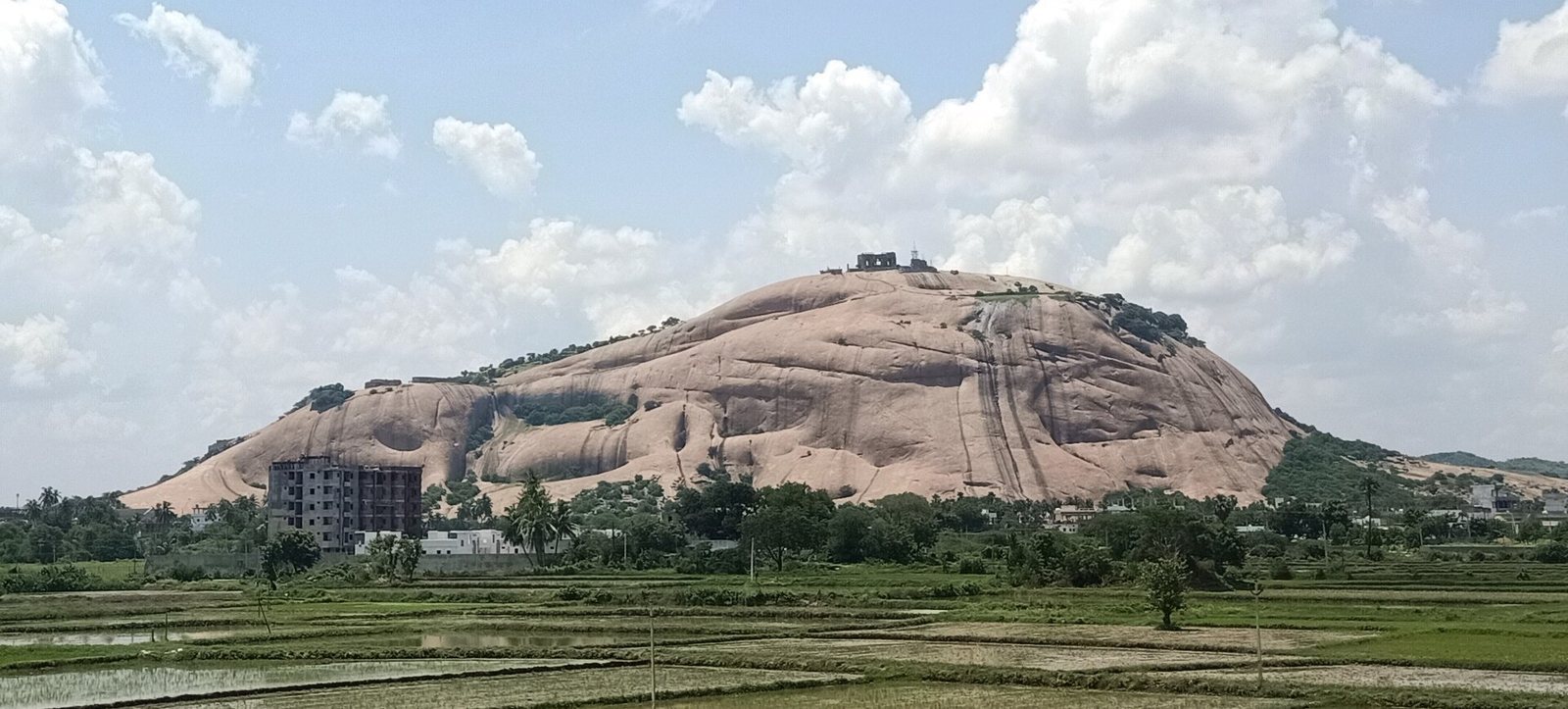
The fort occupies an isolated, egg-shaped granite hill. The rock rises about 170 metres, and the hill is also described as 184.5 metres above road level. The town of Bhuvanagiri lies at its foot, at an elevation of about 430 metres.
Approach and entrances
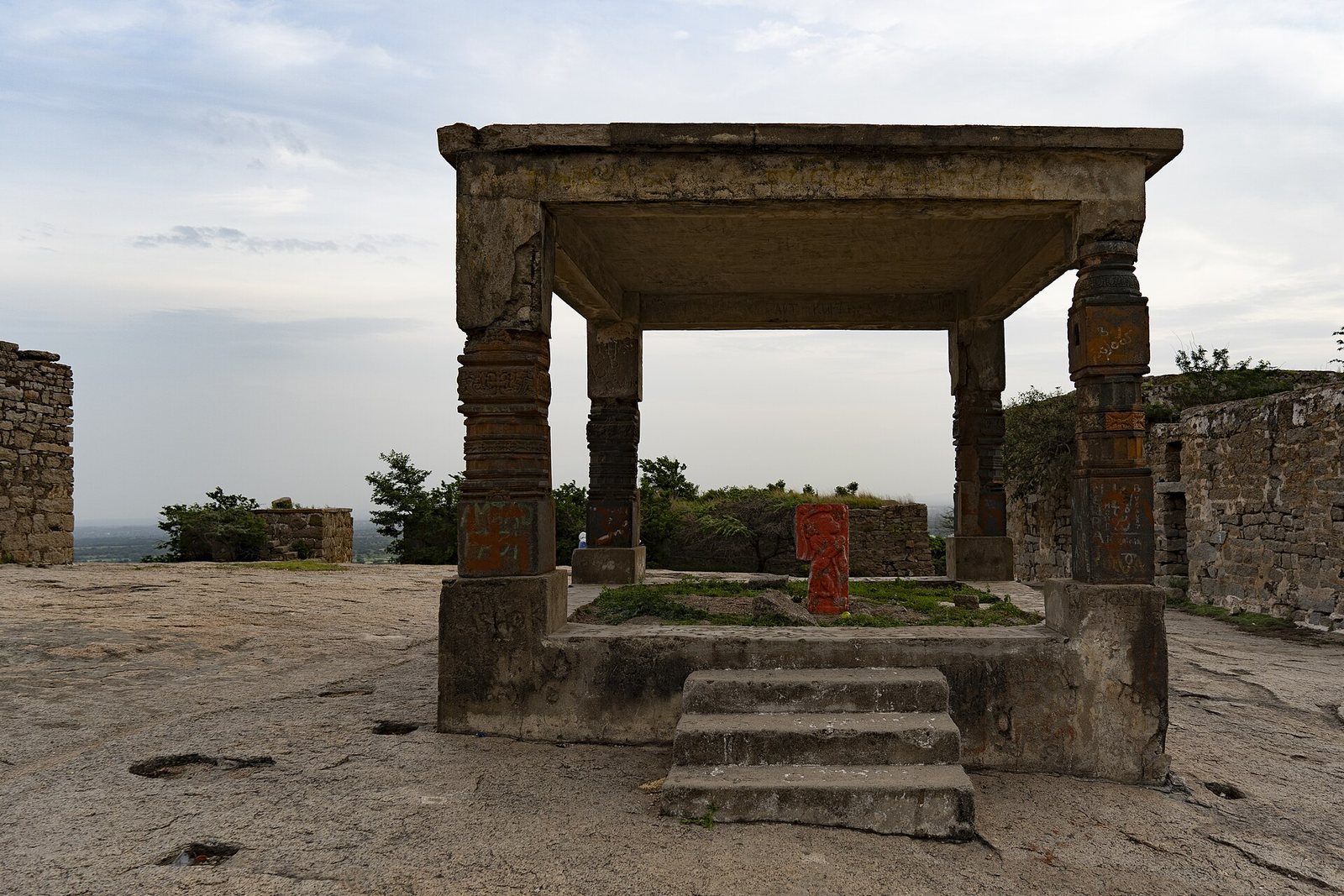
Passageways lie on the hill’s southern and southeastern sides, while the present approach begins from the southwest. Steps from the base to the summit remain intact. A Hanuman temple, dedicated to a Hindu deity associated with strength and protection, stands at the lower end of the steps; large rocks protect two entry points. A steel gateway forms one entrance. It is attributed to a Nizam, a ruler of Hyderabad, who is said to have paid for it. The gateway’s entrance is compared with Fateh Darwaza, the first gate of Balahisar in Golconda Fort.
Fortifications and summit
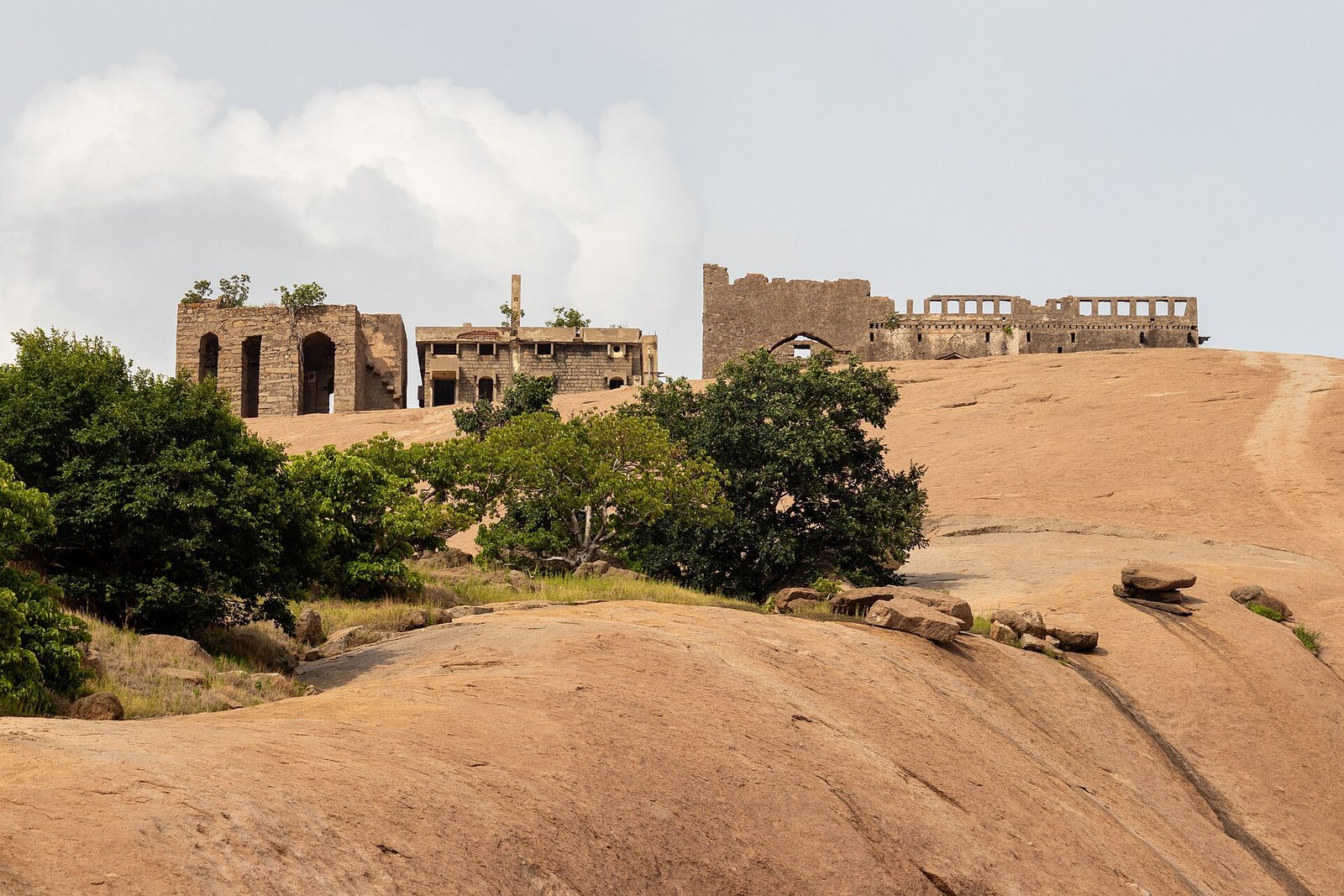
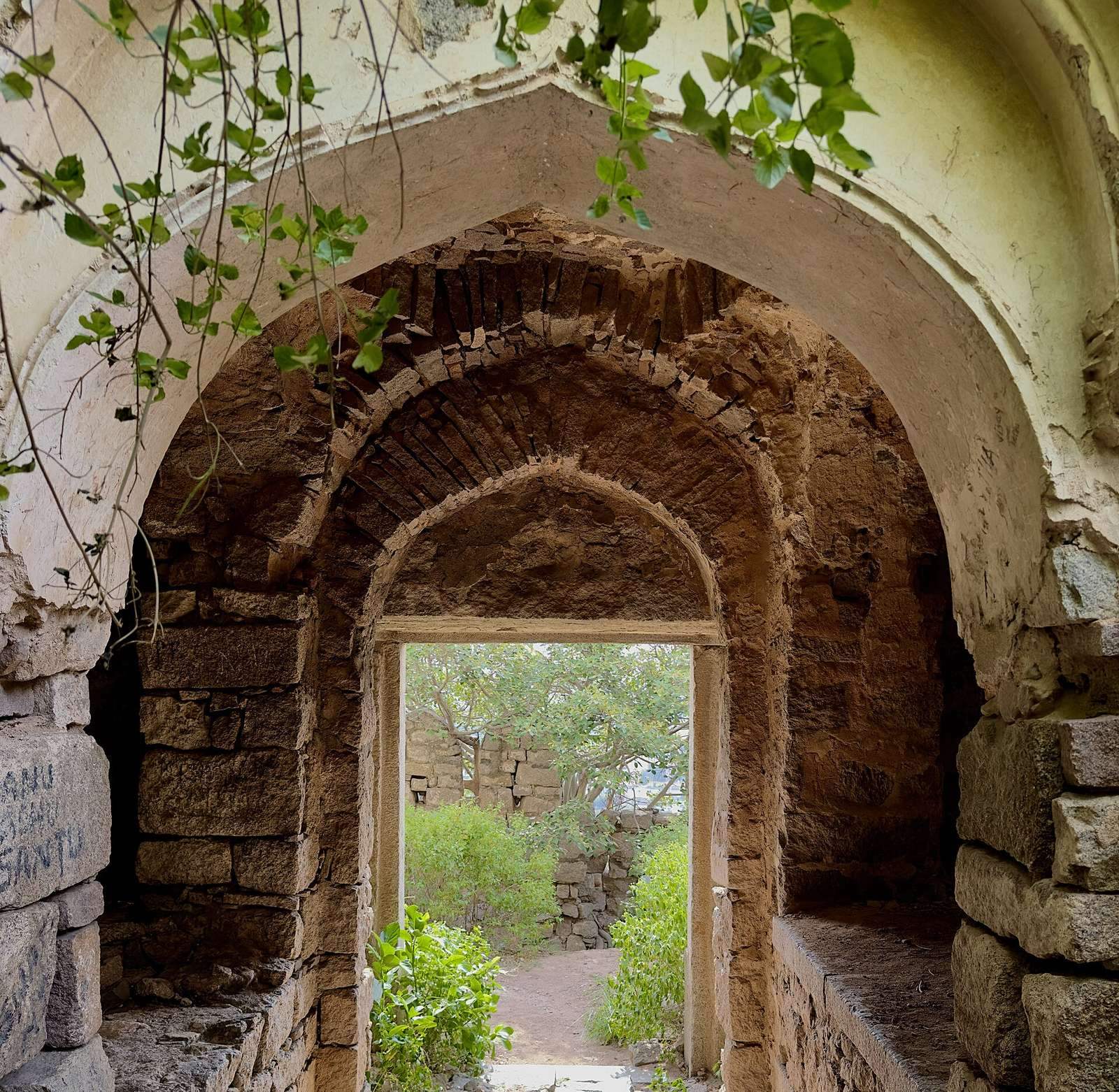
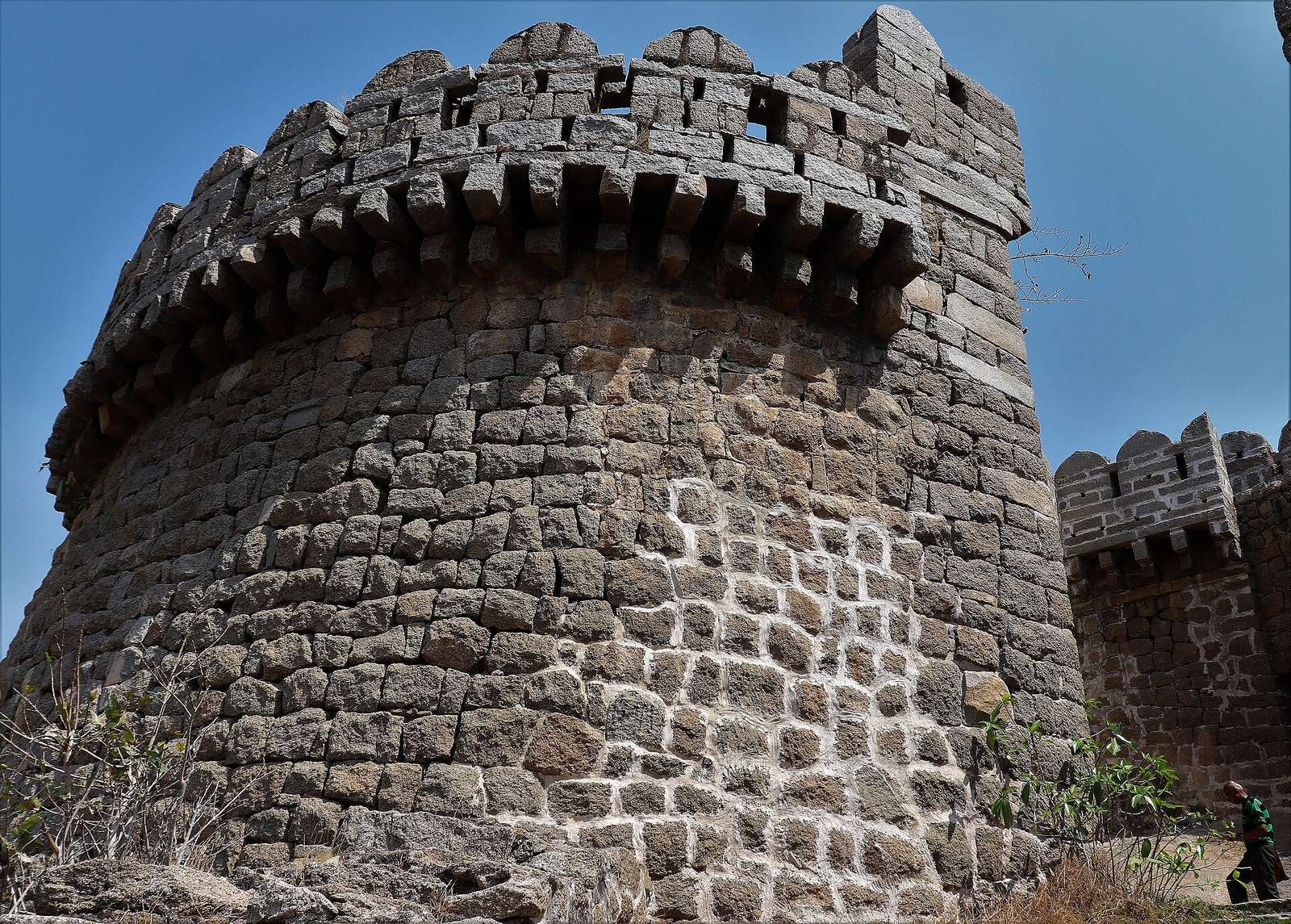
Tall walls, an encircling moat, spacious rooms, and a large underground chamber form part of the fort’s remains. Other features include trapdoors, an armoury, stables, ponds, and wells. Bala Hisar, the fortified inner stronghold at the hilltop, provides a wide view. A few buildings from the Islamic period survive inside the fort, with arches and battlements, defensive parapets along the walls.
Finds and local traditions
A statue stands at the fort entrance after being recovered in excavations nearby. A local rumor describes a passage beneath the ground linking Bhongir Fort with Golconda Fort, but the claim remains unconfirmed. From the south, the hill is said to resemble a tortoise; from the west, a sleeping elephant.