Beilstein Castle Ruins: A Medieval Imperial Ministerial Castle in Germany


Site at a Glance
- Rating
- 4.2
- Popularity
- Low
- Country
- Germany
- Primary era
- Medieval
- External website
- Open
- Eras represented
- Medieval
- Civilizations
- Holy Roman Empire
- Site type
- Military
- Remains
- Castle
On this page7 sections
History
Beilstein castle ruins are the remains of a small medieval castle in Germany, about two kilometres east of Kaiserslautern. Built on a rocky hilltop probably during the twelfth century, around 1100–1185, the castle is attributed to Duke Frederick II of Swabia, known as Frederick the One-Eyed. Its builders were probably imperial ministeriales, officials and military retainers who served rulers and institutions in return for positions such as castle holding or administration.
The Beilstein ministeriales
In 1185, the castle belonged to Merbodo of Beilstein, a ministerial. In 1212, Merbodo sealed the Wilenstein renunciation with his brother Wernher of Wartenberg, who also appeared as a witness. The castle was mentioned again in 1234, when King Henry VII authorized the rebuilding of Castrum Bylenstein, a Latin name for the castle or its fortified complex.
Destruction and later ownership
Beilstein was violently destroyed between 1420 and 1455 and was not rebuilt. It later passed to the Flörsheim family and the Electoral Palatinate, the major principality ruled by the counts palatine of the Rhine. Hans of Bilenstein, master of the kitchens of the Prince-Bishopric of Speyer, an ecclesiastical territory governed by the bishop of Speyer, was the last Beilsteiner mentioned, in 1464. When the Flörsheim family died out in 1665, the castle came entirely into Electoral Palatinate ownership.
Excavation and protection
Around 1900, the Palatine Beautification Association cleared part of the site and undertook safety measures. These works partly destroyed archaeological find zones. Excavations in the late 1950s showed that a fortified complex had existed before the first documentary reference and that it had extended considerably beyond the area still visible.
Since approximately 1990, Beilstein castle has belonged to the city of Kaiserslautern. The ruins are recognized as both a natural monument and a cultural monument, while the natural-monument area includes the castle rock and the ruins. The name probably refers to the axe-like shape of the rocky formation. A local legend tells of a proud knight’s daughter, two ghosts who guarded her, and a young nobleman named Hanno who was killed during an attempted abduction. The same tradition says that a journeyman later died after accepting a tavern wager to walk three times around the castle with a torch in search of the young woman.
Remains
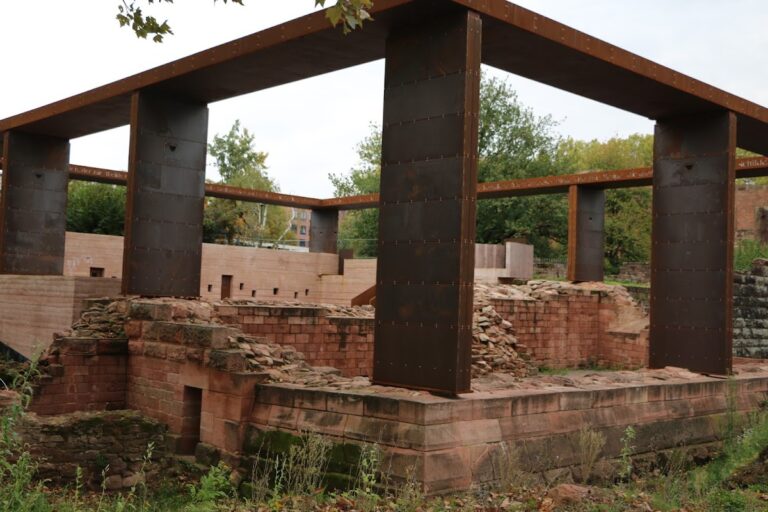
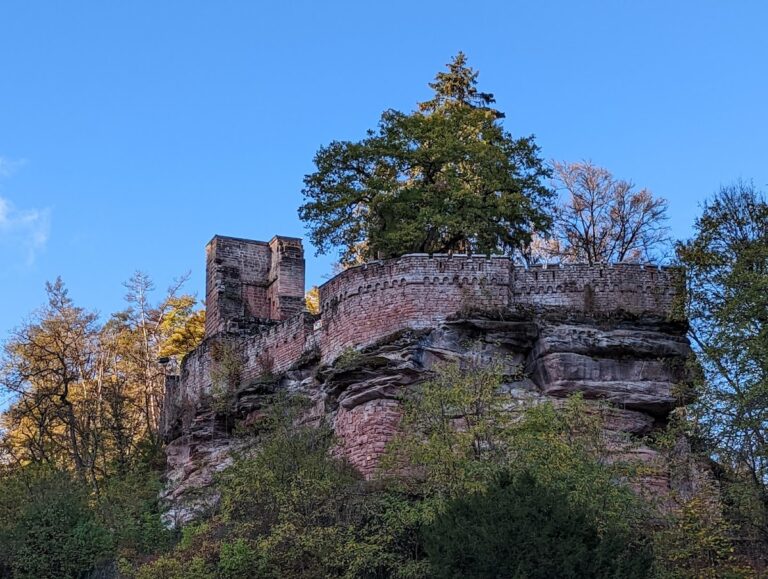
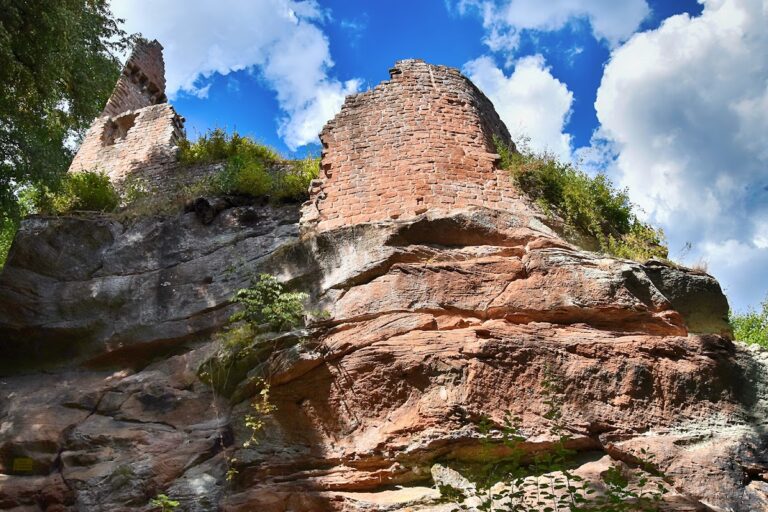
Beilstein was a hilltop rock castle built on an elevated rocky formation beside the federal road from Kaiserslautern toward Hochspeyer, at about 313 metres above sea level. The surviving remains consist mainly of masonry from the keep, the principal fortified and residential tower, together with parts of the castle wall, a portal, and the rock pinnacle. The late-1950s excavations indicate that the original fortified installation was substantially larger than the visible ruins.
Rock pinnacle and surviving masonry
Keep remains
Recesses cut into the rock pinnacle held the roof beams of buildings that once stood around it. These marks preserve evidence of structures no longer standing and show how the rocky core was incorporated into the castle. Parts of the wall and a portal survive alongside the keep masonry, while the exposed rock pinnacle remains the most distinctive element of the ruined complex.
Nearby sites