Barnstaple Long Bridge: A Medieval Crossing of the River Taw
Site at a Glance
- Popularity
- Medium
- Country
- United Kingdom
- Primary era
- Medieval
- Eras represented
- Medieval, Early Modern, Modern
- Civilizations
- British, English
- Site type
- Infrastructure
- Remains
- Bridge
On this page7 sections
History
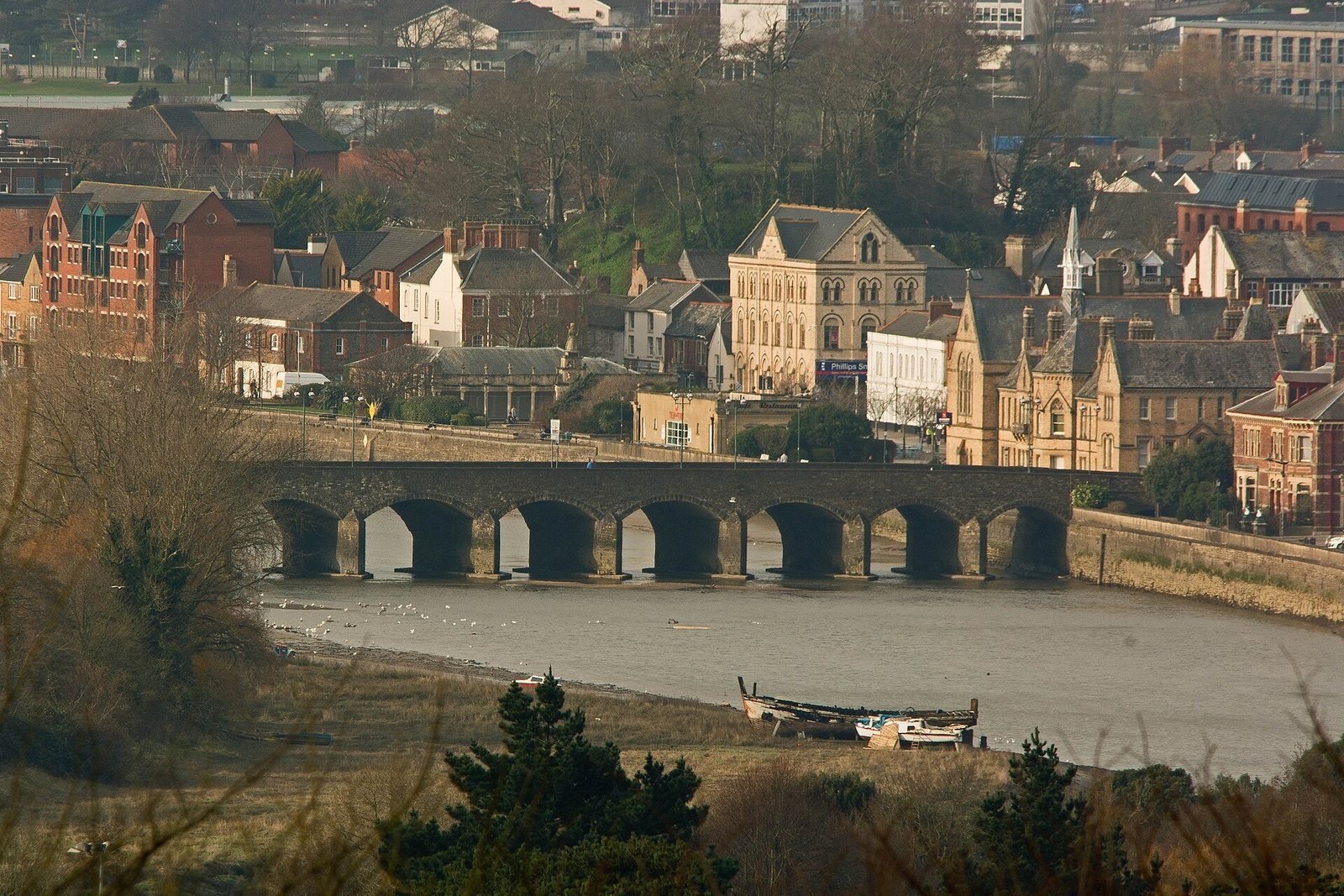
Barnstaple Long Bridge is a stone crossing of the River Taw in Barnstaple, Devon, United Kingdom. Work around 1280 and again in 1333 accompanied its transition from an earlier timber bridge to stone. It is described as one of Britain’s largest medieval bridges.
Early bridge and medieval history
The date of Barnstaple’s first main crossing of the Taw is unclear. A timber bridge at the same location is attributed to the 12th century, and a will made in 1274 left money for its upkeep. Work followed around 1280 and in 1333. The change from timber to stone is associated with the earlier bridge’s instability and damage caused by high water.
The bridge was partly destroyed in 1437 and again in 1646. Three arches known as the Maiden Arches may initially have been wooden and replaced in stone during the 16th century, though their original form is uncertain.
Alterations and continuing use
The bridge was widened in 1796 and substantially altered in 1832–34 under James Green, an English civil engineer. A footpath was added during the 1830s, and cast iron was used to reinforce the structure. In 1962–64, another widening addressed traffic congestion. Victorian ironwork was removed, with the work intended to restore an appearance closer to that of the years between 1796 and 1832.
The Long Bridge Trust, a charitable body established to fund repairs and preservation, continues to manage the bridge. It is Grade I listed, the highest listed-building category for buildings of exceptional interest, and is designated an ancient monument. Traffic congestion remained considerable until the Barnstaple Western Bypass opened in May 2007, diverting traffic bound for Braunton and Ilfracombe away from the town centre and bridge.
Remains
Arches and later construction
Masonry arches
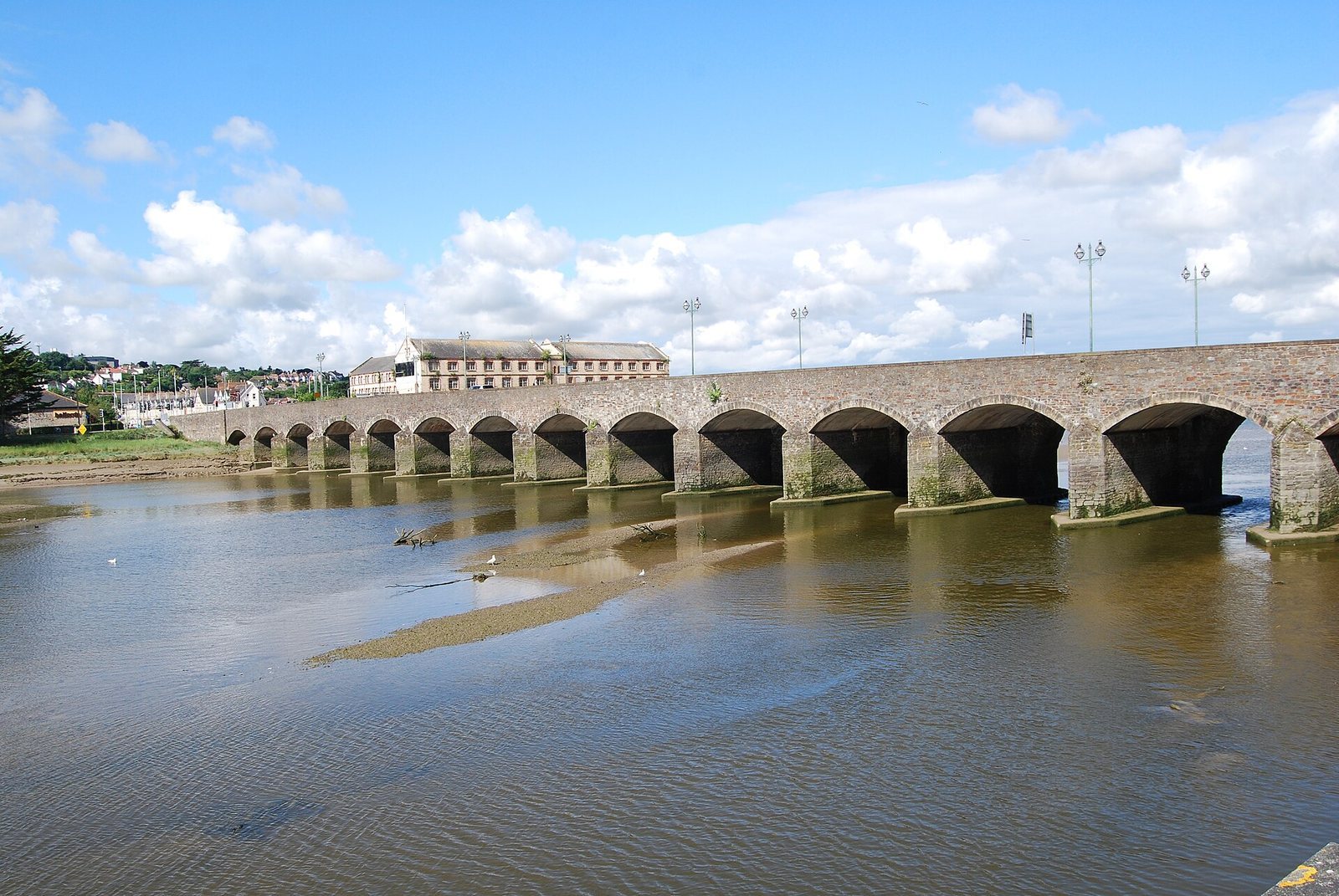
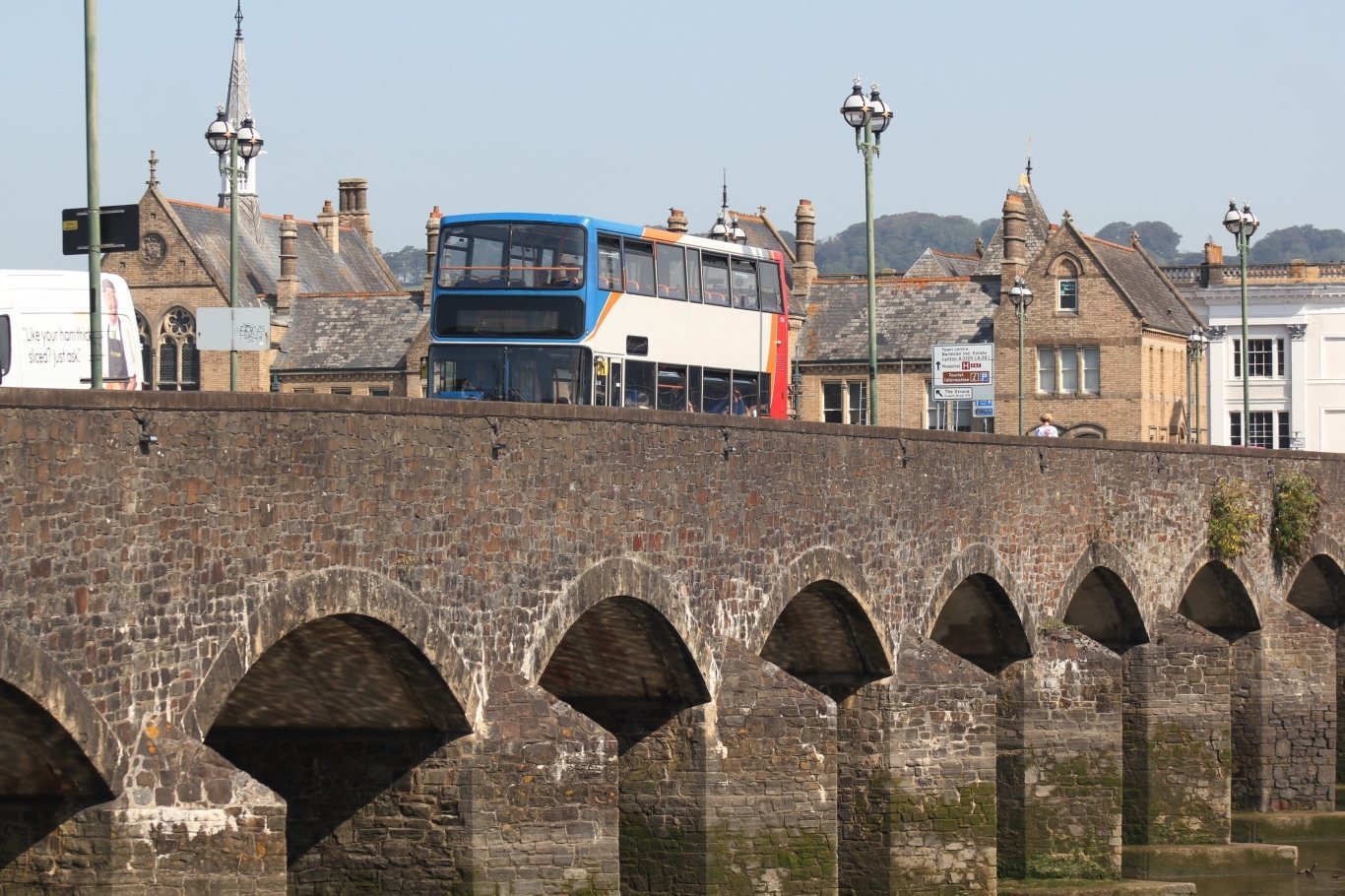
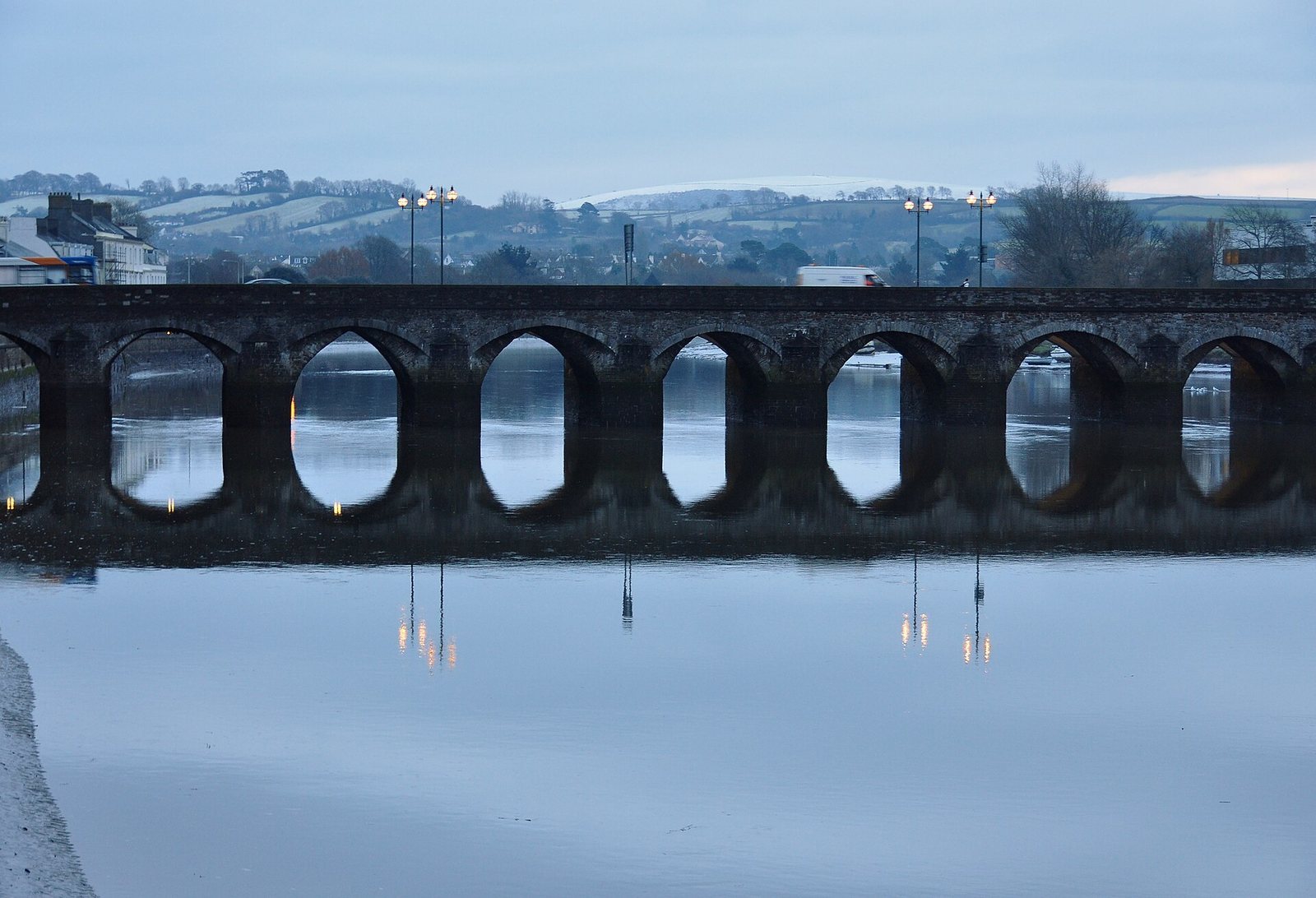
The bridge extends for 159 metres and now has 16 pointed masonry arches, with spans ranging from 5.5 to 7.9 metres. An earlier form is described as having 13 original pointed arches. The bridge carries the A3125 and provides for pedestrians.
Later widening
During the 1832–34 works, the medieval structure was enclosed within a wider stone casing, while its core remained in place. The 1962–64 widening added a concrete structure on the upstream side and provided a broader pedestrian footway and carriageway. Some stonework in the deck above the original arches was replaced by concrete faced with masonry. The two sides consequently have noticeably different architectural treatments.