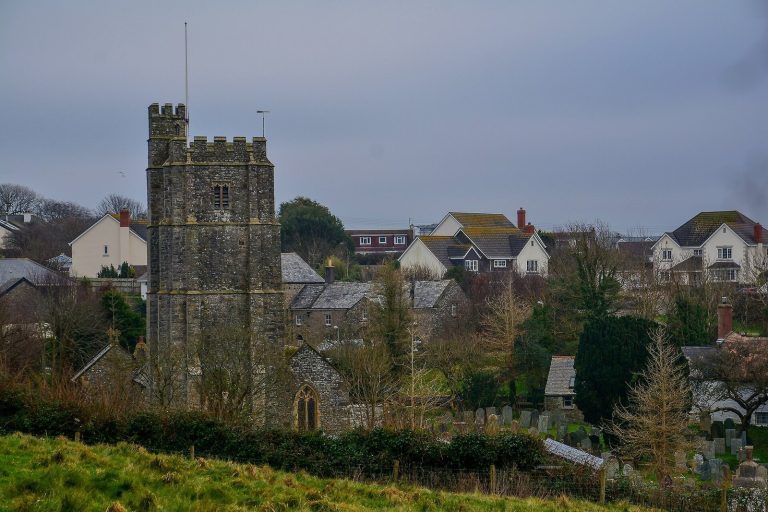
St Peter’s Church in Barnstaple: An Anglican Parish Church
Site at a Glance
- Rating
- 4.7
- Popularity
- Low
- Country
- United Kingdom
- Primary era
- Medieval
- Eras represented
- Medieval, Early Modern, Modern
- Civilizations
- British, English
- Site type
- Religious
- Remains
- Church
On this page12 sections
History
Medieval origins
St Peter’s Church in Barnstaple, United Kingdom, is the town’s Anglican parish church and belongs to the Diocese of Exeter. Its first stone building probably dates to around 1257. Tradition places a church here by 930, when Æthelstan, a tenth-century Anglo-Saxon king, is said to have granted Barnstaple its first charter.
Walter Treasurer was the first recorded rector, in 1257. The church was probably enlarged in 1318, when Walter de Stapledon, Bishop of Exeter, dedicated three altars. Barnstaple Priory, also called the Priory of St Mary Magdalene, belonged to the Cluniac reform movement within Benedictine monasticism. For a long period it held the advowson, the right to nominate a parish priest, and the rectory, the rector’s office and benefice.
Early modern church and civic life
A steeple stood at the church by 1388. After the Dissolution of the Monasteries, the English Crown’s sixteenth-century suppression of monastic institutions, three existing chantry chapels were converted into the north and south aisles. A chantry chapel was endowed for prayers, often for the dead. The aisles were rebuilt around 1670, with earlier wall monuments retained.
The Dodderidgian Library was established in 1664 by the widow of John Dodderidge (1610–1659), using books he had given or bequeathed to Barnstaple Corporation. Dodderidge represented Barnstaple in Parliament in 1646 and 1654. The collection left the church in 1888 for the North Devon Athenaeum, a literary and cultural institution, and moved in 1957 on permanent loan to Exeter University Library.
John Crang made the church’s organ in 1764. Sir George Amyand, a Barnstaple member of Parliament from 1754 to 1766, gave it to the church. Numerous seventeenth-century memorials to merchants, including several former mayors, reflect the prosperity of the town and its port.
Restoration
Galleries added in 1811 and 1825 led to the removal of many wall memorials and tablets. George Gilbert Scott began a major restoration in 1866, and his son John Oldrid Scott continued the work into the 1880s. The galleries were taken out, and many memorials were saved and placed in the Lady Chapel. George Gilbert Scott rejected his patrons’ proposal to demolish the tower. The changes drew criticism from Hoskins, who described the restored interior as dark and dull. The Lady Chapel was restored in 1911.
Remains
Plan and medieval fabric
The church’s plan changed from a cross-shaped layout to a rectangular one. The chancel was raised and widened, while the north and south aisles flank the main body of the church. The Lady Chapel is in the south aisle. Fragments of the tower and parts of the chancel date to the late thirteenth century.
Spire and north aisle windows
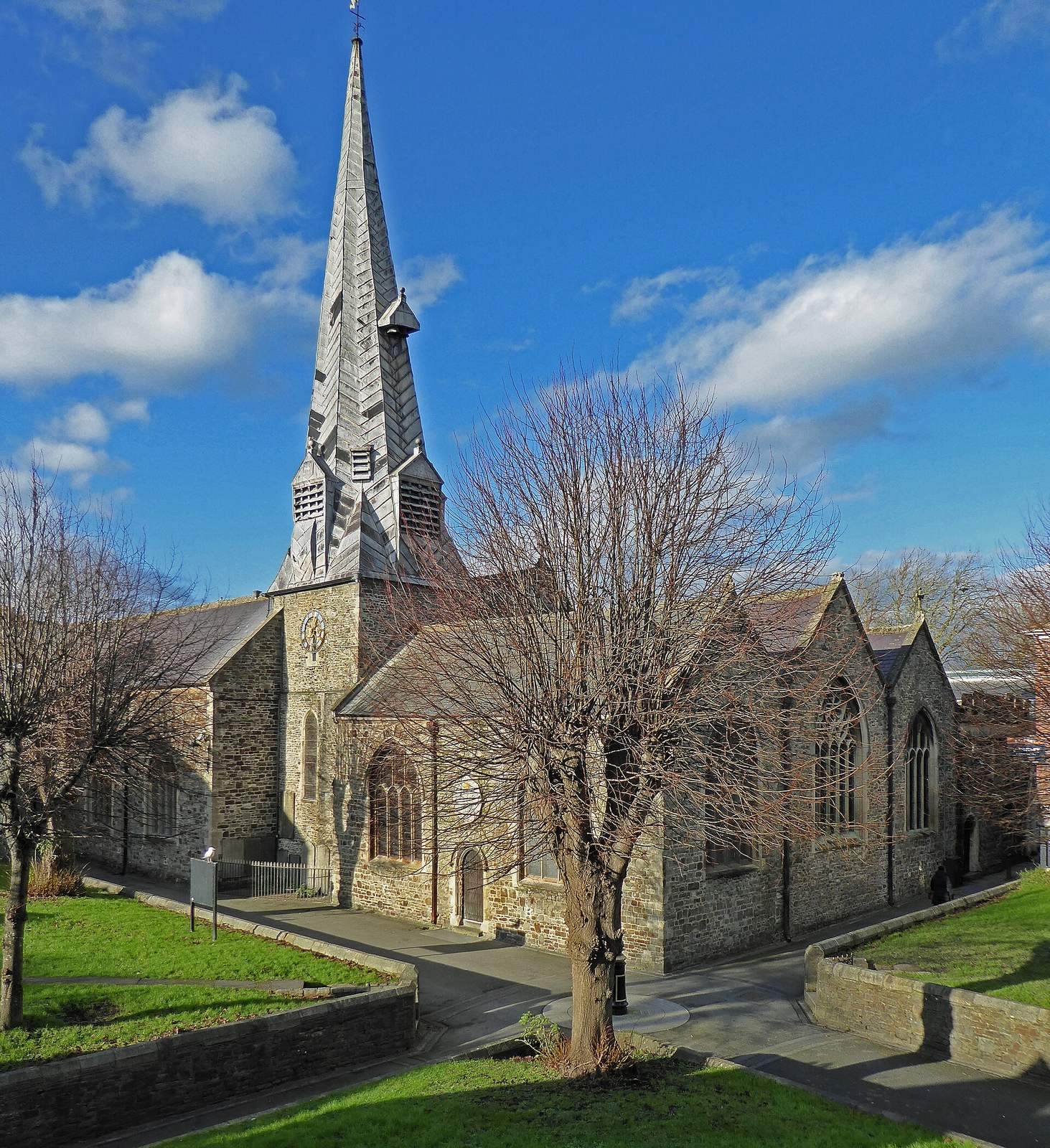
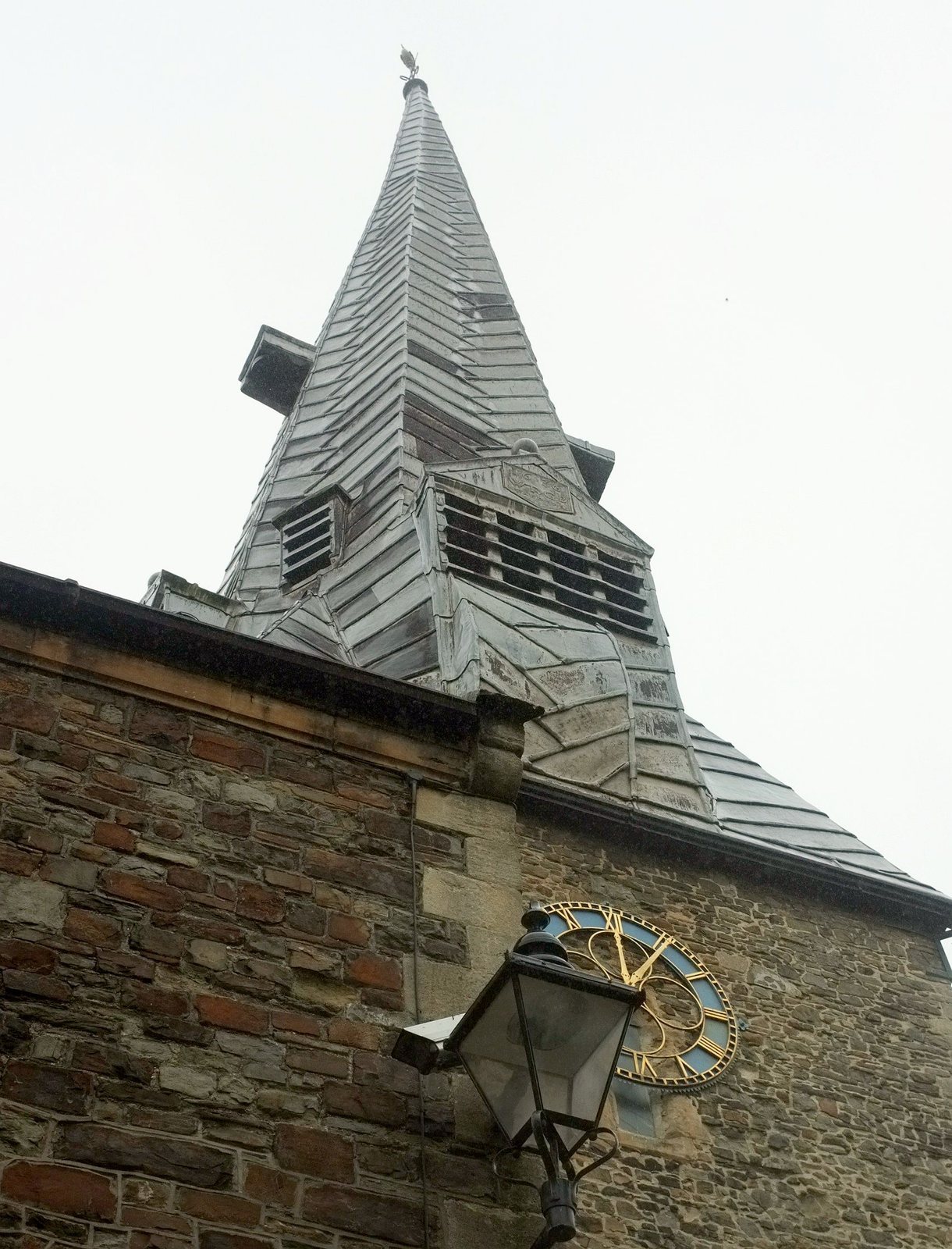
The present spire dates to the late seventeenth century. It is covered in lead and is a broach spire, an octagonal spire set on a square tower with triangular sections bridging the corners. Hoskins considered it England’s finest example of this type. The north aisle retains large seventeenth-century windows with straight tops and horizontal divisions called transoms.
Library, organ, and civic furnishings
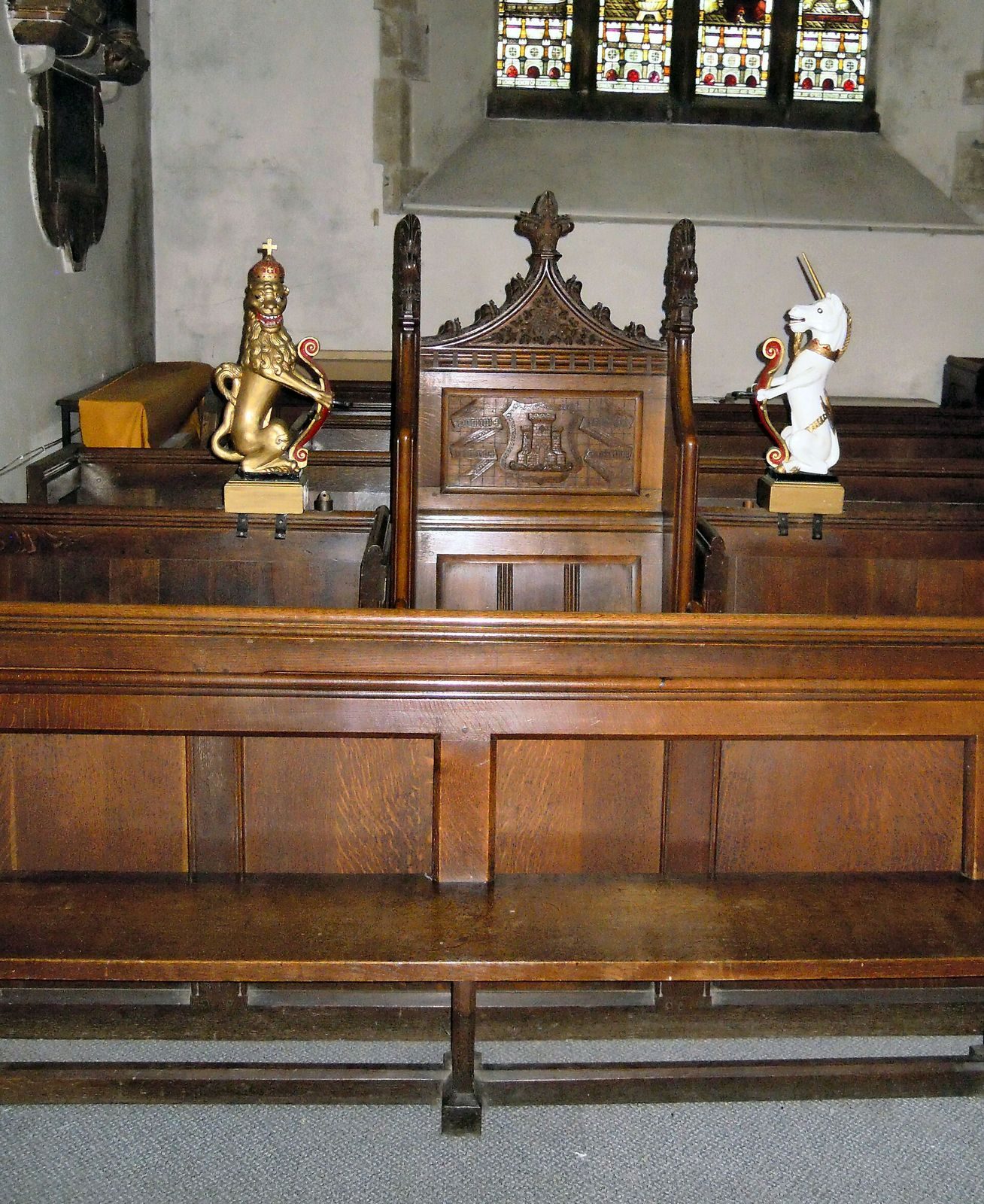
The two-storey Dodderidgian Library stands at the chancel’s north-east corner. Its wooden windows are divided into sections by mullions. The organ, one of Devon’s largest, bears Sir George Amyand’s heraldic arms: a green shield with a gold chevron between three gold sheaves, a smaller shield with unidentified arms, and the Red Hand of Ulster over the design. In the north transept, the Mayor of Barnstaple’s ceremonial pew takes the form of a large wooden armchair flanked by heraldic beasts.
Wall monuments
Martin Blake memorial
A monument dated 1634 commemorates the nine-year-old son and other children of Martin Blake, who died in 1673 and served as Vicar of Barnstaple. Its medallions, decorative panels, and sculpted mottoes refer to Blake’s position and his suffering for the Royalist cause.
Merchant memorials
Elizabeth Delbridge’s memorial commemorates her death in 1628 and identifies her as the wife of merchant John Delbridge (1564–1639), who served six times as Barnstaple’s member of Parliament and three times as mayor. The monument to Richard Beaple (1564–1643), mayor in 1607, 1621, and 1635, includes a roundel showing Penrose’s Almshouses, built between 1624 and 1627 in memory of Beaple’s son-in-law. A separate monument commemorates Raleigh Clapham, who died in 1636.
Civic memorials
Other monuments commemorate George Peard, who died in 1644; Richard Ferris, who died in 1649 and was mayor in 1632 and 1646; and Walter Tucker, who died in 1653 and was mayor in 1639. Thomas Horwood (1600–1658), mayor in 1640 and 1653, is also commemorated. A memorial to Gilbert II Paige, who died in 1669, connects him to his father-in-law Walter Tucker and to his father, Gilbert I Paige, who died in 1647 and was mayor in 1629 and 1641. Another monument commemorates Richard Harris, who died in 1688. Numerous wall memorials and tablets remain in the church.