Ballinasmale Priory: An Early Carmelite House in Ireland
Site at a Glance
- Rating
- 4.2
- Popularity
- Very Low
- Country
- Ireland
- Primary era
- Medieval
- Eras represented
- Medieval
- Civilizations
- English
- Site type
- Religious
- Remains
- Monastery
On this page7 sections
History
Ballinasmale Priory was a Carmelite house in Ballinsmaula, County Mayo, Ireland, dedicated to the Virgin Mary and founded in the thirteenth century by the Prendergast family. It was among the earliest Carmelite foundations in Ireland and stood about five kilometres from Knock within the Diocese of Tuam. The priory was also known as Ballinasmall and in Latin as Monasterium Smalense.
Foundation and medieval endowment
The Prendergasts had already founded the Augustinian house at Enniscorthy around 1240. At Ballinasmale, they established a Carmelite community during the thirteenth century. The Carmelite Fintan O’Brien placed the foundation more narrowly in 1288 or 1289, although no surviving evidence confirms those exact years. The house possessed land and a mill, giving the community an agricultural and economic base.
Survival through the Reformation
The Reformation in Ireland brought the suppression of religious houses and the transfer of their property to secular or royal ownership. Ballinasmale initially survived the dissolutions that began in 1536. In 1541, Eugene MacBrehon, a Carmelite from Ballinasmale, was appointed Bishop of Mayo by Pope Paul III, who led the Catholic Church from 1534 to 1549. MacBrehon was also recognized by the English Crown during the reign of Mary I.
A communication to the Carmelite general chapter in 1570 stated that four or five Carmelite houses still remained in Ireland. The chapter directed Irish Carmelites to visit these communities and continue wearing the habit, unless they had abandoned the faith. Peter O’Dwyer regarded Ballinasmale as one of the houses that had survived this period.
Secularization and divided Carmelite claims
Ballinasmale was later secularized, meaning that the priory or its property was removed from ecclesiastical control. Its value was assessed at 13 shillings and 4 pence. A 1585 record places its transfer, together with Brize Castle, in the hands of Francis Barkly. Another record states that in 1605 the prior surrendered part of the land and the mill, which were valued at 3 shillings. Walter Harris named Sir John King as the recipient in 1745, while Aubrey Gwynn and R. Neville Hadcock placed the transfer in 1605 or 1606.
From 1625, the Discalced Carmelites began arriving in Ireland. This reformed branch, founded in 1593, differed from the older Calced, or shod, Carmelites. Attempts by the Discalced Carmelites to take over houses abandoned by the older branch led to conflict until an agreement was reached in 1633. In 1636, Theodore Stratius, superior general of the Calced Carmelites, transferred Ballinasmale to Henry Murphy, apparently a Discalced Carmelite. The Discalced community later abandoned the priory.
Restoration of the Carmelite community
Efforts to revive the Irish province of the Calced Carmelites developed in France and Belgium. William Tobin, one of the few remaining Calced Carmelites in Ireland, stated in 1643 that Ballinasmale was available. William Shee, an Irish Carmelite born in 1634 and educated in Seville, wrote in 1683 that he was the only Carmelite in Ireland. After becoming acting general for Ireland in 1685, Shee sent newly admitted Carmelites to the Continent for training, including Peter Hughes, who studied in Touraine.
After the death of William III, Peter Hughes returned to Ireland and recovered Ballinasmale for the Carmelites. He recruited new members and sent them to France or Spain for study. The priory had again become a monastery by 1715. John Burk was elected prior at the first Irish Carmelite provincial chapter held since the Reformation, in 1741. When the Irish Carmelite province was restored in 1744, Ballinasmale was one of fifteen Carmelite monasteries in Ireland.
Nineteenth-century decline and dissolution
By 1795, William Seward described Ballinasmale as an extensive building, with parts still visible. Its condition deteriorated during the following decades. In January 1840, Richard Colgan found the monastic house in a miserable state and described its church as resembling a barn. He considered the prior an excellent but very old and weak man, while the recent arrival of the young Carmelite John Carr offered some hope of improvement.
Carr was elected prior in 1843 but became prior of Thergar at the next provincial chapter in 1846, leaving the older Carmelite John Lavin alone at Ballinasmale. Cornelius Crotty was appointed prior in 1849 but remained in Dublin. He sought either a transfer to a reformed Irish monastery or permission to join the Trappists, arguing that Irish Carmelites lived like secular priests. A report to Rome in 1850 mentioned only Lavin, then about eighty years old, and described the priory as so poor that it had no taxes to pay. After Lavin died in October 1852, Ballinasmale ceased to function as a Carmelite monastery in 1853.
Remains
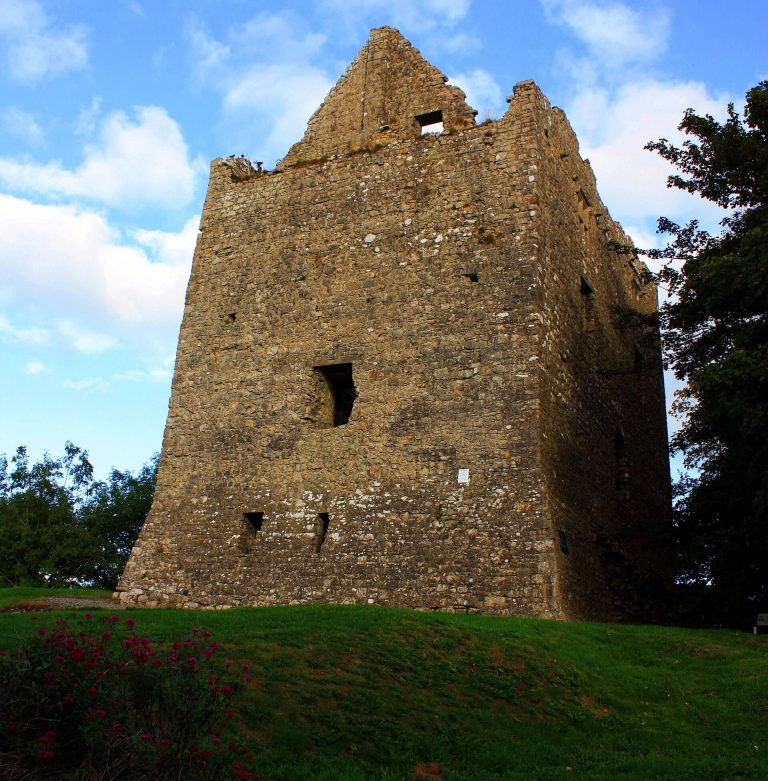
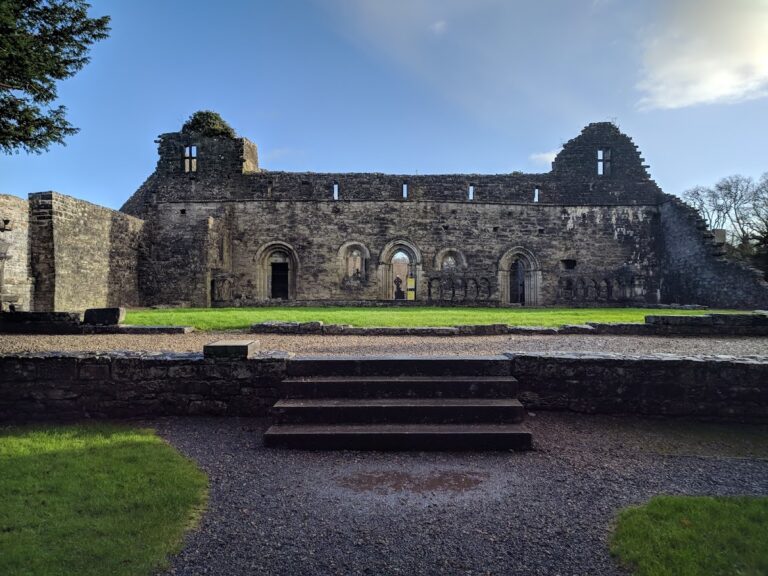
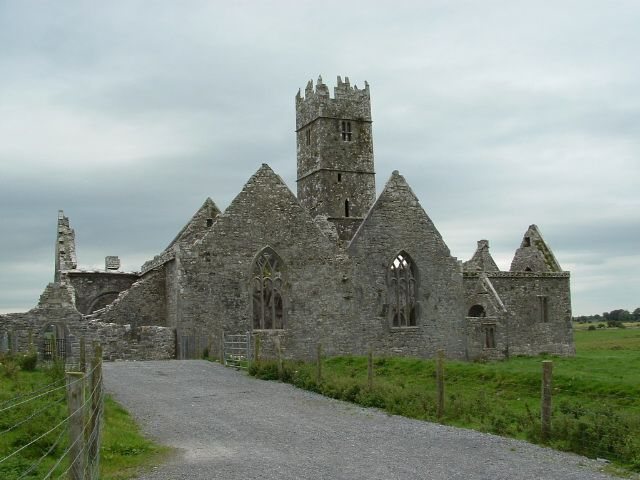
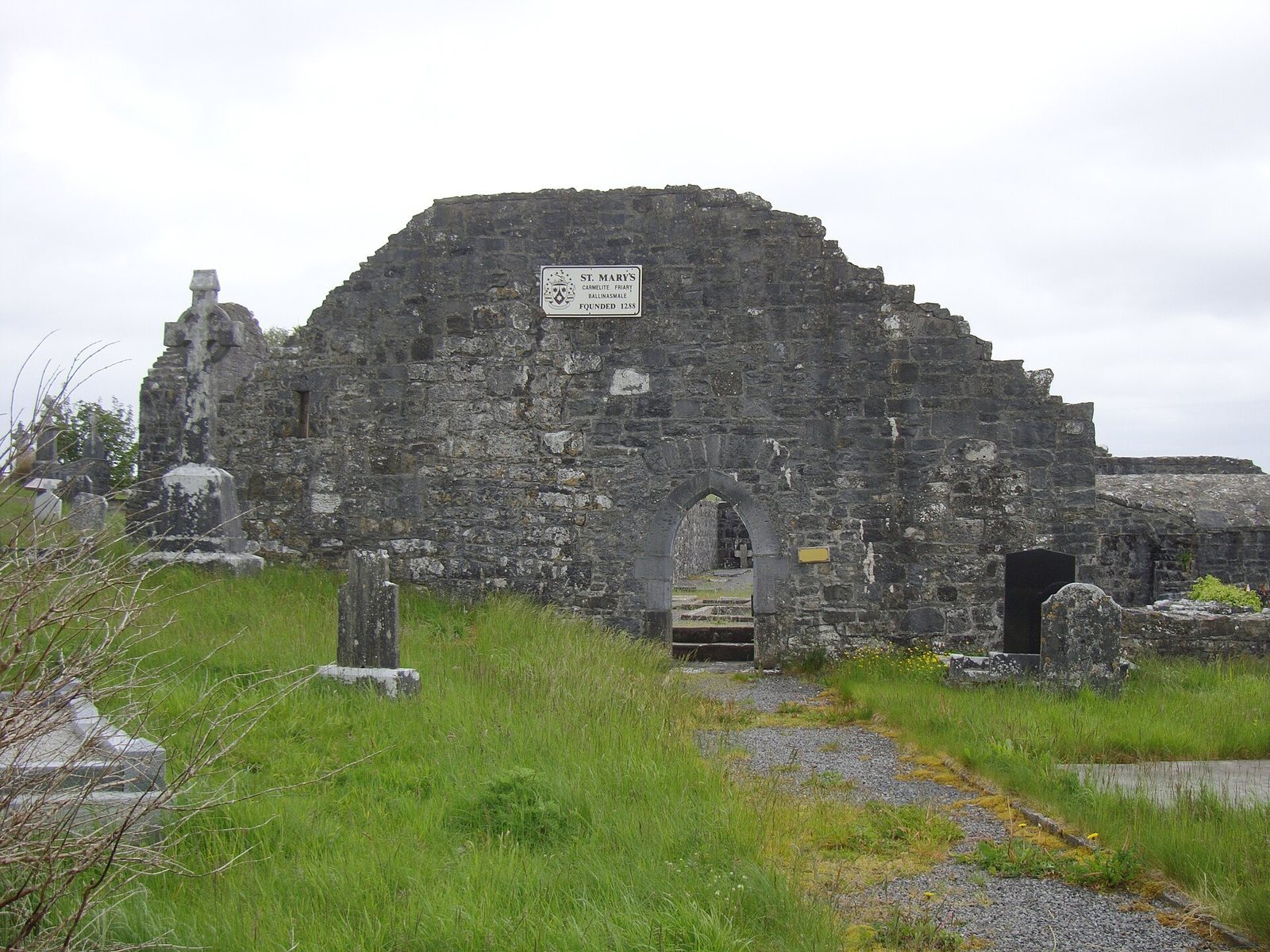
Ballinasmale’s surviving physical record consists of an extensive monastic building associated with land and a mill. In 1795, parts of the building were still visible, indicating that the priory retained substantial above-ground fabric at that time. By 1840, the monastic house was in poor condition, while the church had an appearance that Richard Colgan compared to a barn. These descriptions place the remaining buildings within a long process of decline after the community’s medieval foundation, later survival, and repeated changes of ownership and use.