Arundel Cathedral: A Gothic Revival Catholic Cathedral
Site at a Glance
- Rating
- 4.7
- Popularity
- High
- Country
- United Kingdom
- Primary era
- Modern
- Eras represented
- Modern
- Civilizations
- British
- Site type
- Religious
- Remains
- Cathedral
On this page10 sections
History
Commission and parish church
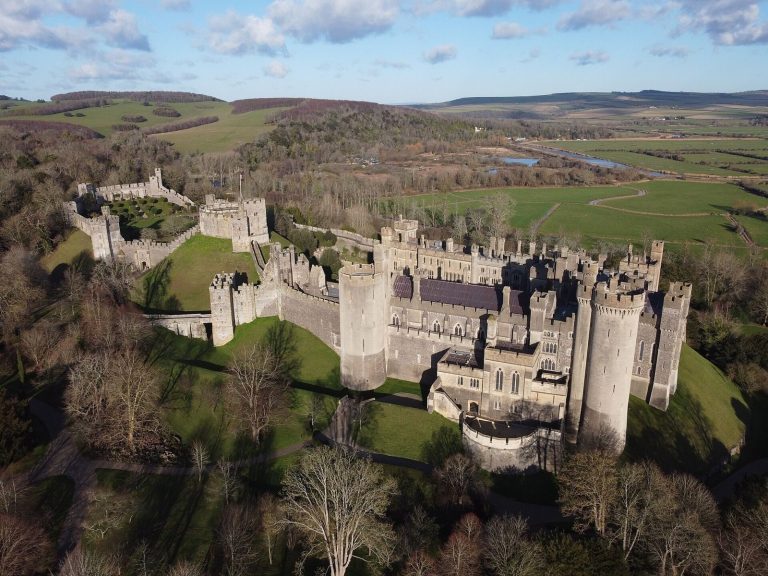
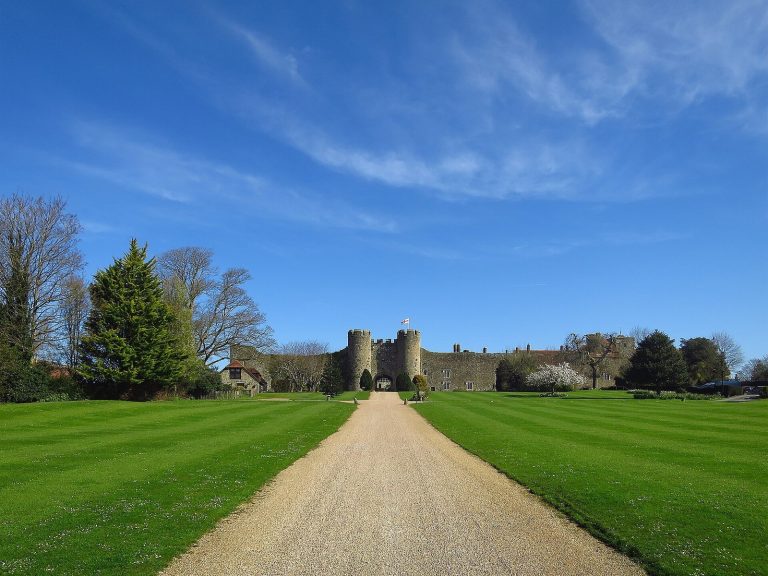
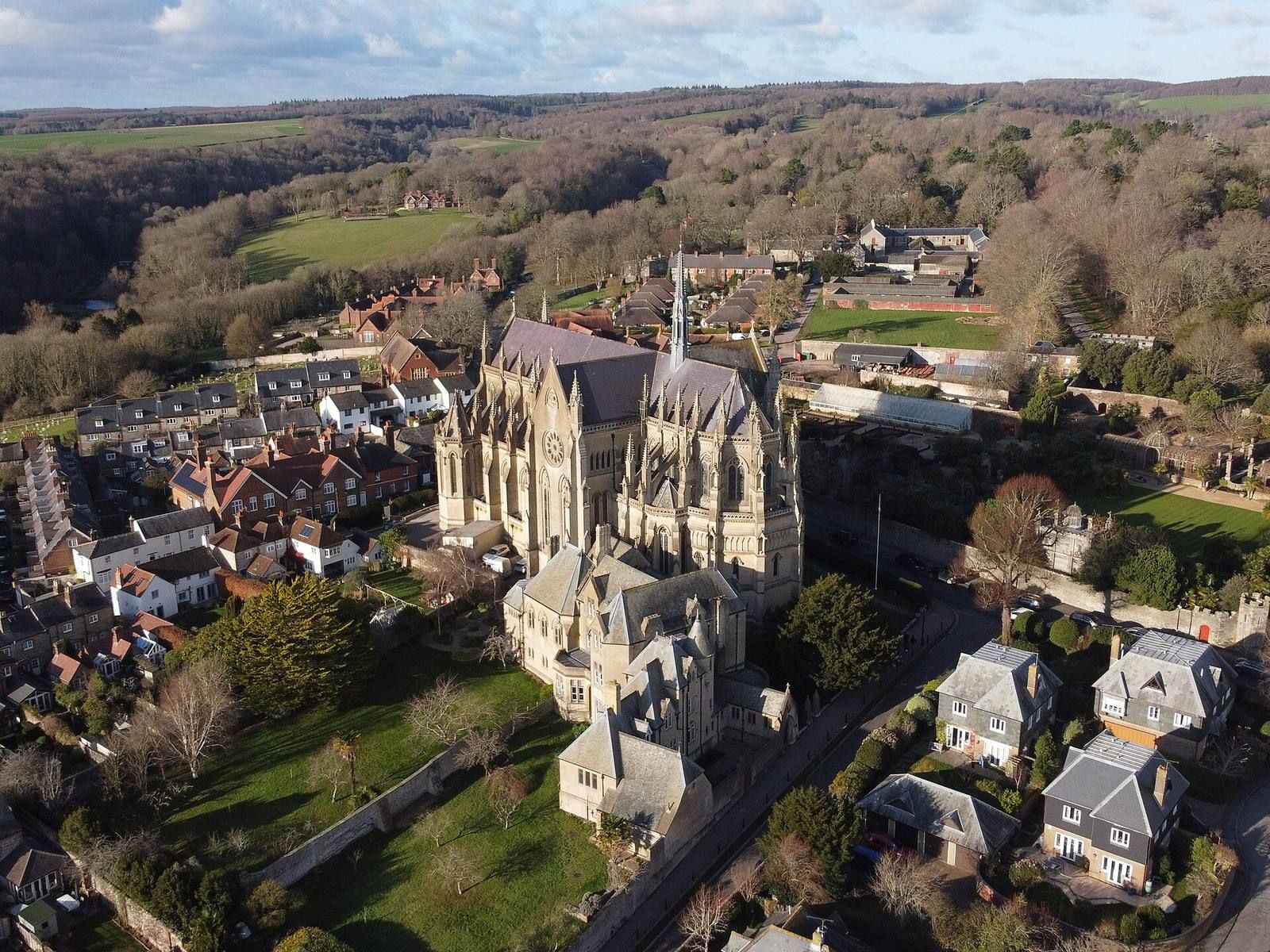
Arundel Cathedral is a Catholic cathedral in the United Kingdom, built on a ridge above the River Arun near Arundel Castle. The Howard family commissioned it between 1868 and 1873 in the Gothic Revival style, which adapts forms associated with medieval Gothic buildings, drawing on French Gothic architecture. The family’s ancestors had been based at the castle since 1102.
Following Catholic emancipation, the 1829 law that allowed Catholic parishes to be established lawfully, Henry Fitzalan-Howard, 15th Duke of Norfolk, asked British architect Joseph Hansom to design a church worthy of standing beside the castle. The project was intended to express the renewed public standing of English Catholicism. Dedicated in 1873, the building served first as Arundel’s Catholic parish church.
Cathedral and later history
When the Diocese of Arundel and Brighton was established in 1965, the church became its cathedral and the seat of its bishop. Its original dedication was to Our Lady, a title for the Virgin Mary, and St Philip Neri, a Catholic priest who founded the Oratory. Our Lady became the principal dedication when the church became a cathedral. After Philip Howard, an English Catholic nobleman venerated as a martyr, was canonized in 1970, his remains were transferred from Arundel Castle to the cathedral in 1971. In 1973, he replaced Philip Neri as the secondary dedication.
Henry Fitzalan-Howard introduced the Arundel Corpus Christi observance in 1877. Corpus Christi is a Catholic feast celebrating the Eucharist. The continuing celebration includes a flower carpet along the cathedral’s central aisle, followed after Mass by a procession carrying the Blessed Sacrament, the consecrated Eucharist, through flower-decorated streets to Arundel Castle for a final blessing.
On 26 March 1949, the cathedral and the piers around its churchyard received Grade I listed-building protection, England’s highest level. In 2002, Elizabeth Stratford became organist and master of the choristers, directing the cathedral choir. She was the first woman to serve as Director of Music at an English cathedral.
Remains
Plan and exterior
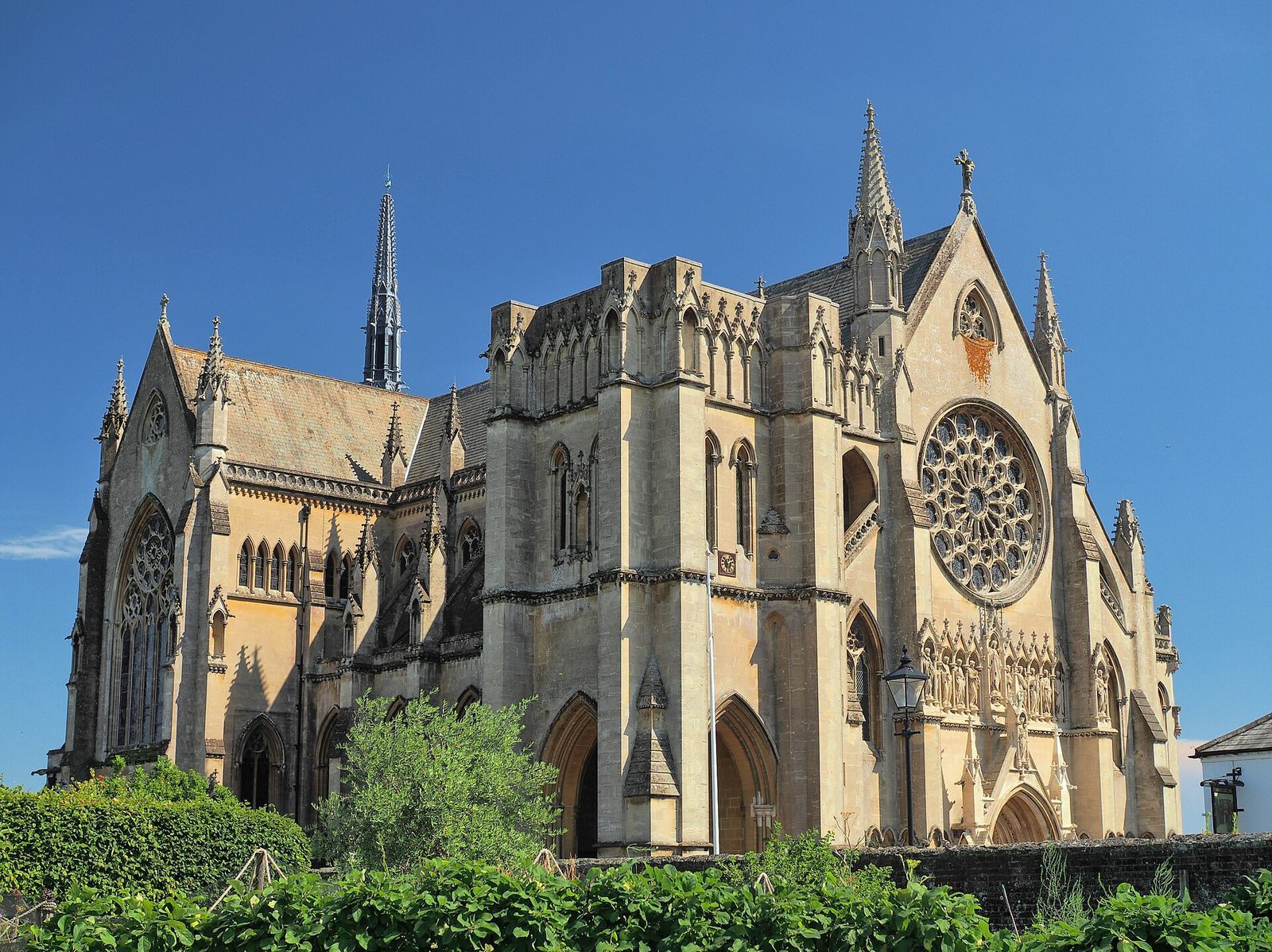
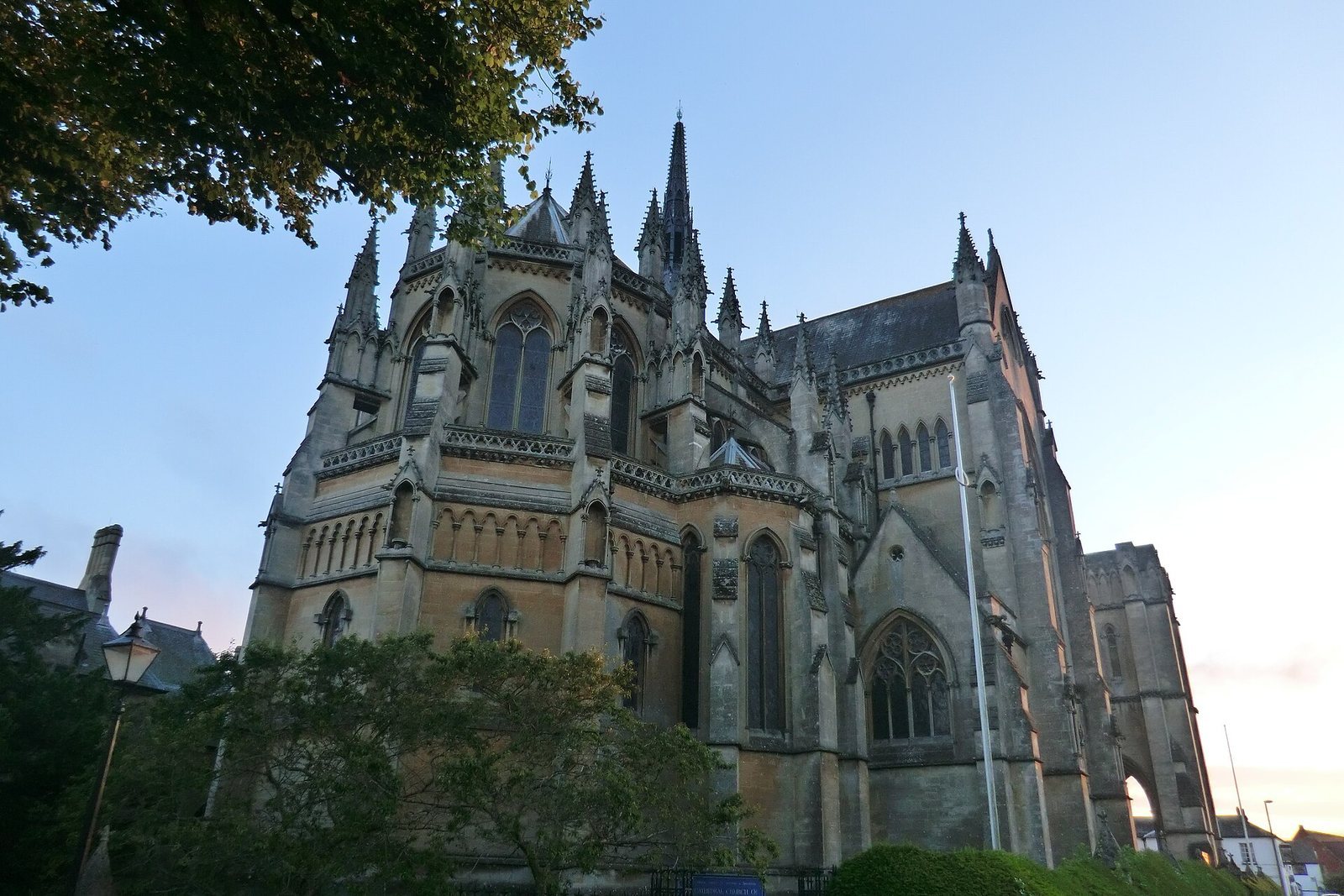
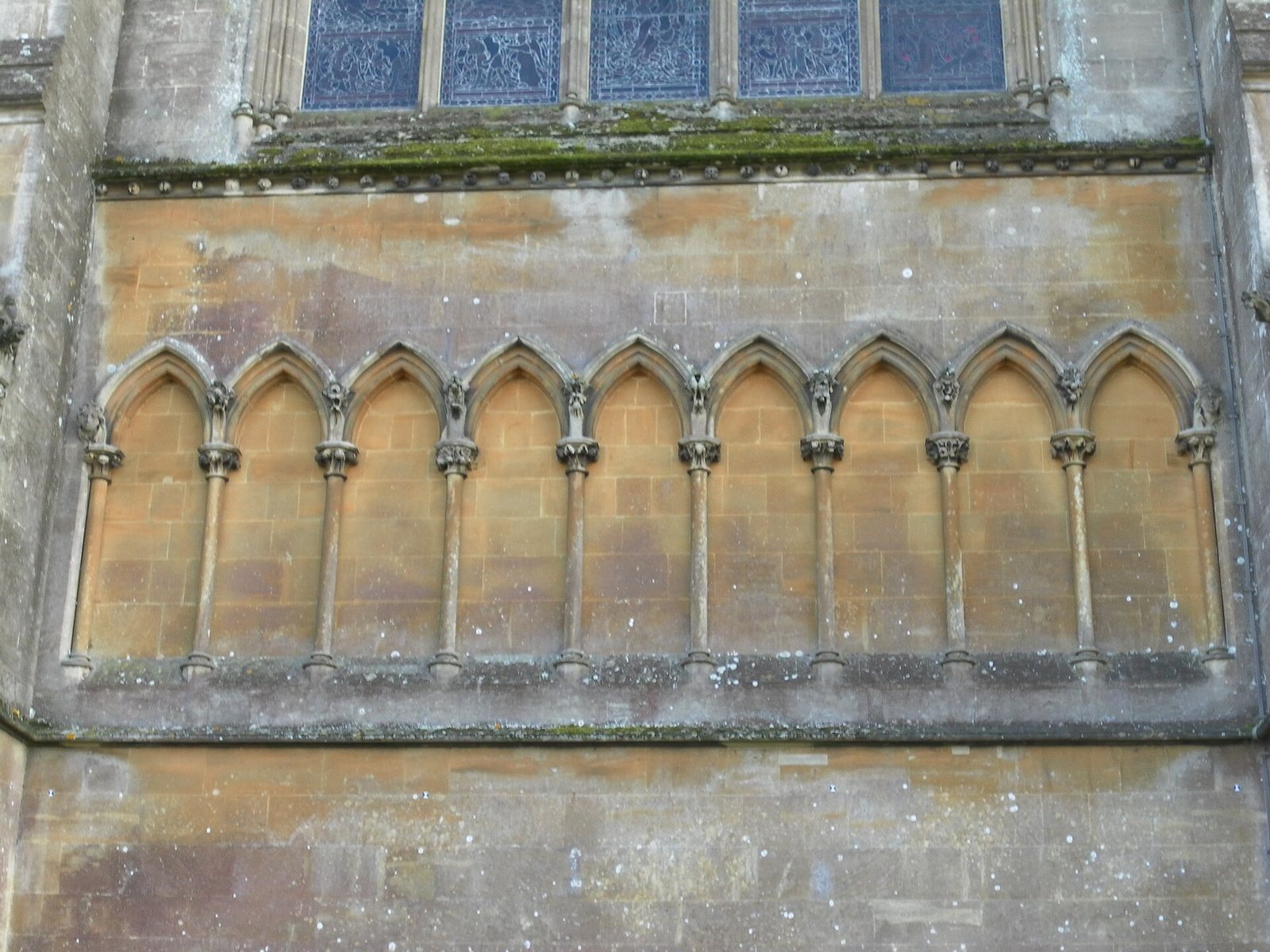
The cathedral has an east-facing, three-aisled basilica plan, with a central nave flanked by side aisles and a transept, the crosswise arm of the church. Brick faced with Bath stone forms the building. The nave is divided into six structural bays and the choir into three, ending in a multi-sided apse. The north tower rises to the height of the nave, while a slender roof turret stands above the crossing, where nave and transept meet. Large windows with ornamental stone divisions occupy the transept fronts. The entrance front has a rose window flanked by statues of Christ, Mary, and the apostles. Piers surround the churchyard.
Interior and furnishings
Nave, choir, and altar area
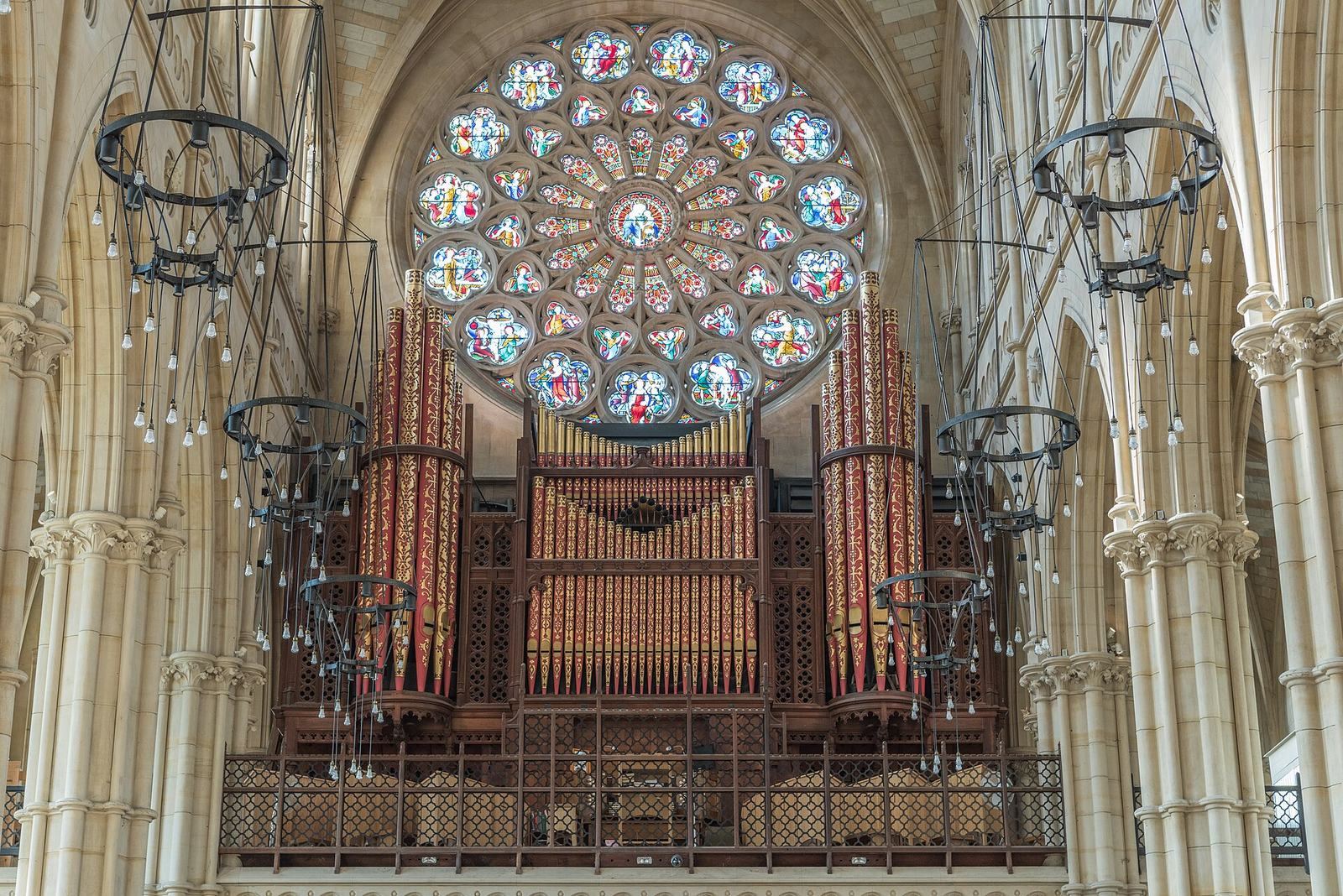
Tall grouped columns with floral capitals rise into arches opening toward the side aisles. The columns support groin vaults, vaulted ceilings formed by intersecting sections. Paired clerestory windows, a high row of windows above lower roofs, admit daylight. The organ gallery is shaped like a choir screen, a partition between choir and nave. Around the choir and sanctuary, the columns and arches of the ambulatory, a passage around that area, form the background to the altar.
Marian chapel
The Marian chapel, dedicated to the Virgin Mary, occupies the east wall of the left transept, parallel to the choir, and also serves as the Blessed Sacrament chapel. Its statue of the Virgin was modelled on a Lourdes Madonna by French sculptor Joseph-Hugues Fabisch.
Philip Howard shrine
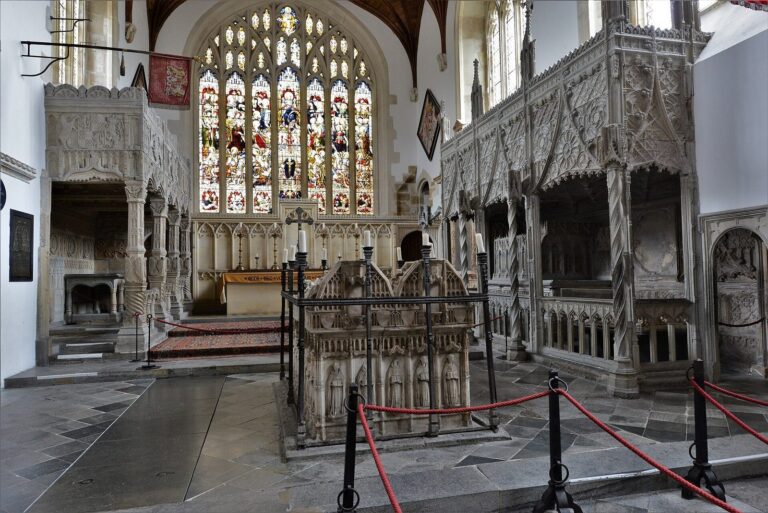
An altar and reliquary shrine for St Philip Howard stands against the transept’s north wall and holds his remains. A statue shows him in Elizabethan dress.
Organ
The organ by British builder William Hill stands in the west gallery. First installed at St John’s Church in Islington, it was acquired for the cathedral in 1873 and placed in a new case. It has 39 stops, controls for selecting groups of pipes, three hand keyboards, and a pedal division played with the feet. Electrical control and pneumatic power operate its keys and stops.