Artificial Caves of Casal do Pardo: Prehistoric Collective Tombs in Portugal
Site at a Glance
- Popularity
- Low
- Country
- Portugal
- Primary era
- Stone Age
- Eras represented
- Stone Age
- Civilizations
- Unclassified
- Site type
- Burial
- Remains
- Necropolis
On this page13 sections
History
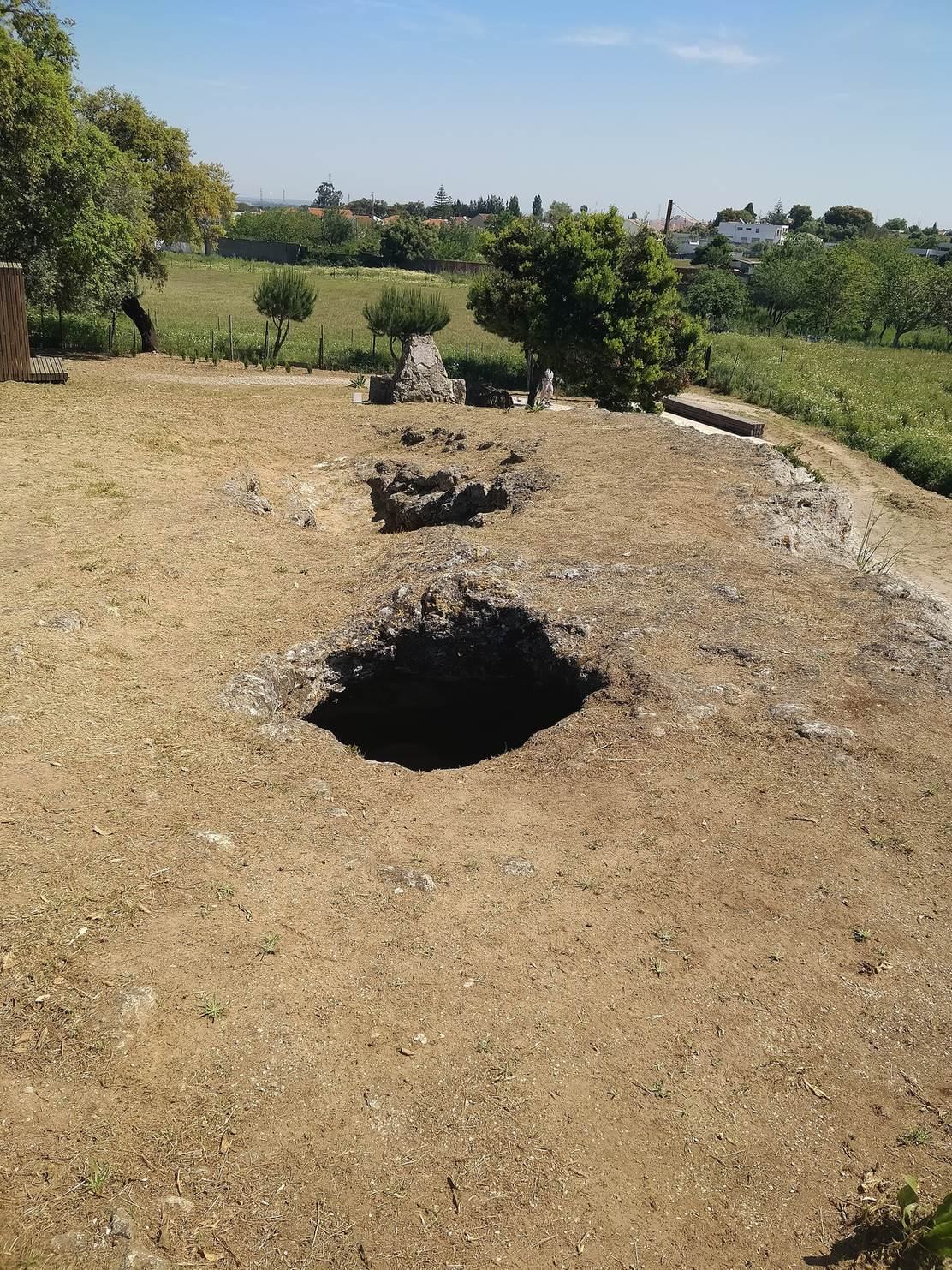
The Artificial caves of Casal do Pardo are four rock-cut collective tombs in Palmela, Portugal, about 25 km south of Lisbon. Dating to around 3000 BCE, they were probably used and reused until about 2000 BCE, from the Late Neolithic, the later Stone Age era associated with farming and settled communities, into the end of the Chalcolithic, or Copper Age.
The caves formed a necropolis where people were buried collectively, a practice that continued into the Copper Age. Their funerary purpose is comparable to that of Portugal’s antas, or dolmens, which followed similar burial traditions. The site is also associated with the Beaker culture, a prehistoric tradition known for its distinctive bell-shaped pottery. Its pottery forms and decoration have brought the caves international recognition.
Discovery and archaeological study
The caves were identified in 1876 during limestone extraction, making them the first artificial tombs of this type discovered in Portugal. From 1876 to 1878, António Mendes Correia and Agostinho Jose da Silva studied the site under the supervision of Carlos Ribeiro. Excavations resumed around 1900–05 under António Inácio Marques da Costa, and Cave 1 was excavated in 1906.
Vera Leisner catalogued finds from the caves in 1965. Objects taken away by early excavators had not been assigned precise original locations, so later archaeologists could not establish their original contexts. The caves became a National Monument of Portugal in 1934.
Remains
Layout and construction
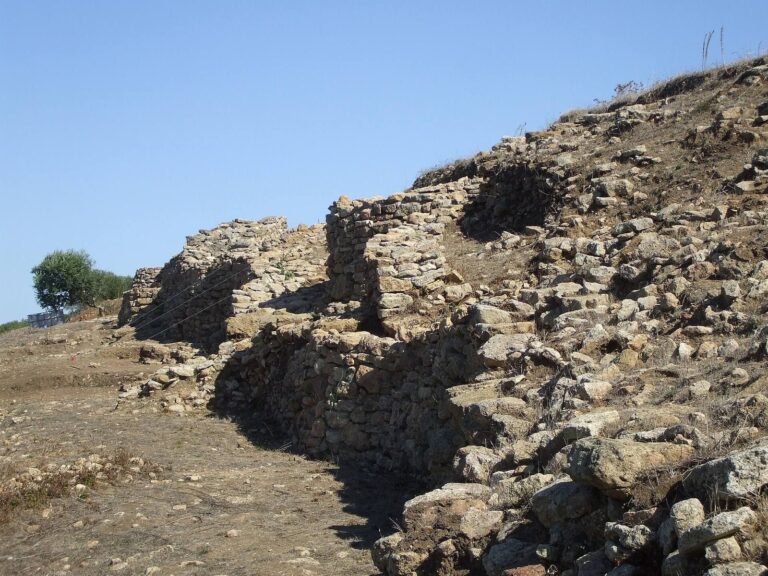
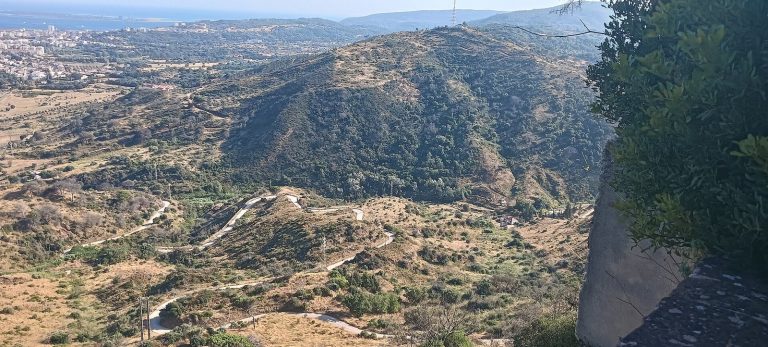
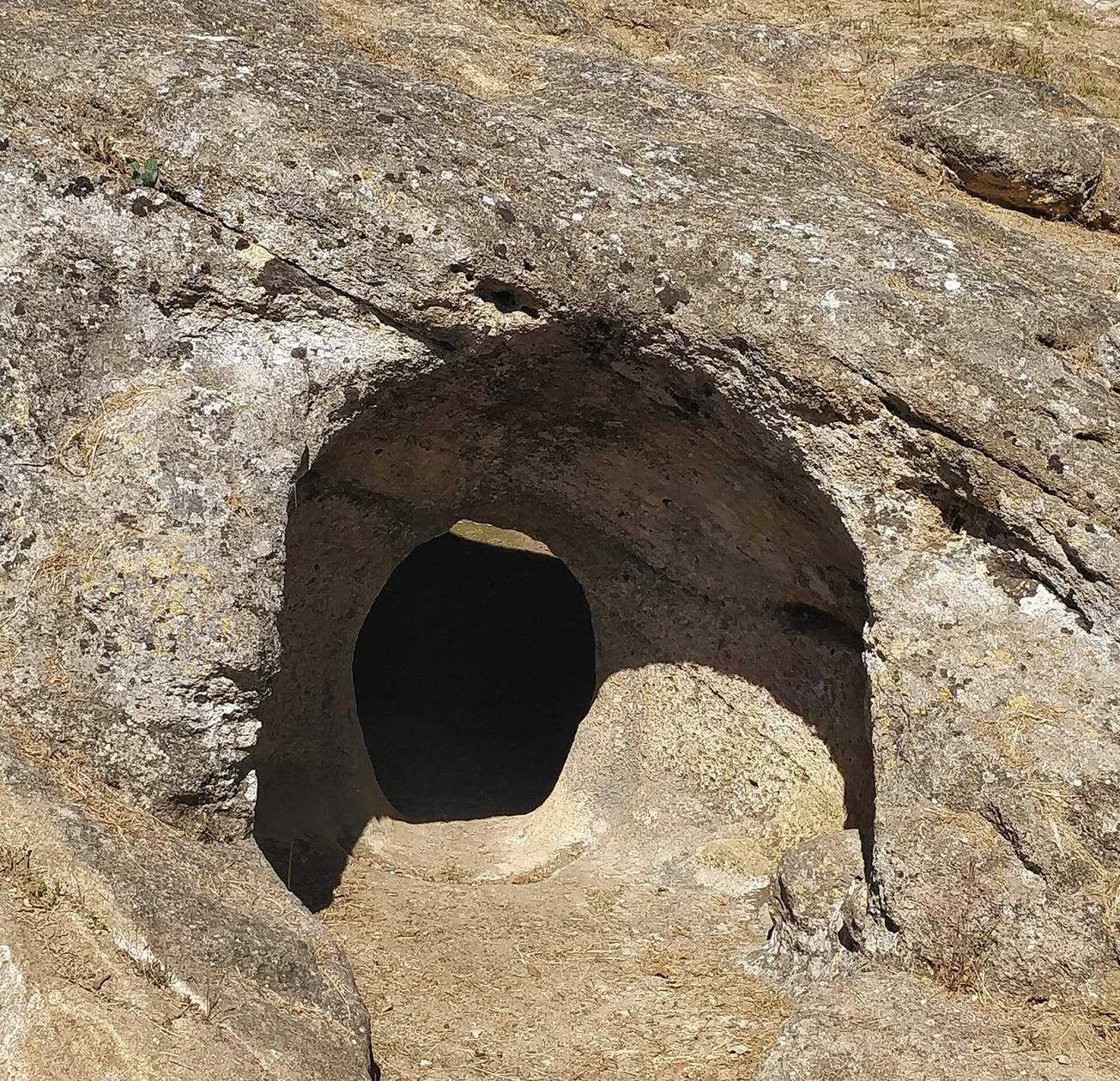
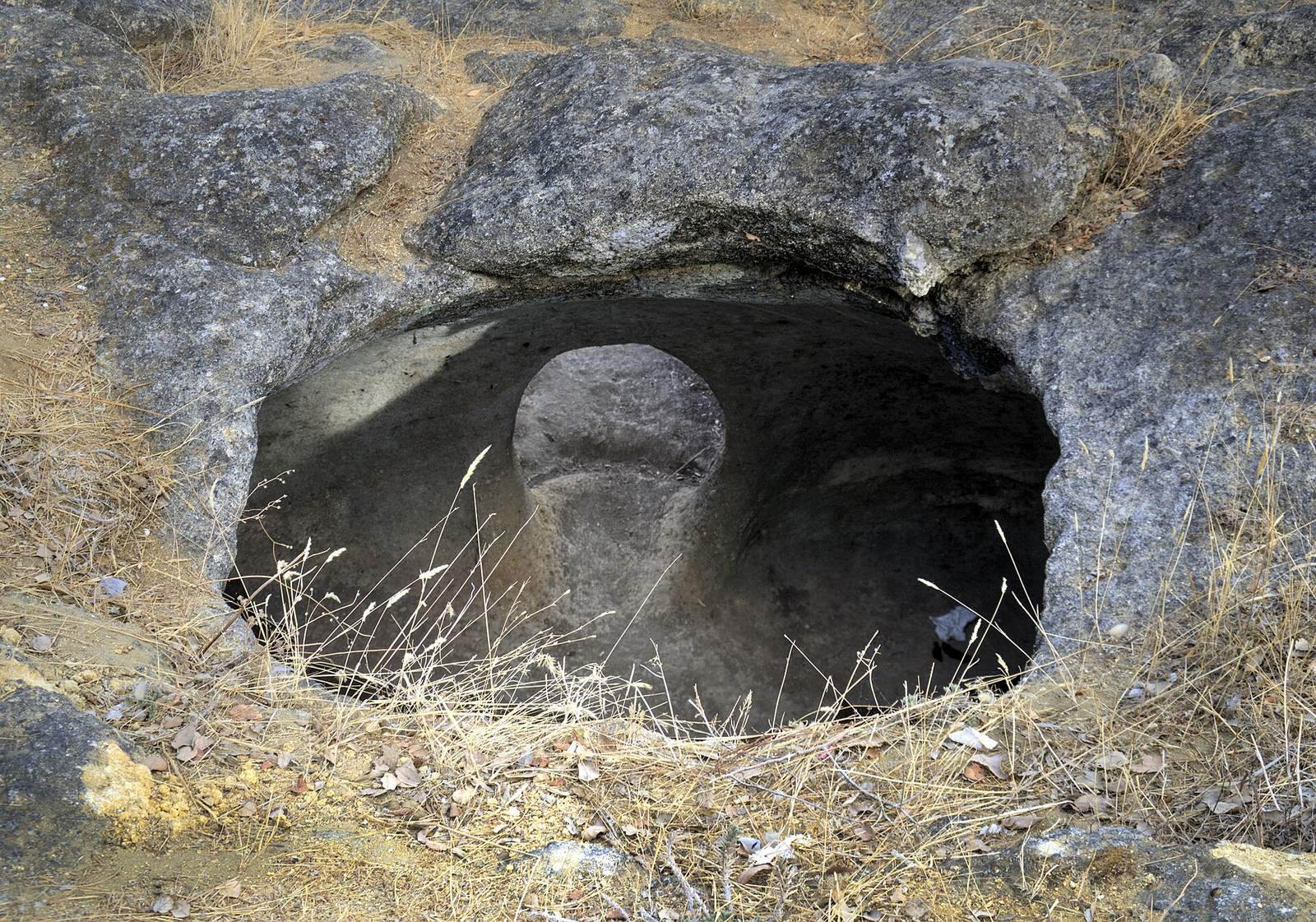
The four independent tombs lie in a small, elongated hill at the foot of the Serra do Louro. Stone tools were used to cut them into soft Miocene limestone, rock from a geological epoch long before human prehistory. The tombs are aligned east to west. Each has an entrance and corridor leading to an antechamber, or small room before the main chamber, and a large, rounded burial chamber. A circular opening above the chamber allowed bodies to be lowered inside when the chamber and corridor were full; a lid then covered the opening. The two best-preserved tombs have domed chambers about 4–5 m across and up to 2.30 m high.
Individual tombs
Cave 1
When excavated in 1906, Cave 1 measured 9.75 m in total. Its oval chamber measures 5.5 by 4.7 m, with a dome 2.3 m high. Part of the corridor is now covered by a road.
Cave 2
Cave 2 measured 11.5 m in length at excavation. Its nearly circular chamber is 4.5 by 4.6 m, and its dome reaches 2 m in height.
Cave 3
An old quarry disturbed Cave 3, which survives for about 9 m in total. Its burial chamber measures 5 by 5.3 m; the height at the former centre of the dome is estimated at about 2.5 m.
Cave 4
Cave 4 is the least well preserved. Its corridor and part of its antechamber have been destroyed, while the chamber measures 4.7 by 4.1 m. Limestone extraction damaged two of the caves, leaving them with the appearance of alcoves rather than complete tombs.
Excavated remains
Burial remains and carved objects
Excavated material includes human remains, ritual objects, limestone idols, sculpted sacred stones, including phallic forms, decorated shale plaques and bone buttons. The finds also include small stone tools, flint blades, polished-stone axes and adzes, and other polished-stone objects.
Metalwork and personal ornaments
Arrowheads were made from flint and copper, and some copper objects contained traces of arsenic. The metal finds include leaf-shaped copper arrowheads and small gold objects. Jewelry and pendants were made from materials including shell, ivory, shark teeth, bone, lignite and minerals; some were gold.
Pottery
Beaker pottery was found chiefly in the access corridors. The vases and bowls generally date to the latter half of the third millennium BCE. The vases have an inverted-bell shape, with dotted or linear decoration. Bowls from the caves and nearby Castro of Chibanes, an ancient fortified settlement, share a distinctive incised decoration called the Palmela type. The earliest examples of these bowls were collected in the Palmela area.