Anio Novus: A Roman Aqueduct Supplying Rome
Site at a Glance
- Popularity
- High
- Country
- Italy
- Primary era
- Classical
- Eras represented
- Classical
- Civilizations
- Roman
- Site type
- Infrastructure
- Remains
- Aqueduct
On this page11 sections
History
The Anio Novus was a Roman aqueduct in Italy that carried water to Rome. Work began under Emperor Caligula in AD 38, and Emperor Claudius completed and dedicated it on August 1, AD 52, together with the Aqua Claudia. The two aqueducts cost an estimated 350 million sesterces combined. The Anio Novus was one of Rome’s four great aqueducts, alongside the Aqua Anio Vetus, Aqua Marcia, and Aqua Claudia. It ranked among the city’s longest water routes and supplied more water than any other aqueduct.
Water sources and quality
At first, the aqueduct drew from the Anio River. The river crossed cultivated land and had loose banks, so its water could be muddy and discolored even in dry weather. Before Frontinus’s reforms, the Anio Novus helped make up shortages in other aqueducts. Its water was also blended with supplies from the Aqua Claudia and Aqua Tepula, making those waters more turbid.
Emperor Trajan later improved the supply by connecting the aqueduct to water from two of the three lakes upstream at Subiaco. Nero had created those lakes with dams to serve the grounds of his villa. During the medieval period, the river swept the dams away. The new water source extended the aqueduct’s route.
Regulation and distribution
Frontinus, the Roman official responsible for the city’s water supply, recorded its flow in quinariae, a Roman unit for measuring water. He gave the regulated flow as 3,263 quinariae, equivalent to about 135,000 cubic metres per day. At the aqueduct’s head he measured 4,738, while its recorded distribution was 4,211. He attributed the shortfall of 527 quinariae, along with further losses, to water being taken illegally along the route.
Outside Rome, the aqueduct distributed 1,145 quinariae, about 48,000 cubic metres per day. Of this amount, 731, or 64 percent, went to the emperor, while private users received 414, or 36 percent. Together with the Aqua Claudia, the Anio Novus supplied 3,824 quinariae per day, about 159,000 cubic metres, to Rome’s fourteen districts through 92 distribution tanks. The emperor received 779 quinariae of this combined supply, private users 1,839, and public uses 1,206. The public allocation included water for 18 workshops, 12 entertainment venues, 226 basins, and nine camps.
Repairs and restoration
The aqueduct’s construction was considered poor in quality, and repairs were needed within several decades. Emperor Vespasian carried out an extensive restoration around AD 71. Further work followed under Trajan, with smaller repairs under Hadrian. The Severan dynasty, which ruled in the late second and early third centuries, restored the aqueduct in AD 201. Additional repairs took place between AD 201 and 381, though their precise dates are uncertain.
Remains
Route and construction
From the Anio valley to Rome
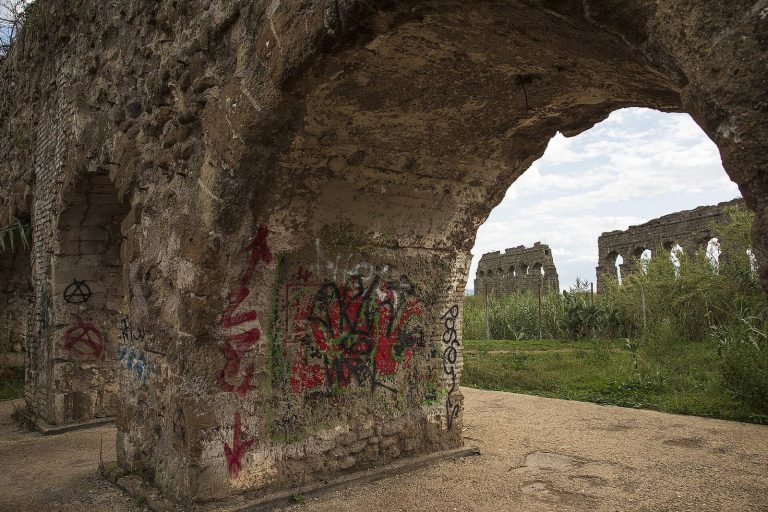
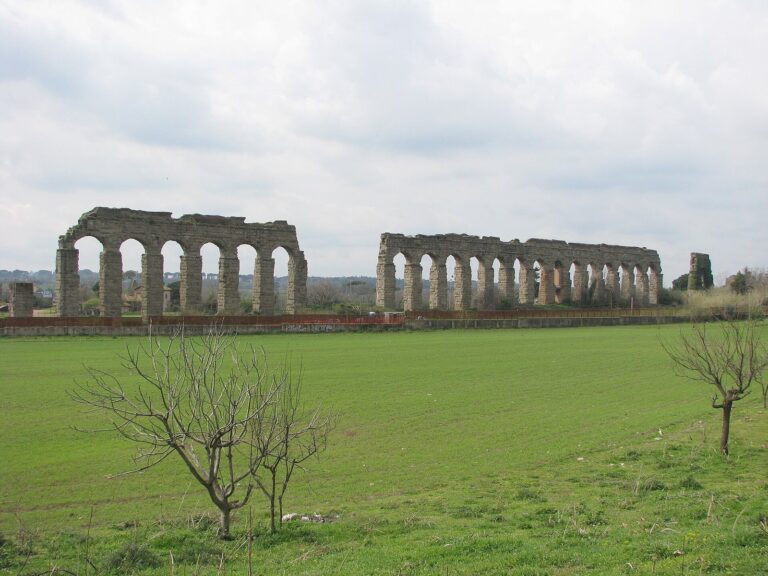
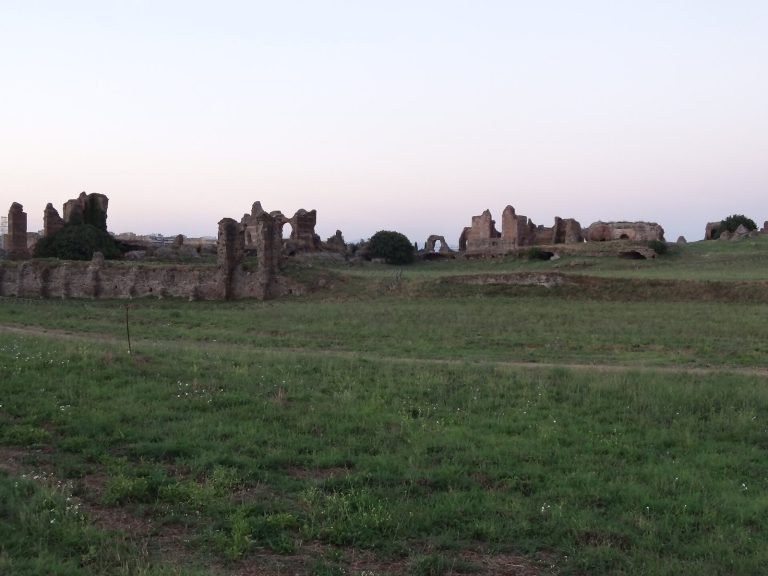
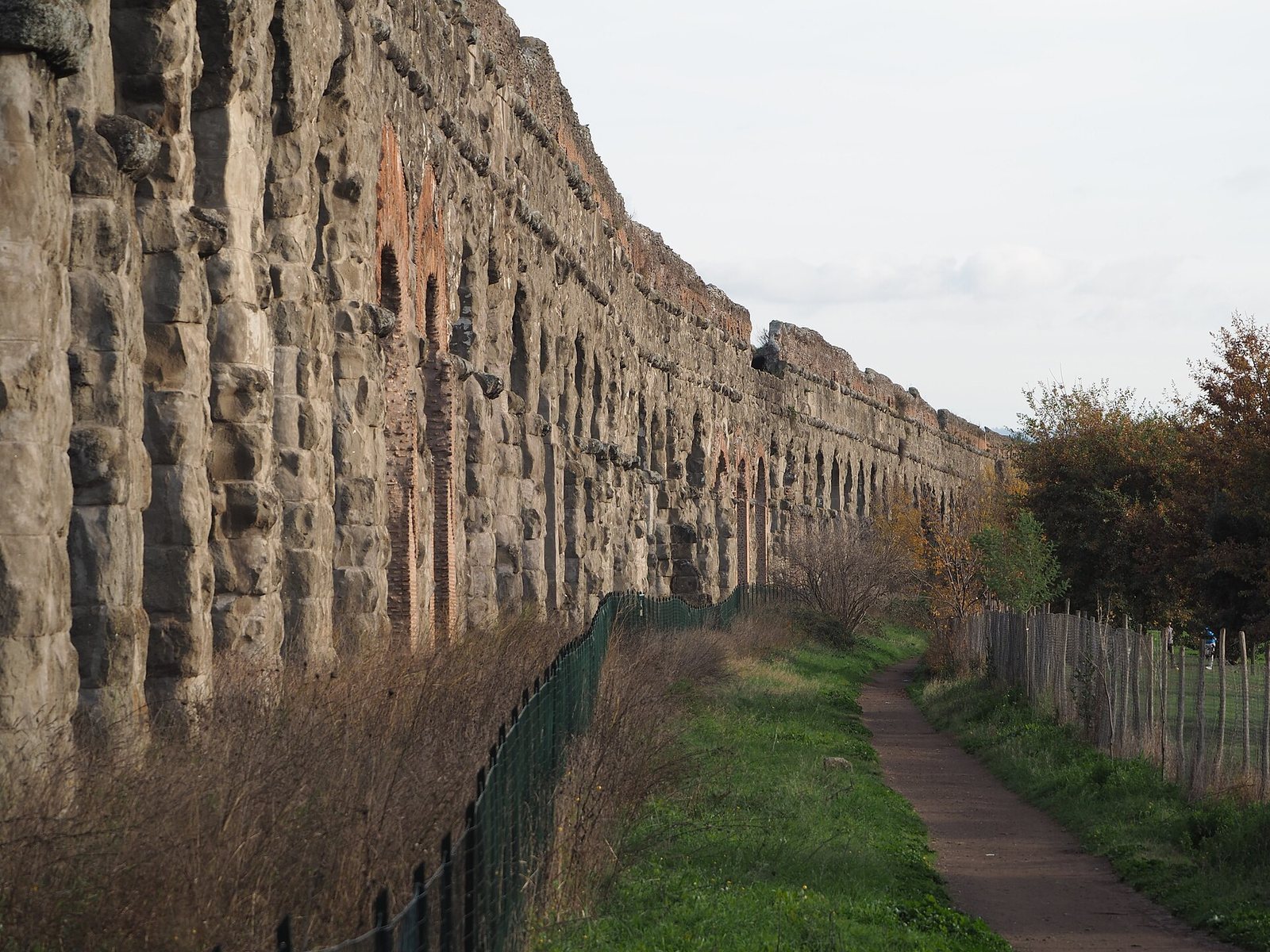
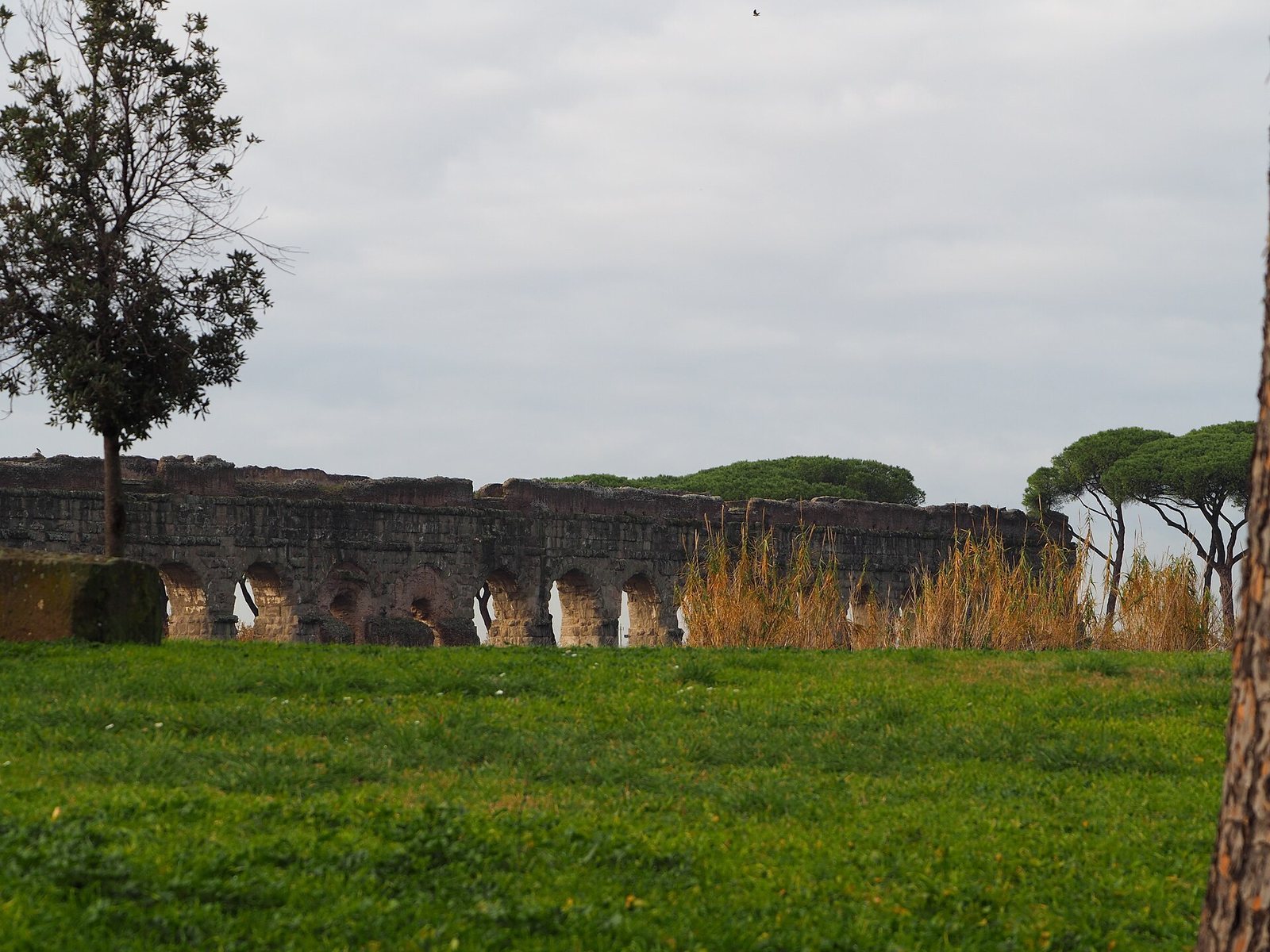
The aqueduct ran for about 87 kilometres, with approximately 73 kilometres underground and 14 kilometres above ground. Its above-ground works included around 3.4 kilometres of foundations and arcades near the source and 10.5 kilometres near Rome. Builders used tuff and brick; the surviving structure is now in ruins. From the Anio valley, the route first followed the river, then ran beside the Via Latina for nearly 10 kilometres. It divided into two channels above Tivoli and joined again near Gericomo.
The elevated channel
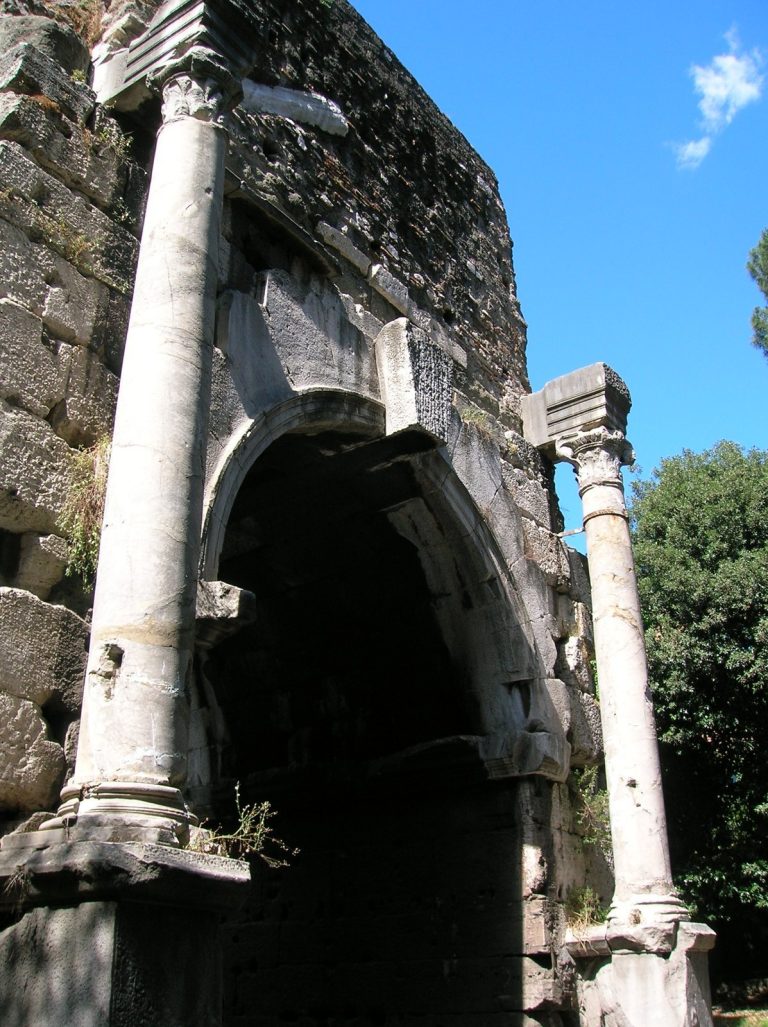
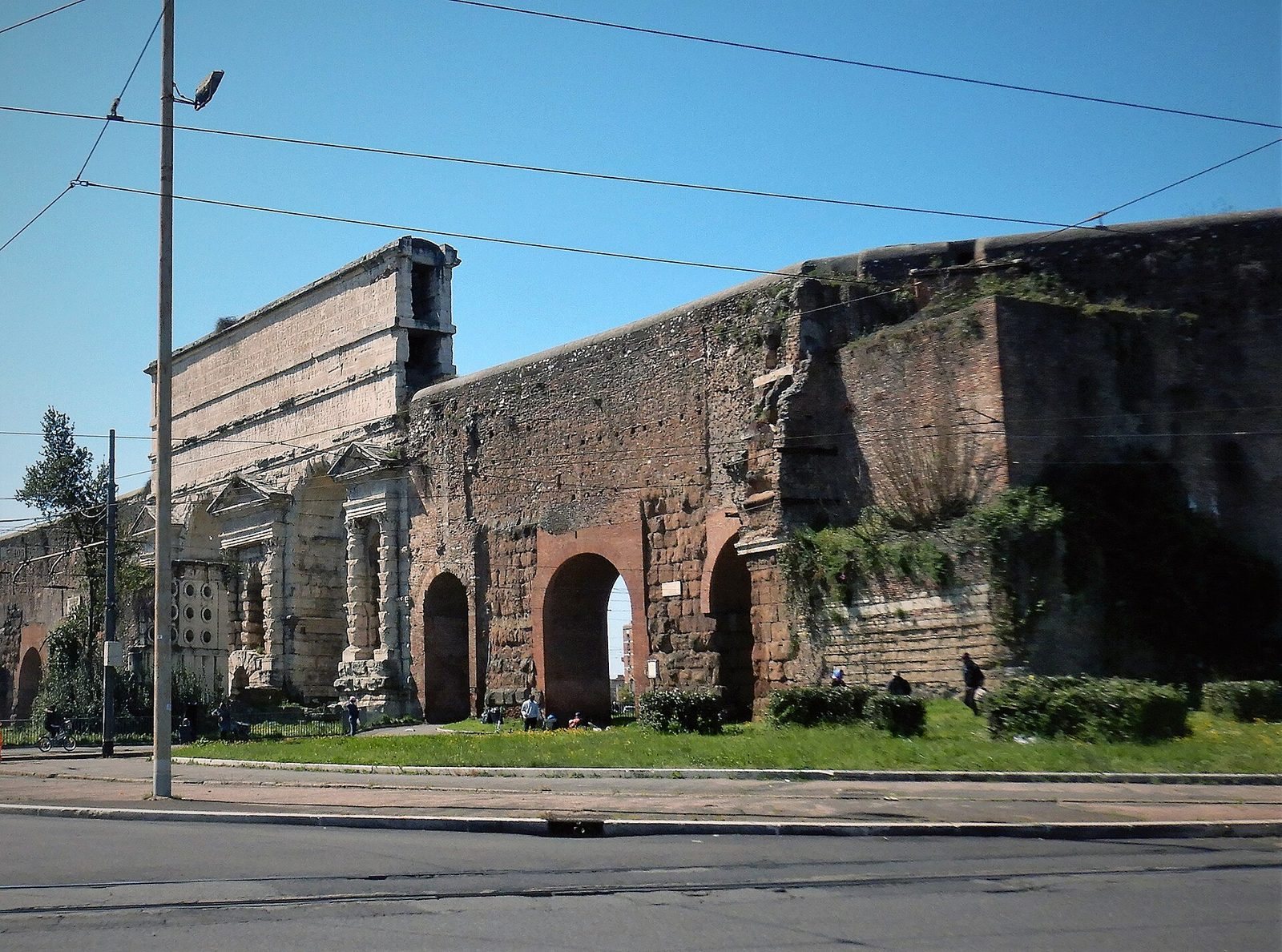
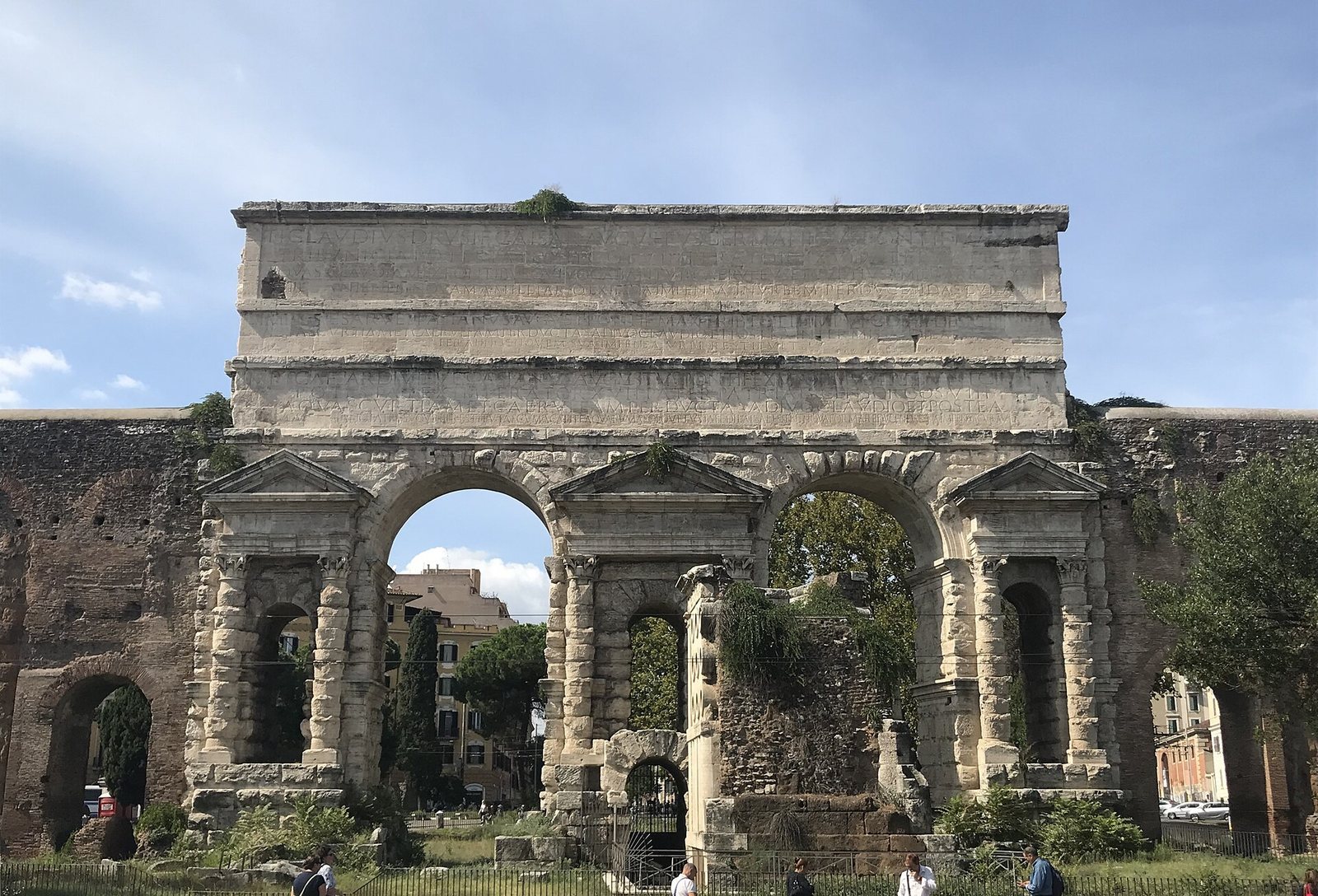
A settling basin stood at the aqueduct’s head, while a filtering tank lay near the seventh milestone of the Via Latina. For its final 13 kilometres before Rome, the Anio Novus channel ran directly above that of the Aqua Claudia. Near the city, its watercourse followed the Aqua Claudia’s arches in a channel immediately overhead. In Rome, the two aqueducts entered through the Porta Maggiore and crossed the Aqua Marcia, which carried the Aqua Tepula’s channel. The Anio Novus ended on the Esquiline Hill.
In Frontinus’s time, the Anio Novus ran at the highest level of Rome’s aqueducts. Its source was about 400 metres above sea level, while its endpoint stood at approximately 47.52 metres, a descent of roughly 350 metres. This elevated route could supply Rome’s higher districts, but it also required taller bridges than the other aqueducts; some arches reached about 35 metres.
Surviving bridges
Bridges associated with the aqueduct include Ponte degli Arci, Ponte Arcinelli, Ponte Sant Antonio, and Ponte Barucelli, also known as Ponte Diruto.
Ponte Sant Antonio
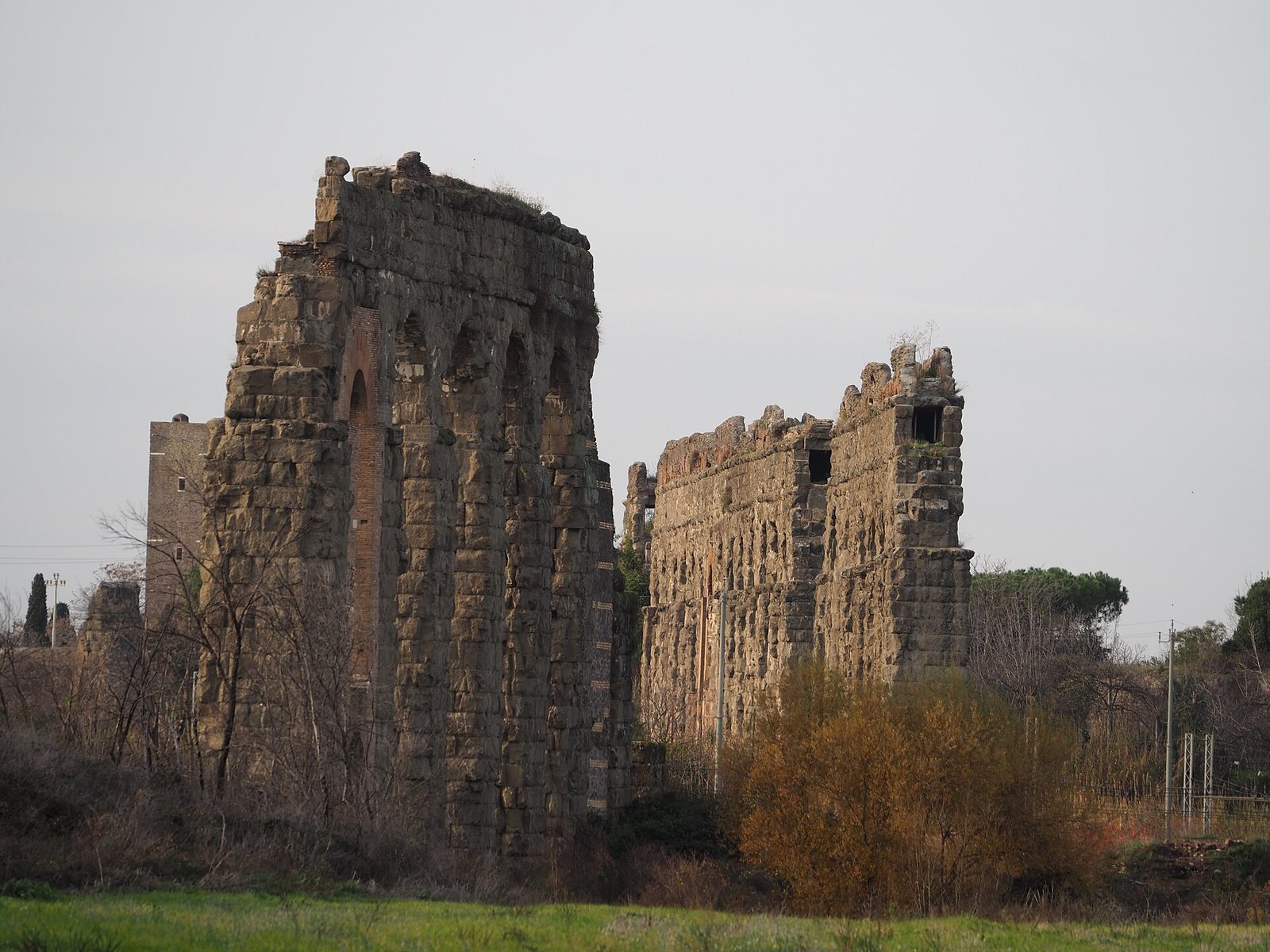
Ponte Sant Antonio crosses the Acqua Raminga stream and takes its name from an ancient sanctuary. Its central original section is built from squared stone blocks. The main arch rises about 32 metres and spans 10 metres. Projections on its piers provided fixing points and support for scaffolding during construction and later restoration. After the Severan period, builders strengthened nearly the whole bridge with Roman concrete faced in brick and added small arches at its base. Part of an unfinished supporting arch survives on the eastern side, on the southern pier near the stream. On the western side, the channel turns at a right angle and can be followed for several dozen metres.
Ponte Barucelli
Ponte Barucelli comprises two monumental bridges about 8 metres apart. The Anio Novus bridge is to the south and the Aqua Claudia bridge to the north; both cross the Acqua Nera stream and date to AD 38–52. Later buttresses and reinforcements strengthened the structures, which were eventually joined. The Anio Novus bridge measures about 85 metres long and 10 metres wide. Several small arches accompany its high, narrow main arch over the stream. Originally built from tuff in squared blocks, it gained mixed-masonry reinforcement in the second half of the first century. Two buttresses from that work remain visible at its eastern end.
At the start of the third century, builders added nine rectangular buttresses at regular intervals along the bridge’s north side and three on its south side near the streambed. Later additions included five poorly executed brick-faced concrete buttresses on the west bank and two built with mixed masonry on the east. Three brick arches and further buttresses ultimately connected the two bridges.