Anglian Tower: A Tower Remnant in York’s City Defenses
Site at a Glance
- Rating
- 4.5
- Popularity
- Low
- Country
- United Kingdom
- Primary era
- Unclassified
- Eras represented
- Unclassified
- Civilizations
- Unclassified
- Site type
- Military
- Remains
- Tower
On this page7 sections
History
The Anglian Tower is the surviving lower part of a tower associated with York’s city defenses, in York, United Kingdom. “Anglian” refers to the Angles, one of the peoples associated with early Anglo-Saxon England, but neither the tower’s date nor its identification as an Anglian structure is certain.
Possible Roman and early medieval origins
Proposed dates include the mid-seventh and mid-ninth centuries. Analysis of the tower’s architectural details and tooling has also suggested a fourth- or fifth-century origin, which would associate its wall with York’s late Roman defenses. The tower cannot be dated directly, so these interpretations remain unresolved.
An interpretive plaque describes the structure as the lower floor of a tower incorporated into a fourth-century Roman fortress, while also linking it to the reign of Edwin, king of Northumbria from 616 to 632. The plaque also says the Roman walls remained in use into the ninth century and that the tower served for about 200 years. In its account, the Viking invasion of York in 866 was followed by construction of a Danish wall that concealed the tower.
Possible defensive function
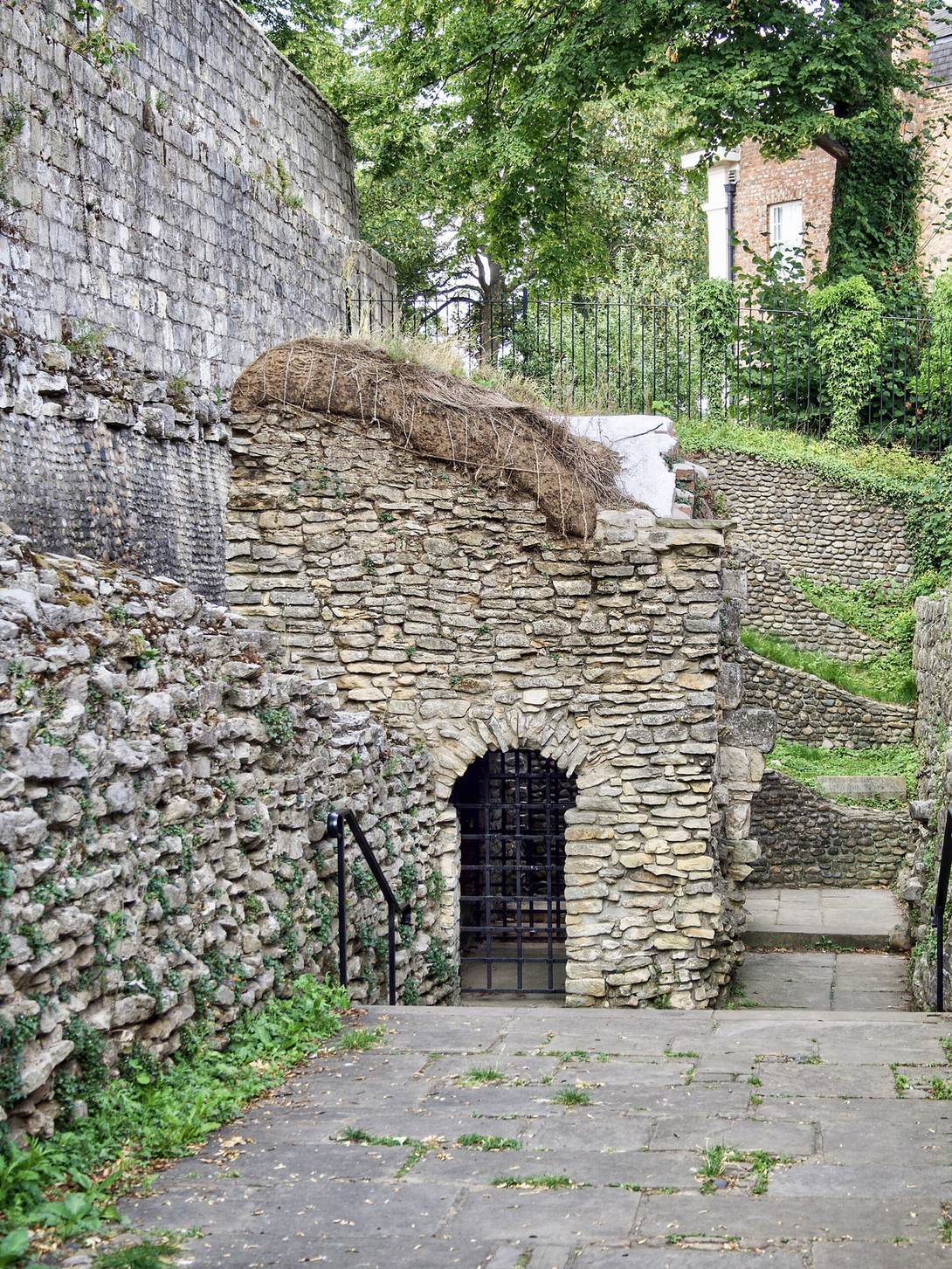
The lower chamber appears to have allowed a sentry to pass behind the remnant of the Roman fortress wall and move along the defenses. The upper part may have served as a watchtower or as a platform for archers or artillery, but these uses are unconfirmed. The tower’s precise purpose remains uncertain.
Rediscovery and investigation
Workmen uncovered the structure in 1839 while making a tunnel between St Leonard’s Place and Mint Yard. The City Engineer probably located it again in 1934. The tower was listed as a Grade I building in 1954, the highest listed-building category in England, for buildings of exceptional interest. Limited excavation followed, and archaeologist Jeffrey Radley died in an accident during work at the tower on 22 July 1970.
Remains
Position and form
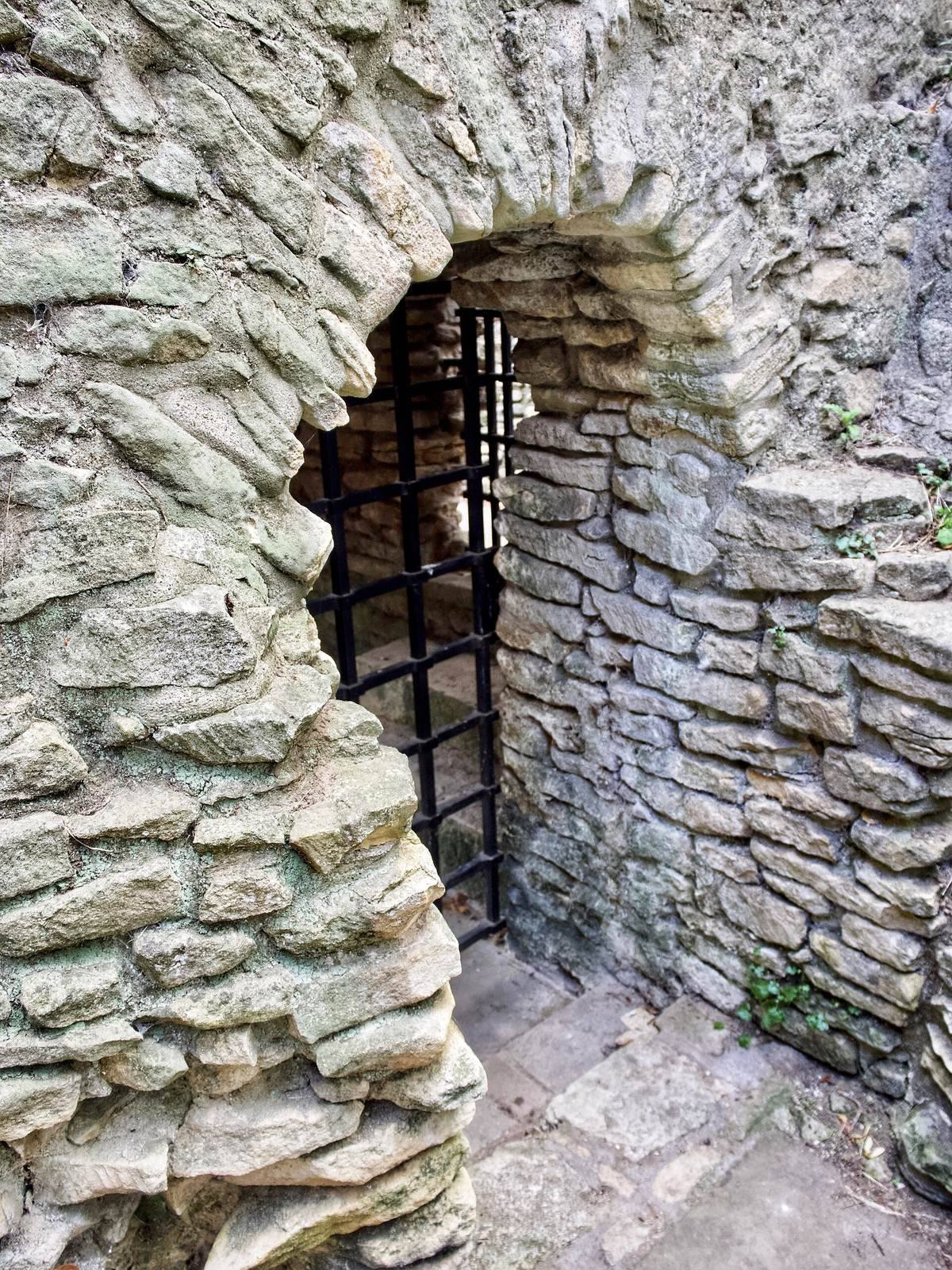
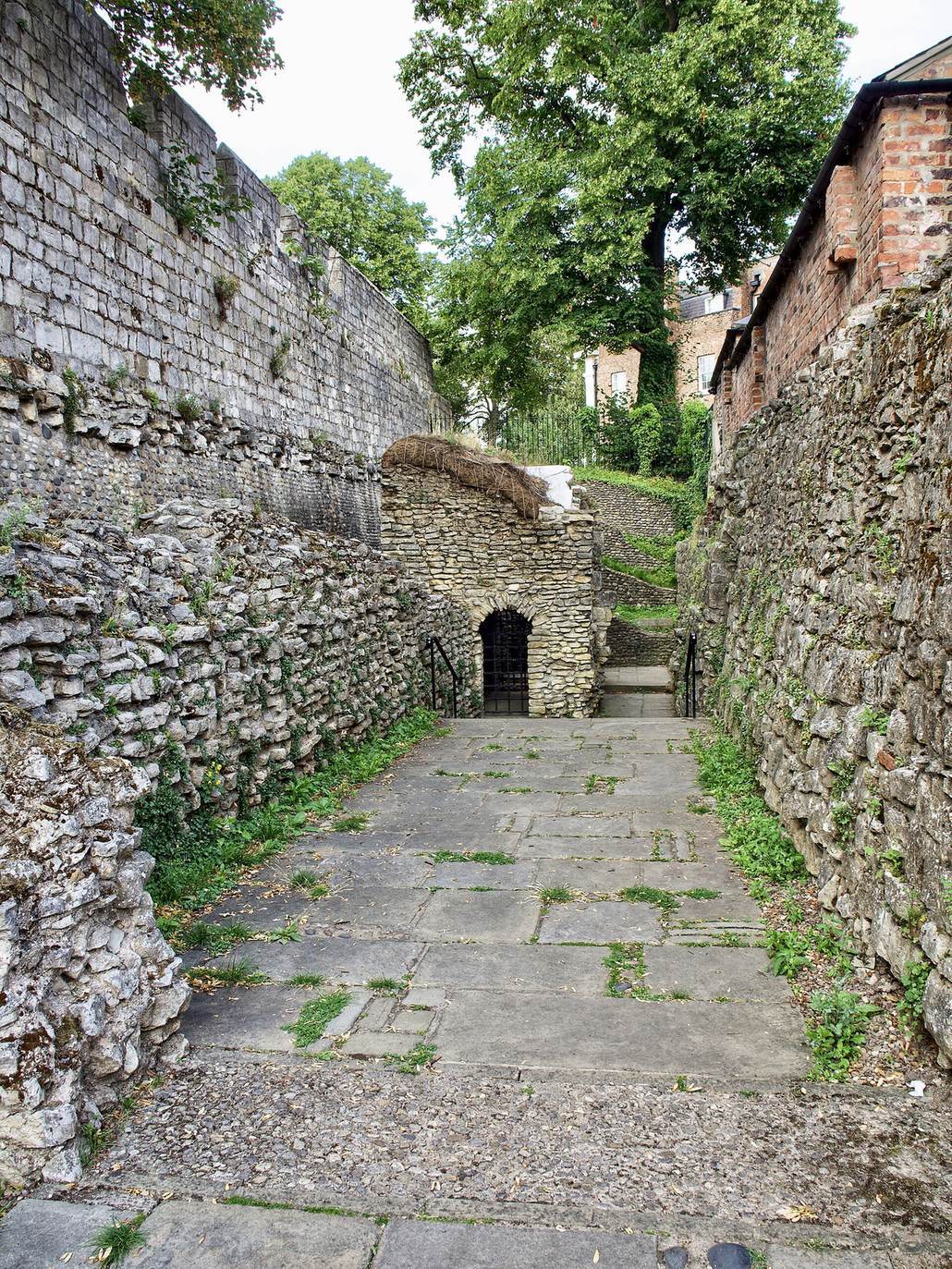
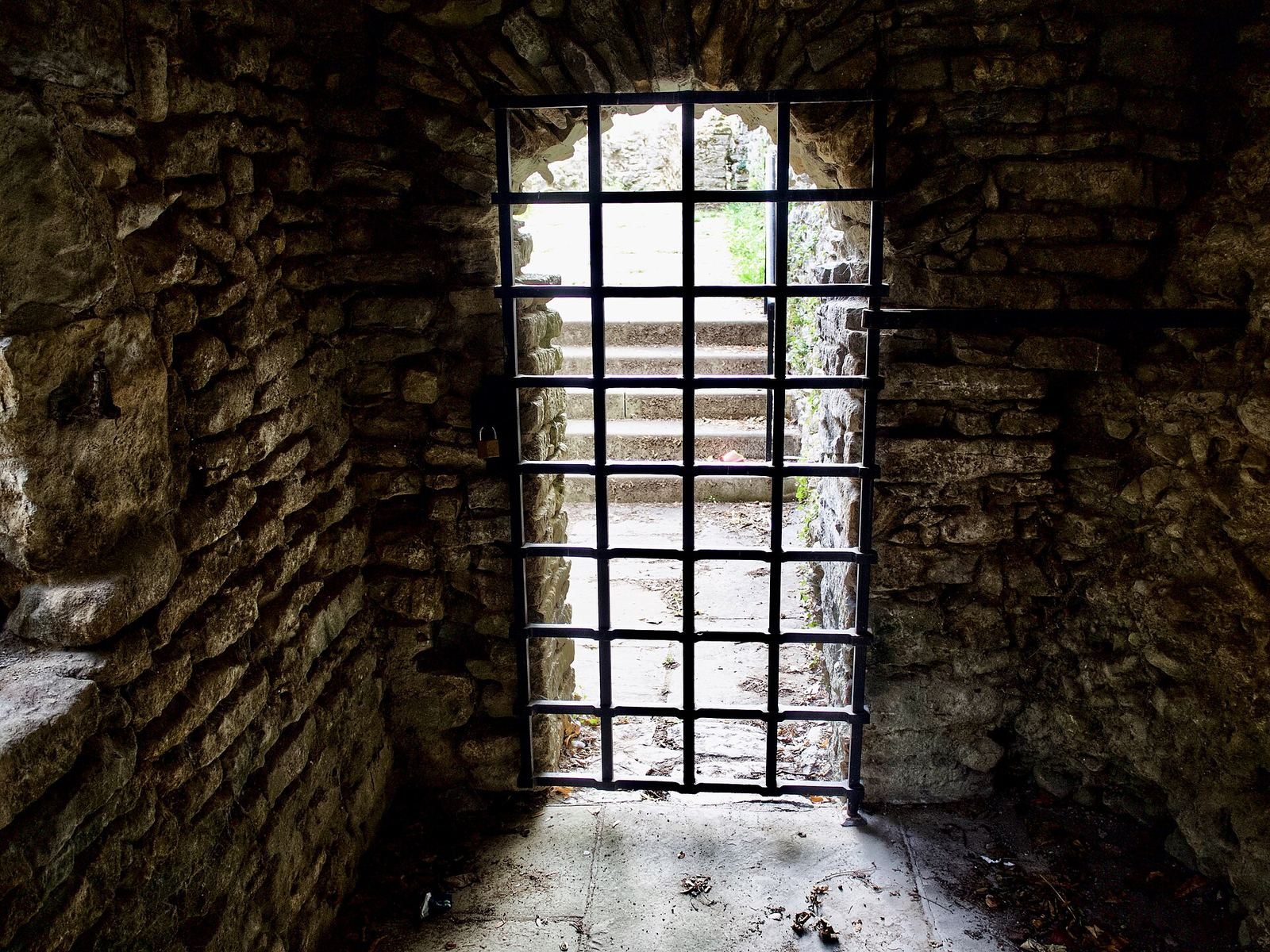
The small, square structure stands on the inner south-west face of York’s city walls, in the grounds of York City Library. More than three metres of masonry survive, abutting the later medieval wall. The tower lies between the proposed positions of two towers along the Roman fortress wall, a location that may indicate that other towers stood along the defenses. Its roughly worked stone is newly quarried oolitic limestone. Two arched doorways at the base pass through the structure beneath a barrel vault, a continuous arched ceiling; a brick arch stands above the entrance.
Excavated area and memorial
The 1969 excavation exposed an area about 25 by 15 feet between the medieval wall and a stable, at roughly 10 feet above modern street level. A plaque at the tower commemorates archaeologist Jeffrey Radley.