All Saints Church in Kraków: A Late Gothic Timber Parish Church
Site at a Glance
- Popularity
- Low
- Country
- Poland
- Primary era
- Early Modern
- Eras represented
- Early Modern, Modern
- Civilizations
- Austria-Hungary, Habsburg, Polish–Lithuanian Commonwealth
- Site type
- Religious
- Remains
- Church
On this page10 sections
History
Foundation and eighteenth-century changes
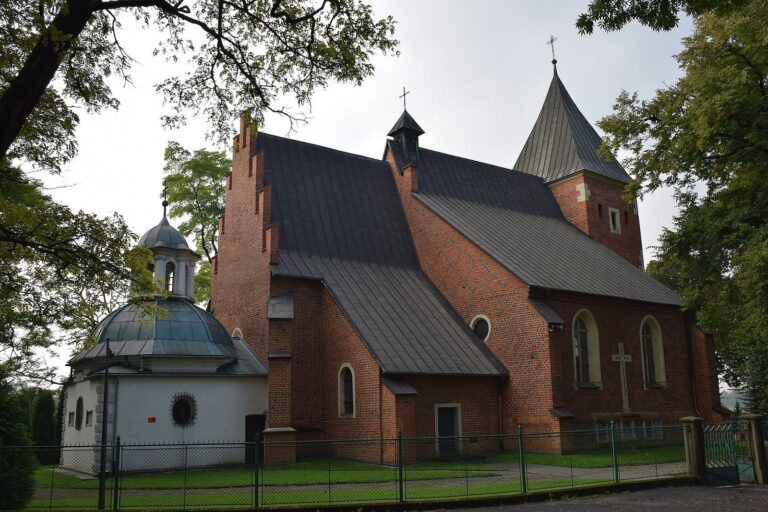
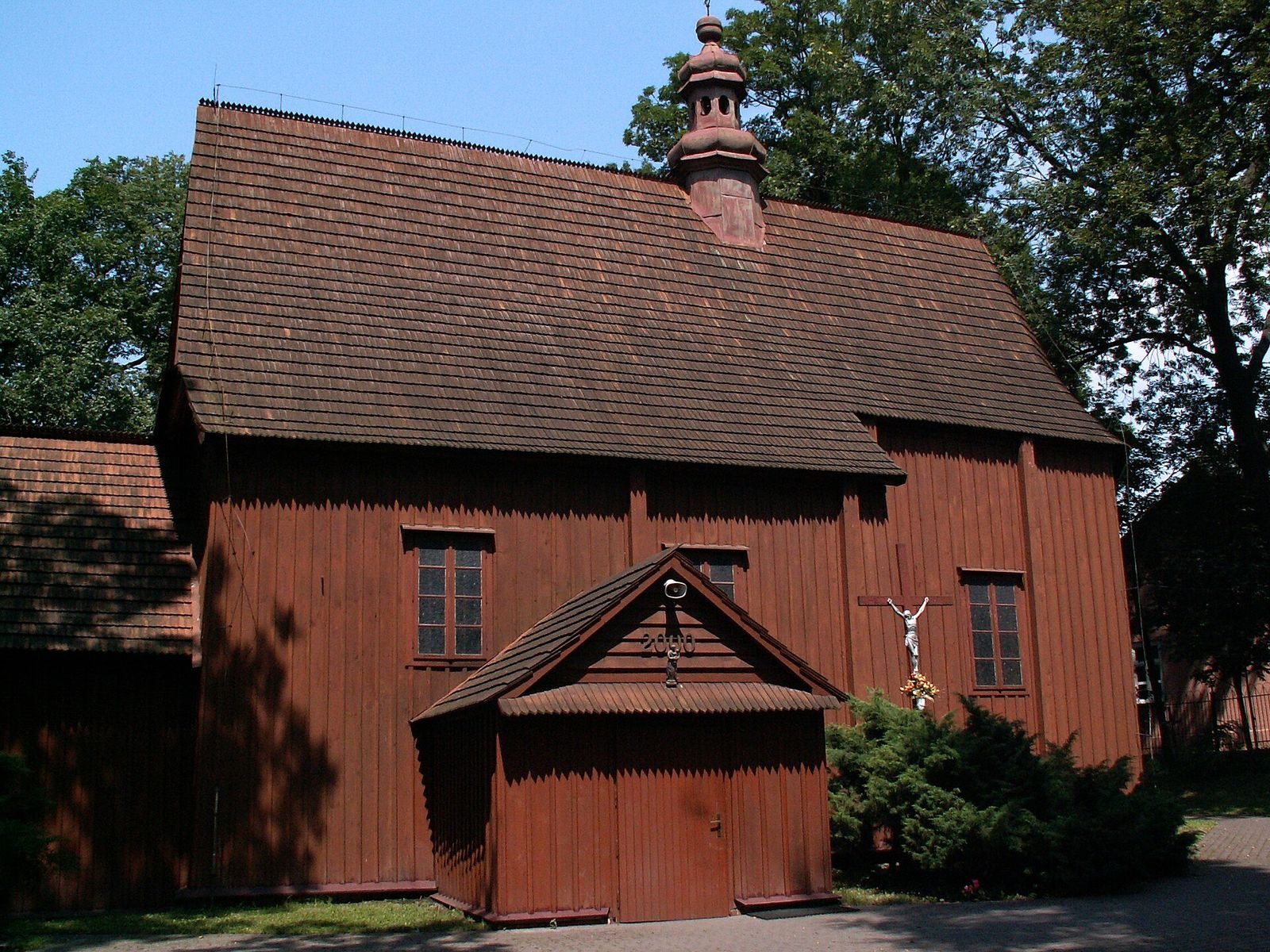
All Saints Church in Kraków is a Roman Catholic parish church in the city’s Kościelniki neighborhood, Poland. It was built in 1646–1648 in the late Gothic style, an early phase in the succession of European architectural styles that later included Baroque and Rococo. The church stands in an area once occupied by the village of Górka Kościelnicka, now part of Kościelniki, and replaced an earlier church on the site. Barbara Morsztynowa, then owner of Kościelniki, paid for its construction.
The church was consecrated in 1698 and remodeled in 1777.
Nineteenth-century addition and modern restoration
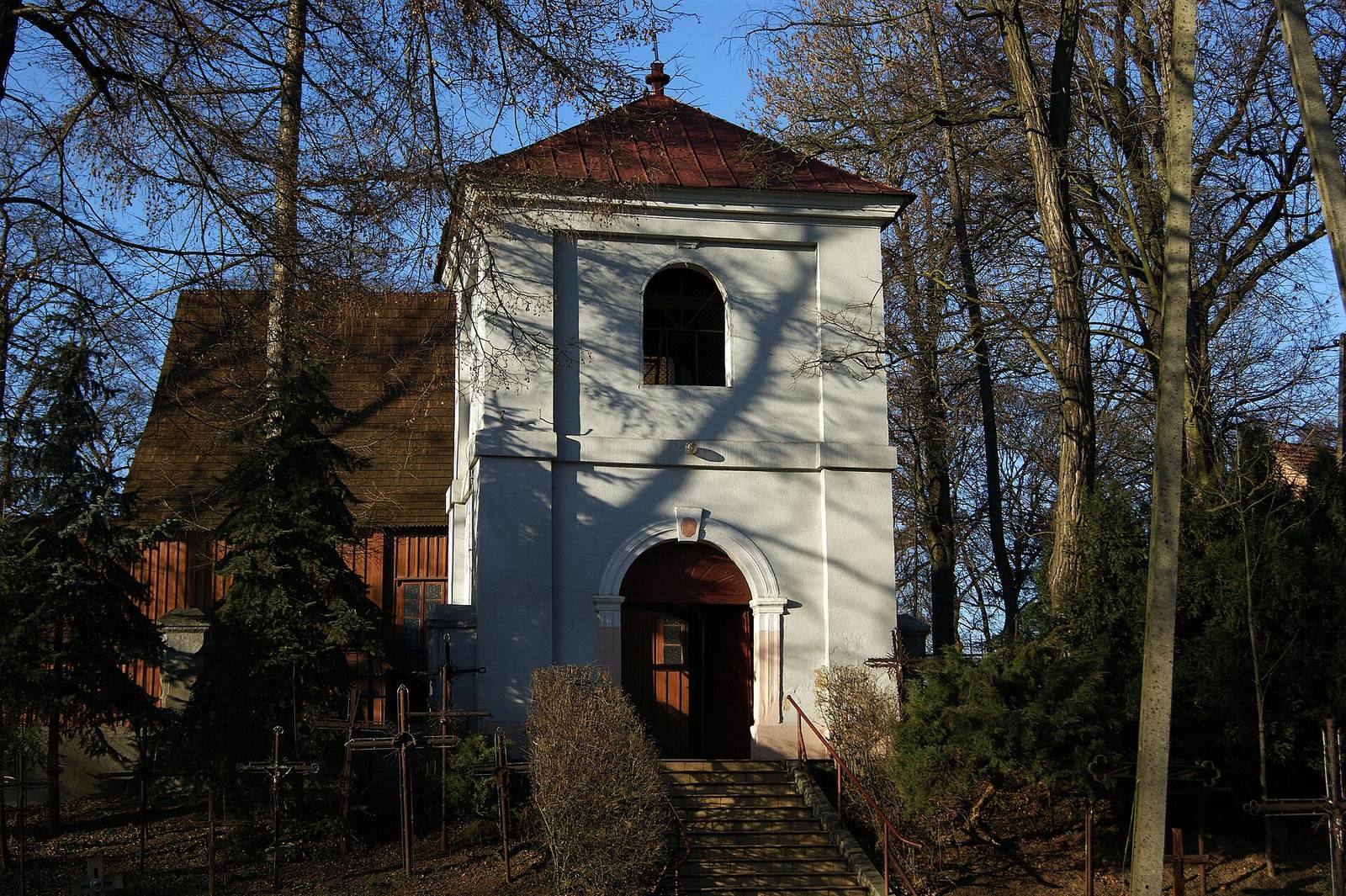
In 1823, Count Józef Wodzicki funded construction of the gate belfry beside the church. A major renovation followed from 1994 to 2000. The church remains a Roman Catholic parish in the Archdiocese of Kraków, the Church’s territorial jurisdiction headed by an archbishop.
Remains
The church is a log-built timber structure, formed from horizontal courses of wood, with a bell turret on its roof. A separate masonry gate belfry and burial areas lie beside it.
Church structure and interior
Timber building and decoration
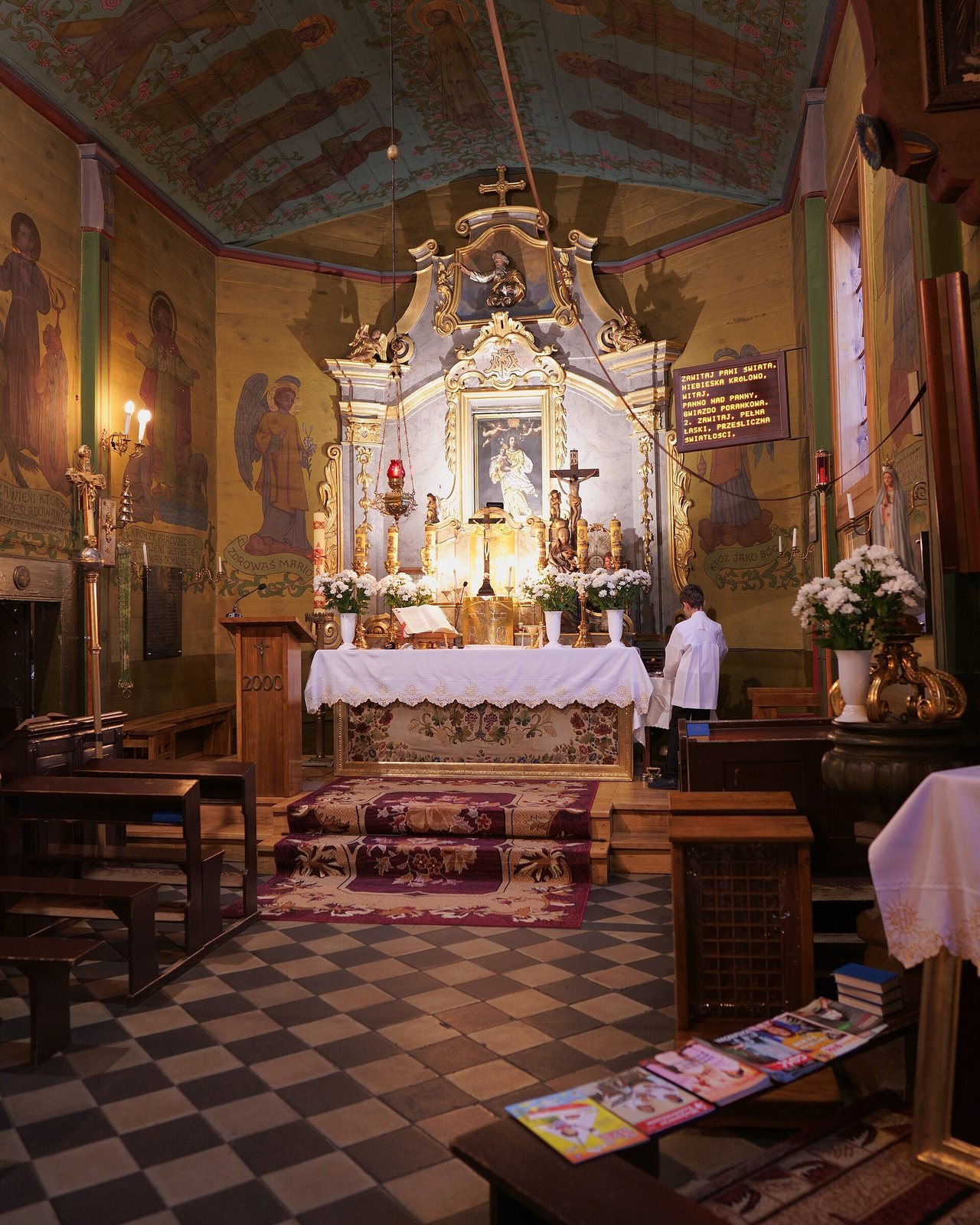
A Baroque bell turret topped by a lantern rises above the nave. Inside, curved false barrel vaults imitate the shape of structural vaults. Paintings of saints and the Stations of the Cross cover the walls and ceilings; this multicolored decoration began in 1909 and was supplemented in 1954.
Altars and furnishings
The eighteenth-century altars are in the Rococo style. The main altar holds a seventeenth-century image of Our Lady of Angels. The side altars contain an eighteenth-century image of Christ and the Samaritan woman, and an image of the Sacred Heart of Jesus dating to 1952–1956. Other furnishings include a Baroque baptismal font and a Rococo pulpit.
Gate belfry and burial grounds
Gate belfry
The masonry belfry stands beside the church. A marble epitaph to its founder is preserved in the gateway.
Cemetery and family graves
A small First World War military cemetery lies beside the church. Two family graves remain in the former churchyard. The Zapalski family grave includes Józef Zapalski (1805–1878), an insurgent in the November Uprising, a Polish revolt against Russian rule in 1830–1831, as well as his son Józef (1849–1887) and daughter Maria. A separate grave is associated with the Potocki and Wodzicki families and retains the gravestone of Count Stefan Potocki (1820–1891).