Alderman Fenwick’s House: A Merchant House, Inn and Club in Newcastle
Site at a Glance
- Rating
- 4.7
- Popularity
- Very Low
- Country
- United Kingdom
- Primary era
- Early Modern
- Eras represented
- Early Modern
- Civilizations
- British, English
- Site type
- Domestic
- Remains
- Elite Residence
On this page5 sections
History
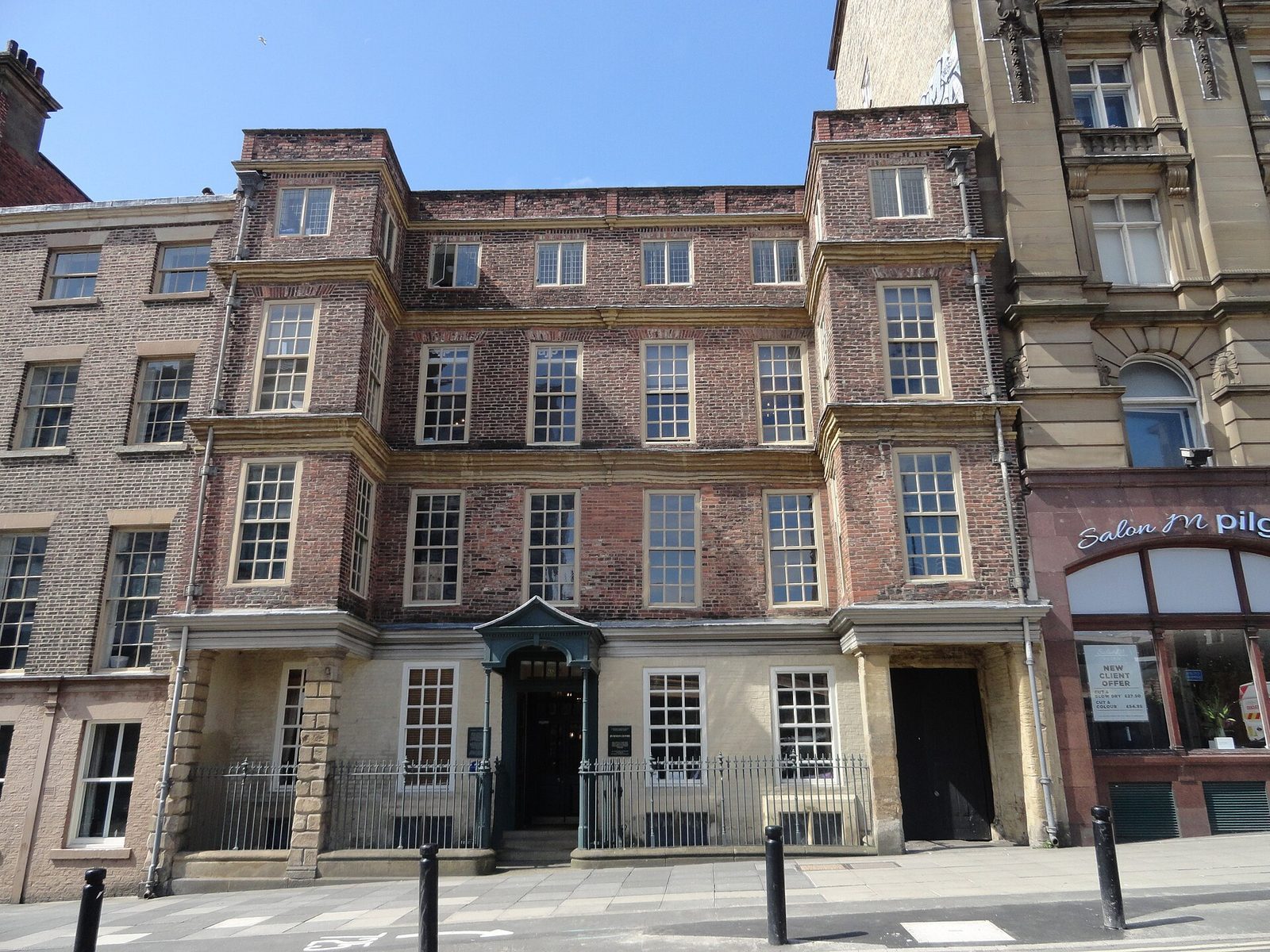
Alderman Fenwick’s House is a historic merchant residence on Pilgrim Street in Newcastle, United Kingdom. Its construction date is uncertain, but it is thought to have been built around 1670 and has an early Georgian appearance. It is one of Newcastle’s few surviving historic merchant houses.
The Fenwick family and the house
Pilgrim Street climbed from the River Tyne and the Quayside, serving as a southern entrance to Newcastle. In 1649, Gray described it as the town’s longest and fairest street. The house may have passed by inheritance to Sarah Winship in 1695. She was married to the merchant Nicholas Fenwick, who improved the residence around 1700, when Pilgrim Street was a desirable address for gentry townhouses. The house was regarded as stylish and appropriate for an important family.
Fenwick married Elizabeth Clavering in 1716, and the marriage brought him an estate in Alnwick. His father had been Newcastle’s mayor in 1708; Nicholas served as mayor in 1720 and 1726. In 1727 he became the city’s Tory representative in Parliament, remaining in the role until 1747. A Tory belonged to one of the principal British political groupings of the period. Fenwick strongly opposed Robert Walpole’s Excise Bill, which proposed allowing officers enforcing duties on goods to search houses on suspicion.
As Newcastle’s coal and metalwork trades grew, gentry began moving to newer addresses, including Charlotte Square, built in 1770. The Fenwick family sold the house in 1753, the year after Nicholas died.
The Queen’s Head Inn and urban change
Charles Turner bought the property in 1781 and converted it into the Queen’s Head Inn. It prospered as a coaching inn for more than a century. Charles Dickens stayed there in 1850 while in Newcastle to give readings of his works.
New streets and changing transport reshaped the district. Grey Street was laid out in the 1830s across the former back gardens of Pilgrim Street houses. The opening of the High Level Bridge in 1850 brought railway viaducts across the lower end of Pilgrim Street, and traffic increasingly used St Nicolas Street and the Bigg Market instead. The growth of railways weakened coaching inns, while shops and businesses shifted towards newer developments such as Grey Street and Grainger Street. The Royal Arcade was intended to revive the area, but the Central Arcade proved more successful, and the neighborhood became a business district near Carliol Station.
The Liberal Club and later restoration
In 1883 the Newcastle upon Tyne Liberal Club leased the house. The Liberal Party then had considerable influence on Tyneside and represented the industrial classes. Winston Churchill, then a Liberal, attended the club’s annual luncheon in 1909. After the First World War, the party declined as Labour grew. By 1962 the building was too large for the club, which moved elsewhere. Known as the Old Liberal Club, the house stood empty for years, deteriorated, and faced proposals for demolition and redevelopment. Newcastle City Council bought the site in 1974 but did not find a suitable use for it.
Transport changes also altered Pilgrim Street. The Tyne Bridge opened in the 1930s and redirected the A1 through the street. Congestion led to the Central Motorway and Swan House roundabout in the 1960s, and the redevelopment required the demolition of the Royal Arcade opposite the house. The motorway now carries through-traffic beneath Swan House; traffic on this stretch of Pilgrim Street is largely local, and the A1 runs west of the city.
The Tyne and Wear Building Preservation Trust, established in 1974, was invited to take on the house in 1984. Restoration was completed in 1997. The building is Grade I listed, England’s highest listing category for buildings of exceptional architectural or historic interest. Central Space acquired it in 2020 and uses it as its head office, as boutique offices, and as an events space.
Remains
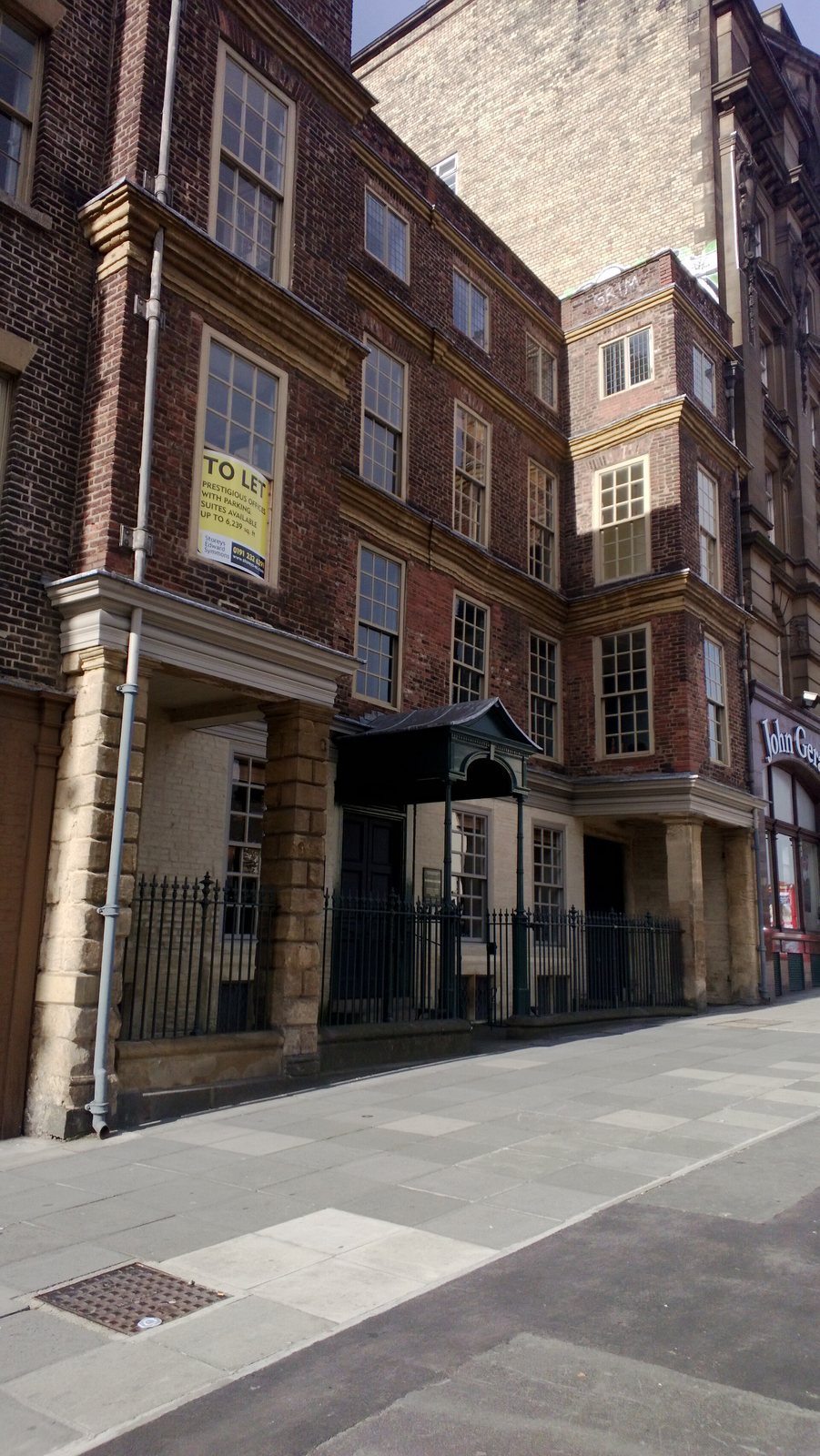
At 98–100 Pilgrim Street, on the street’s west side near the Swan House roundabout, the house is four storeys high, with a basement and attics. It is built mainly of brick. Closet wings, side extensions containing small private rooms or storage, frame the front. Horizontal bands of sandstone mark each floor, and the roof is mainly covered with pantiles, curved roof tiles. The frontage faces the Swan House development. Turner’s expansion of the inn extended it across the two buildings that still occupy the site.
The house is one of three significant brick buildings of its age surviving locally; the others are nearby Holy Jesus Hospital and Keelmen’s Hospital on City Road. Its restoration used appropriate materials and preserved its traditional appearance, including sash windows with lattice glazing and a porch.