Alamance Battleground: A Historic Battlefield in North Carolina
Site at a Glance
- Rating
- 4.7
- Popularity
- Low
- Country
- United States
- Primary era
- Early Modern
- External website
- Open
- Eras represented
- Early Modern, Modern
- Civilizations
- Unclassified
- Site type
- Military
On this page11 sections
History
Alamance Battleground is a preserved historic battlefield in Burlington, North Carolina, United States, where the Battle of Alamance was fought on May 16, 1771. The battle took place during the Regulator Movement, an organized colonial protest in North Carolina against perceived abuses and in support of reforming the provincial government. Governor William Tryon led the North Carolina militia against the Regulators, who were defeated.
The Battle of Alamance and Its Aftermath
Following the battle, Tryon ordered the hanging of six men. A plaque at Alamance Battleground commemorates their deaths and names James Pugh, Robert Matear, Benjamin Merrill, Captain Messer, and two others. The site also preserves associations with Herman Husband, a prominent pamphleteer and activist linked to the Regulators. Husband was present at the battle and was the brother-in-law of Amy Allen.
Later Military History
Archaeological studies begun in 2009 identified evidence of a Revolutionary War skirmish fought at the site on March 5, 1781. The Delaware Light Infantry engaged forces commanded by British General Charles Cornwallis in one of several small encounters in the area before the Battle of Guilford Courthouse.
The same studies found evidence of a Civil War-era encampment occupied by the 3rd North Carolina Junior Reserve under Colonel John Hinsdale. The unit later surrendered near High Point to Union forces.
Preservation
Alamance Battleground became a North Carolina State Historic Site to preserve part of the battlefield and interpret the lives of settlers in north-central North Carolina during the 1770s. It is administered by the North Carolina Department of Natural and Cultural Resources. The property covers approximately 40 acres and was listed on the U.S. National Register of Historic Places on February 26, 1970, a federal recognition for places considered historically significant.
Remains
The preserved grounds include marked battle positions and a trail approximately three-quarters of a mile long. A campsite and a smokehouse form part of the surviving landscape, while the battlefield is also interpreted through monuments, a commemorative plaque, and material associated with the fighting.
Battlefield Memorials
Granite Monuments
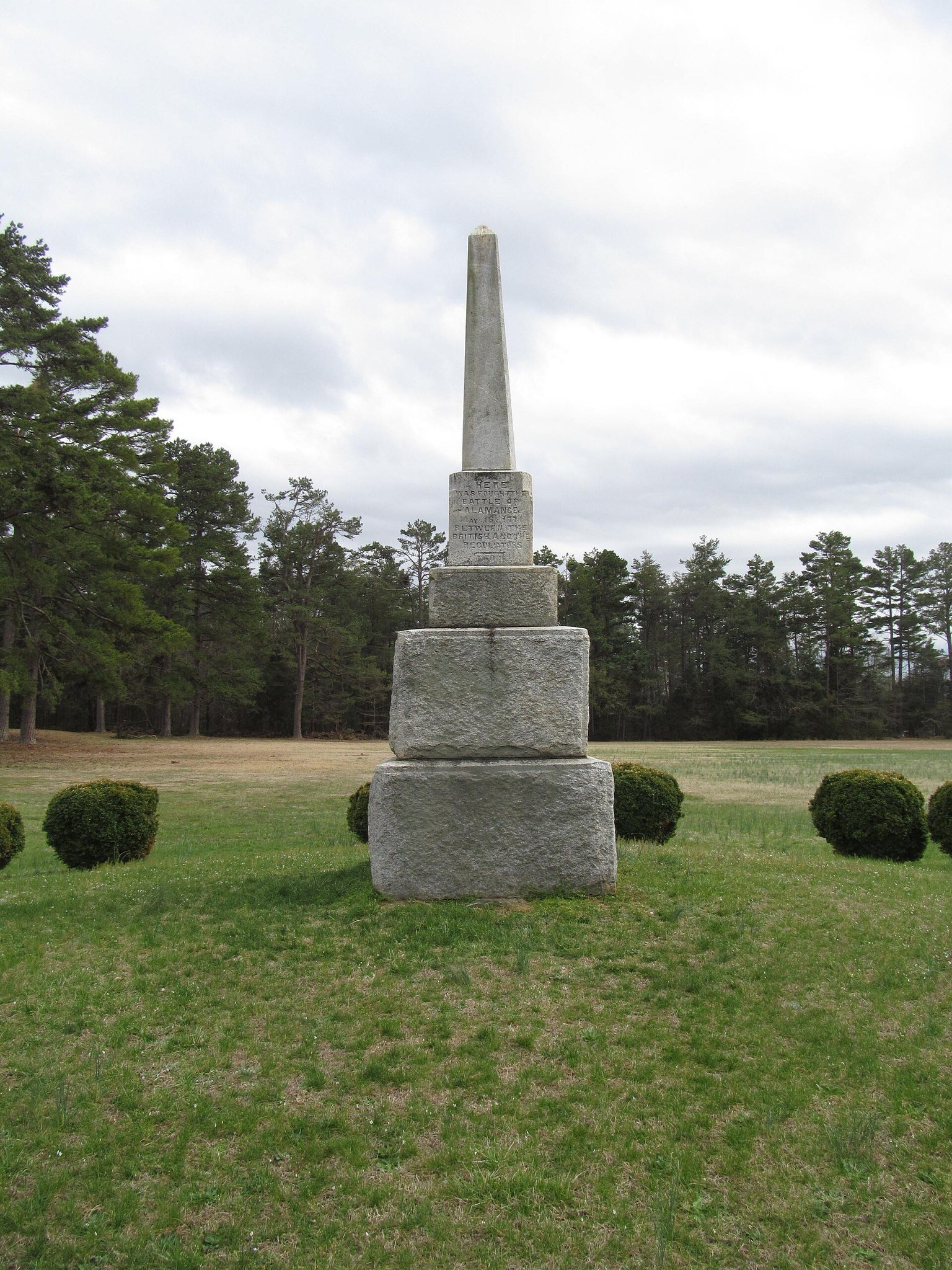
Two granite monuments stand on the grounds. The smaller was erected as a memorial in 1880. The larger followed in 1901 and carries a statue of James Hunter, who is identified by the title “General of the Regulators.”
Hanged Men Plaque
A plaque commemorating the six men hanged after the Regulators’ defeat forms another part of the memorial landscape. It names James Pugh, Robert Matear, Benjamin Merrill, Captain Messer, and two additional men.
Interpretive Buildings and Collections
Visitor Center
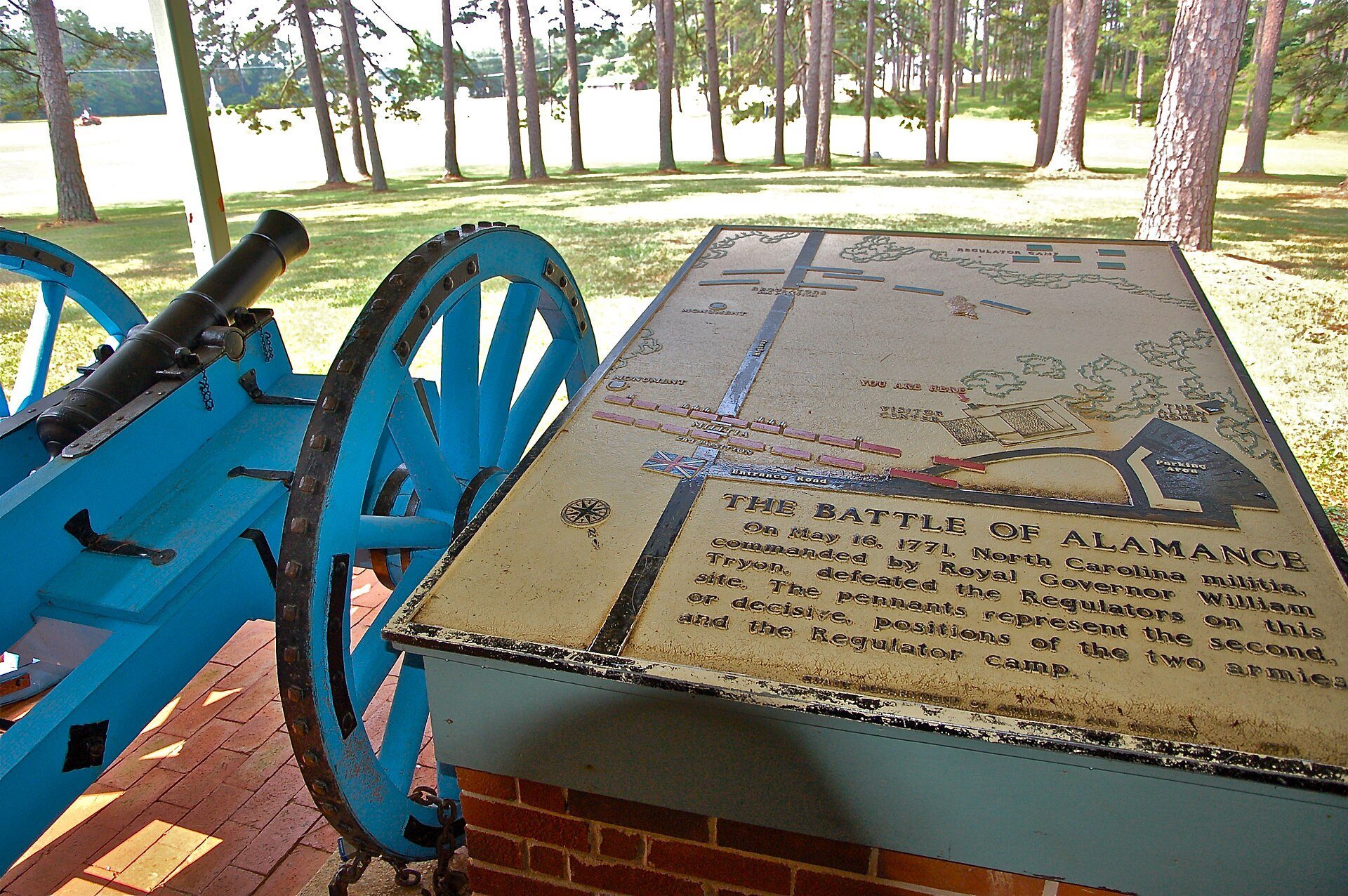
The visitor center contains a small museum and historical exhibits. Among them is the powder horn of Harmon Cox, identified as the only known surviving archaeological relic from the Battle of Alamance. Outside the building are a replica of a three-pounder cannon and a map of the battleground.
John Allen House
The John Allen House is a frontier-style, one-room log house moved from nearby Snow Camp after descendants of the Allen family donated it to the site. Family sources place its construction around 1780. Restored original furnishings from the period remain inside, and the house provides an example of frontier life in the eighteenth and nineteenth centuries.
Family papers, books, and documents associated with Alamance Battleground add evidence about the period and preserve further examples of frontier life. Together with the house and battlefield features, these materials connect the commemorated battle with the wider experiences of settlers in the surrounding region.