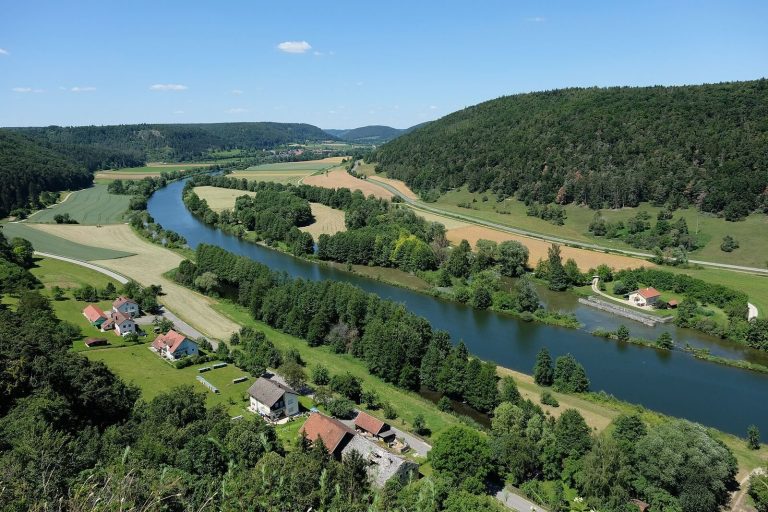
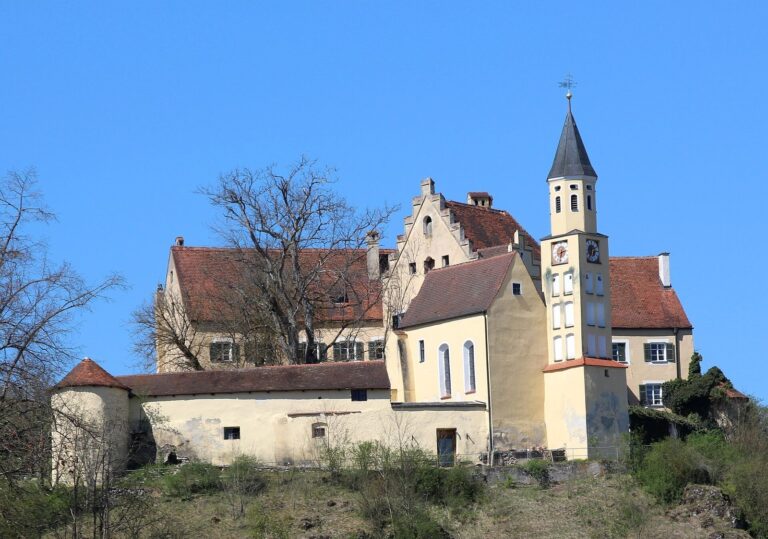
Aicholding Castle: A Former Aristocratic Residence in Bavaria
Site at a Glance
- Rating
- 5
- Popularity
- Very Low
- Country
- Germany
- Primary era
- Early Modern
- Eras represented
- Early Modern
- Civilizations
- Electorate of Bavaria, Holy Roman Empire
- Site type
- Domestic
- Remains
- Manor House
On this page13 sections
History
Aicholding Castle is a former aristocratic residence in Aicholding, now part of Riedenburg in Bavaria, Germany. Its present building was erected in the seventeenth century. Aicholding is associated with a reported meeting in 1052 between Henry III, a Salian emperor from a medieval German ruling house, and Pope Leo IX, whose pontificate lasted from 1049 to 1054. The place-name has been interpreted as meaning “Aigold’s property,” and its ending has been linked to the period of Bavarian settlement.
Early records and estate obligations
Amazi of Eicoltingan appears in the donation book of St Emmeram monastery during Abbot Rupert’s tenure, from 1068 to 1095. His wife, Gerbirhc, was described as a freewoman from Francia. Their sons Amalgis, Waltehri and Richeri, and their daughters Iburhc, Berhta and Richilt, are also named; the family owed the monastery five medieval pennies.
Records name Haidfolk of Aigoltingen in 1120 and Hartwig of Aikoltingen in 1145, as well as Siegfried and Haimardus. During a land exchange involving Prüfening monastery, Hartwig was pulled by the ear according to a custom intended to help him remember the transaction. The Aicholdinger family continued to appear in records into the fourteenth century.
A Bavarian ducal estate register from 1240 lists a farmholding at Aicholding owing five measures of rye and five of oats. A later register adds five shillings in fish dues, which are listed again in 1326.
The Aicholdingers and medieval ownership
In 1287, Dietrich of Aicholding received 29 pounds in silver pfennigs, a monetary accounting unit rather than a measure of weight, on Duke Rudolf’s order, followed by a further 13 pounds for a gelding. Ulrich of Stein confirmed Dietrich’s will in 1297. Hanns and Conrad of Aicholding appear in records from the early fourteenth century. In 1319, Haimo and his sons Rudger and Heinrich transferred a farmholding to Schamhaupten monastery; in 1328, Heinrich received 10 pounds in Regensburg pfennigs from the abbot of St Emmeram.
The name Dietrich of Aicholding occurs again in 1387, and Heinrich of Aicholding sealed a document at Hexenagger Castle in 1476. The Aicholdingers seem to have sold their ancestral seat before 1382, when Urban Pairstorfer was recorded as residing at Aicholding. The Hüttinger family held the estate by the late fifteenth century.
Divided ownership and rebuilding
Anselm von Hüting’s daughter Barbara married Eustachius von Schmiechen, who sold the Aicholding manorial estate in 1542 to Hans Ziegl, also known as Zugl, a master of the Neuenkersdorf metalworking mill. Ziegl divided the estate into three parts. One remained with the works until the Keck family line ended; the castle and garden were divided among the Günzkhouer family, Georg Seitz and Philipp Peer, the latter two citizens of Riedenburg. In 1568, the Bavarian cartographer Apian recorded the place-name as Aickling.
On 25 August 1597, Christoph Khekh of Prunn and Neuenkhertorf bought Philipp Peer’s third of the estate. Christoph’s father, Karl Köckh, had held the Prunn manorial estate since 1570. Adam Günzkofer of and at Günzkofen is recorded as an owner in 1609.
The estate appears to have suffered little physical damage during the Thirty Years’ War, a major conflict of the period, although the dean of Essing described Aicholding as entirely deserted. In 1646, Bavarian general Georg von Truckmiller bought the Aicholding estate, the Prunn estate and the Neuenkersdorf metalworking works from the Keckh bankruptcy estate. In 1675, the property passed from Truckmiller’s daughters to Johann Leonhard Cantzlmüller, a regimental councillor, an administrative official. Cantzlmüller rebuilt the dilapidated castle.
Later owners and uses
Baron von Haagn owned the property in 1772, and the Burghausen seminary fund later held it. A description from 1837 notes that tenants lived in the little castle and records the wider estate’s fields, meadows, extensive woodland and manorial rents. The Royal Forestry Administration at Riedenburg acquired the buildings in 1865.
The painter Max von Seydewitz bought the castle in 1915 and established his studio in a barn to the left of the entrance. The priest Johann von Gott Winterl followed him as owner; the estate then passed to the St Anne’s monastery of Riedenburg and later to Munich music publisher Josef Preißler. Rosina Ammer became its owner in 1923. The castle is protected as both an architectural and an archaeological monument.
Remains
Castle and grounds
Castle and farm buildings
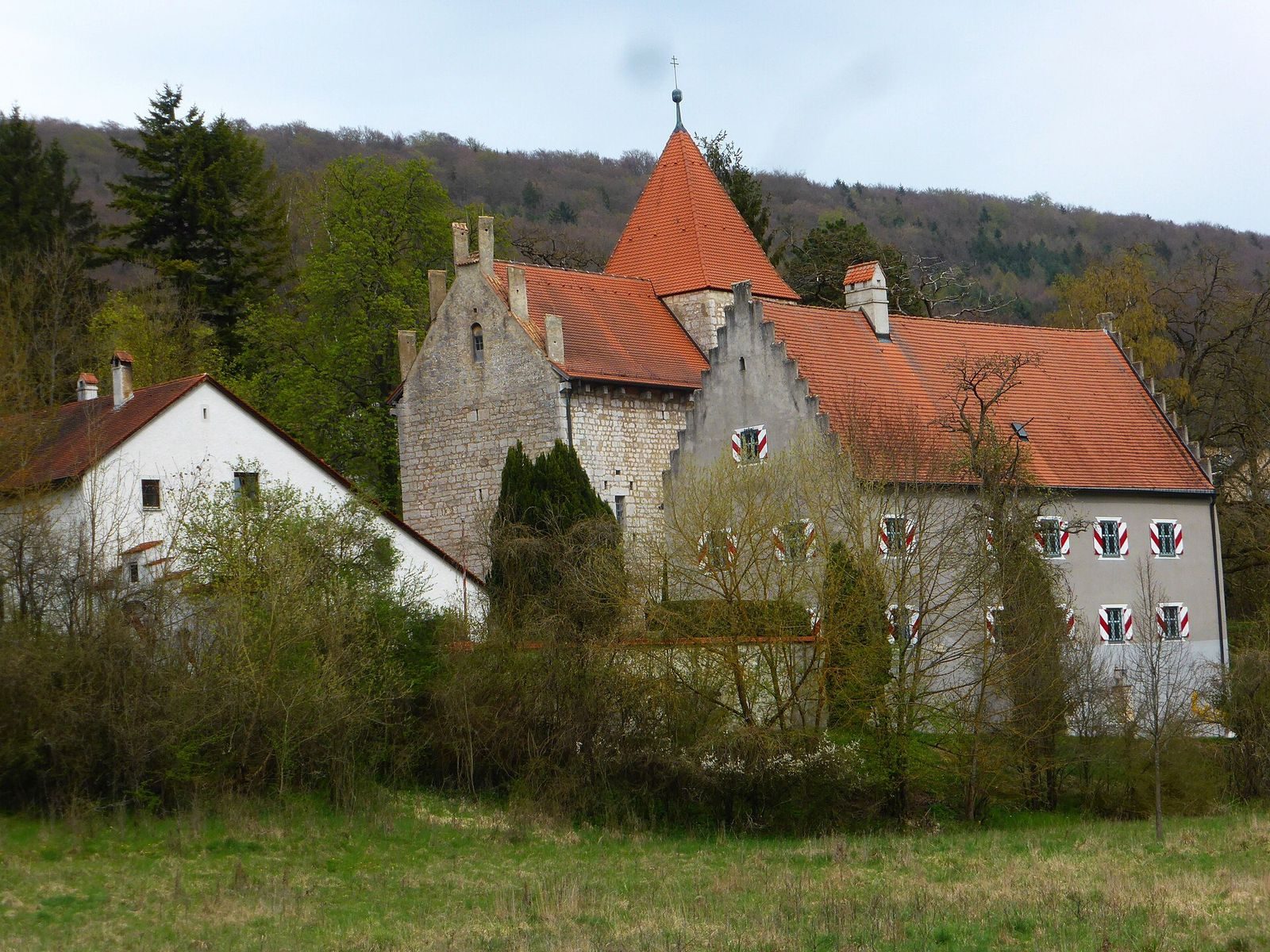
The complex brings together a simple castle building with a stepped gable and associated farm buildings. The farm buildings date from the seventeenth and eighteenth centuries, and the castle stands on the site of an earlier medieval castle.
Interior
The interior has been remodelled, and its furnishings were acquired in the twentieth century. A Renaissance tiled stove in the salon bears scenes from the Old and New Testaments; it is said to have come from a castle in Tyrol. Paintings by former owner Max von Seydewitz hang in the house.
Enclosure and entrance
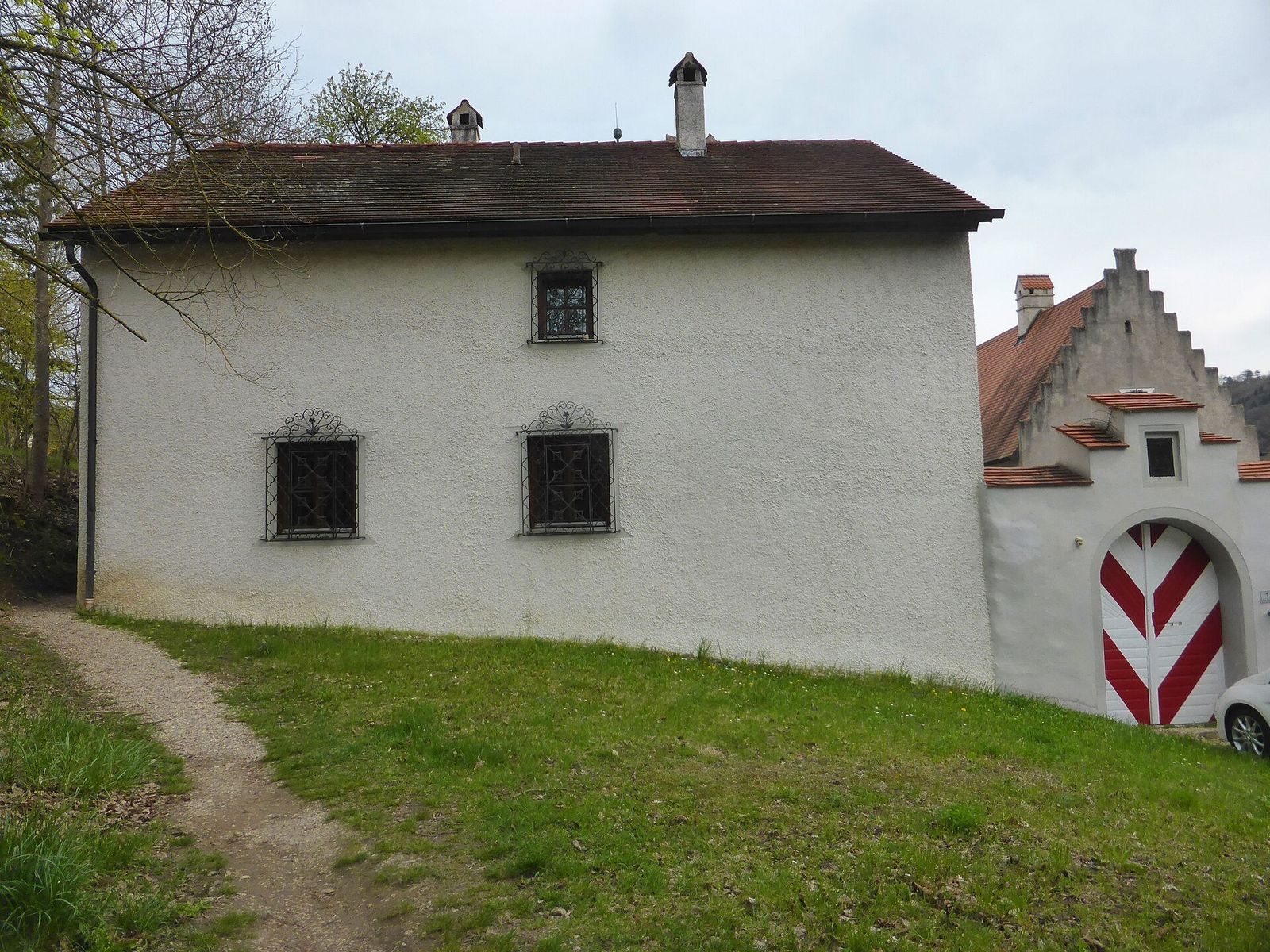
A wall encloses the complex and bears the date 1748, although that marking alone does not establish when the wall was built. Two large linden trees stand beside the entrance gate.
Connection with St Martin’s Church
Former passage to the church
A wooden passage once linked the castle’s upper floor to the gallery of adjacent St Martin’s Church. The rectangular opening has been bricked up, while the beam holes, about five metres above ground, remain visible. The church also contains a memorial plaque to Johann von Gott Winterl.
Archaeological remains
Subsurface medieval and early-modern remains extend around the church and castle, including traces of an earlier medieval castle. Together, the castle and St Martin’s Church illustrate the form of small former aristocratic residences in the Upper Palatinate.