Adichanallur: An Ancient Tamil Settlement and Cemetery in India
Site at a Glance
- Popularity
- Very High
- Country
- India
- Primary era
- Iron Age
- Eras represented
- Iron Age
- Civilizations
- Unclassified
- Site type
- Burial
- Remains
- Necropolis
On this page12 sections
History
The Adichanallur archaeological site is an ancient settlement and cemetery on the bank of the Tamiraparani River in Thoothukudi district, Tamil Nadu, India. It is associated with ancient Tamil culture. The discovery of residential remains alongside a cemetery made Adichanallur the first archaeological site in Tamil Nadu where both were identified; Amirthamangalam, by comparison, had yielded burial grounds alone.
Chronology and cultural interpretation
Adichanallur has been associated with a Tamil civilization described as predating 1600 BCE. Carbon-dated samples include dates of 905 and 791 BCE, with the wider set of results placing sampled material between 905 and 696 BCE. Samples from the 2004 excavations have also been assigned a broad date range of 1000 to 600 BCE. A separate age estimate places urns found in 2005 at least 3,800 years ago, so the different dating results do not establish a single construction date for the site.
An optically stimulated luminescence estimate, a method that dates when mineral grains were last exposed to light, placed copper remains at 1500 BCE, plus or minus 700 years. The estimate was considered too uncertain, and carbon dating was urged. Cultural interpretations based on finds portray a community that cultivated rice, used horses, and smelted and cast iron for weapons. They also suggest that poetry and music praised heroic deeds, with war drums used in ritual, and associate religious practice with Murugan and Korravai.
Excavations from 1876 onward
German ethnologist Dr. Jagor and a team that included the district collector and an engineer investigated part of a mound in 1876. Further excavations took place in 1896 and 1902. British archaeologist Alexander Rea carried out detailed investigations from 1899 to 1905, including extensive work in 1903 and 1904, and recorded thousands of finds. Jagor’s finds went to Berlin’s Museum für Völkerkunde, now the Ethnological Museum of Berlin. Rea’s finds were catalogued and are believed to be in India.
T. Satyamurthy supervised excavations from 2004 to 2006. The state archaeology department excavated at the site in 2020, and work began in the Parambu area in 2021. These investigations added to understanding of the settlement as well as its cemetery.
Renewed work and protection
In 2017, a local writer petitioned the Madras High Court to renew excavation, publish the excavation report, and establish a museum for the finds. The court criticized the delay of more than 15 years in dating material from the 2004 to 2006 excavations. When dating results were submitted in 2019, the court treated them as evidence that Adichanallur was among Tamil Nadu’s earliest ancient sites. It also ordered the Archaeological Survey of India to fence the site and establish a police post to help prevent damage.
Archaeologist Sathyabama Badrinath was nominated to prepare an excavation report, with the court allowing T. Satyamurthy’s reports to be incorporated. The report was published after a 17-year delay from the 2004 excavation. A larger museum project was announced in 2020. In 2023, Union Finance Minister Nirmala Sitharaman laid its foundation stone on a selected 5.5-acre site beside the road from Adichanallur to Srivaikuntam.
Remains
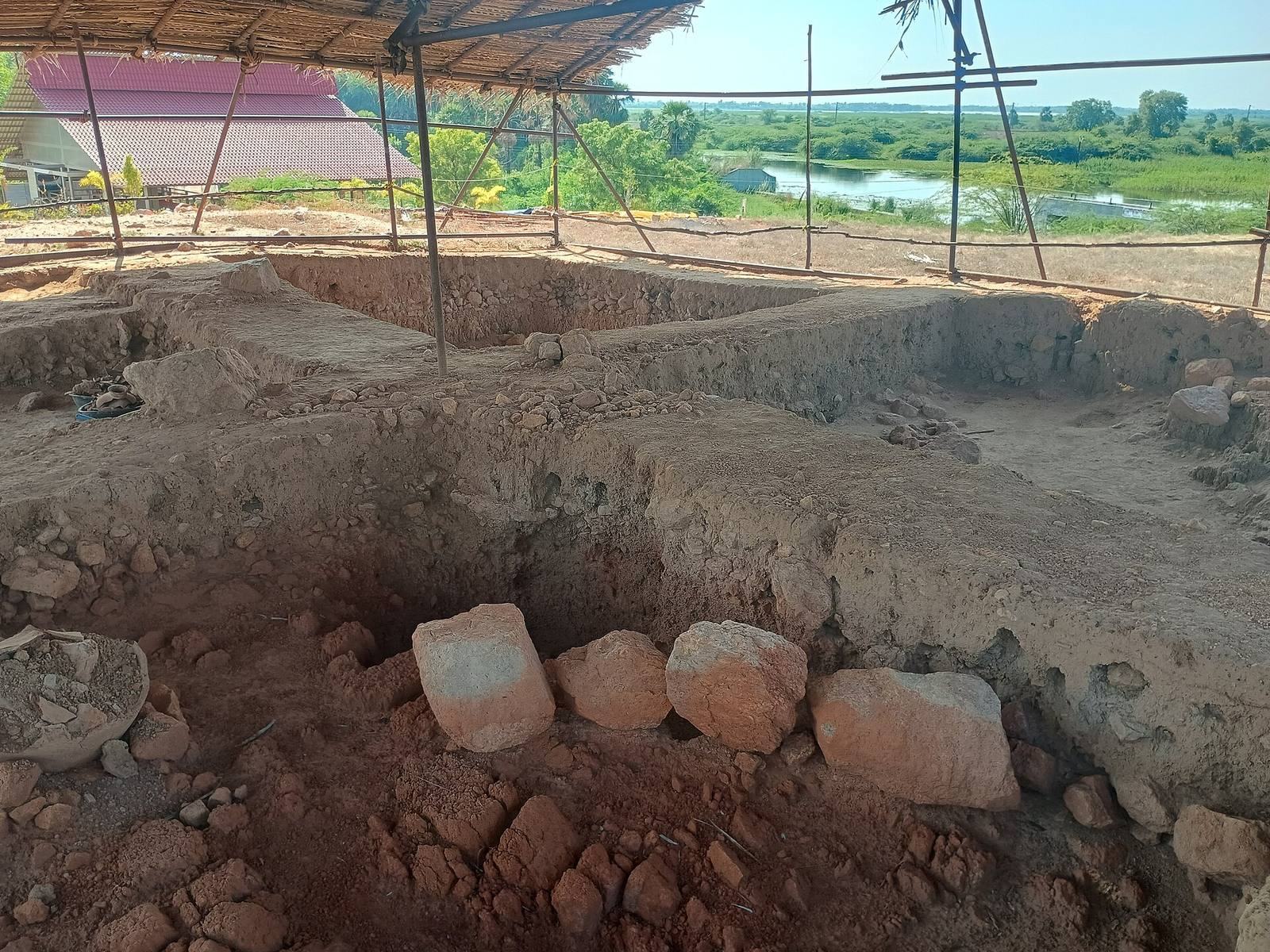
The archaeological area covers about 114 acres beside the Tamiraparani River. Its cemetery occupies rocky slopes, while the residential settlement lies on sloping ground about 100 metres north and northwest of the burial area. The remains include clay-urn graves, a fortified residential area, and evidence of pottery production.
Cemetery
Urn burials
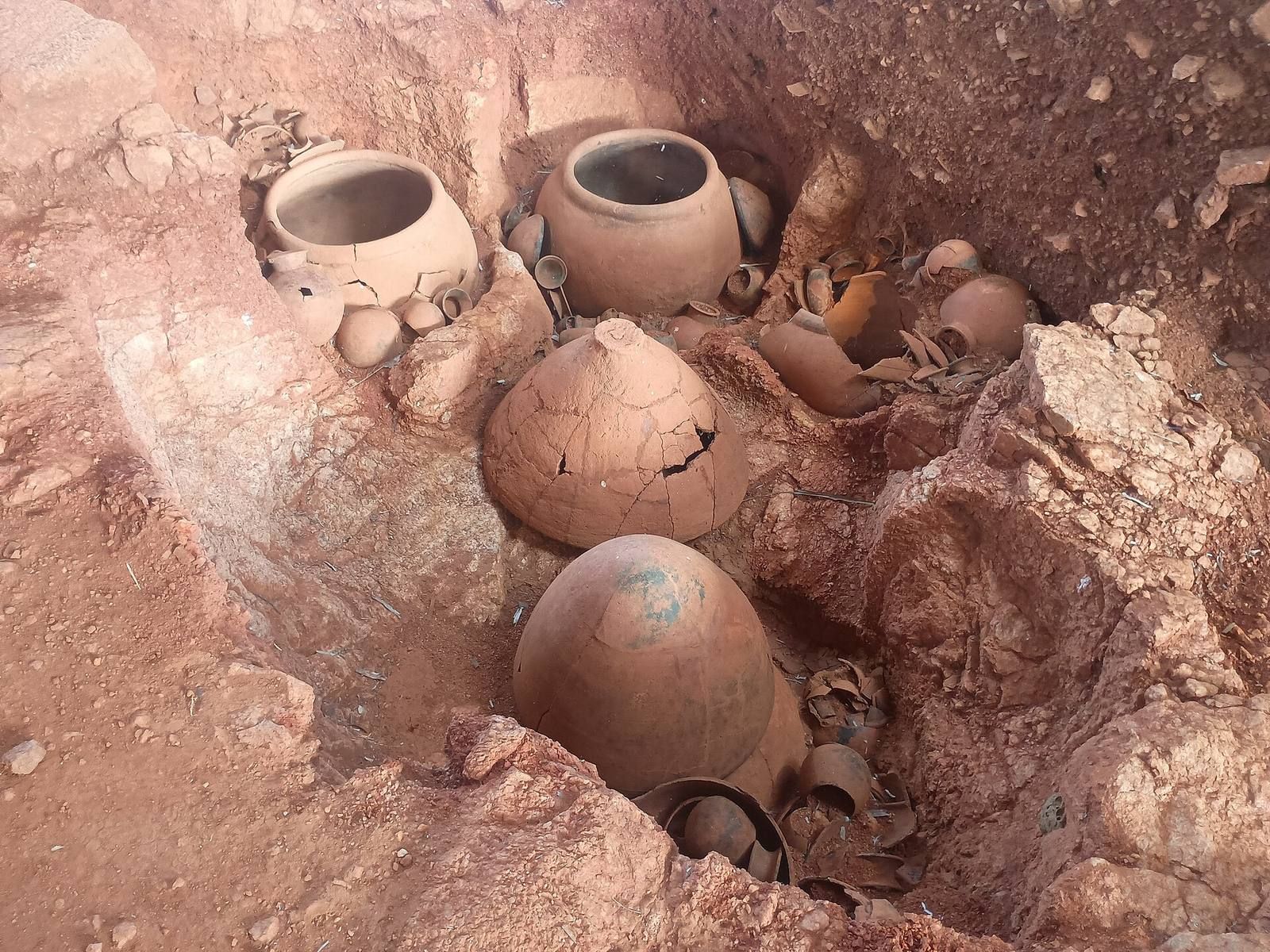
Burials occur at three levels on the rocky slopes. Fired-clay urns were placed in pits, and some graves contain two urns, with one covering the other. About 169 urns containing human skeletons were unearthed in 2005. The remains provide evidence of burial practices and include human bones and skulls.
Inscriptions and skeletal remains
Some urns bear incisions that researchers have interpreted as Tamil-Brahmi, an early script used to write Tamil. Proposed readings include references to Shiva and the phrase “Aathan, son of the Sun,” while other researchers regard the marks as ash-like scratches rather than writing. Thirteen skeletons were examined; eight skulls were identified as male and five as female, and most were broken or fragmentary. Researchers offered differing physical classifications, including the older term “pre-Australoid,” which is not a precise modern identification of a population.
Residential settlement and pottery production
Fortified residential area
A regularly shaped fortification wall is part of the residential area. Finds from the settlement include an iron knife, moulds for making beads, carnelian and other beads, bone tools, and pottery fragments marked with megalithic symbols, signs associated with a large-stone burial tradition.
Potters’ quarter
A small potters’ quarter within the settlement contains three pottery kilns, alongside ash, charcoal, and broken pottery. Excavations yielded red, black, and red-and-black pottery, as well as earthenware utensils. One vessel carries applied images of a woman, ears of rice, a deer, and a lizard.
Other finds and the on-site museum
Other objects from the site include a gold forehead ornament; iron knives, sword blades, short swords, hatchets, and other tools and weapons; bronze objects; and beads made of gold, bronze, and precious stones. A small spear has been interpreted as evidence of worship of Murugan, a major Tamil Hindu deity. An on-site museum displays pottery, other excavated objects, and a skeleton in glass cases.