Acheson House: A Seventeenth-Century Townhouse in Edinburgh
Site at a Glance
- Popularity
- Medium
- Country
- United Kingdom
- Primary era
- Early Modern
- Eras represented
- Early Modern, Modern
- Civilizations
- British, Kingdom of Scotland
- Site type
- Domestic
- Remains
- Elite Residence
On this page7 sections
History
Construction and early owners
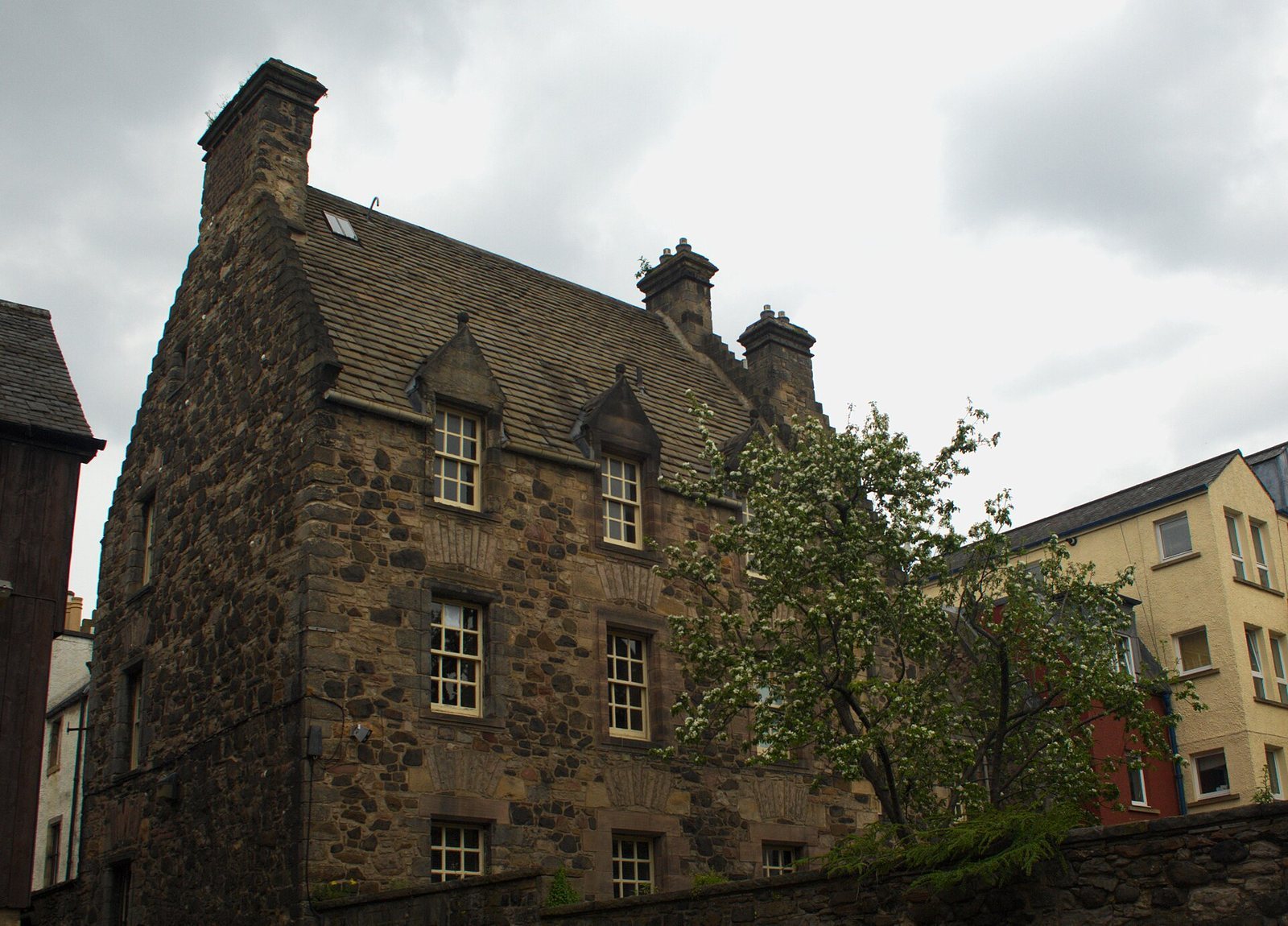
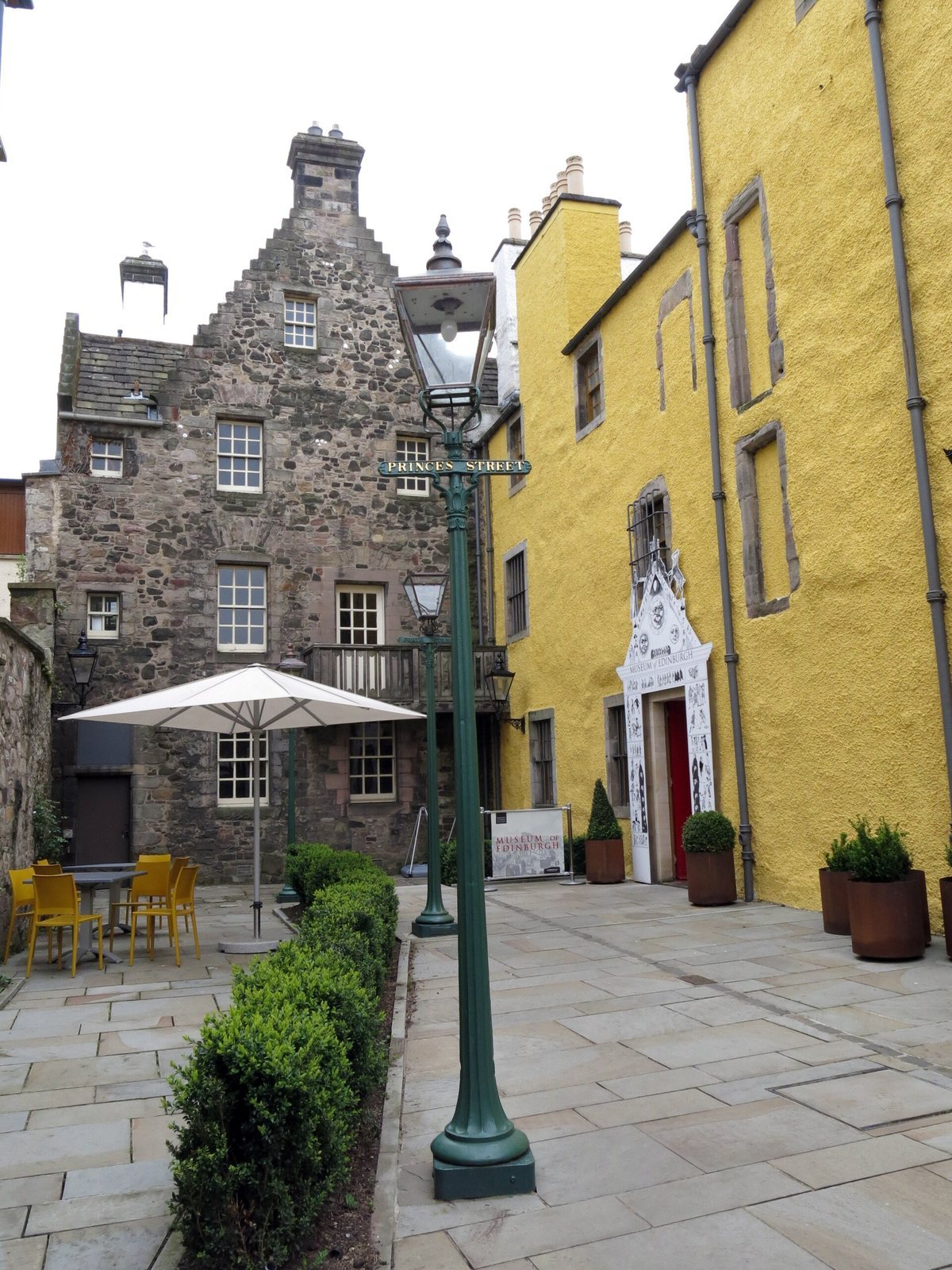
Acheson House is a seventeenth-century Scottish townhouse on the Canongate in Edinburgh, United Kingdom. Sir Archibald Acheson, 1st Baronet, and his wife, Margaret Hamilton, had it built in 1633. A Scottish lawyer, Acheson moved to Ireland in 1610 but continued a public career in Scotland. He sat in the Scottish Parliament in 1625, became a judge of the Court of Session in 1627, and served as Secretary of State for Scotland under Charles I, who ruled Scotland, England, and Ireland. Acheson died in 1634 and may never have lived in the house.
The property was sold to Edinburgh merchant Patrick Wood in 1636 and later changed hands several times. The Incorporation of Bakers owned it in 1784.
Changing uses and restoration
During the eighteenth century, the house was divided into smaller dwellings. By the early nineteenth century, a brothel operated there. The Slater family owned it from 1830 until 1924, when Edinburgh City Council acquired the property amid efforts to clear overcrowded, deteriorating housing in the Old Town.
John Crichton-Stuart, 4th Marquess of Bute, bought the building in 1935 and commissioned architect Robert Hurd to restore it. The work, carried out during the 1930s, was extensive but sought to respect the historic house. In 1938, Acheson House was considered as a possible official residence for the Secretary of State for Scotland. Canongate Kirk acquired it the following year, and the Iona Community used it afterward. From 1947 to 1951, a publisher, his wife, and their five children lived there.
In 1951, the house became the Scottish Craft Centre, displaying contemporary Scottish craftwork. The centre closed in 1991, and the building remained empty for two decades. It was placed on Scotland’s Buildings at Risk Register in 2000. Plans prepared by 2007 proposed incorporating it into the Museum of Edinburgh, based in nearby Huntly House. Acheson House was renovated in 2011, and the Edinburgh World Heritage Trust moved in that November. The plans also envisaged using the ground floor as part of the museum.
On 14 October 1970, Acheson House received Category A listed status, Scotland’s highest grade of listed-building protection. The designation recognizes it as an outstanding example of a large Scottish townhouse from the early seventeenth century.
Remains
Layout and architectural features
Plan and forecourt
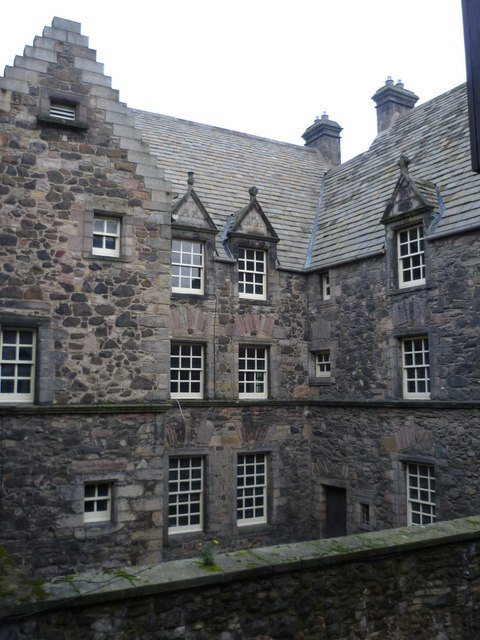
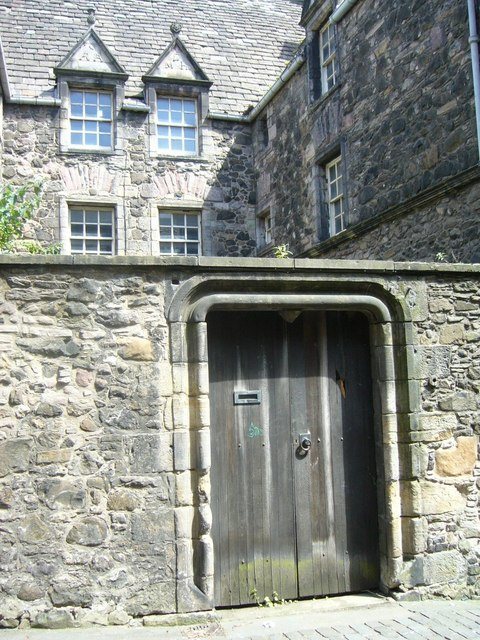
The three-storey house has an L-shaped plan, with its north side facing the Canongate and its west side facing Bakehouse Close. It stands back from the Canongate behind a small forecourt, whose entrance is closed by a timber door.
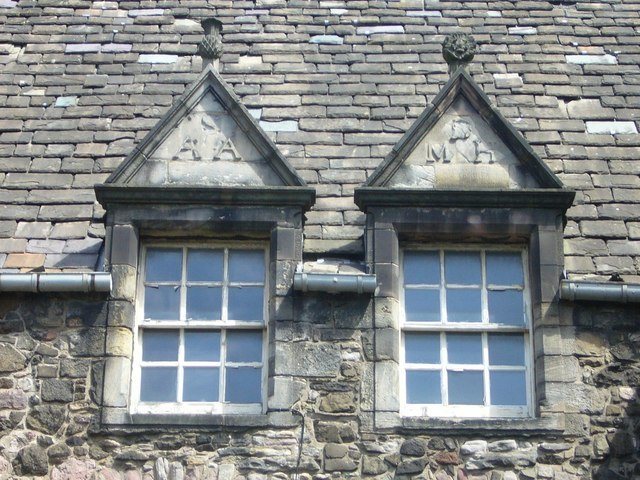
Carved details and gateways
A stone lintel above the forecourt entrance was originally located in Anchor Close. Its inscription expresses trust in the Lord. The doorway to the stair tower bears the date 1633, the initials of Archibald Acheson and Margaret Hamilton, and the Acheson crest, showing a cock and a trumpet. A gateway at Bakehouse Close was brought from Carberry Tower in East Lothian during the restoration of the 1930s.