Canongate Tolbooth: A Civic and Judicial Building in Edinburgh
Site at a Glance
- Rating
- 4.5
- Popularity
- Low
- Country
- United Kingdom
- Primary era
- Early Modern
- Eras represented
- Early Modern, Modern
- Civilizations
- British, Kingdom of Scotland
- Site type
- Civic
- Remains
- Town Hall
On this page7 sections
History
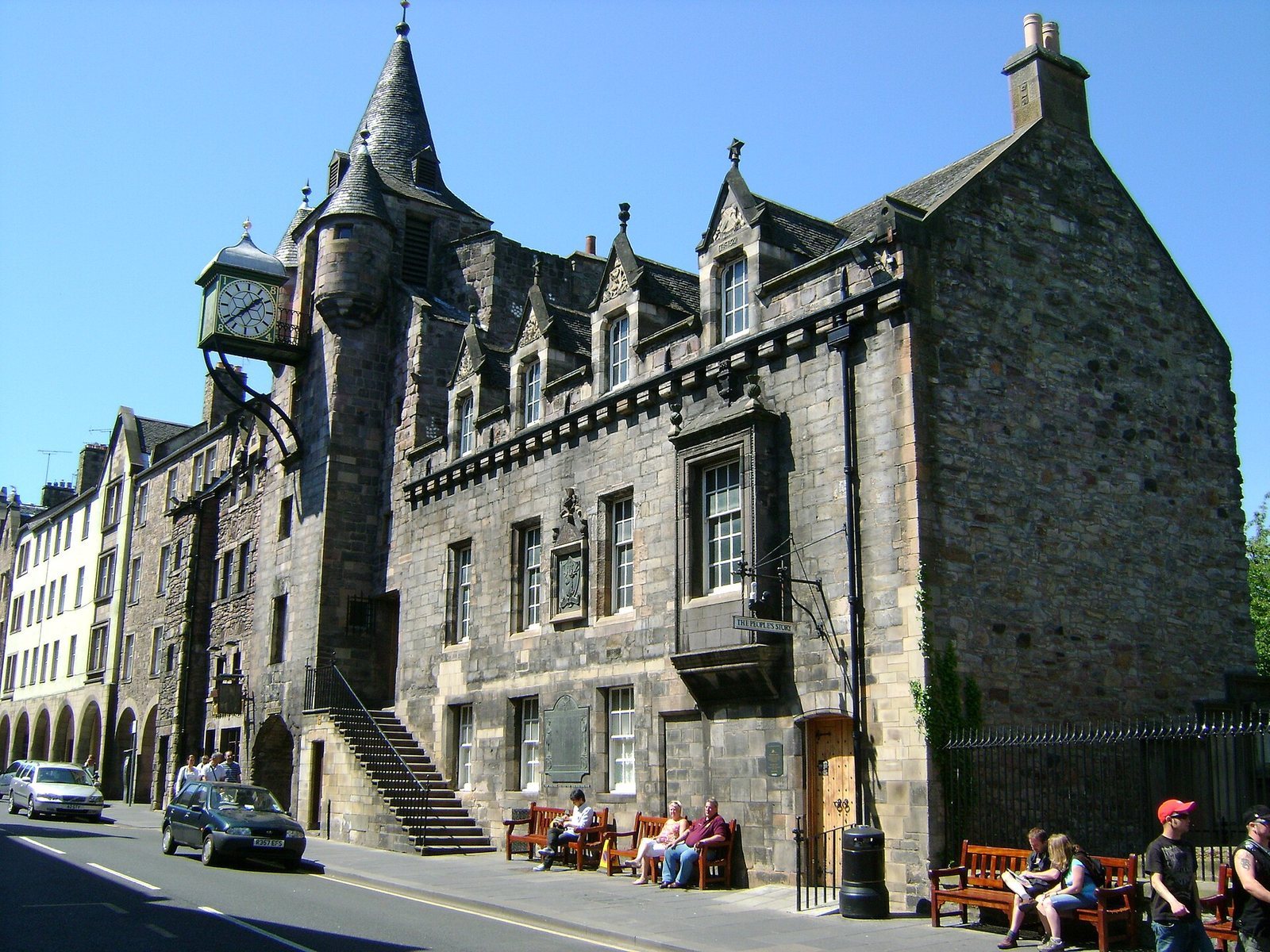
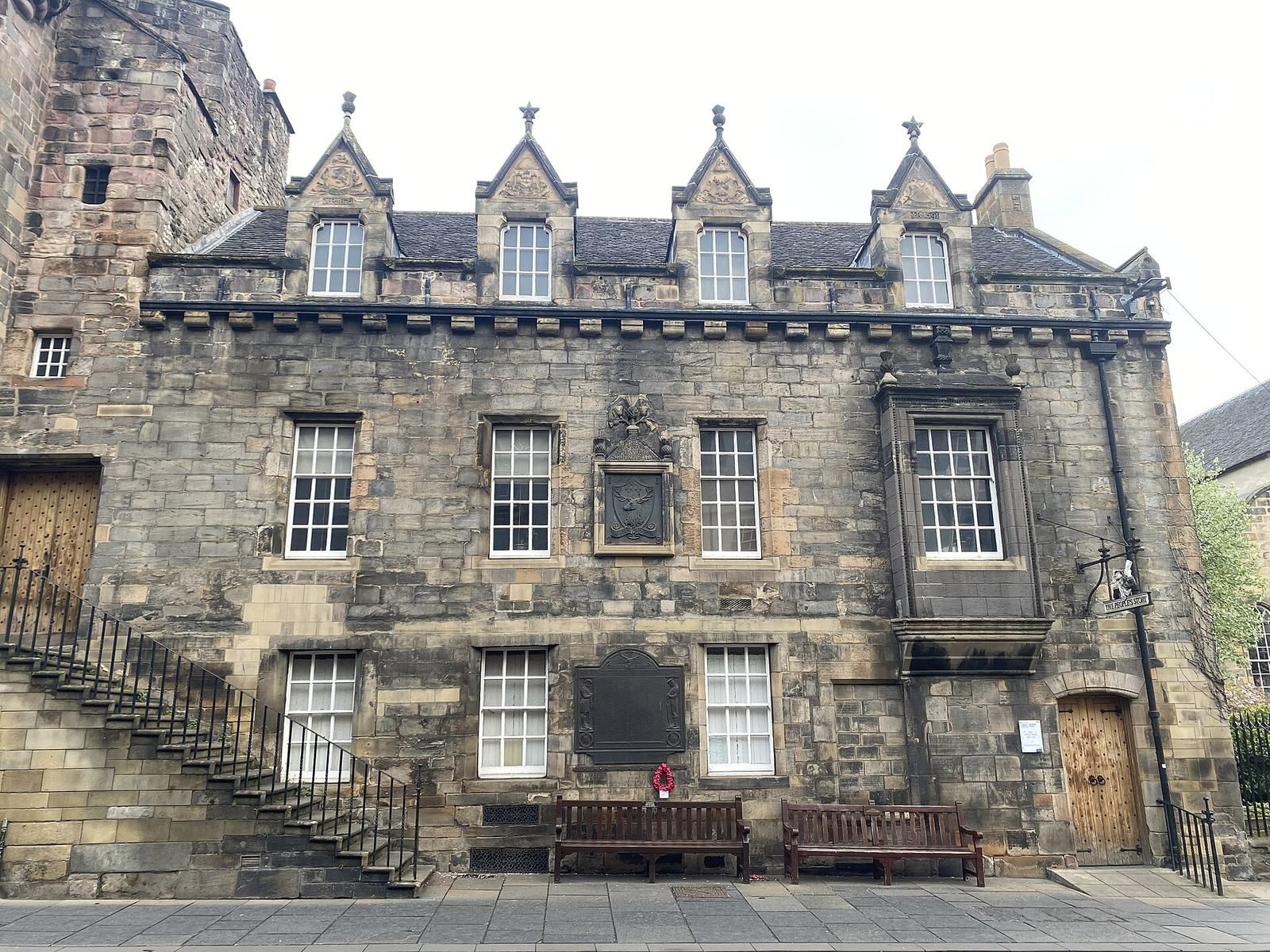
Canongate Tolbooth is a Scottish civic building for administration and justice in Edinburgh, United Kingdom; its tower dates to 1591. Designed in the Scottish medieval style, it served as the administrative and judicial centre of the separate burgh of Canongate, a town with its own civic organization. The eastern block was built at the same time as the tower or shortly afterward.
Foundation and burgh government
The building work was carried out by Sir Lewis Bellenden, baron of Broughton, feudal superior of Canongate and Lord Justice Clerk, a senior judicial officer in Scotland. The tolbooth served the burgh as a jail as well as a centre of civic life.
Seventeenth-century use
During the seventeenth century, many Covenanters, Scottish Presbyterians associated with religious covenants and opposition to royal religious policies, were imprisoned there in poor conditions. A riot took place inside the building in May 1692.
Annexation and restoration
Edinburgh annexed Canongate in 1856, ending the tolbooth’s municipal role and the burgh council’s meetings there. In 1875, Edinburgh City Architect Robert Morham extensively remodelled the exterior to recover its medieval appearance. Inside, the first and attic floors were joined into one level, now occupied by The People’s Story Museum. The building has been a Category A listed building since 14 December 1970. In Scotland, this is the highest listing category, for buildings of special architectural or historic interest at national or international level.
Remains
The building consists of a bell tower and a lower block to its east. The Kirk of the Canongate and Canongate Kirkyard stand farther east along the Royal Mile.
Bell tower
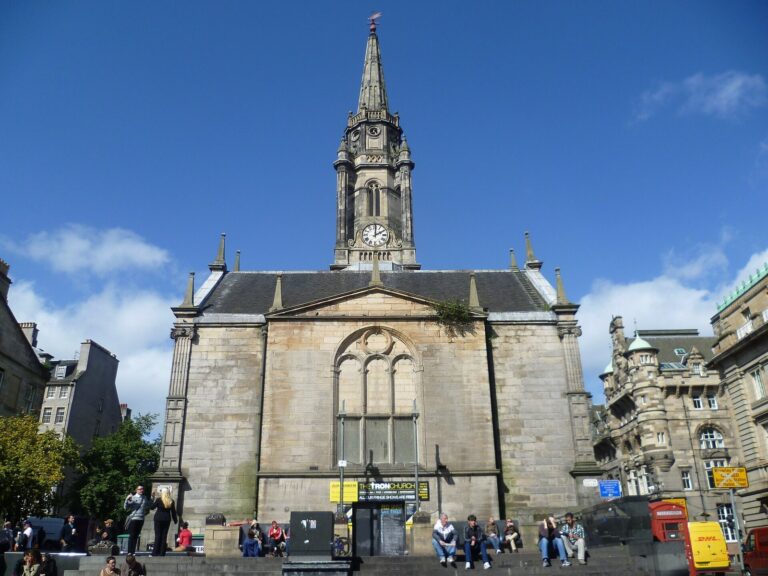
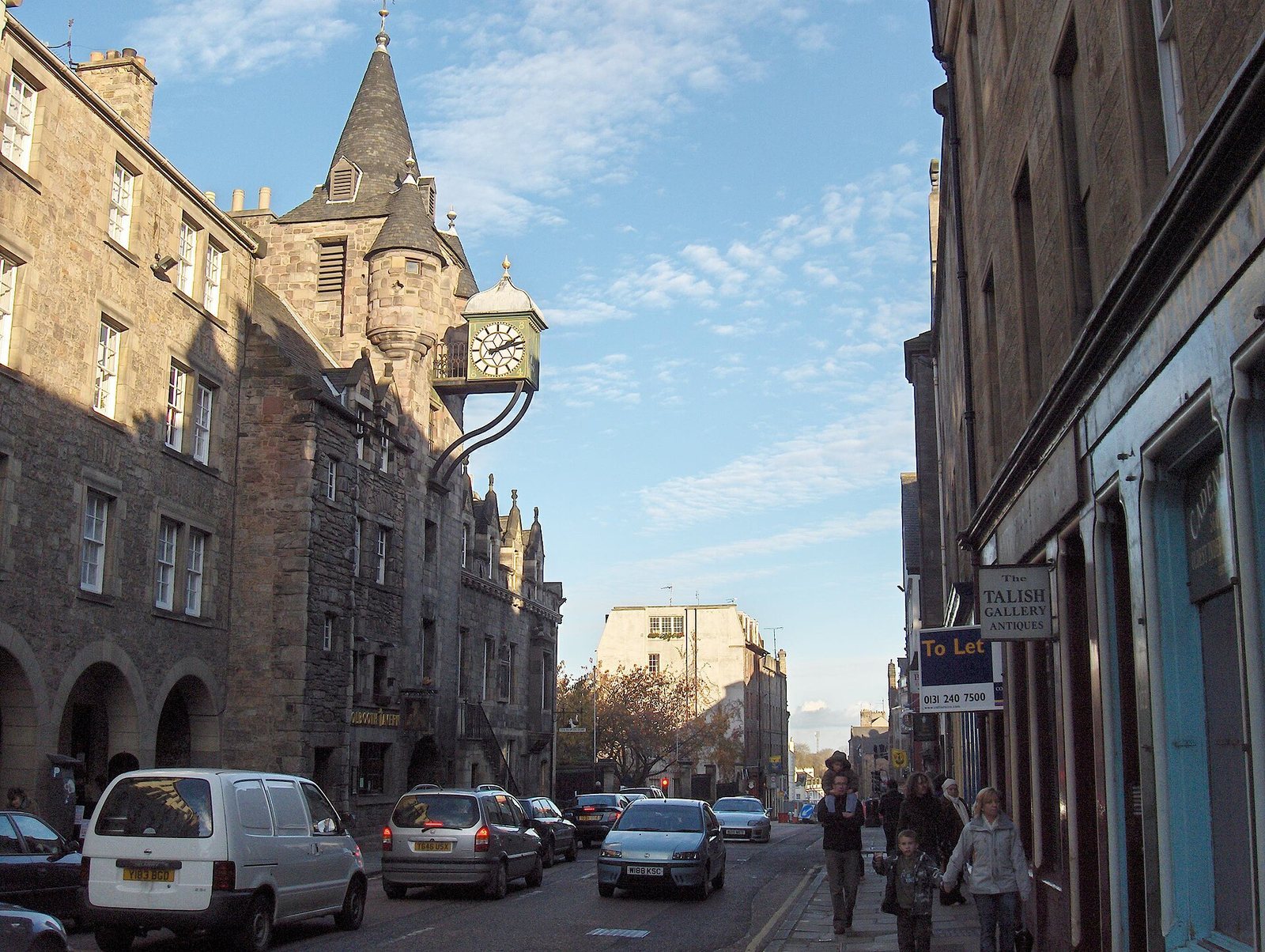
Two small projecting turrets flank the clock, with ornamental openings for firearms set beside it. A conical spire rises above. At street level, a round-arched passage beneath the tower leads into Tolbooth Wynd. The clock, dated 1884, was made by James Ritchie & Son and hangs over the Royal Mile from wrought-iron brackets.
Eastern block
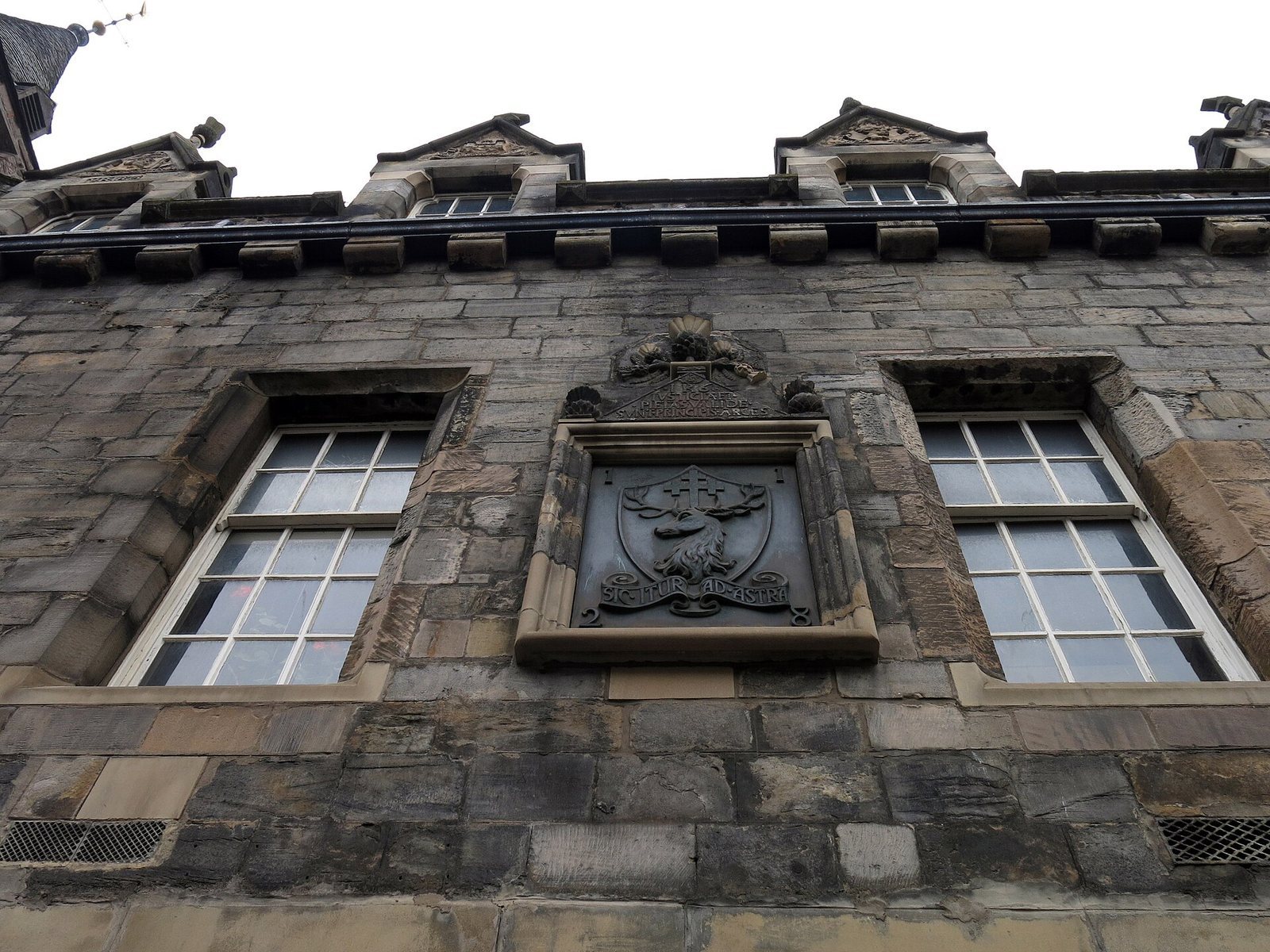
The lower block contained the council chamber and courtroom. A stone external stair leads to a door beside the tower, and an oriel, or projecting window, extends from the wall. Four roof windows topped by pediments, designed by Morham with reference to Gordon of Rothiemay’s 1647 map, replaced three earlier windows with hipped roofs.