Abellinum: An Ancient Samnite and Roman City
Site at a Glance
- Rating
- 4.6
- Popularity
- Low
- Country
- Italy
- Primary era
- Classical
- Eras represented
- Classical
- Civilizations
- Roman, Samnite
- Site type
- Settlement
- Remains
- City
On this page13 sections
History
Abellinum was an ancient city on Civita hill near present-day Atripalda, Italy. It began as a Samnite settlement of the Hirpini, an ancient Italic people associated with the Samnites, and was occupied from the fourth century BCE to the sixth century CE.
Samnite settlement and Roman colony
During the Samnite Wars, conflicts between Rome and Samnite peoples in Italy, the Hirpini resisted Roman power. Abellinum came under Roman control after the civil war between the rival Roman leaders Gaius Marius and Sulla. Sulla is credited with razing the earlier settlement.
A Roman colony was established at Abellinum during the late Republic, although its exact foundation date is uncertain. It may have been founded during the Second Triumvirate, the governing alliance of Octavian, Mark Antony, and Lepidus. The colony belonged to the Galeria tribe, a Roman citizen grouping used for civic and voting purposes, and its land was assigned to veterans.
Imperial growth and status
Under Augustus, Rome’s first emperor, Abellinum was enlarged and incorporated into Region II, Apulia and Calabria. It was renamed for his wife, Livia Drusilla, and the territory between Abellinum and Aeclanum was assigned to her. The city’s location in a region carrying traffic along the Appian Way contributed to its importance.
Ancient writers placed Abellinum in different regional groupings. Pliny the Elder counted it among the towns of Campania in Augustus’s first region and called it an oppidum, meaning a town or fortified settlement. Ptolemy, by contrast, included it among the cities of the Hirpini. The Tabula Peutingeriana, an ancient road map, places Abellinum on the route from Beneventum to Salerno, about sixteen Roman miles from Beneventum.
In the third century CE, Emperor Severus Alexander substantially expanded the colony and brought in many people from the eastern provinces. The city then bore the name Livia Augusta Alexandrina. The population change helped eastern religious cults spread, including the worship of Sol Invictus, a Roman sun deity. Imperial inscriptions identify local magistrates and indicate that Abellinum retained considerable wealth and importance at least into the period of an emperor named Valentinian.
Decline and abandonment
Abellinum declined amid economic crises in the third and fourth centuries, an earthquake in 346, a volcanic eruption in 472, and the Byzantine-Gothic War of 535–555. Lombard incursions beginning in 568 added to the disruption, and inhabitants moved away from the walled settlement. The ancient city was destroyed during the Roman-Lombard wars. People settled on nearby hills, while the name Abellinum continued in Avellino.
Remains
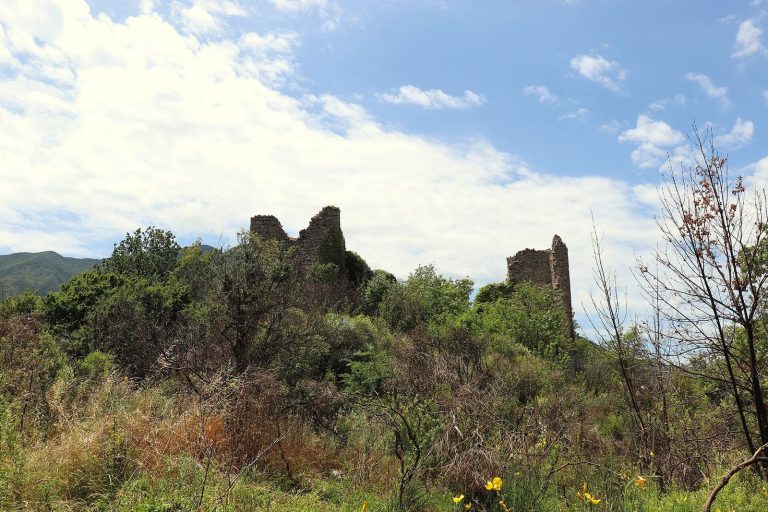
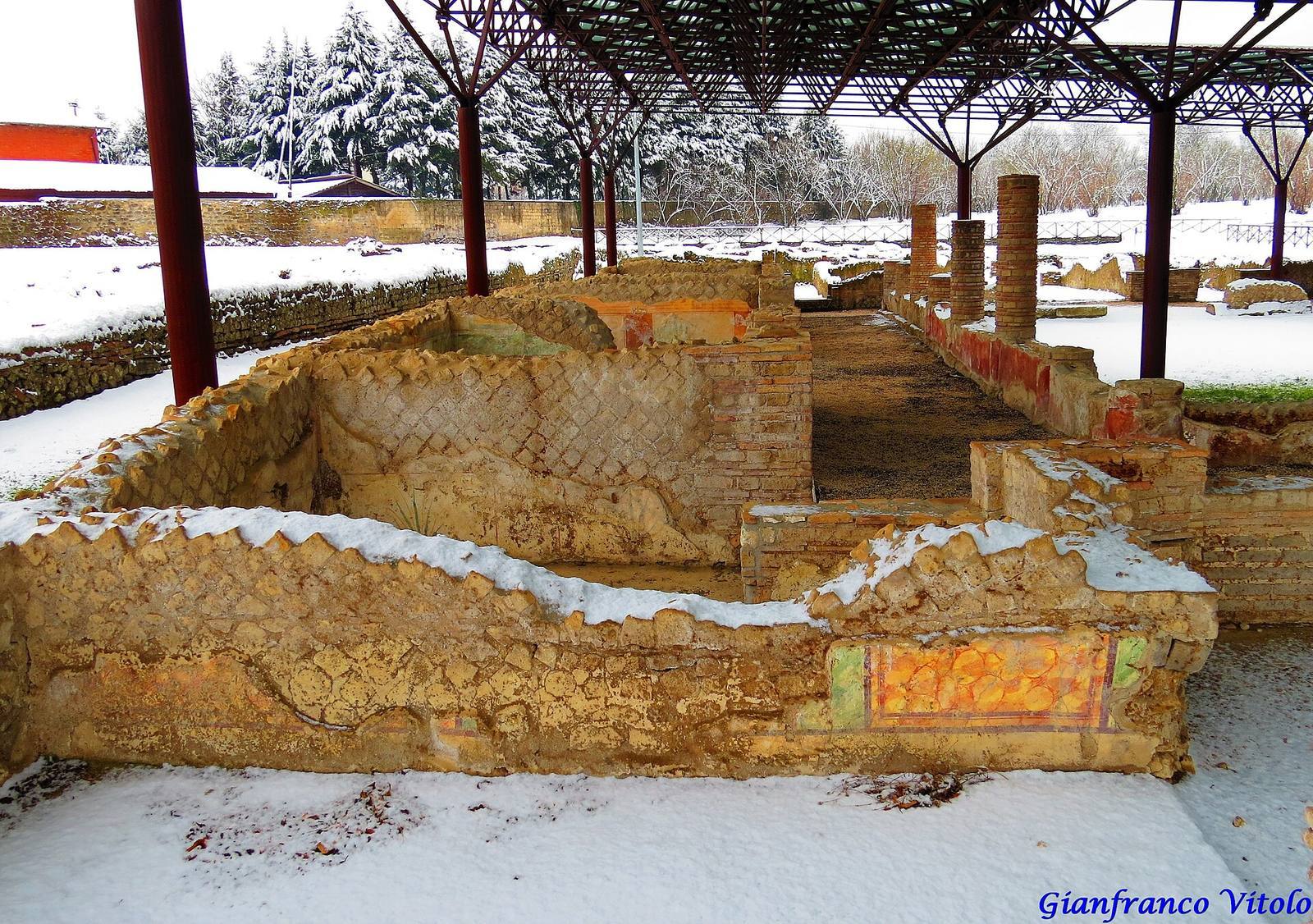
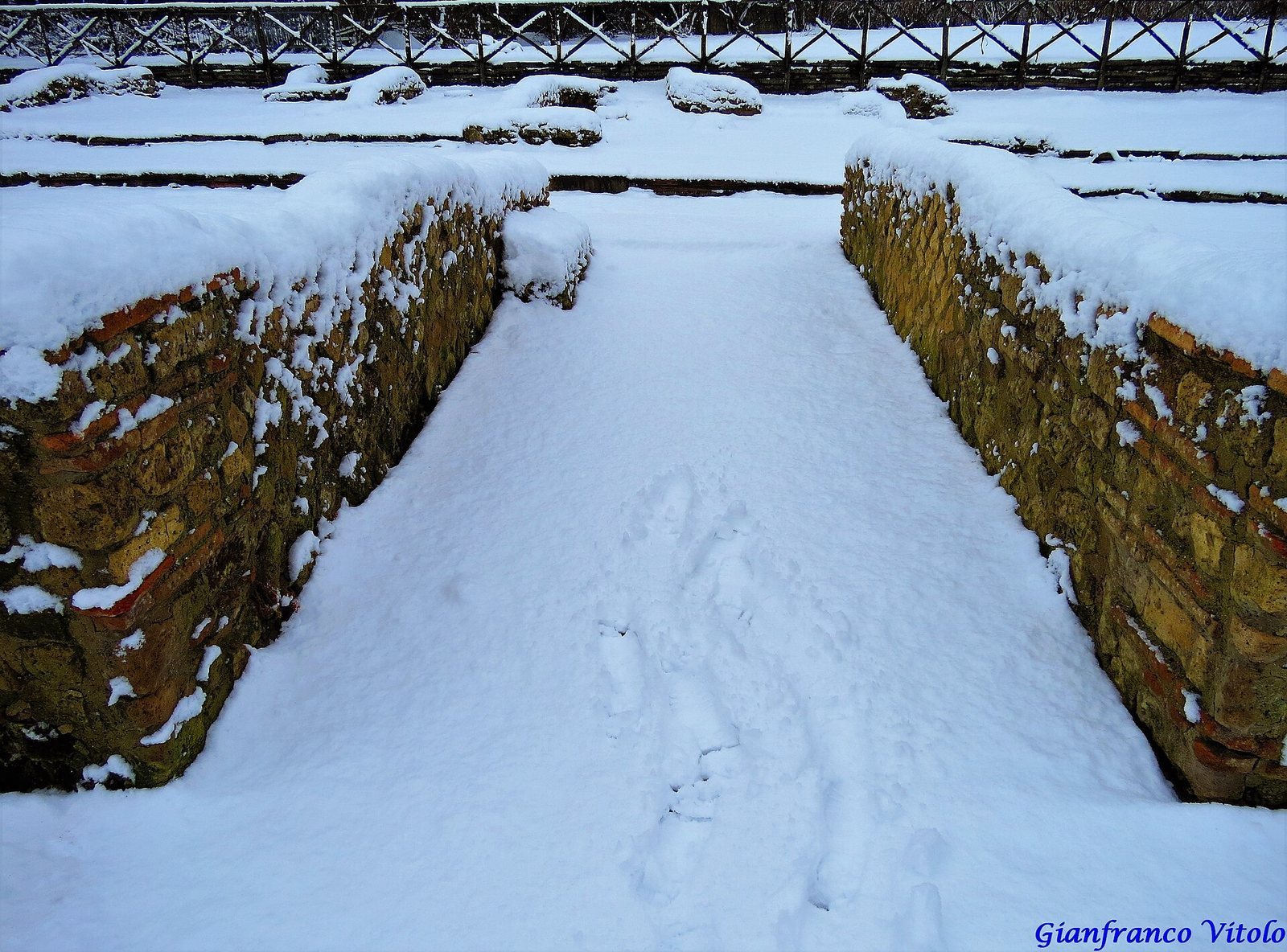
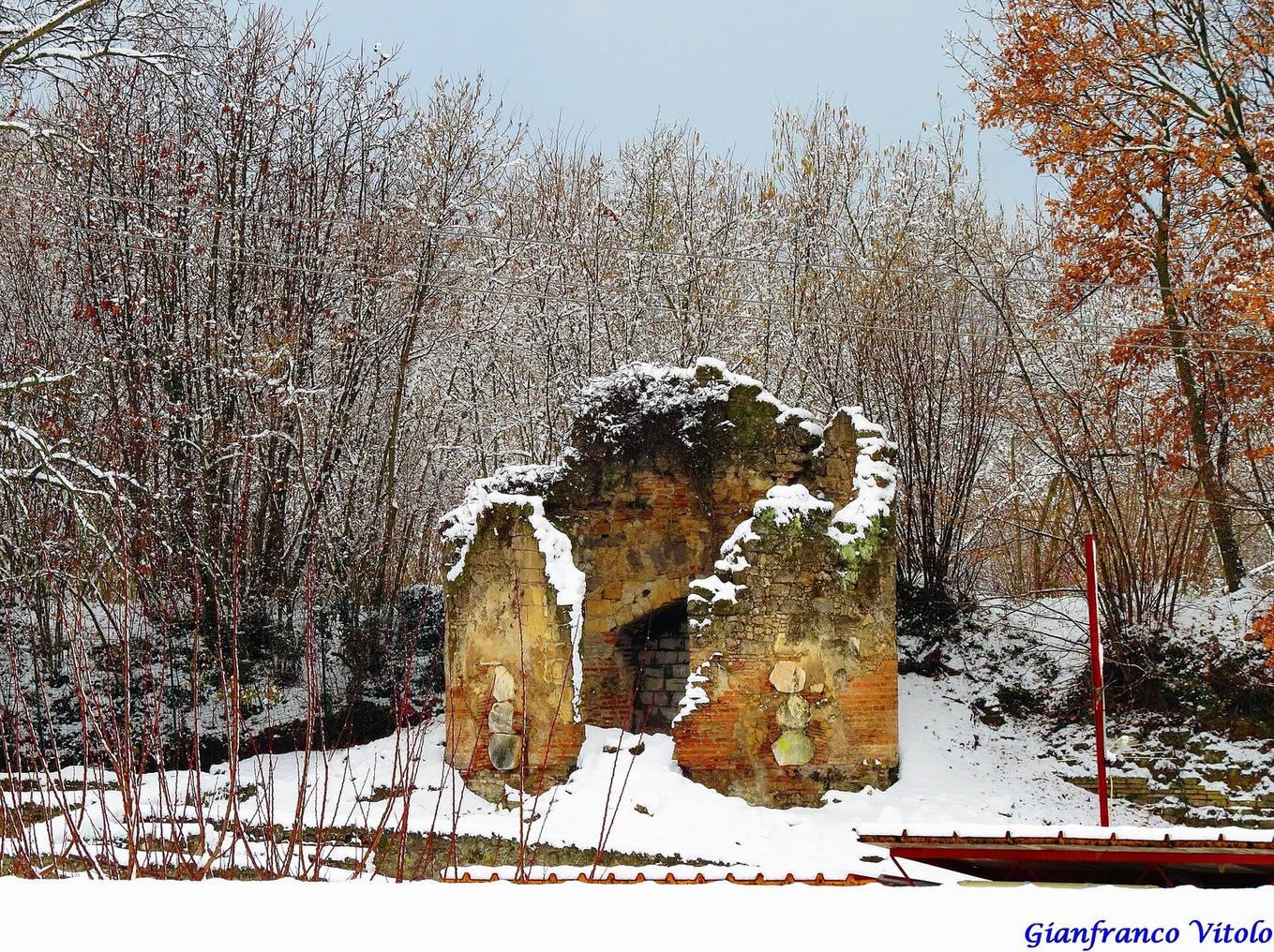
The remains occupy the plateau of Civita hill in the upper Sabatus valley, beside the Sabato River. The archaeological park covers about 25 hectares and preserves a regular Roman urban plan, public and residential buildings, and sections of the city’s defenses.
Urban plan and defenses
Street plan and civic center
Perpendicular streets divided the city into regular quarters. The forum, a civic public space, was bordered by temples.
City walls
Two circuits of walls, dating to the third century CE, survive within an overall circuit roughly two kilometres long. Some Roman masonry uses opus reticulatum, a technique in which small stones are set in a net-like pattern. Augustan-period towers and ditches are also noted, alongside the remains of two large circular towers.
Public works and buildings
Baths and aqueducts
A bath complex, also known as the Goldsmiths’ Tower, includes a hot room. A section of the Roman Serino aqueduct lies within the city walls. Beyond them, aqueduct remains belong to a line that led to Misenum.
Residential buildings
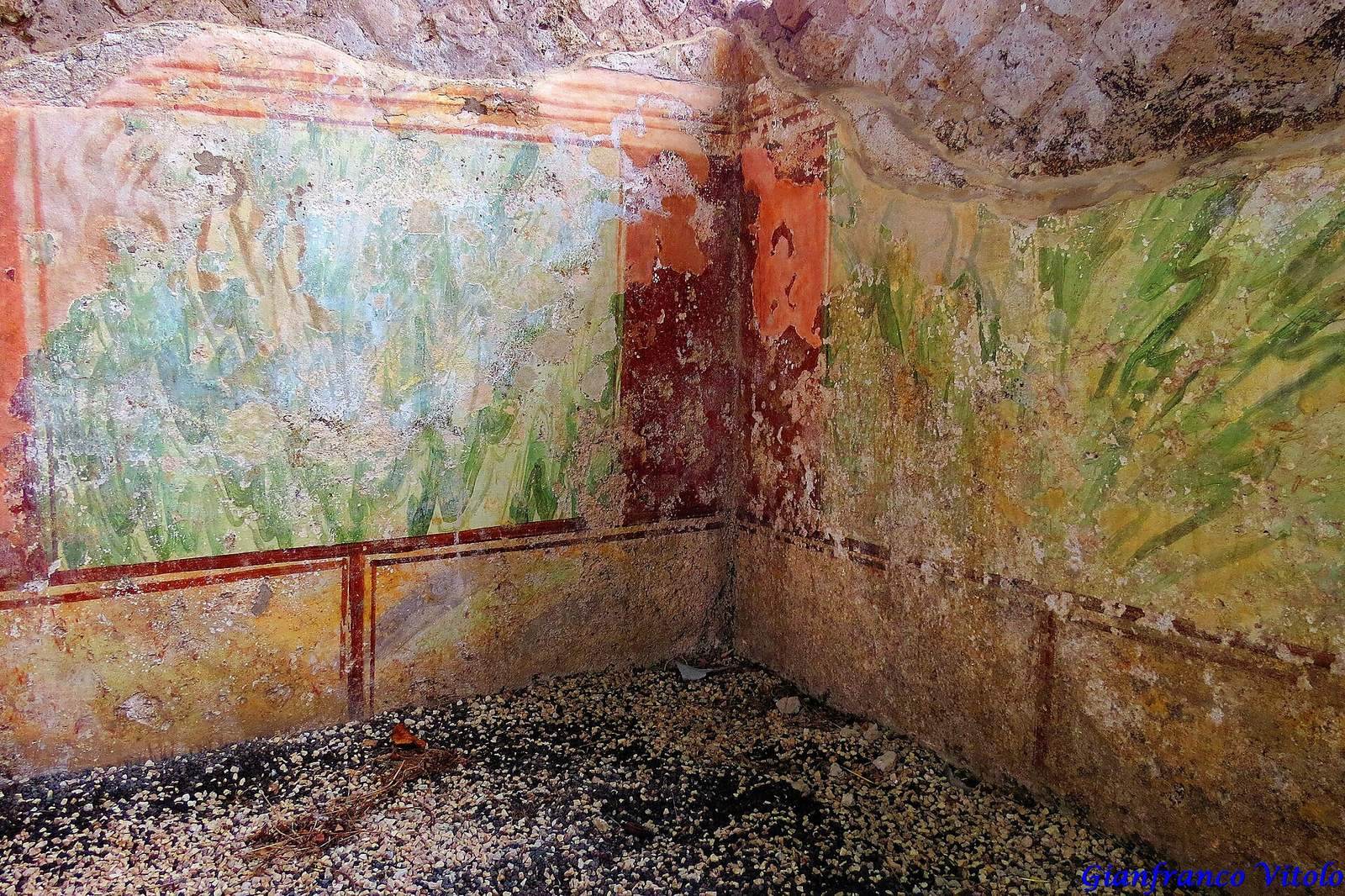
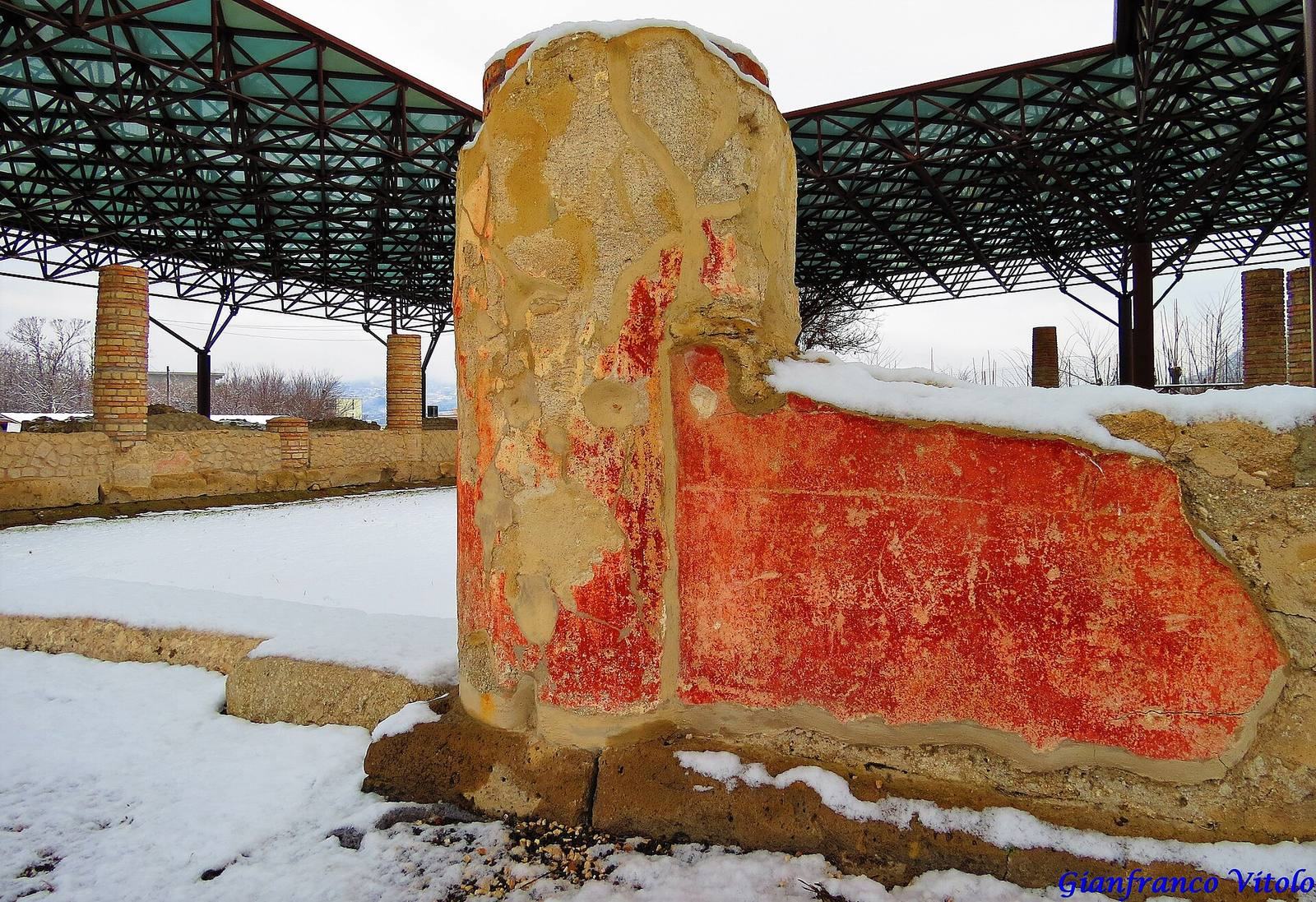
A large Roman house covered about 2,500 square metres. One room was decorated with plant motifs against a Pompeian-red background, and the house included a colonnaded courtyard. Other residential buildings also survive among the remains.
Amphitheatre and inferred brothel
Fragments of the amphitheatre remain outside the city walls. A brothel is inferred from coins found at Abellinum that bear erotic images.
Burial ground and finds
An eastern burial ground at San Ippolisto remained in use into the Christian period. Finds from Abellinum include numerous inscriptions, bas-reliefs, altars, and smaller objects. The Irpino Museum preserves material from the site, including a first-century marble altar dedicated to Tiberius.