Saint-Géraud Abbey Church of Aurillac: A Benedictine Monastic Foundation
Site at a Glance
- Popularity
- Medium
- Country
- France
- Primary era
- Medieval
- Eras represented
- Medieval, Modern
- Civilizations
- Carolingian, French
- Site type
- Religious
- Remains
- Fortified Monastery
On this page16 sections
History
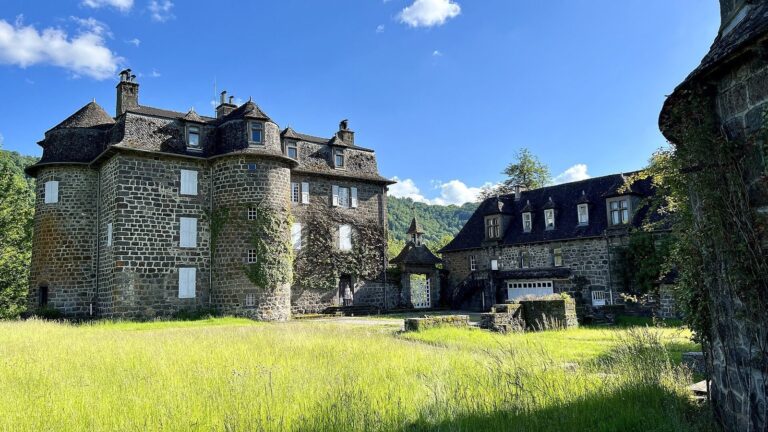
Saint-Géraud Abbey Church of Aurillac is the church of a former Benedictine abbey in France. Count Gerald of Aurillac founded the abbey in the late ninth century, and construction of its church is dated to 885. Its major medieval rebuilding was Romanesque, a European architectural style known for rounded arches and substantial masonry. The abbey became a center of monastic reform, learning, and pilgrimage.
Foundation and privileges
During a pilgrimage to Rome in 893–894, Gerald formally gave his estates and revenues to Saint Peter for the foundation and upkeep of a monastic community. He envisaged a community of an abbot, 39 monks, and other religious and lay members. The abbey came under the direct authority of the Holy See and was required to make an annual payment. Gerald held most of his land without the usual obligations to a superior lord. He declined his cousin William the Pious’s offer of protection, except in the case of Talizat, whose inhabitants he could not defend himself. He later transferred his remaining property to the abbey while granting some servants and his nephew rights to use and benefit from parts of it. His nephew also retained rights of justice and protection over the monastery.
Gerald chose Adalgarius as the first abbot and sent young followers to the Benedictine community at Vabres for training. Charles the Simple exempted the abbey from civil and episcopal jurisdiction in 899, giving its abbot privileges associated with a bishop, including ceremonial insignia. Gerald died on 13 October 909, a few days after Adalgarius. Jean, a relative of Gerald, became the second abbot. Pope John X confirmed the abbey’s direct relationship with the Holy See in return for an annual payment. Later papal confirmations, including those of 1061 and 1068, upheld the abbey’s judicial rights and the monks’ right to elect their abbot.
Gerald also established a protected settlement around the abbey, marking its territory with four crosses and granting inhabitants municipal rights. He freed an initial hundred people from serfdom, the largest group he was permitted to free at once, and intended to emancipate all the serfs on his estates. Serfdom later disappeared in the region.
Reform, learning, and expansion
In the 920s, Odo of Cluny briefly led the abbey and left Arnulf as coadjutor and co-abbot. They introduced Cluniac customs, practices associated with the monastery of Cluny, and established a school teaching theology, grammar, and music. Aurillac became a model for Cluny and contributed to wider church initiatives, including the Reconquista, the Christian reconquest of territories in the Iberian Peninsula, and the Gregorian Reform, a movement to reform church governance and clergy.
The abbey helped spread Benedictine reform in the region. In the tenth century it sent monks to Saint-Pons-de-Thomières, helped establish Saint-Sauveur in 936 with Raymond Pons I of Toulouse, and took part in reforming Saint Théofrède in 937 at the request of Godescalc, bishop of Puy. Its network of foundations and dependent houses grew over time. By about 1290, it held more than a hundred priories across 17 dioceses, whose estates yielded over 80,000 livres a year. Many of these houses later became parishes and then communes.
A library and a place for copying manuscripts made the abbey an important intellectual center from the tenth century. Gerbert of Aurillac, later Pope Sylvester II, studied there from about the age of 12 under Raymond de Lavaur. In 963, Borrell II, count of Barcelona, visited to honor Gerald’s relics. Abbot Adralde persuaded him to take Gerbert to Catalonia to continue his studies. Gerbert later obtained ancient manuscripts for the abbey. Around 1021, Robert the Pious also made a pilgrimage there to honor Gerald’s relics and visit Gerbert’s birthplace. Gerald’s cult spread around the turn of the tenth and eleventh centuries, and successive popes recognized him as blessed and saint.
The abbey grew through gifts from Jean, its second abbot, Countess Aldegarde, the counts of Toulouse and Poitiers, the viscounts of Narbonne, other lords, and pilgrims. It served travelers on routes to Rome, Catalonia, and Santiago de Compostela. Its dependent houses included a hospice at Mont-Cébro in Cerdanya.
Conflict and late medieval change
On 3 January 1184, armed mercenary bands known as Routiers, commanded by Louvart and Sanche de Savagnac, attacked and pillaged the abbey. In the later Middle Ages, observance of the Benedictine Rule weakened, in part during the crisis of the Hundred Years’ War, a series of conflicts between England and France from the fourteenth to the fifteenth century. Most priories were secularized and became parishes. The monks later abandoned the cloister and shared dormitory, while income was assigned to individual clergy.
Commendation, destruction, and rebuilding
A papal bull dated 13 May 1561 established the commendatory system at Aurillac. Under this arrangement, an abbot appointed from outside the community could retain the abbey’s revenues without living there. The change was introduced under Martin de Beaune, whom Catherine de’ Medici had appointed against the monks’ wishes.
On 6 September 1569, during the abbacy of Cardinal Luigi Pisani, Calvinist forces attacked Aurillac. They burned and destroyed the church, convent, abbatial palace, sculptures, and tombs. They melted down precious metals and took them to Geneva, while the abbey’s books, manuscripts, and archives were burned. Properties were sold at auction in the names of the princes of Navarre and Condé. For 14 months, townspeople endured extortion and torture, and some were killed.
The church was rebuilt in the sixteenth century and reconstructed again under Charles de Noailles, abbot from 1606 and later bishop of Saint-Flour. That work was completed in 1643. A further reconstruction took place in the second half of the nineteenth century; its design has been attributed either to Jules Lisch or to Jean-Baptiste-Antoine Lassus. The abbey was suppressed during the French Revolution, a period of political upheaval that began in France in 1789. The surviving remains received French historic-monument classifications in 1920 and 1942, followed by registration in 2018.
Remains
Layout and surviving architecture
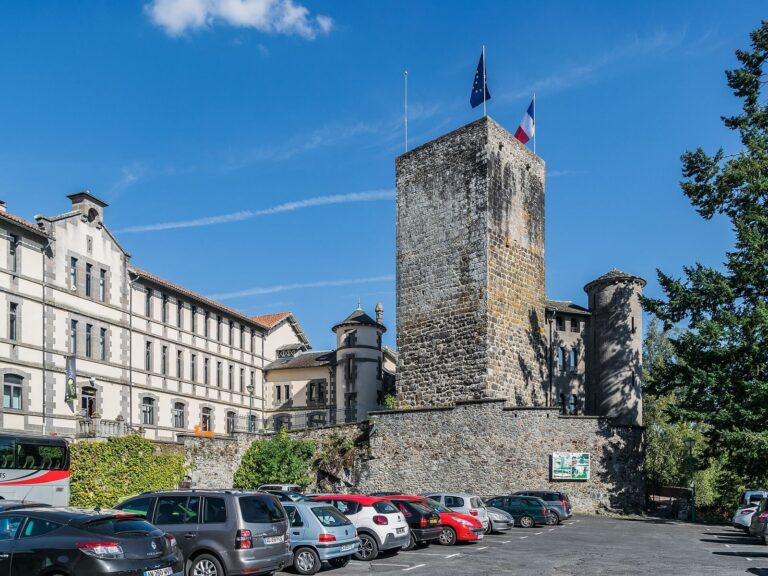
The abbey enclosure occupied the plain below the castle of Saint-Étienne. Its surviving fabric includes church walls incorporated into the later Saint-Géraud church, the façade of a former hospital, and several square towers that belonged to the abbey’s defenses.
Earlier church and abbey church
The church of Saint Clement, built by Gerald’s father and associated with the burial of Gerald’s parents, preceded the abbey church. Its location may have been the site of the later church or somewhere else. An initial plan for a new church on the plain below Saint-Étienne was abandoned after a collapse; the existing Saint Clement church was then renovated and enlarged. A few walls from the church of Saint Peter are incorporated into Saint-Géraud church.
The Romanesque church’s crosswise section was decorated with groups of three blind arches, decorative arch forms that do not open into a passage or window. Each group had a central arch shaped like a bishop’s miter, flanked by two semicircular arches.
Former hospital
The façade of the former Romanesque hospital survives as a row of arches. The building belonged to the abbey’s wider provision for travelers.
Defensive towers
Several square towers survive from the abbey’s defensive system. Fires lit on them could warn of an approaching enemy.
Later church and bell tower
Church structure
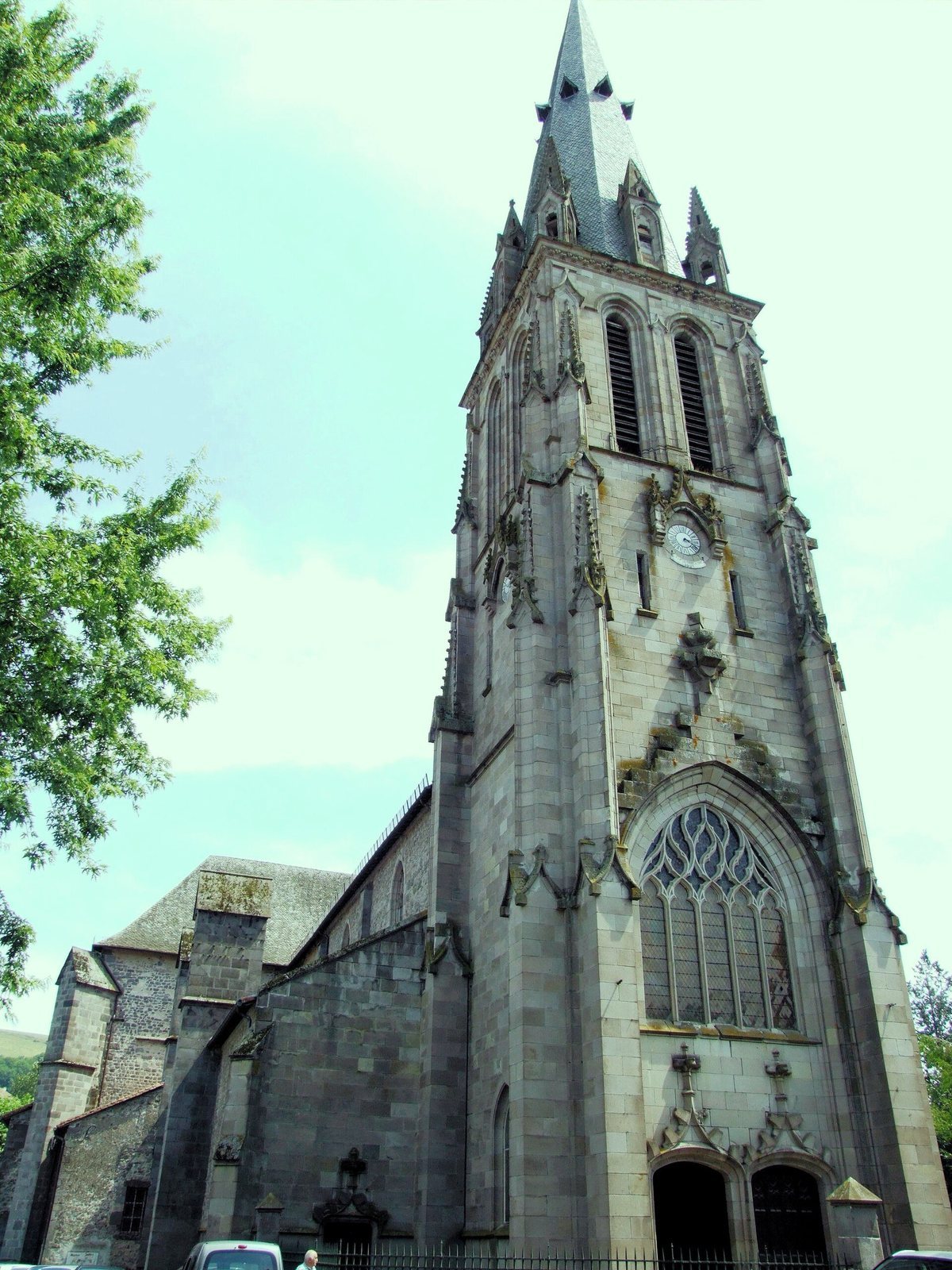
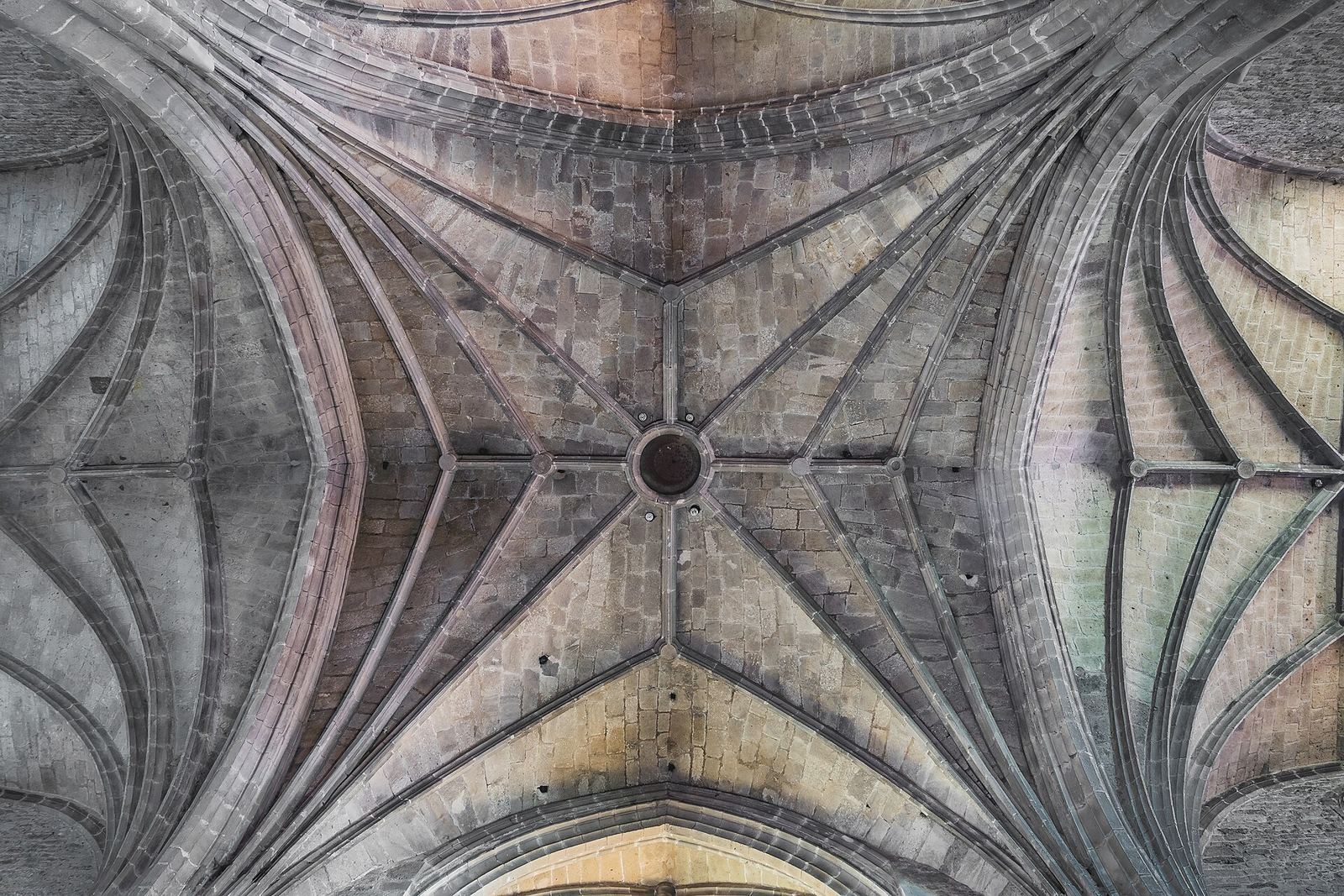
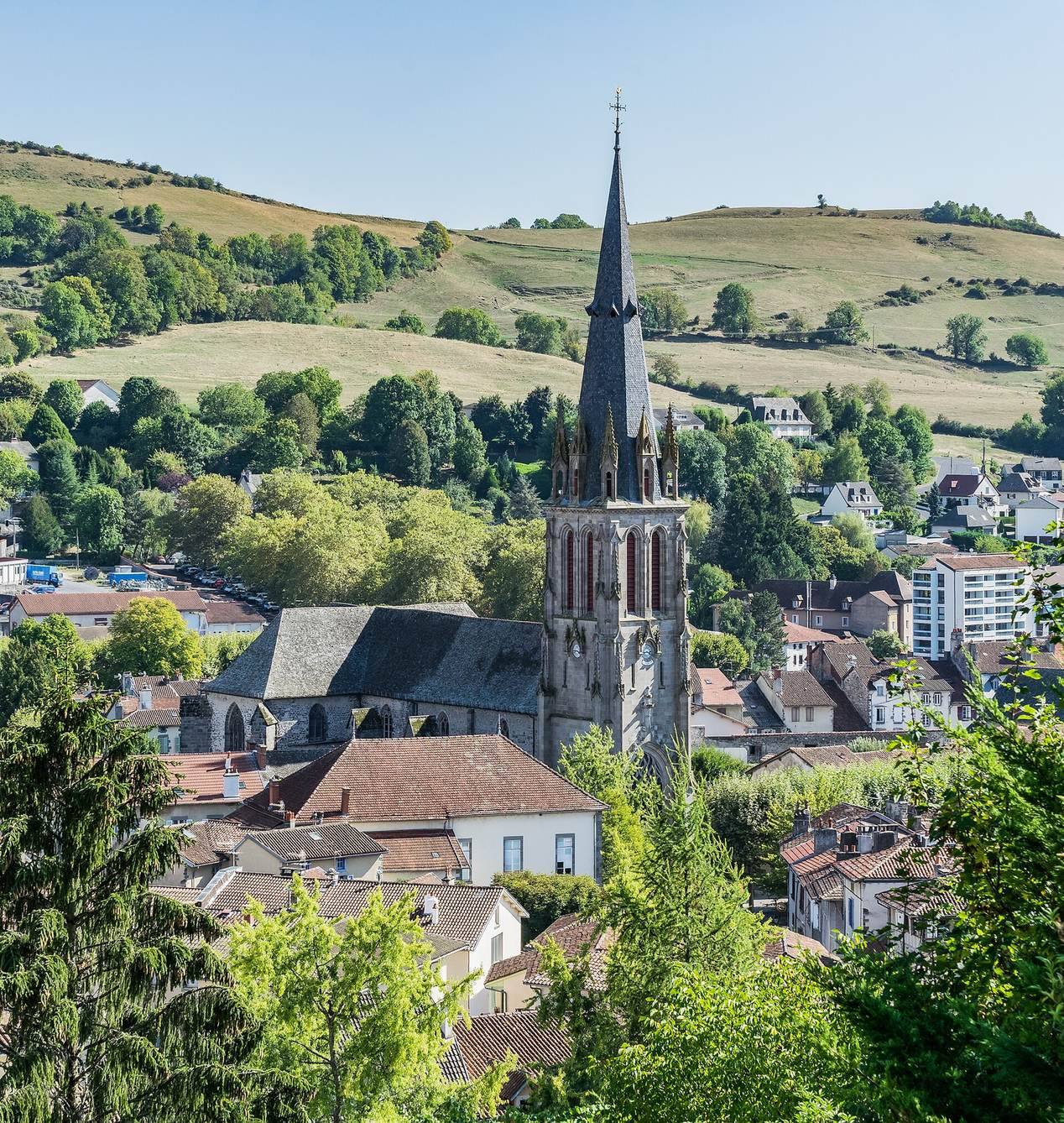
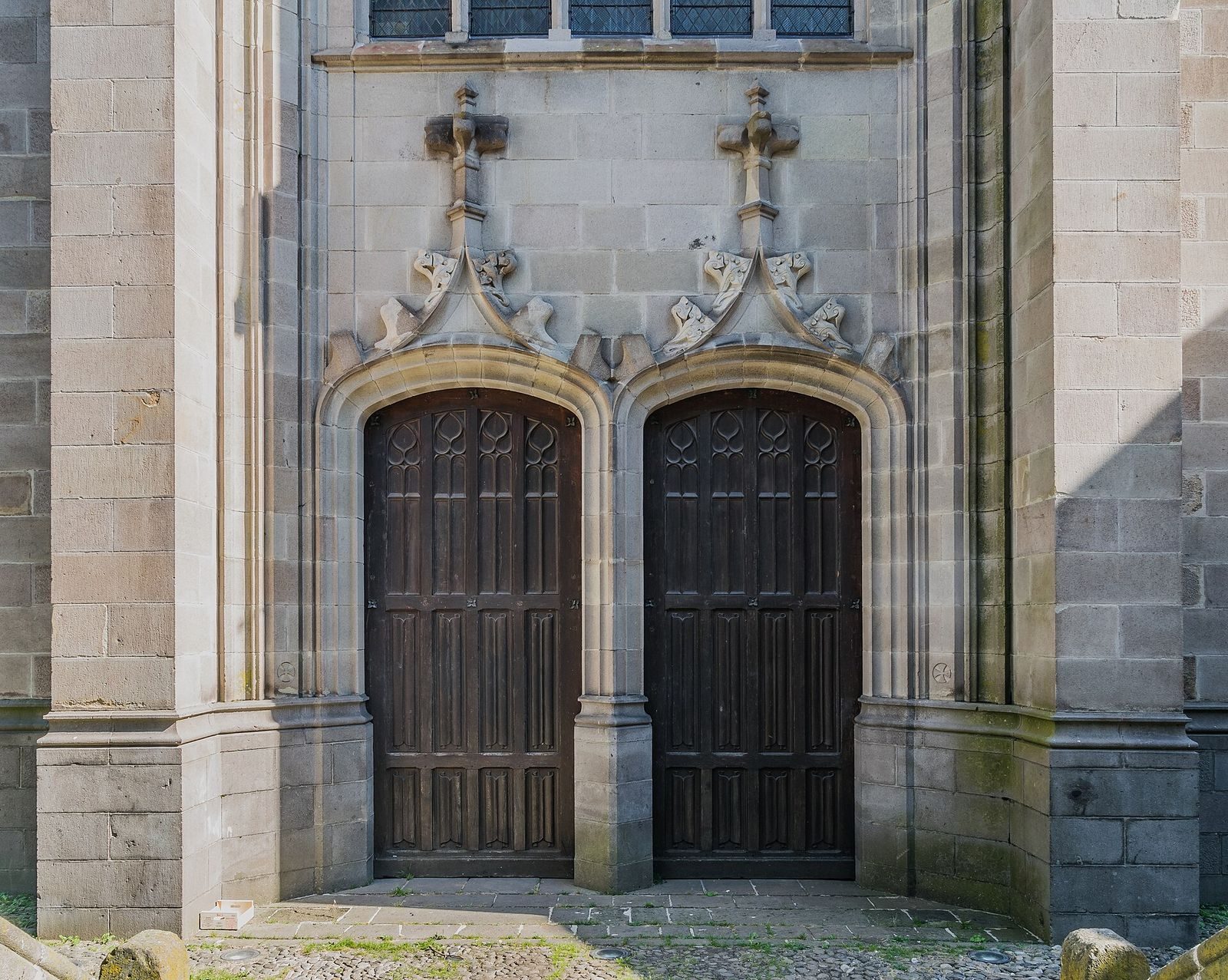
The seventeenth-century church had a main hall of one structural section. In the nineteenth-century reconstruction, two further sections were added, and a covered entrance porch was built.
Bell tower
The bell tower was rebuilt during the nineteenth-century work and inaugurated in 1898. It stands 77 metres high and is the tallest building in Aurillac.
Heraldry and seal
Abbey arms and traditions
The abbey’s earlier arms showed a red shield edged in scalloped green. A later design divided the shield between gold and green, with the colors reversed along the scalloped border. A miter and crosier represented spiritual authority, while a sword signified civil jurisdiction. The abbey’s motto, translated into English, was “Aurillac, Aurillac, for Gerald and for the abbot!” Its banner is said to have inspired the arms of Auvergne. A tradition in Gerald’s first Life connected the earlier shield to a miracle in which sacrificial blood revived supposedly barren ground and grass grew.
Seal of Jean d’Armagnac
A copper seal associated with Jean d’Armagnac, elected abbot in 1465, measured 18 centimetres around. It showed two allegorical figures holding Saint Gerald’s shield beneath a Gothic canopy. Below them, an angel encircled the Armagnac arms, surmounted by a notched crosier, with a lit candle on either side. Its inscription identified it as the seal of John of Armagnac for the abbatial court of Aurillac. A flat, openwork ring held the seal; when left unsupported, it tilted to the right on its hinge.