Indo-Greek Kingdoms: Sites and Map
Indo-Greek kingdoms emerged south of the Hindu Kush in the second century BC. Their history survives in fortified settlements and inscriptions as well as royal coinage. Barikot and Sirkap place them within present-day Pakistan, while the Heliodorus pillar in central India records a diplomatic and religious connection farther south.
Primary Function: All
Type: All
Country: All
Popularity: All
Rating: All
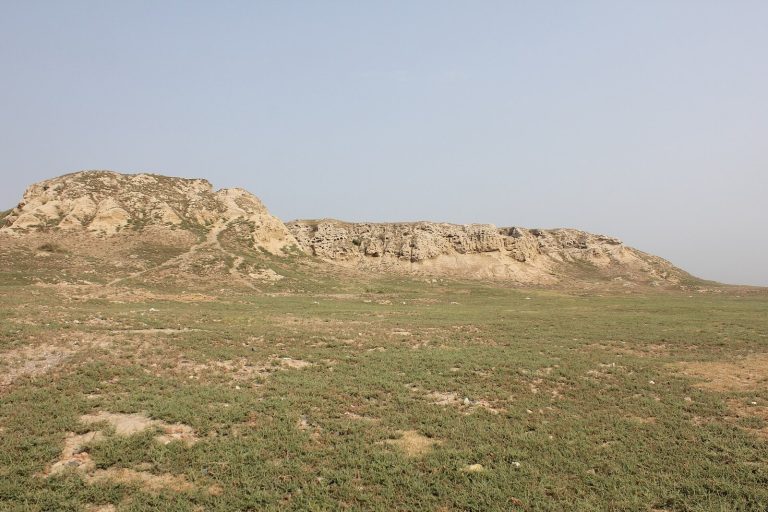
Pushkalavati was the capital of ancient Gandhara, with archaeological remains at Bala Hisar and Shaikhan Dheri near the Swat and Kabul rivers. Its…
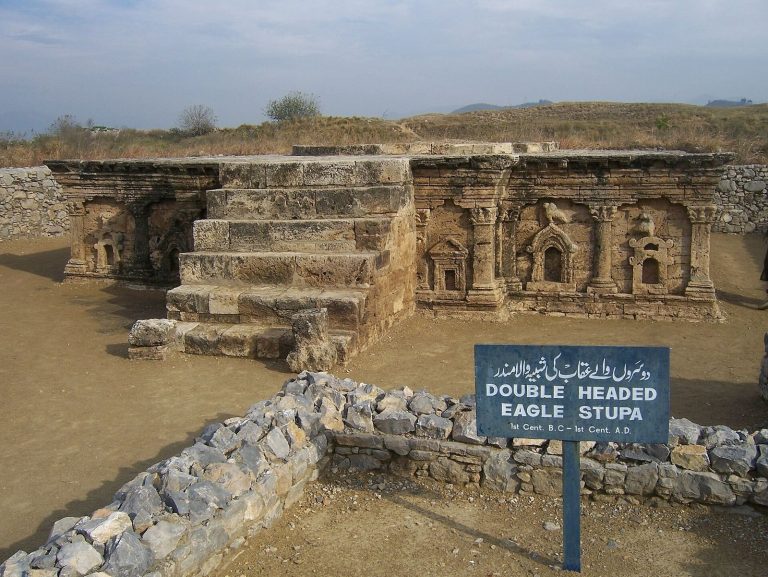
Taxila developed from prehistoric settlements into a capital of Gandhara and a centre of learning, trade and Buddhist activity. Its archaeological…
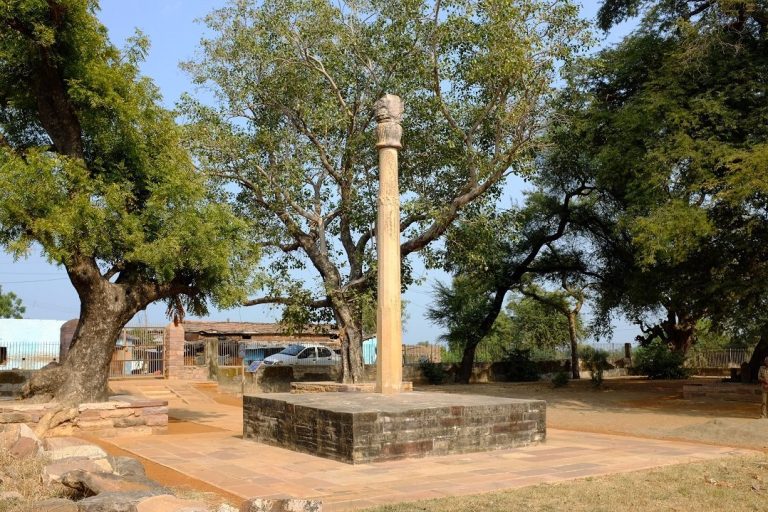
The Heliodorus Pillar at Besnagar preserves an early inscription about Vāsudeva worship and records the dedication of a Greek ambassador serving the…
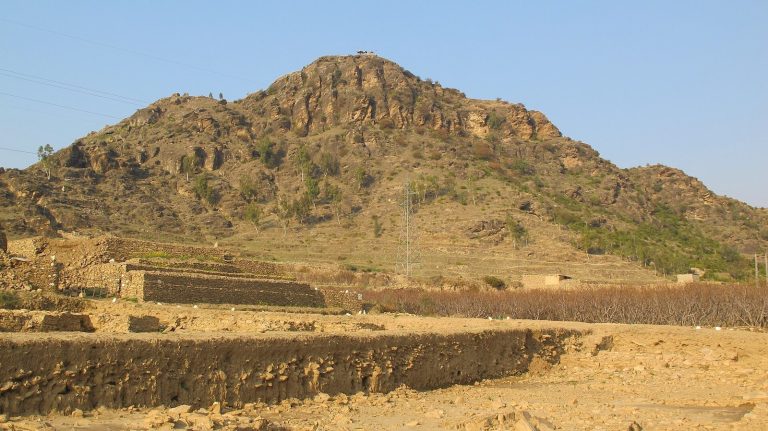
Bazira beneath modern Barikot preserves a long sequence of settlement from the Copper Age through the Ghaznavid period, including Iron Age urban…
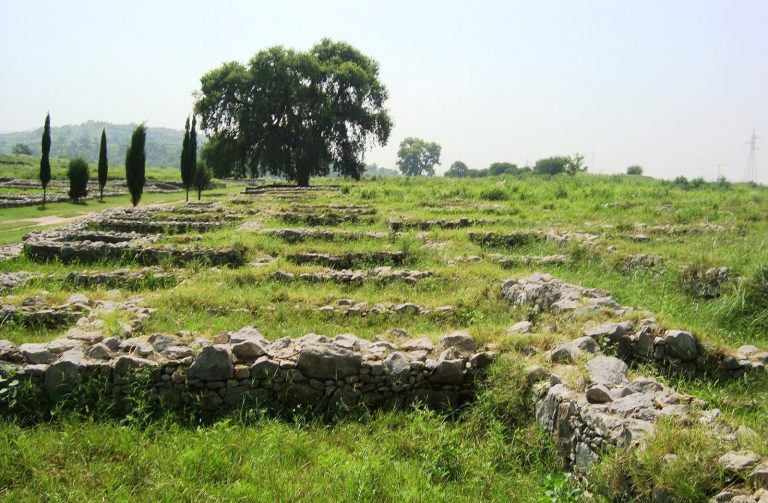
Sirkap was an ancient planned city at Taxila, founded by the Greco-Bactrian king Demetrius and later rebuilt under Indo-Scythian and Indo-Parthian…
For details on how to use the maps, which sites are included, how popularity and ratings are determined, and how sites are classified, see the help page.
Barikot: a defended town in the Swat Valley
Barikot, ancient Bazira, occupied a strategic position in the Swat Valley. Excavations have identified a long sequence of settlement, including town walls built during the Indo-Greek period around the middle of the second century BC.
The fortifications enclosed an inhabited town rather than an isolated military post. Streets, houses and later religious buildings reveal continued urban life through several changes of ruler. The Indo-Greek wall is therefore one identifiable phase within a much longer settlement history. It provides a concrete setting for the kingdoms’ presence in the valleys south of the Hindu Kush.
Sirkap: a planned street grid at Taxila
Sirkap at Taxila was laid out with a main avenue and cross streets dividing the town into regular blocks. Its foundation belongs to the Hellenistic age, when Greek-speaking dynasties ruled territories extending eastward from Alexander’s conquests. Coins and objects with Greek imagery add evidence for the town’s Indo-Greek connections.
The surviving buildings also record substantial later work under Indo-Scythian and Parthian rulers. Many of the monuments visible within the grid consequently belong to the city’s subsequent development. The street plan and the sequence of rebuilding are useful together: one explains the initial urban framework, while the other shows how later inhabitants adapted it.
Heliodorus: an ambassador’s dedication
The Heliodorus pillar near Vidisha carries an inscription recording an ambassador from the Indo-Greek king Antialcidas. Heliodorus identified himself as a man of Taxila and dedicated the monument to Vasudeva, a deity later closely associated with Vishnu. The text was written in the Brahmi script used in South Asia.
The stone shaft originally supported a standard associated with Garuda, the divine bird connected with Vasudeva. Its inscription places an individual envoy within both royal diplomacy and local worship. Vidisha was the destination of that mission, beyond the main Indo-Greek territories; the pillar records a relationship between courts rather than an Indo-Greek capital.
The map markers and grid cards open the individual accounts of the towns and pillar, with their inscriptions, finds and later phases.