Castles in Bahrain: Explore Coastal Forts, Round Towers and Courtyard Residences
The castles and forts in this collection show both coastal defence and fortified domestic life in Bahrain. Arad has a compact enclosure with round corner towers, while Riffa combines protective walls with rooms grouped around courtyards. At Bu Maher, a surviving tower marks a former fort beside the maritime approaches to Muharraq.
These examples belong to the wider castle and fortification group used by the map. Arad and Riffa provide the more substantial enclosed complexes; Bu Maher adds a smaller surviving structure connected with the defence of the bay.
Primary Function: All
Type: All
Civilization: All
Popularity: All
Rating: All
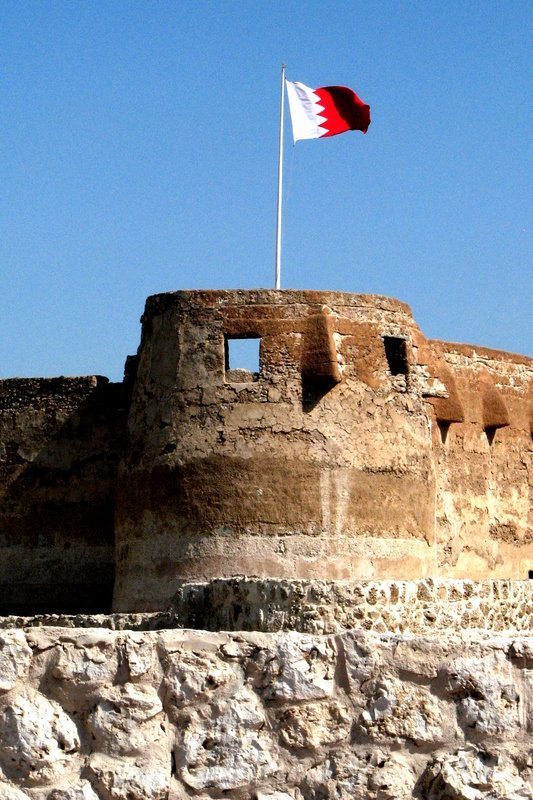
Arad Fort is a fifteenth-century defensive stronghold in Bahrain, associated with Omani occupation, Portuguese military activity, and the maritime…
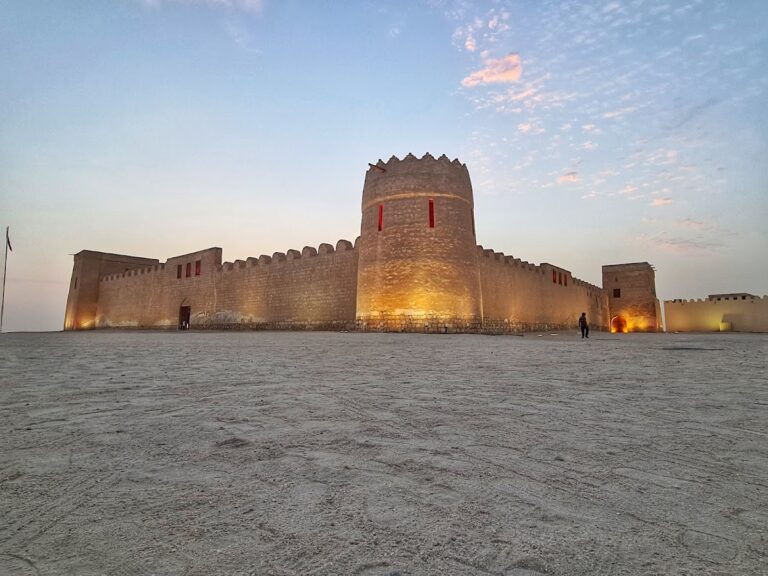
Riffa Fort, also known as Shaikh Salman bin Ahmed Al Fateh Fort, was rebuilt between 1812 and 1818 on the foundations of an earlier fort. It later…
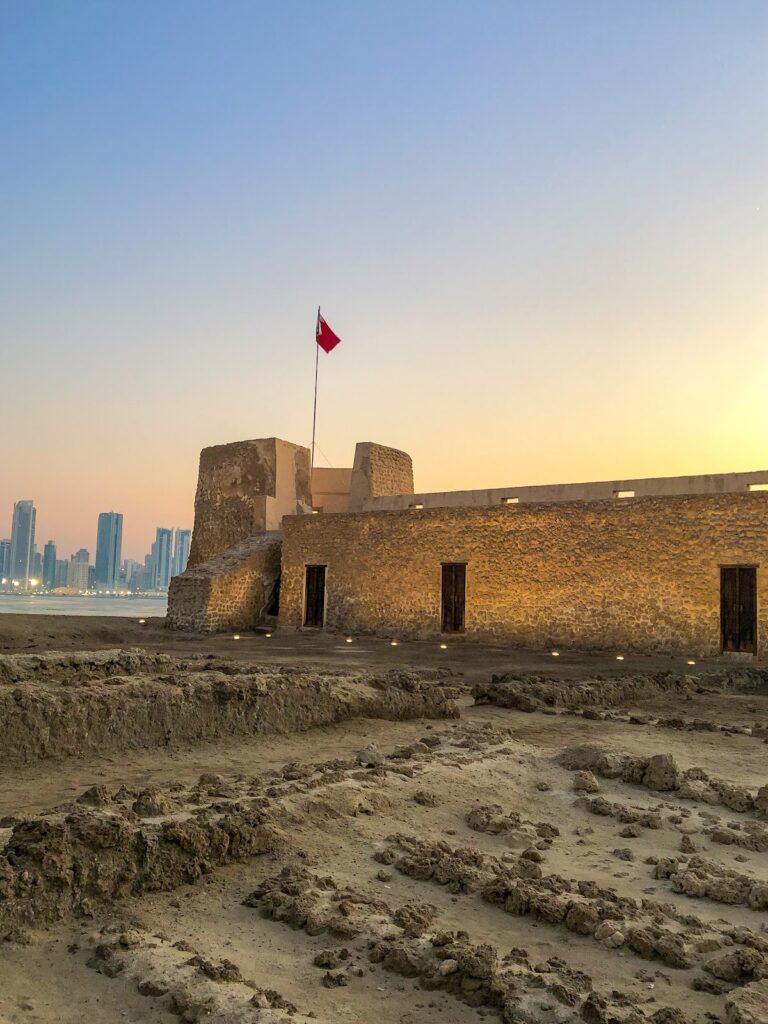
Bu Maher Fort in Muharraq, Bahrain, was built in 1840 to guard the passageway of Muharraq Bay. Destroyed in 1868, it was later reconstructed and…
For details on how to use the maps, which sites are included, how popularity and ratings are determined, and how sites are classified, see the help page.
On this page4 sections
Arad Fort: square enclosure and round towers
Arad Fort has a square plan with a cylindrical tower at each corner. A shallow defensive trench surrounded the enclosure and was supplied with water from purpose-dug wells. The fort overlooked maritime passages along Muharraq’s shores, making its position part of the defence of the coastal approaches.
Projecting openings along the upper walls and towers provided protected firing positions extending beyond the main wall face. This detail is worth distinguishing from a simple narrow slit cut through flat masonry. The fort’s construction and restoration also reflect local materials: coral or sea stone, lime, sand and palm trunks were used in conservation work to remain compatible with the earlier fabric.
Riffa Fort: residential rooms and three courtyards
Riffa Fort stands on a low cliff overlooking the valley between East and West Riffa. Rebuilt in the early nineteenth century on earlier foundations, it served both as a defensive position and a residence of Sheikh Salman bin Ahmed Al Khalifa.
Its rooms are arranged in three groups around separate courtyards. These areas had different functions and a degree of independence, with stairs, living rooms, a kitchen and stores fitted around them. The largest courtyard connects directly with the exterior, while other spaces lead between the residential areas and a round fortification. An earlier prayer space was later separated from the fort to become the adjacent mosque.
The courtyard plan gives Riffa a more explicitly domestic focus than Arad’s compact towered enclosure. Rooms and circulation routes explain how the building accommodated a household within its protected boundary.
Bu Maher: surviving coastal tower
Bu Maher Fort formerly had a rectangular enclosure with four circular towers. A solitary tower survives from the larger defensive site, which guarded the passage into Muharraq Bay. Its nineteenth-century rebuilding was followed by destruction in 1868 and later restoration and reconstruction work.
Bu Maher is therefore a smaller example in this collection. The standing tower records the position of the former fort, while the linked site article explains the lost enclosure and its later uses. It should not be read as an intact counterpart to Arad’s four-towered plan.
Explore the collection
Explore sites on the map or in the grid. Map icons reflect each site’s primary function, helping you identify different kinds of places at a glance. Narrow this collection by primary function, by a site type within the castle and residence group, or by civilization and era. Additional filters cover popularity and rating. Select a map marker to view the site’s details and open its article, or open the article from its grid entry.