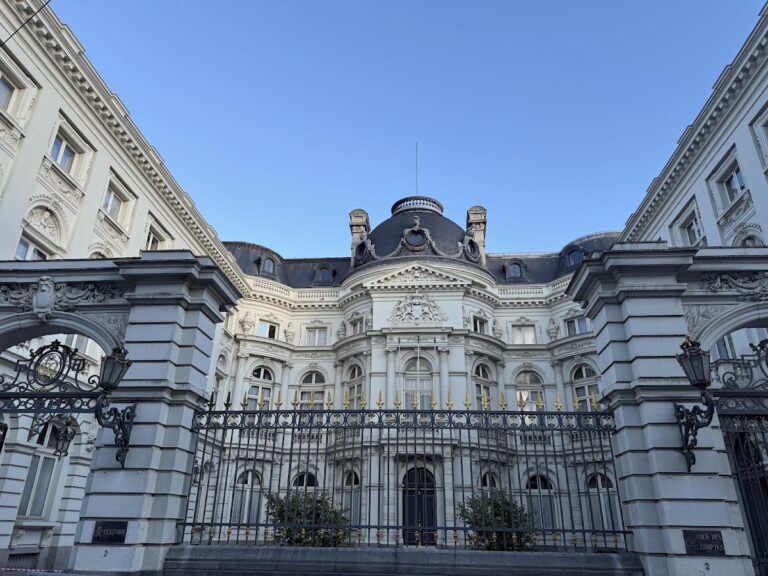
Charlier Museum: A Belgian Art Museum in a Historic Townhouse


Site at a Glance
- Rating
- 4.3
- Popularity
- Low
- Country
- Belgium
- Primary era
- Modern
- External website
- Open
- Eras represented
- Modern
- Civilizations
- Belgian
- Site type
- Domestic
- Remains
- Elite Residence
On this page6 sections
History
Charlier Museum is an art museum in Saint-Josse-ten-Noode, Belgium, housed in the former townhouse of the Belgian patron, collector, and painter Henri Van Cutsem. The late-nineteenth-century building combines neoclassical architecture with an early form of Brussels Art Nouveau, reflecting Victor Horta’s 1890 transformation of two adjoining houses for the display of Van Cutsem’s collection.
Van Cutsem’s House and Collection
In 1890, Van Cutsem purchased two neighboring neoclassical houses on the present Avenue des Arts. The older house, built in 1844, was retained, while the second was demolished and reconstructed so that the buildings and their façades could be joined. Van Cutsem also commissioned Horta to remodel the interiors between 1890 and 1893, creating spaces suited to his growing collection and to the artists he welcomed there.
Van Cutsem hoped to bequeath the collection to the Belgian state. The proposed gift was refused by the responsible official, partly because it included a reclining nude woman representing Perimele, a figure from Greek mythology. Van Cutsem then approached the city of Tournai, which agreed to build a museum for the works. This arrangement later shaped the division of the collection between Brussels and Tournai.
From Private House to Public Museum
When Van Cutsem died in 1904, the sculptor Guillaume Charlier inherited the house and its artworks. Charlier continued to collect and arranged for the holdings to be divided in accordance with Van Cutsem’s wishes. The finest works were transferred to the museum opened in Tournai in 1928.
In 1925, the municipality of Saint-Josse-ten-Noode acquired the townhouse and collection on the condition that they would become a public museum. The Charlier Museum opened on 21 October 1928. Its exhibitions and collections focus on Belgian art of the late nineteenth and early twentieth centuries, while its historic music salon also hosts cultural activities and classical and jazz concerts. The building became a listed monument in 1993. The municipality remains its owner, and the property is used as exhibition space.
Remains
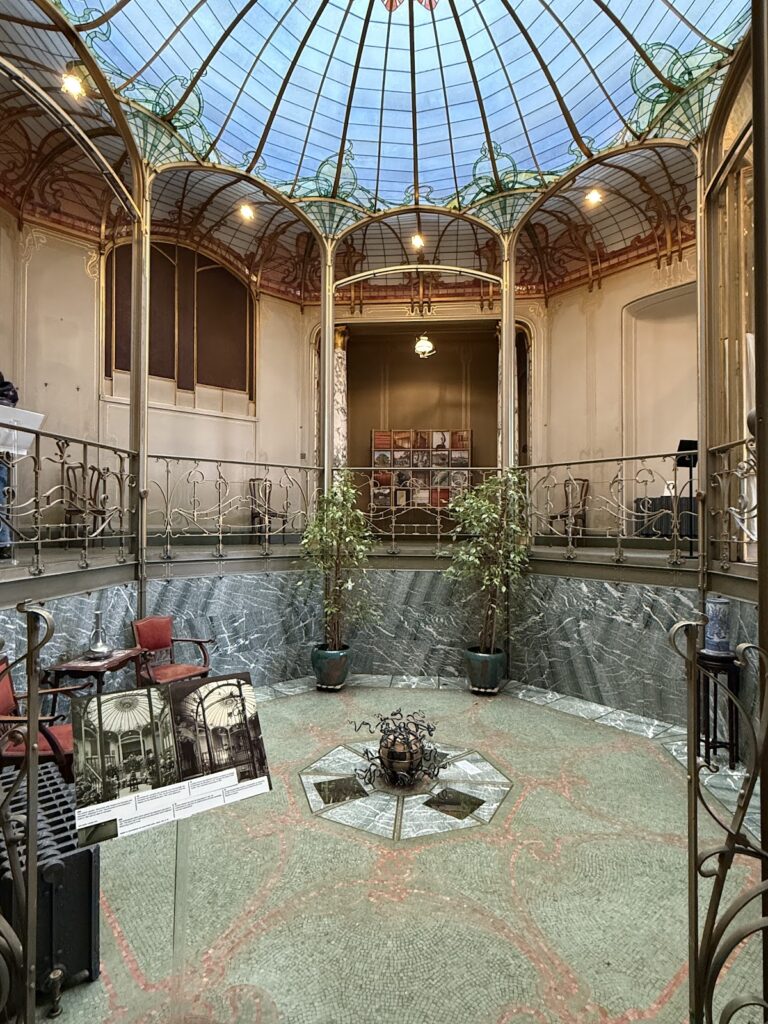
The museum occupies a late-nineteenth-century townhouse created by joining and reshaping two neoclassical buildings. Its exterior retains the neoclassical envelope, while the interior introduces Horta’s early decorative language, an important stage in the development of the Belgian architect’s Brussels Art Nouveau. Long galleries covered with glass were designed to present Van Cutsem’s collection, and the adapted rooms, display fittings, and lighting formed an integrated setting for both domestic life and the exhibition of art.
Galleries and Historic Interiors
Horta’s long, glass-covered galleries organize the principal display areas. Interior cases divide rooms without preventing light from reaching the smoking room, small hall, and reception room. The historic salons preserve furniture and decorative objects in Louis XV and Louis XVI styles, French eighteenth-century forms, as well as in the Empire style associated with monumental classical motifs developed under Napoleon. Tapestries from Brussels, Oudenaarde, and Aubusson, together with carpets, porcelain, and goldsmiths’ work, form part of the decorative setting.
Belgian Art Collections
The museum preserves paintings, drawings, prints, and sculpture alongside furniture, tapestries, carpets, porcelain, goldsmiths’ work, and other decorative arts. Its Belgian painting, print, and drawing holdings include works by Hippolyte Boulenger, Guillaume Vogels, James Ensor, Anna Boch, Auguste Oleffe, Jacob Smits, Alfred Stevens, Émile Wauters, and Antoine Wiertz. These works relate to naturalism, Impressionism, the artistic movements of the late nineteenth century, Les XX, a Belgian avant-garde association known as the Group of Twenty, and the Tervueren School, a Belgian movement particularly associated with landscape painting.
Sculpture is represented especially by Guillaume Charlier, as well as by Emile Namur, Rik Wouters, and other Belgian sculptors. A bronze bust of Paul Panda Farnana, made by Charlier in 1898, stands on a marble base. Farnana was a Congolese intellectual, educator, and anti-colonial activist, and the bust bears the inscription “Guill. Charlier” on its left shoulder.
Nearby sites