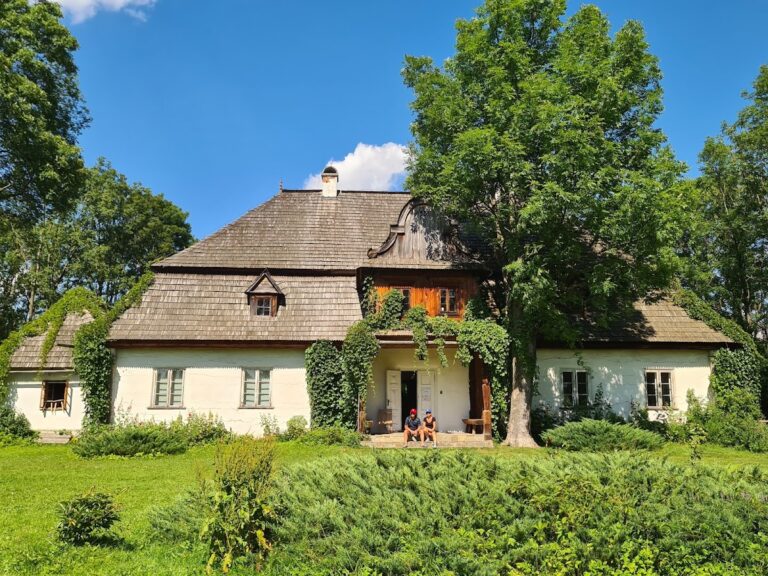
Kasztel we Frydmanie: A Renaissance Defensive Manor in Poland


Site at a Glance
- Rating
- 3.8
- Popularity
- Very Low
- Country
- Poland
- Primary era
- Early Modern
- Eras represented
- Medieval, Early Modern, Modern
- Civilizations
- Habsburg, Hungarian, Polish–Lithuanian Commonwealth
- Site type
- Domestic
- Remains
- Castle
On this page9 sections
History
Kasztel we Frydmanie is a sixteenth-century Renaissance defensive manor in Frydman, Poland, developed from an earlier watchtower built by the Berzewicz family to protect the Polish-Hungarian border. Its Renaissance form combined aristocratic domestic use with fortified elements, and the residence became associated with the Horvath family.
From border watchtower to Renaissance residence
The site’s history began in the fourteenth century, when the Berzewicz family constructed a square watchtower on the location of the present manor. It served a defensive purpose on the Polish-Hungarian frontier before the site was transformed into a more substantial residence.
In 1589, the Hungarian magnate Jerzy Horvath of Palocsa acquired the Frydman and Niedzica estates from Olbracht Łaski. Between 1585 and 1590, he carried out a major rebuilding campaign that created the Renaissance defensive residence. The kasztel, meaning a fortified manor or aristocratic residence, served as the Horvath family’s summer home.
Decline and rebuilding
After the death of the last Horvath in 1857, the property passed to Aladar Salamon. During Salamon’s ownership, the manor was neglected and approached ruin. In 1881, the Polish traveler Bronisław Gustawicz described it as still roofed, but abandoned and devastated on the upper floor. The building was also used for a time as a cheese dairy.
In 1910, the property was taken from the Salamon family for debt and sold to the local priest Józef Noworolski. He rebuilt the manor, but the work substantially changed its Renaissance appearance. During the period of the Polish People’s Republic, the communist Polish state that existed from 1947 to 1989, the owners continued to live in the deteriorated building while a school operated on the ground floor.
Kasztel we Frydmanie remains privately owned by the heirs of Józef Noworolski. It was entered in the heritage register under number 346 on 8 February 1974.
Remains
Manor and later alterations
Renaissance defensive manor
The surviving manor is a single-storey defensive building from the sixteenth century. Its form was described as resembling fifteenth-century Italian castles, while its function combined residential accommodation with defensive features. The building represents the Renaissance rebuilding of the earlier square watchtower associated with the Berzewicz family.
1910 rebuilding
The building’s present appearance results from the rebuilding carried out in 1910. That work destroyed the Renaissance attic parapets, which were upper screens that concealed or extended the roofline, and removed the stone surrounds from the windows. The original roof was replaced with a hipped roof. The corner chambers were enclosed in helmet-like forms that do not suit the main mass of the manor. The kasztel has survived in this altered form.
Wine cellars
Storage cellars
Wine cellars were built near the manor in 1820 by Andrzej Horvath. They were used to store wine brought from Hungary, linking the nearby storage buildings with the estate’s historical connections to the Hungarian magnate family.