Dwór w Łopusznej (Tetmajer Manor): A Polish Noble Estate


Site at a Glance
- Rating
- 4.8
- Popularity
- Low
- Country
- Poland
- Primary era
- Early Modern
- External website
- Open
- Eras represented
- Early Modern, Modern
- Civilizations
- Habsburg
- Site type
- Domestic
- Remains
- Manor House
On this page8 sections
History
Dwór w Łopusznej, also known as Tetmajer Manor, is a rural noble estate in Łopuszna, Poland, whose present manor house was built in the late eighteenth century in the regional style of Polish noble residences. The estate’s history reaches back to the end of the sixteenth century, when Walerian Poradowski, a Polish nobleman and landholder, received Łopuszna from King Stefan Batory.
Construction and the Lisicki family
Romuald Lisicki, a member of the Bar Confederation, built the manor house between 1787 and 1790. The Bar Confederation was an eighteenth-century Polish noble and military movement formed in opposition to Russian influence and the Polish king. Lisicki’s daughter Ludwika later married Leon Przerwa-Tetmajer, who received Łopuszna as her dowry and owned the village from 1824 until his death in 1881.
The Tetmajer household
After Leon Przerwa-Tetmajer died in 1881 and Ludwika died in 1889, the estate passed to their daughter Kamila and her husband, Kazimierz Lgocki. In 1892, they renovated the manor house and altered its appearance. Their household continued a tradition of political and literary hospitality. Poets, patriotic activists, and revolutionaries gathered there, including Stanisław Worcell and Bohdan Zaleski, as well as Julian Goslar and Jan Kanty Andrusikiewicz, leaders of the Chochołów Uprising, a nineteenth-century highland revolt in the Podhale region.
In 1832, after the defeat of the November Uprising, Seweryn Goszczyński hid at the manor. The November Uprising was the Polish insurrection against Russian rule that began in 1830 and was defeated in 1831. Goszczyński, a poet and political activist, later described the manor in A Travel Diary to the Tatras, published in 1851. The smaller auxiliary residential building known as the gacek subsequently housed Bohdan Zaleski, while Goszczyński lived in the estate’s lamus, a storehouse or auxiliary manor building.
Inheritance and museum use
Kamila and Kazimierz Lgocki’s sons inherited the estate in succession, first Aleksander and then Stanisław. It remained in the family’s hands throughout the interwar period. The estate was nationalized in 1949. Since 1978, the manor has formed a branch of the Tatra Museum in Zakopane, which has owned it since 2018.
Remains
Manor house and courtyard
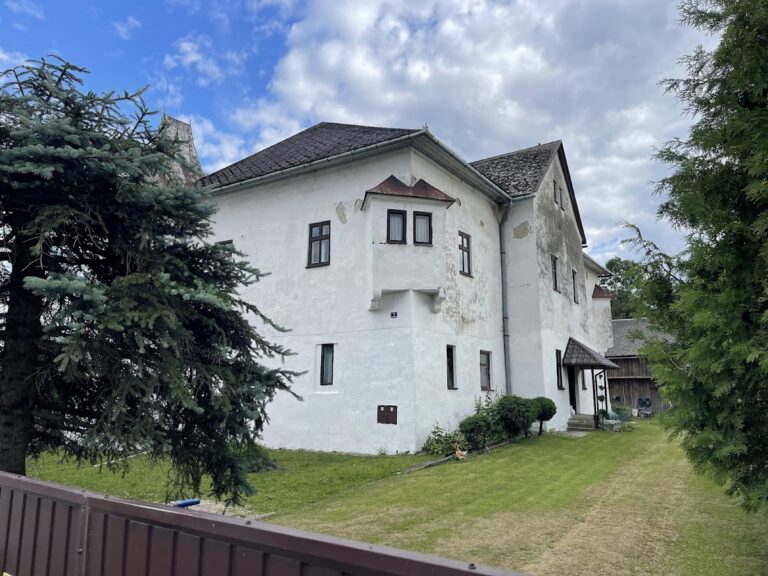
The complex follows the arrangement of a rural Polish noble manor. A wooden fence encloses grounds organized around a spacious courtyard. The principal house is a substantial single-storey wooden building with a rectangular plan and a broken-pitched roof covered in wooden shingles. Its projecting porch includes side benches. A smaller building stood on the house’s left side, while agricultural buildings screened the right side.
Residential and agricultural buildings
The small gacek originally contained the kitchen and servants’ quarters. The complex also retains a stable with a carriage house, a granary, cowsheds, and the cellars of a small lamus. These buildings formed the residential and working parts of the manorial estate, whose agricultural operation was characteristic of a folwark, a large landed estate combining an owner’s residence with agricultural production.
Klamerus House
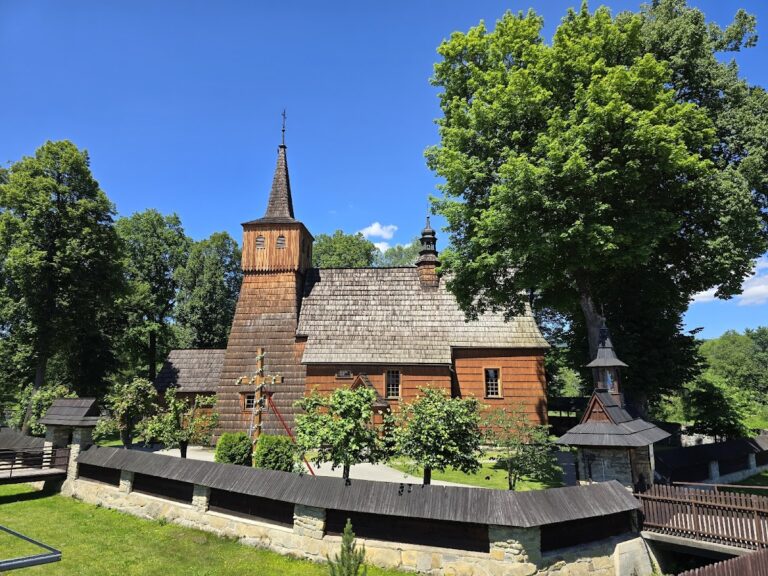
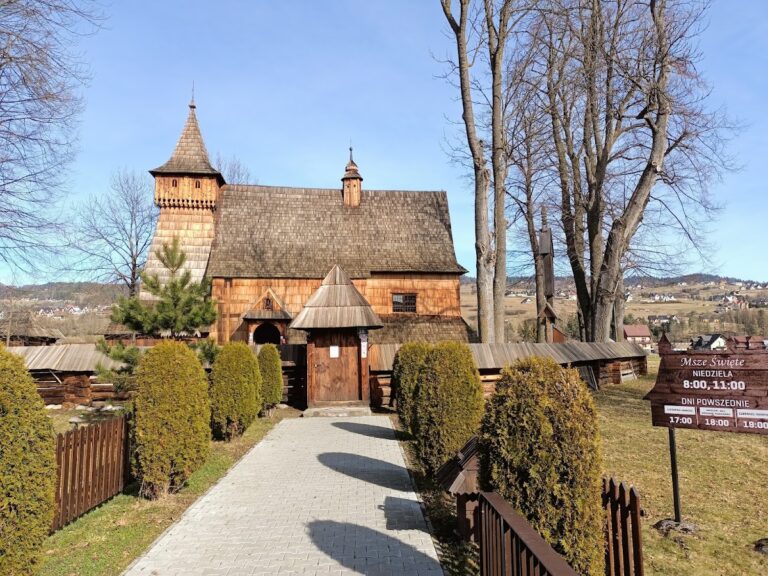
The museum complex also includes Klamerus House, a wooden cottage dating from 1887. The manor stands near Nowy Targ, in Łopuszna on the opposite side of the Czerwonka stream from a fifteenth-century wooden church.
Nearby sites