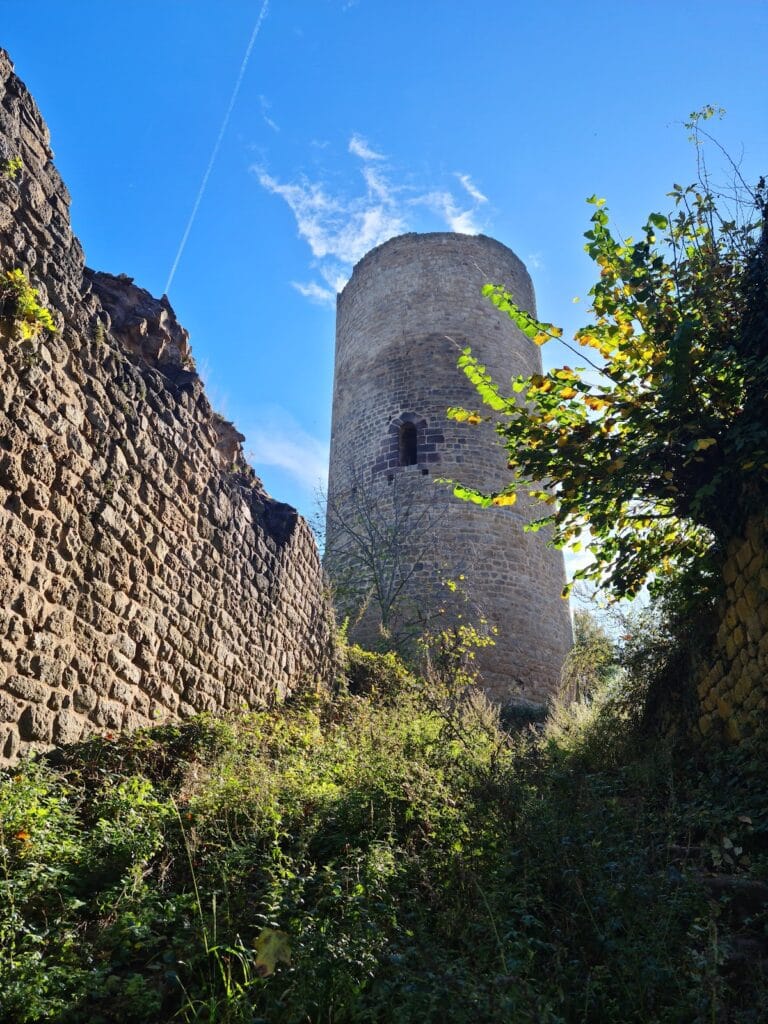
Château de Dagsbourg: A Medieval Hilltop Castle in France


Site at a Glance
- Rating
- 4.2
- Popularity
- Very Low
- Country
- France
- Primary era
- Medieval
- Eras represented
- Medieval
- Civilizations
- Holy Roman Empire
- Site type
- Military
- Remains
- Castle
On this page5 sections
History
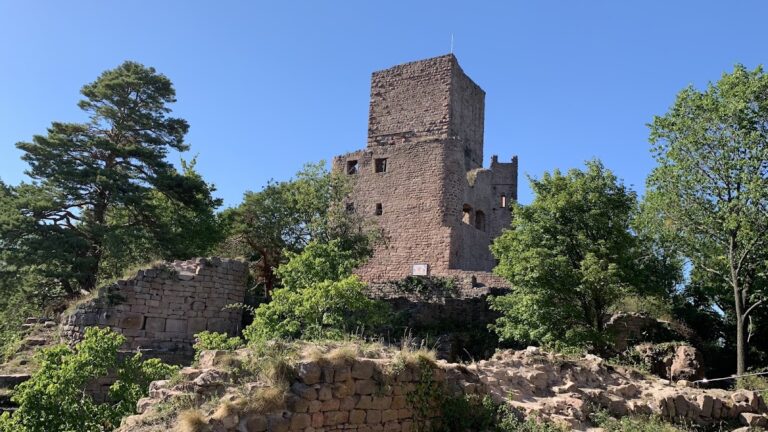
Château de Dagsbourg is a ruined medieval hilltop castle in France, located in the territory of Eguisheim, and was built around 1150 as the youngest of three castles on the same ridge. Its name commemorated the marriage, toward the end of the tenth century, of Hugo VI, Count of Nordgau and Count of Egisheim, to Countess Heilwig of the older Dagsburg in present-day Lorraine, about 70 km away.
The Egisheim and Dagsburg Family
The three castles known as Hoh-Egisheim, Les Trois Châteaux d’Eguisheim, or the “Three Exen” were constructed close together during the eleventh and twelfth centuries. Château de Dagsbourg was the last of the group to be built. The family connection behind its name also linked the castle to Bruno of Egisheim-Dagsburg, the son of Hugo VI and Heilwig. Bruno was born in 1002 at Wahlenburg, then the Egisheim family residence, and was elected pope as Leo IX at Worms in 1048. He remained pope until his death in 1054.
Strasbourg Ownership and Destruction
After the main line of the Alsatian noble family died out in the thirteenth century, the younger Dagsburg passed to the Bishopric of Strasbourg, the ecclesiastical lordship governed by the bishop of Strasbourg. It remained under that ownership into the fifteenth century before returning to an Egisheim descendant, the knight Peter of Egisheim. Peter descended through a collateral branch from Hugo VI and was suspected of acting as a robber knight, a nobleman accused of using fortified holdings for raids, extortion, or related violence.
In spring 1466, Peter granted asylum at Château de Dagsbourg to Hermann Klee, a miller from Mulhouse involved in a dispute with the city over a small monetary claim. The protection given to Klee became the occasion for the Six-Plappert War, named after the value of six medieval coins called Plapperts. Mulhouse troops attacked the castle and captured it on Corpus Christi, a Christian feast associated with the Eucharist, in 1466. They then destroyed the castle. Peter escaped, while Hermann Klee and several companions were captured and executed. Château de Dagsbourg has remained a ruin since that destruction.
The ruins have been protected as a French historic monument since 1840. This designation places the site within France’s national heritage system and reflects its historical and architectural importance.
Remains
The Three-Castle Ridge
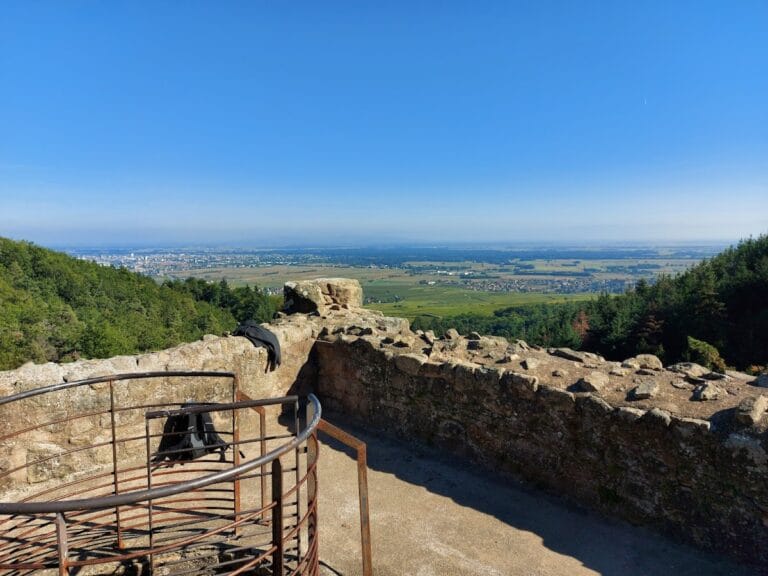
Château de Dagsbourg survives as a ruined hilltop castle in the Vosges at an elevation of approximately 575 m, within the territory of Eguisheim in the Haut-Rhin. It lies about 1 km northwest of Husseren-les-Châteaux and about 7 km southwest of Colmar. The castle forms part of a group extending for approximately 120 m along the same ridge. From northwest to southeast, the sequence is Château de Dagsbourg, Wahlenburg, and Weckmund; the latter two lie within the territory of Husseren-les-Châteaux. The surviving condition of Château de Dagsbourg reflects its destruction during the attack of 1466.
Nearby sites