Fort de Toulbroc’h: A Coastal Defense of the Brest Roadstead


Site at a Glance
- Rating
- 4.5
- Popularity
- Low
- Country
- France
- Primary era
- Modern
- Eras represented
- Modern
- Civilizations
- French, German
- Site type
- Military
- Remains
- Fort
On this page8 sections
History
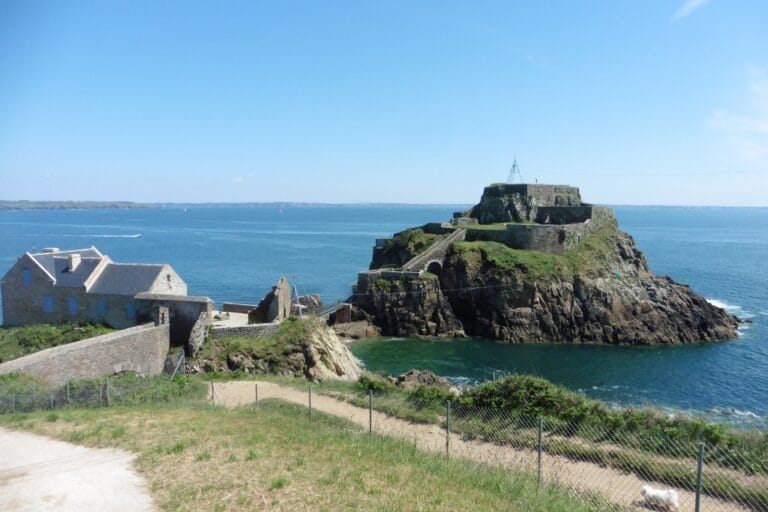
Fort de Toulbroc’h is a French coastal fortification in Locmaria-Plouzané, France, erected in 1884 to help defend the goulet and roadstead of Brest. The goulet is the narrow sea passage linking Brest’s sheltered roadstead with the open sea, making control of it important to access to the harbor. The fort was built on the site of a Model Tower No. 3 of the 1811 type, a standardized nineteenth-century coastal fortification design that had been constructed there in 1812.
Expansion of the defensive system
Fort de Toulbroc’h was progressively enlarged until 1914 under the 1900 restructuring program. Its defenses gained additional artillery batteries, searchlights supplied by generators, and magazines for ammunition and weapons. Other batteries and casemates, which were fortified chambers for artillery, troops, or equipment, supported the system around the Pointe du Grand Minou and helped control the area and the entrance to the goulet of Brest.
By 1922, the fort’s six guns were reported unusable because the essential aiming instruments required to adjust their fire were lacking. This condition affected the practical use of the fort’s original artillery, although the defensive complex remained part of the coastal military landscape.
German occupation and the fighting of 1944
German forces occupied Fort de Toulbroc’h during the Second World War. From December 1941, the fort’s radio supervisor watched the Cable House, roughly 500 metres away, and sent patrols out by day and night to prevent transmissions to the Allies.
In 1942, the Organisation Todt, a German civil and military engineering organization responsible for major wartime construction projects, added four casemates armed with 75 mm guns. Allied bombardment struck the battery in late August 1944. Fighting for the fort followed from 2 to 3 September, when the 5th Ranger Battalion attacked with Companies B and D while Company F protected the eastern flank near Minou.
A German counterattack initially forced the Rangers back. An air attack by eight P-47 aircraft, which dropped 500 kg bombs and then strafed the fort, proved more effective. A final rapid assault by 60 Rangers took the position. Five German officers and 237 soldiers surrendered afterward. Part of the garrison was reportedly Italian and was commanded by Captain Sovelli.
Transfer to coastal protection
A convention signed on 17 February 1993 transferred the Toulbroc’h battery from the Ministry of Defence to the Conservatoire du littoral, the French public body responsible for protecting important coastal areas and landscapes. The Conservatoire du littoral is the current owner.
Remains
Fort and associated defenses
Main fort
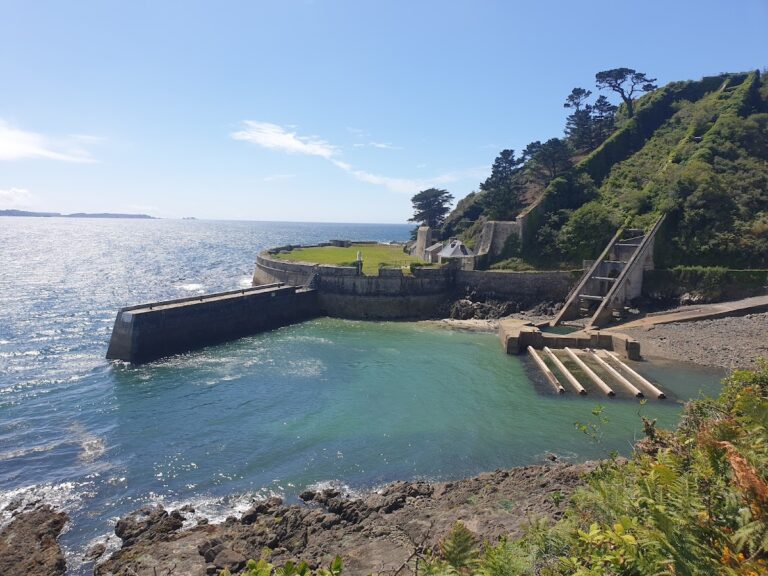
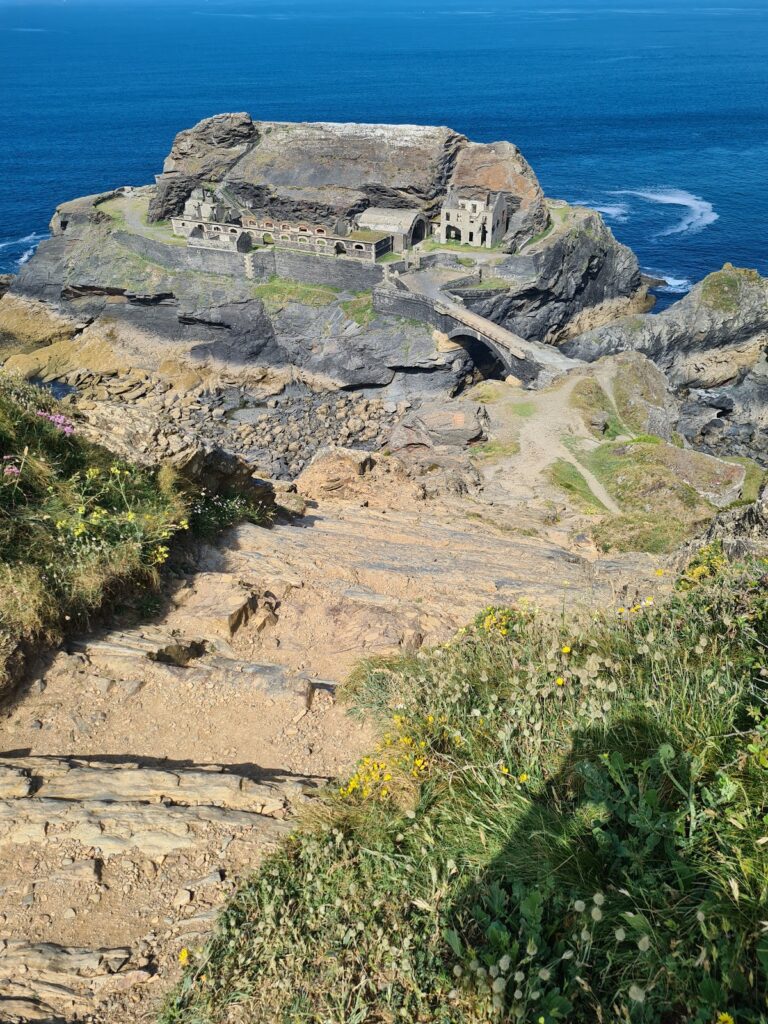
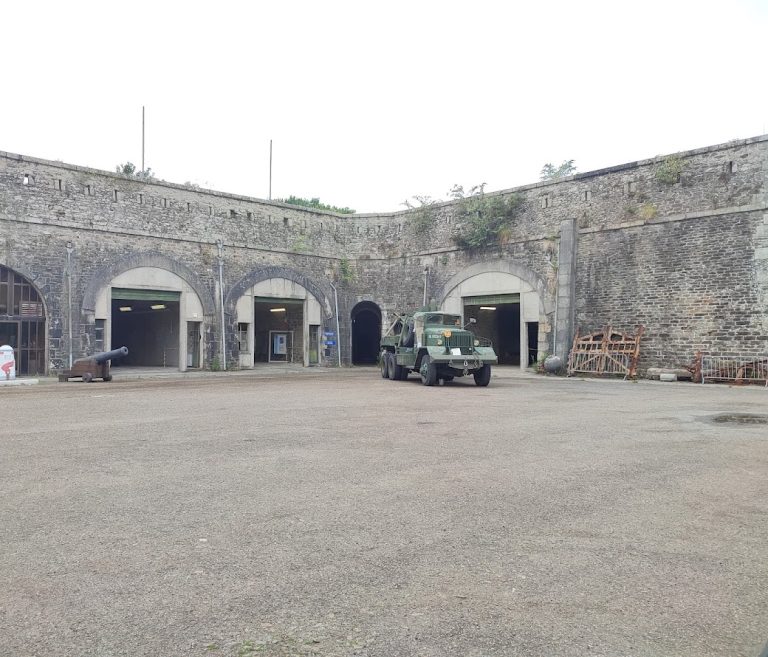
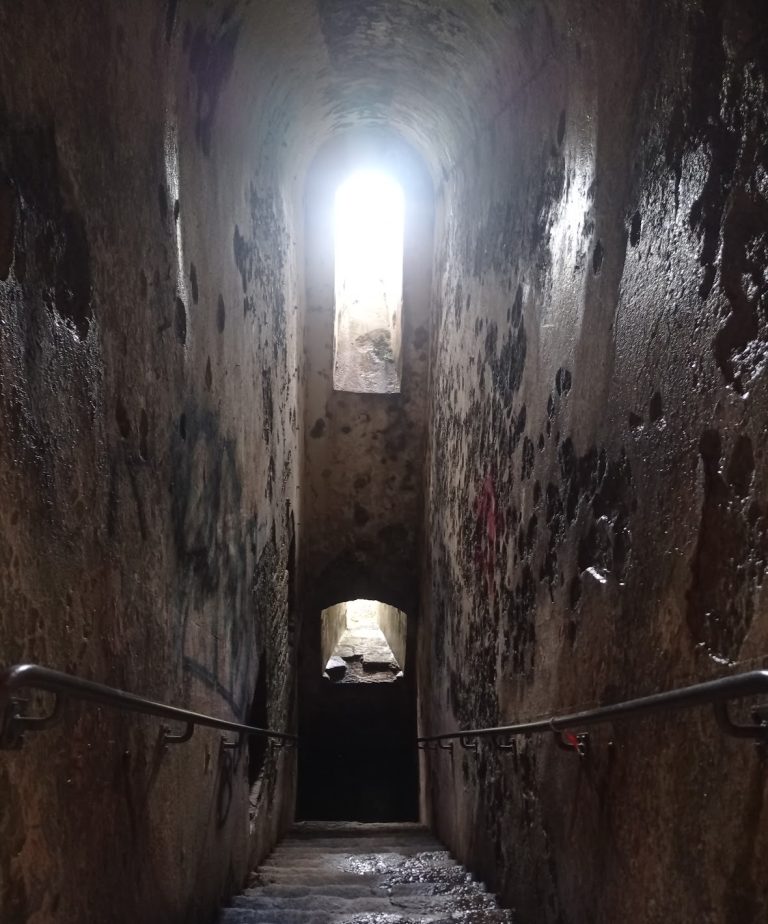
The surviving complex includes the fort at the Pointe du Grand Minou and associated coastal military works. The original fort was arranged around an interior courtyard that opened onto four barrack rooms. Deep surrounding ruins formed part of a natural defensive belt around the position, adding to the fortified character of the site.
Batteries, searchlights, and casemates
The wider remains include artillery batteries, searchlights with their generators, and armament magazines. Four casemates added in 1942 survive as part of the wartime defensive complex. Their 75 mm guns were positioned within fortified chambers designed to protect the weapons and their crews while allowing defensive fire. Together, the fort, batteries, and casemates formed a connected system along the defenses of the goulet of Brest.
The remains lie within the territory of Locmaria-Plouzané and are reached by the GR34, a long-distance coastal hiking trail in France.
Nearby sites