Jaroměřice Castle: A Baroque Cultural Residence in Czechia


Site at a Glance
- Rating
- 4.7
- Popularity
- Medium
- Country
- Czechia
- Primary era
- Early Modern
- External website
- Open
- Eras represented
- Early Modern
- Civilizations
- Holy Roman Empire
- Site type
- Domestic
- Remains
- Castle
On this page13 sections
History
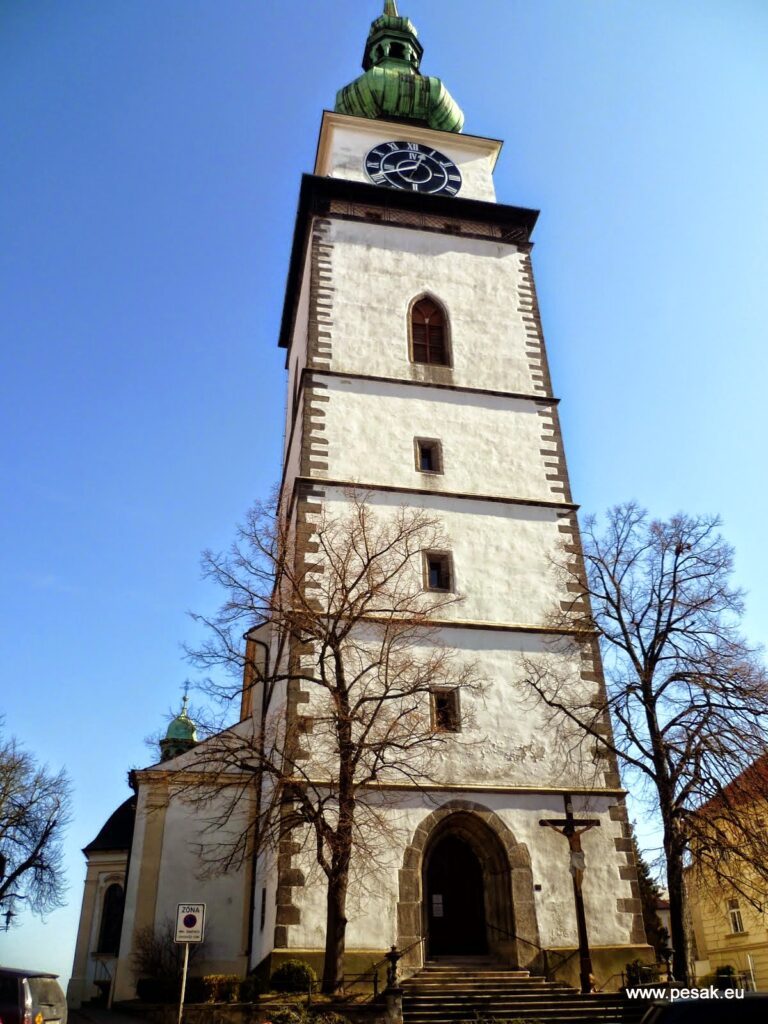
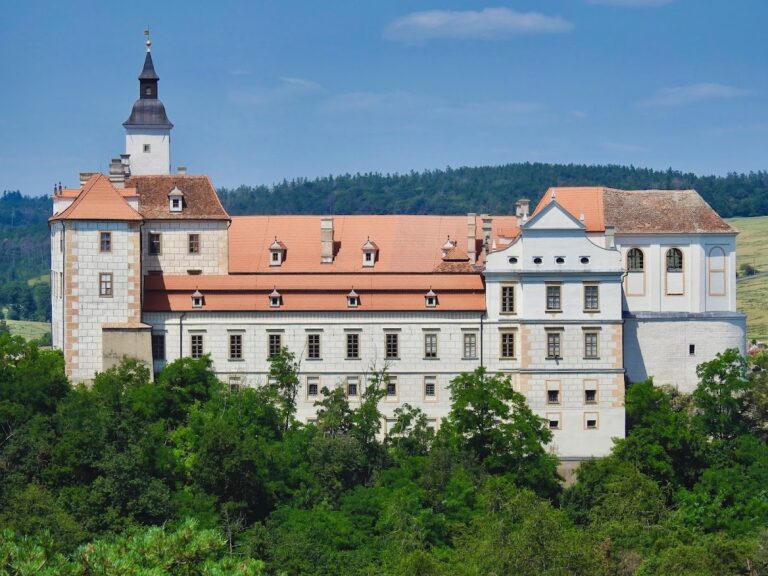
Jaroměřice Castle is a Baroque castle in Jaroměřice nad Rokytnou, Czechia, developed from a medieval fortress and shaped principally between 1700 and 1737. The Baroque period was a European era known for monumental planning, theatrical spaces, elaborate decoration, and formal gardens. The present complex incorporates masonry from the earlier Renaissance castle and, together with the Church of Saint Margaret, forms the dominant architectural symbol of the town.
From Fortress to Renaissance Castle
The site’s medieval fortress was rebuilt as a Renaissance castle at the end of the sixteenth century. A fortress dated to 1534 preceded this transformation, while parts of its later Renaissance masonry remain within the current building. In 1607, Sigmund von Tiefenbach acquired the estate and constructed a Renaissance castle on the site.
Tiefenbach joined the anti-Habsburg uprising that began in Prague in 1618. After the rebellion was defeated, Ferdinand II, the Habsburg ruler and Holy Roman Emperor associated with the suppression of the Bohemian revolt that began the Thirty Years’ War, confiscated Tiefenbach’s property. The Jaroměřice estate was transferred to the emperor, who sold the lordship to Gerhard von Questenberg in 1623.
The Questenberg Cultural Center
The present seven-winged Baroque residence was created chiefly under Count Johann Adam von Questenberg between 1700 and 1737. Questenberg was a Moravian nobleman and patron of music and theater who transformed Jaroměřice into a cultural center. The estate contained a large library, a gallery, a theater, and its own orchestra, and these activities brought important benefits to the town.
Jaroměřice became a notable center of musical and theatrical life during Questenberg’s ownership. The castle orchestra was directed by František Václav Míča, a composer and chapel master, meaning the director of a musical ensemble maintained by a court, church, or noble household. Míča composed The Founding of the Town of Jaroměřice, described as the first Czech opera. A garden theater was designed in 1732, and the natural theater was completed by Konrad Adolf von Albrechtsburg for performances and celebrations.
Later Ownership and Public Preservation
After the Questenberg family became extinct in 1752, the estate passed to the Kaunitz family and later to the Wrbna-Freudenthal family. The Kaunitz heir Dominik Andreas, Prince of Kaunitz-Rietberg, received the combined name “Kaunitz-Rietberg-Questenberg” in 1761. In 1898, Rudolf Christian, Count of Wrbna and Freudenthal, received a further combined name and heraldic union. The Wrbna family held Jaroměřice until its expropriation in 1945.
After the Second World War, the castle became state property and opened to the public in 1947. It is now a state-owned museum complex administered by the National Heritage Institute. Jaroměřice Castle and the Church of Saint Margaret are protected together as a Czech national cultural monument.
Remains
The surviving complex is a large Baroque ensemble of three connected building sections and the Church of Saint Margaret. Its principal facade rises three stories, while the wings enclose the garden. The castle and grounds are arranged along a central axis that begins at the Holy Trinity plague column in the town square, passes through the entrance courtyard and the Ancestral Hall, crosses the French garden and the Rokytná River, and continues toward the natural theater. The complex is in very good condition, and its Baroque form preserves masonry from the Renaissance castle.
Castle Interiors
Ancestral Hall
The Ancestral Hall contains a notable ceiling fresco and wood-paneled walls. Portraits of members of the Questenberg family hang among Baroque furniture and contemporary musical instruments, connecting the room’s decoration with the family’s period of ownership.
Nineteenth-Century Rooms
The nineteenth-century interiors include a dining room, music rooms, an eastern Chinese room, a ballroom, and Roman baths. Musical instruments and furniture associated with the castle’s musical history remain in the rooms, while the complex also presents an exhibition of eighteenth- and nineteenth-century toys.
Formal Garden and Park
French Garden
The representative French garden was designed by Jean Trehet in 1715. Its parterre, a formal pattern of symmetrical beds and paths, follows the castle axis around a circular fountain. Enclosed groups of trees known as bosquets occupy both sides. The garden’s construction proceeded in stages: a double staircase and three fountains were completed in 1710, the Rokytná was widened to 22 meters and raised by a weir in 1730, systematic planting began in 1733, and Baroque benches were carved from Eggenburg sandstone in 1734. Twenty statues and two gondolas were also part of the garden.
River Axis and Theatrical Island
The garden axis crossed the Rokytná by a bridge aligned with a straight canal and continued to a triangular theatrical island. A branch of the canal enclosed the island, whose decoration included a double avenue of trees. Beyond the canal, trees planted in concentric circles formed another garden connected with the main grounds. This arrangement led toward the natural theater, the garden space completed for performances and celebrations.
English-Style Park
A large English-style park surrounds the formal garden and extends along both banks of the Rokytná. A substantial section lies on the opposite bank, forming the wider landscape setting of the Baroque residence and its river-centered garden design.
Garden Reconstruction
The garden was reconstructed between 1962 and 1965 according to a design by Dušan Riedl. The ornamental pattern of the parterre followed a 1956 design by Břetislav Štorm, preserving the formal structure of the garden within the restored complex.
Nearby sites