Llys Rhosyr: A Medieval Welsh Commotal Centre and Royal Court
Site at a Glance
- Rating
- 4.4
- Popularity
- Very Low
- Country
- United Kingdom
- Primary era
- Medieval
- External website
- Open
- Eras represented
- Medieval
- Civilizations
- Kingdom of Gwynedd
- Site type
- Domestic
- Remains
- Palace
On this page7 sections
History
Llys Rhosyr, also known as Cae Llys, is a medieval Welsh commotal centre in Niwbwrch, United Kingdom. A commote was a medieval Welsh territorial and administrative division, and a commotal centre was a place where local administration and law were conducted. The site existed before Edward I of England conquered Wales in the late thirteenth century. Its precise former function remains debated, although the Gwynedd Archaeological Trust regards it as a royal residence.
A Welsh administrative and royal centre
The name llys originally referred in medieval Welsh usage to an enclosed open-air space and later came to mean a place for legal proceedings or a royal court. Llys Rhosyr’s buildings formed an enclosed complex with a hall, accommodation, and storage barns. Archaeological investigation has identified artifacts associated with people of high social status, supporting the interpretation of the site as a place connected with elite or royal activity.
Burial beneath the sands
A fierce sandstorm in the winter of 1332 buried Llys Rhosyr and much of the surrounding area. The covering of sand may have contributed to the decline in activity indicated at the site during the fourteenth century. By the early eighteenth century, shifting sands had exposed parts of the walls, though no substantial remains could then be seen. Local people continued to know the location and character of the site, which was associated with the names Llys and Cae Llys. The latter means “the field of the court.”
Excavation and modern stewardship
The Gwynedd Archaeological Trust began excavating Llys Rhosyr in 1992. The work revealed a large enclosed complex and recovered pottery, silverware, and lead fishing weights. Llys Rhosyr is the only royal court in Gwynedd whose site has so far been excavated. The site opened to the public in 1995 and became a scheduled monument on 20 March 1997. Cadw, the Welsh Government’s historic environment service, bought it in 2023.
Remains
The enclosed complex
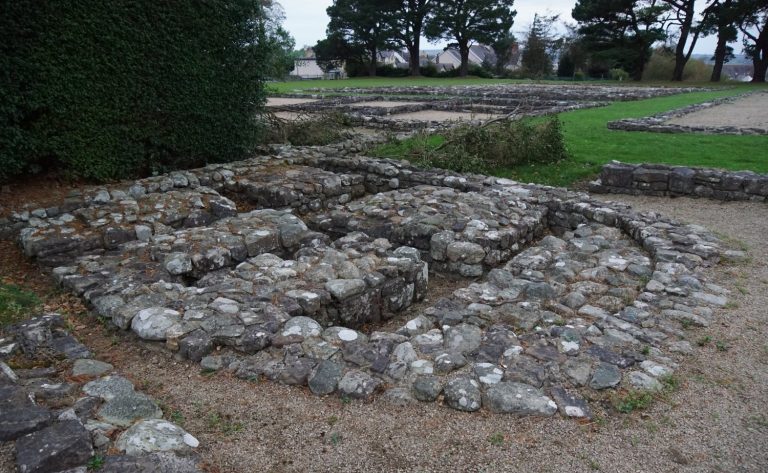
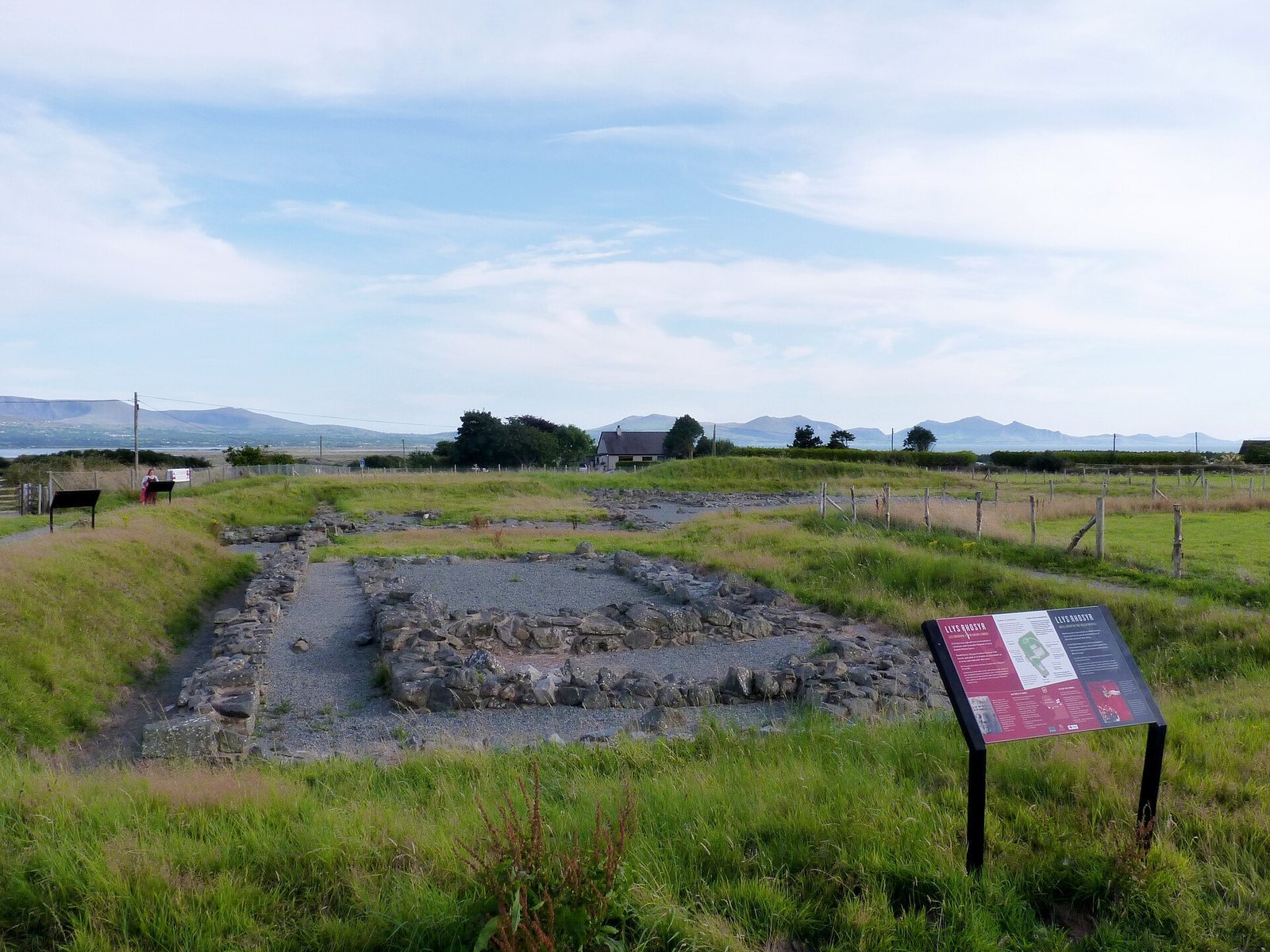
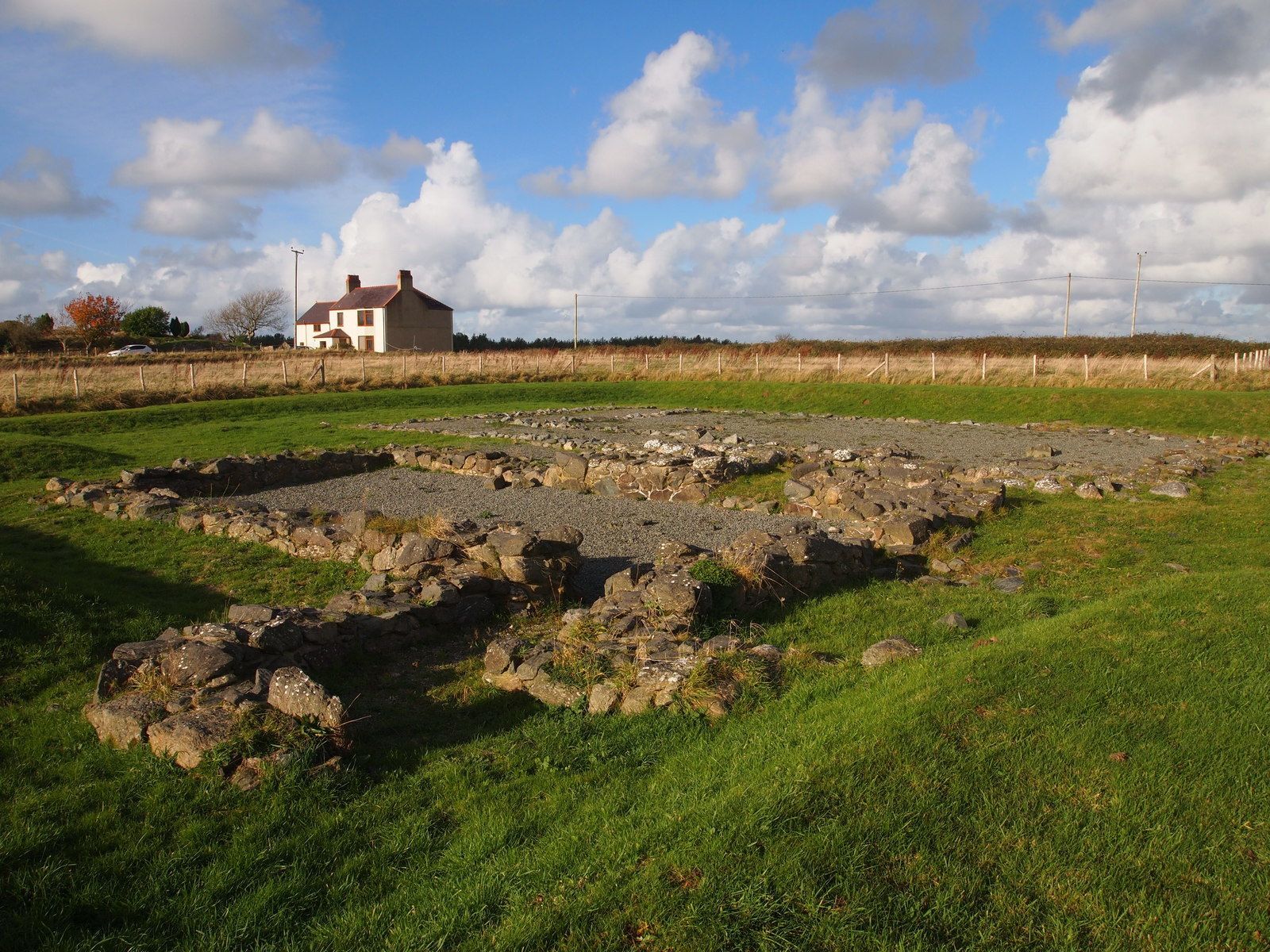
Llys Rhosyr was enclosed by a surrounding wall and may have covered up to approximately 450 by 300 feet, or 137 by 91 metres. Its buildings were constructed in stone and wood and included a hall, accommodation, and storage barns. Excavation has exposed only about one-quarter of the enclosure. The surviving remains consist chiefly of wall outlines, together with the foundations and lower walls of three large buildings, possibly including a hall, a chamber, and storage barns. Pottery and silverware recovered from the complex indicate its use by people of high social status, while the lead fishing weights add to the range of objects associated with activity at the site.
The reconstructed hall and chamber
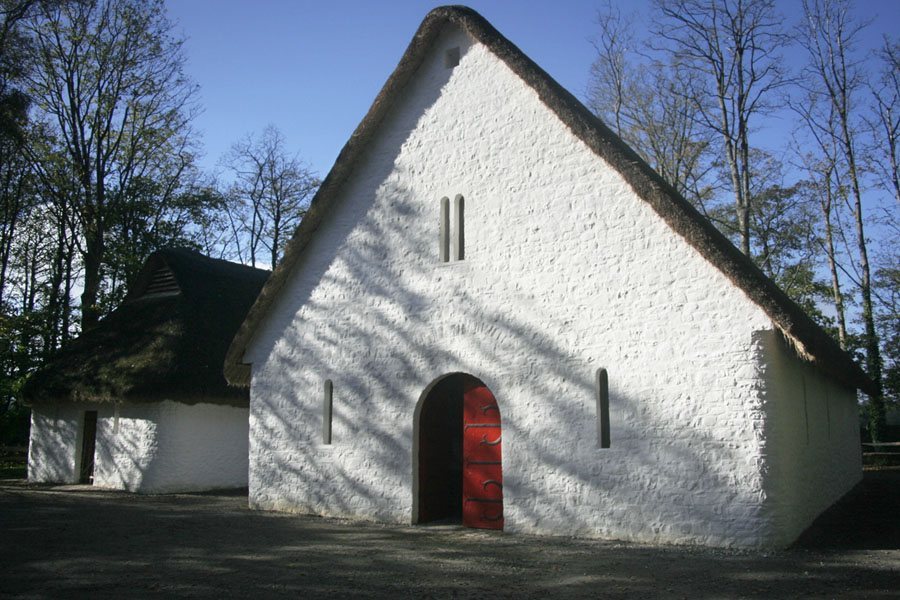
A reconstruction of the Great Hall and an adjacent chamber was created at St Fagans National History Museum in Cardiff. The two buildings were modelled on the most thoroughly excavated structures at Llys Rhosyr. The reconstructed hall, now called Llys Llewelyn, has walls approximately 9 metres, or 30 feet, high and opened in 2018. It was intended to accommodate groups overnight.