Palais Dietrichstein, Brno: A Baroque Palace and Museum

Site at a Glance
- Rating
- 4.5
- Popularity
- Very Low
- Country
- Czechia
- Primary era
- Early Modern
- External website
- Open
- Eras represented
- Early Modern, Modern
- Civilizations
- Habsburg, Holy Roman Empire
- Site type
- Domestic
- Remains
- Palace
On this page6 sections
History
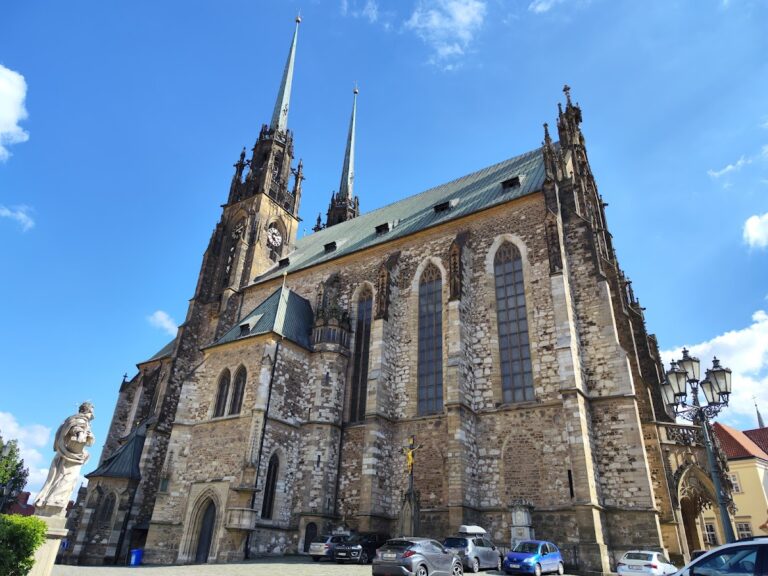
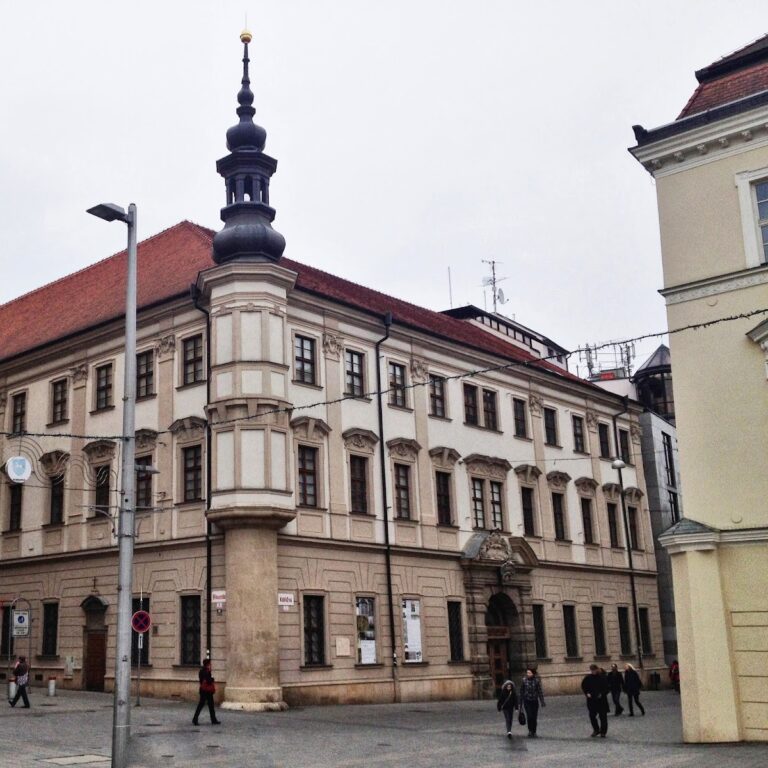
Palais Dietrichstein, Brno, is a Baroque palace in Czechia, built between 1614 and 1620 for Cardinal Franz von Dietrichstein, the Catholic Bishop of Olomouc. It occupies the site of five private houses and was one of the residences of the Dietrichstein family. The palace stands in the upper part of Zelný trh, a historic market square in central Brno, directly below the Cathedral of St Peter and St Paul.
Foundation and early history
Construction was commissioned by Franz von Dietrichstein, whose ecclesiastical position made him one of the leading figures in Moravia. The building was long associated with the architect Giovanni Giacomo Tencalla, although that attribution is now considered unlikely. During the Bohemian Estates’ Revolt in 1620, an uprising against Habsburg rule that formed part of the wider Thirty Years’ War, the palace became the residence of Frederick of the Palatinate. He was a German Protestant prince who briefly ruled as King of Bohemia and became known as the “Winter King.”
After this period, the palace stood unused and had fallen into disrepair by 1690. Nicolas Stumbeck reconstructed it between 1691 and 1693, while finishing work continued until 1700. Before 1748, the entrance was rebuilt with a new portal, vestibule, and staircase leading to the first floor. The design has been attributed at different times to Domenico Martinelli and Christian Alexander Oedtl, but the most recent attribution assigns it to Moritz Grimm and dates the design to around 1730. Maria Theresa, the Habsburg ruler of the Austrian monarchy from 1740 to 1780, stayed at the palace in 1748.
Military, judicial, and museum uses
In October 1805, shortly before the Battle of Austerlitz, the Russian commander Mikhail Illarionovich Kutuzov stayed at Palais Dietrichstein. The battle was fought near Brno during the Napoleonic Wars, and a memorial plaque in the palace commemorates Kutuzov’s stay.
During the nineteenth century, the building first housed the Court of Appeal and later the Supreme Provincial Court. It was gradually altered to accommodate judicial proceedings. These changes culminated in 1928 and 1929, when an attic level was added above the third floor. The Moravian Museum acquired the palace in 1911, and the archaeologist and paleontologist Karel Absolon also began working there that year.
The palace has been protected as a cultural monument since 1958. During reconstruction in the 1980s, the later attic addition was completely removed, bringing the exterior closer to its original Baroque character. The interior arrangement was adapted for museum use, and the museum reopened in October 1991. Palais Dietrichstein now serves as the main building of the Moravian Museum, a regional institution devoted to the natural sciences, archaeology, history, and culture of Moravia.
Remains
Palace structure and entrance
Palais Dietrichstein is a Baroque building whose original early Baroque structure was substantially transformed by later reconstruction. The main walls and some vaults survive from the original building after the high-Baroque alterations, while the restored exterior reflects the removal of the later attic level. The entrance ensemble comprises a portal, vestibule, and staircase to the first floor. The palace also contains a main entrance, an inner courtyard, a foyer, and a courtyard, organizing the building around its principal circulation and interior spaces.
Museum interiors
The ground floor contains the Children’s Museum, established in 1992 as a space for interactive exhibitions and activities for children and young people. This level also includes a café, the Parnassus Gallery, and a museum souvenir shop. The first floor houses the “Extinct Life in Moravia” paleontological exhibition, which presents selected geological periods, and the “World of Minerals” exhibition, devoted to the mineral wealth of Moravia, Silesia, and other parts of the world.
The second floor contains three exhibitions with archaeological and historical themes. “Prehistory of Moravia” covers the period from the Paleolithic to the Migration Period. “Great Moravia” examines Slavic settlement from the sixth to the tenth centuries, while “Moravia in the Middle Ages” follows the development of Slavic states from Great Moravia, an important early medieval Slavic polity in Central Europe, to the fifteenth century. The third floor provides rooms for temporary exhibitions. A memorial plaque to Mikhail Illarionovich Kutuzov is installed within the palace.