Rosersberg Palace: A Swedish Royal Residence and Historic Estate


Site at a Glance
- Rating
- 4.4
- Popularity
- Low
- Country
- Sweden
- Primary era
- Early Modern
- External website
- Open
- Eras represented
- Early Modern, Modern
- Civilizations
- Swedish
- Site type
- Domestic
- Remains
- Palace
On this page8 sections
History
Rosersberg Palace is a Swedish palace built by the Oxenstierna family near Stockholm between 1634 and 1638. Commissioned by Gabriel Bengtsson Oxenstierna, the original Renaissance structure was named after his mother, who belonged to the Tre Rosor, or Three Roses, family. Evidence of earlier rural or farmstead buildings places occupation on the site as early as the Iron Age, the period when iron became a major material for tools and weapons after the Bronze Age.
The Oxenstierna residence
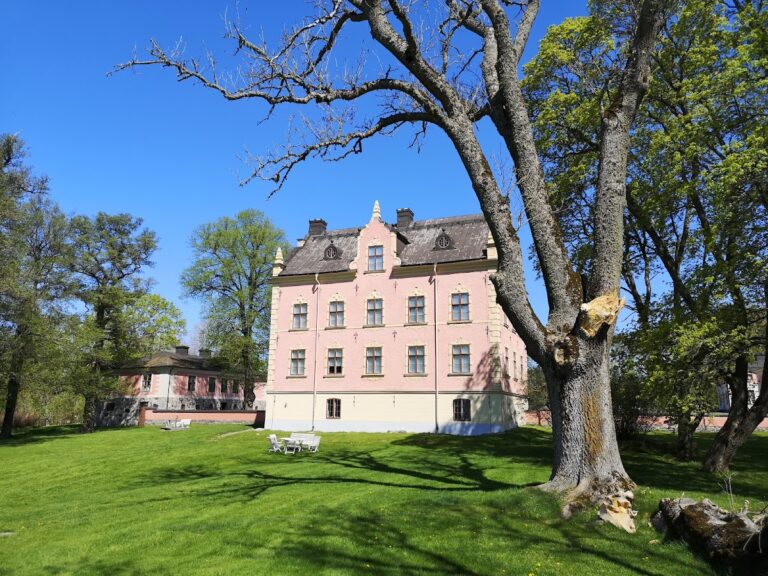
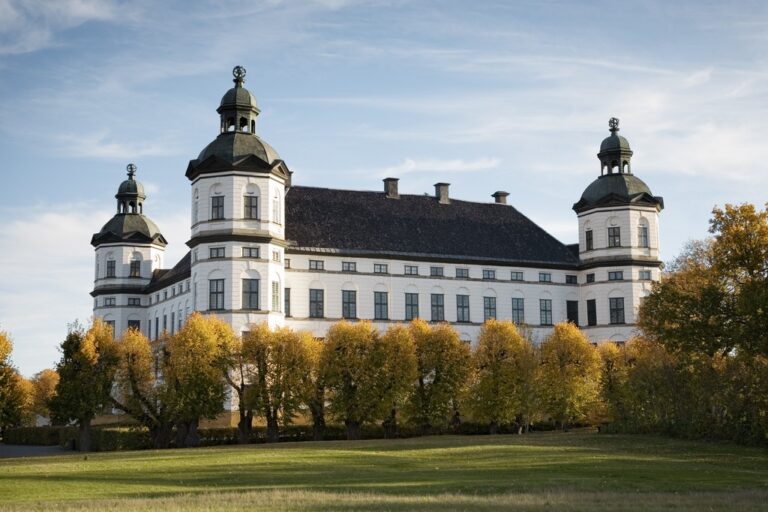
Rosersberg began as an aristocratic residence. In the late seventeenth century, Bengt Gabrielsson Oxenstierna ordered a radical modernization as Renaissance architecture lost its fashion. Nicodemus Tessin the Younger, one of Sweden’s leading architects of the period, directed the work. The renovation removed the main building’s Renaissance gables, replaced its roof, and added new wings and a colonnaded gallery, a passage defined by a row of columns. These changes gave the palace a Baroque character and substantially shaped the complex that survives today.
Tessin the Younger was also responsible for the palace’s formal French Baroque garden. Commissioned by Bengt Gabrielsson Oxenstierna and laid out at the end of the seventeenth century, it was regarded at the time as one of Sweden’s most lavish gardens. Later changes and neglect caused much of the original design to become overgrown or disappear, although important features remain.
Modernization under Duke Charles
Baron Erland Carlsson Broman acquired Rosersberg in 1747 and began another modernization with the assistance of Jean Eric Rehn, an eighteenth-century architect and designer. After Broman died in 1757, the state acquired the estate. In 1762 it transferred Rosersberg to Duke Charles, the future King Charles XIII and younger brother of King Gustav III. Rosersberg thereby became a royal palace.
Charles took up residence at Rosersberg and continued Rehn’s plans. The palace was remodeled in a restrained late Gustavian manner. The Gustavian style was Sweden’s controlled adaptation of Neoclassicism during the reign of Gustav III, while the related Charles XIII Empire style developed a more serious and romantic character. Gustaf af Sillén directed further renovations in the 1790s, helping to create the interiors and furnishings associated with the palace’s royal period.
Royal residence and later institutional use
Rosersberg later became a favored summer residence of Charles XIV John and Queen Desideria. Charles XIV John ruled Sweden and Norway from 1818 to 1844 and founded the Bernadotte dynasty in Sweden. Desideria was the dynasty’s first queen. They were the last members of the Swedish royal family to use Rosersberg as a residence. The rooms and furnishings were preserved substantially in the form they had between 1795 and 1825, and original furnishings dating from before 1860 also survived.
After Desideria died in 1860, the palace was transferred to the Swedish infantry. Parts of the palace were occupied by an Infantry Gunnery School from the 1870s until 1961, when the school moved to Linköping Garrison. On 1 July 1961, Rosersberg passed to the Swedish Civil Defence Board. Following the board’s reorganization as the Rescue Services Agency in 1986, the agency continued to use premises in the palace and its wings until 2006.
Sweden’s National Property Board has managed Rosersberg since 1993 and is identified as its current owner. Since the late twentieth century, part of the palace has housed hotel rooms. The estate’s functions have consequently extended from aristocratic and royal residence to military use, civil-defence administration, and hospitality, while its royal identity has been retained as one of Sweden’s royal palaces and official royal residences.
Remains
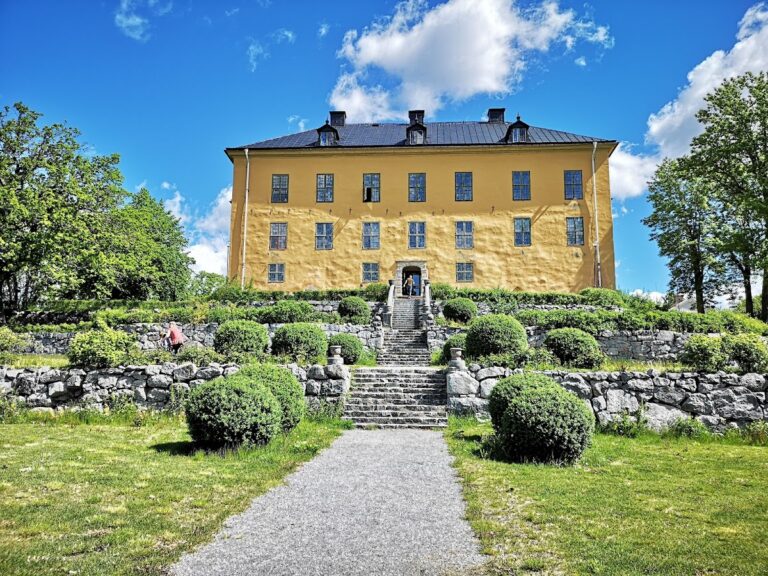
Rosersberg Palace stands beside Lake Mälaren near Stockholm. The main building retains the form created through successive seventeenth- and eighteenth-century transformations: a Renaissance foundation reshaped with Baroque additions, followed by interiors remodeled during Duke Charles’s royal occupation. The complex includes the main palace, wings, a colonnaded gallery, a chapel, and extensive grounds containing formal and informal gardens.
Palace interiors and chapel
The palace’s surviving interiors include the Orange Drawing Room, the Red Drawing Room, and the Hogland Room. Charles XIV John’s bedchamber is regarded as an important example of an early nineteenth-century Swedish interior. Much of the interior arrangement and furnishing belongs to the period between 1795 and 1825, while furnishings from before 1860 also remain. The Hogland Room contains a painting by Louis Jean Desprez depicting the Battle of Hogland.
A chapel was established in the southeast wing in 1695. It contains an organ from the workshop of Per Strand. During the nineteenth century, Catholic Masses were celebrated there for Queen Desideria, linking the chapel’s physical setting to the religious practice of the palace’s final royal resident.
Formal garden and surviving park features
The palace park preserves parts of the French Baroque garden designed and planted by Nicodemus Tessin the Younger at the end of the seventeenth century. Its surviving features include avenues and a pond approximately 600 metres long. The garden’s original organization was based on geometric planning, avenues, and controlled views, although much of the historic layout later became overgrown or was lost.
English gardens
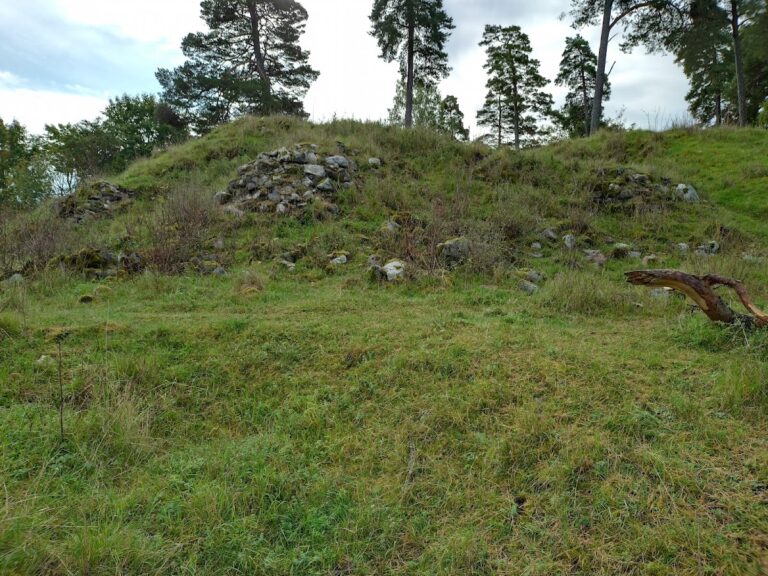
An English garden lies to the left of the palace. Duke Charles commissioned it around 1800, and its design includes winding paths. West of the palace, beside Lake Mälaren, is another English garden called Djurgården, established by Charles XIII. Its features imitate ancient temples, burial mounds, and ruins, and the garden also includes Kettil’s Cave.
Kettil’s Cave was destroyed by fire during the 1990s. A boulder made to resemble a rune stone stands beside the cave, preserving part of the garden’s designed historical imagery after the loss of the cave structure.