Schloss Mattsee: A Medieval Fortified Castle Complex in Austria
Site at a Glance
- Rating
- 4.4
- Popularity
- Low
- Country
- Austria
- Primary era
- Early Modern
- External website
- Open
- Eras represented
- Medieval, Early Modern, Modern
- Civilizations
- Habsburg, Holy Roman Empire
- Site type
- Domestic
- Remains
- Palace
On this page12 sections
History
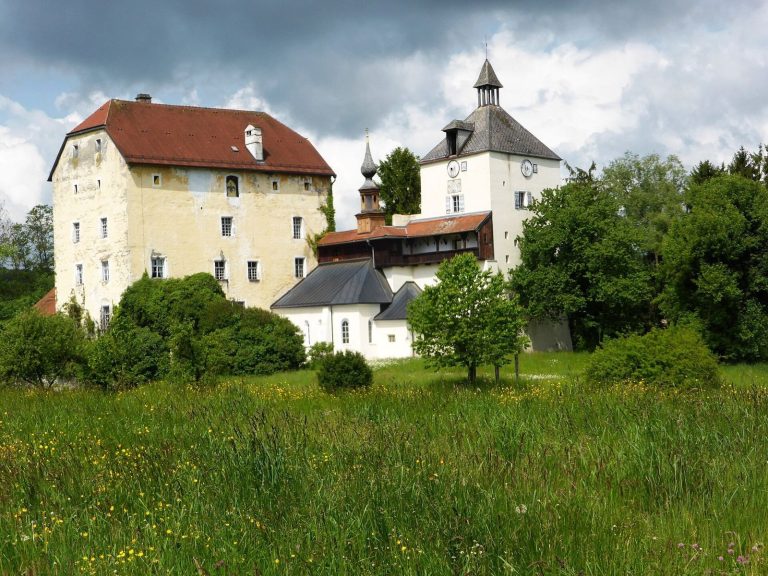
Schloss Mattsee is a medieval fortified castle complex in Austria, built around 1100 for the bishops of Passau as an administrative center for their possessions in the area. It stands on the Schlossberg at Mattsee, a hill that was inhabited during the Neolithic period and was a rocky island in prehistoric times. The bishops of Passau had acquired the Mattsee territory from the German dukes in 907.
Passau and Salzburg control
A document dated to about 1356 attributed the castle’s construction around 1200 to Heinrich and Hadmar von Schleedorf. That tradition conflicts with the presence of Marchvart von Mathse, who was already recorded as castellan in 1189. The Schleedorf family held the office of episcopal treasurer and collected grain tithes rather than founding the castle.
In 1232, after Bishop Gebhart of Passau resigned, Pope Gregory IX ordered that the castle’s fortifications be entrusted to the archbishop of Salzburg. During later conflicts between the Bavarian dukes and the Diocese of Passau, a Bavarian bailiff from the nearby Mattsee Abbey besieged and captured the castle. A tower was built or completed on the summit in the late thirteenth century.
In 1357, Bishop Gottfried of Passau pledged the fortress to Archbishop Ortolf of Salzburg for 1,000 silver marks. Further temporary arrangements followed between Bavaria and Salzburg. At the end of the fourteenth century, Bishop George of Passau sold the castle permanently to Archbishop Pilgrim of Salzburg, after which Salzburg-appointed custodians administered it.
The New Palace and archiepiscopal use
In 1552, the custodian Joachim Raumensatl built the New Palace on behalf of the archbishops of Salzburg. The complex suffered damage during the Peasants’ Wars, major uprisings in the German-speaking lands during the early sixteenth century, and remained roofless for several years. The old castle was partly burned in 1566, while the New Palace was described as dilapidated slightly more than a decade later.
In 1598, Archbishop Wolf Dietrich commissioned the master builder Hanns Nobilot to restore the New Palace so that he could stay there during a plague epidemic in Salzburg. Wolf Dietrich and his successor Markus Sittikus, both prince-archbishops of Salzburg, later visited Mattsee regularly during the hunting season. Because the restoration had been carried out economically, the castle was described in 1614 as largely uninhabited and dilapidated.
During the Thirty Years’ War, the European conflict fought from 1618 to 1648, the walls were strengthened because Swedish troops were feared to be advancing into the region. The measures proved unnecessary because the Swedish army never reached the area. Several restorations were undertaken in the New Palace during the first half of the eighteenth century, while the old castle and its tower were abandoned and fell into ruin.
Private ownership and municipal preservation
The site housed the local chancery in 1791. Under Bavarian rule, its furnishings were auctioned and the buildings were sold to private owners. In 1837, the defensive walls were still considered effective, and the area could be entered only through the castle gate.
In 1842, owner Georg Hechenberger demolished the entire northern section and sold its stones as building material. In 1858, Josef Sigl, owner of the Obertrum brewery, acquired the surviving buildings. He demolished the damaged second floor of the south wing and converted its first floor into residential accommodation. Sigl also built an ice cellar beneath the castle in 1871.
After the Second World War, the municipality of Mattsee acquired Schloss Mattsee and established a local-history museum there. The property has belonged to the municipality since 1949. Restoration and reconstruction took place between the late 1990s and 2003, following the original plans. The complex is now used as a local cultural center for cultural and private events, and it contains a café and the Leonardo Art Academy. It has been protected as an Austrian monument since 1993 under monument number 12153.
Remains
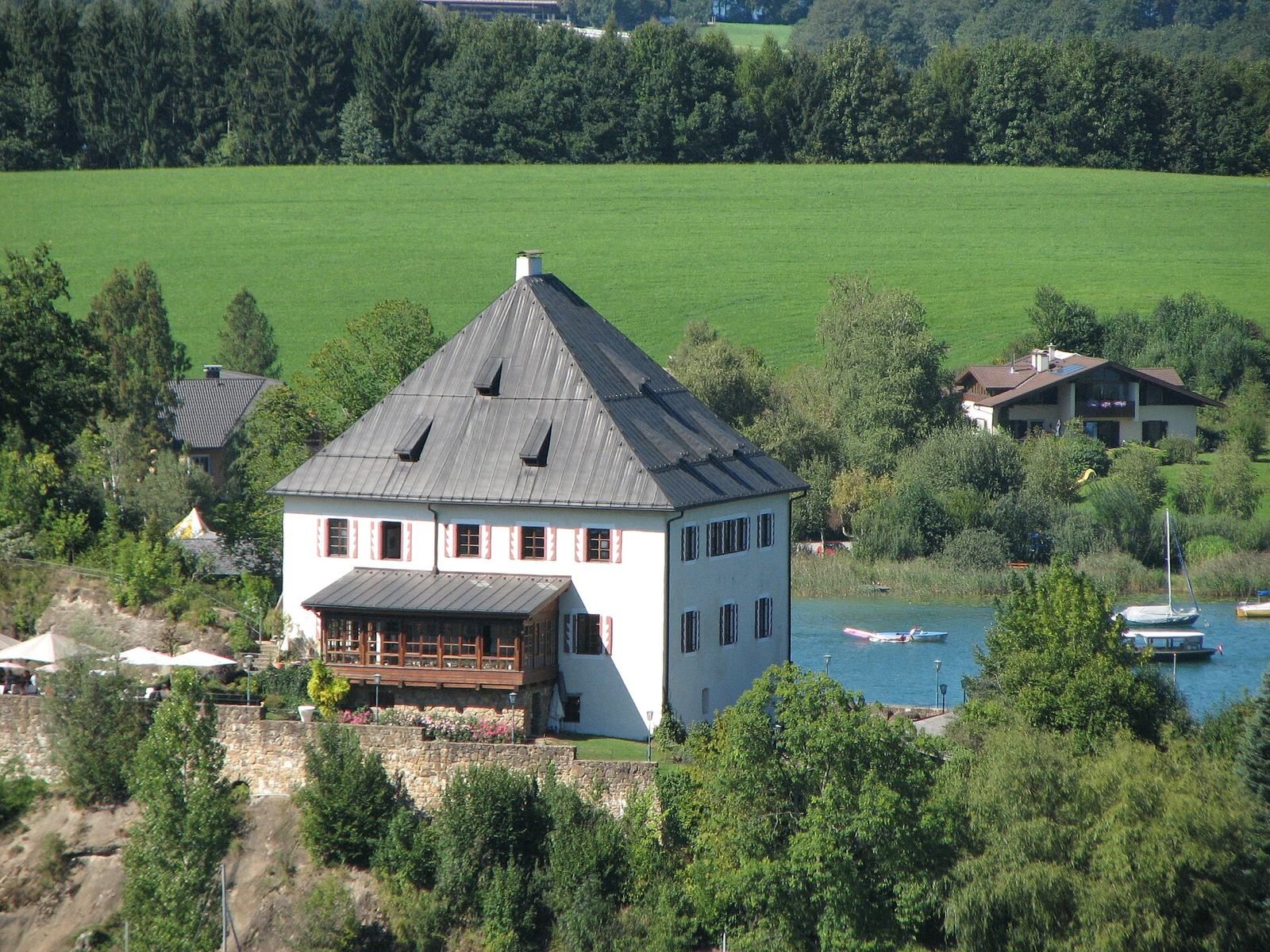
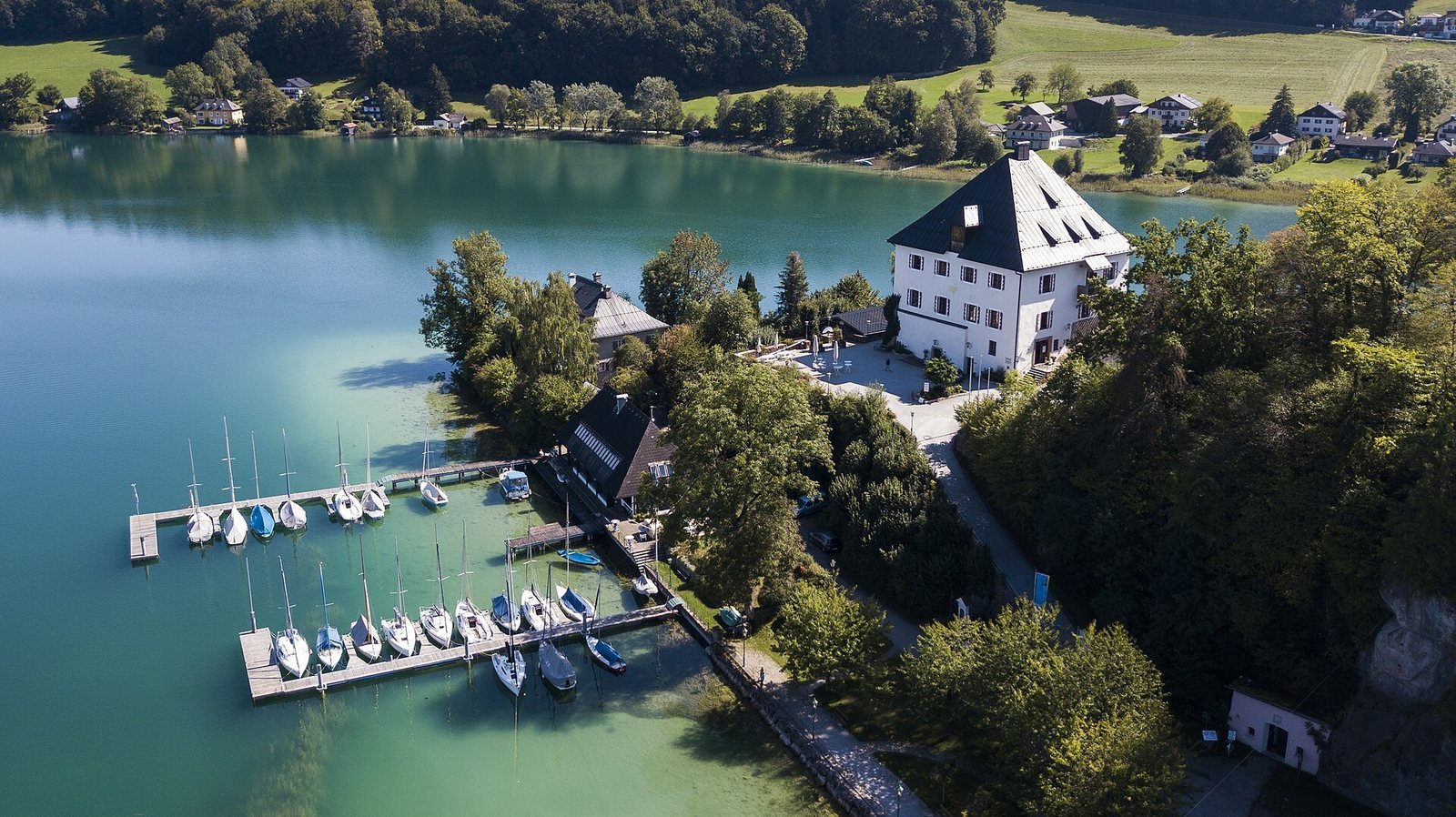
Schloss Mattsee occupies the Schlossberg on a narrow peninsula partly surrounded by water. A deep water-filled moat, a ditch around a fortified site, formerly separated the hill from the mainland. A moat constructed in 1325 after a Salzburg attack during the succession conflict between Louis IV and the Habsburgs gave the site the character of an island. The surviving complex is centered on the south wing, while elements of the earlier castle remain around its perimeter.
Surviving castle structures
South wing
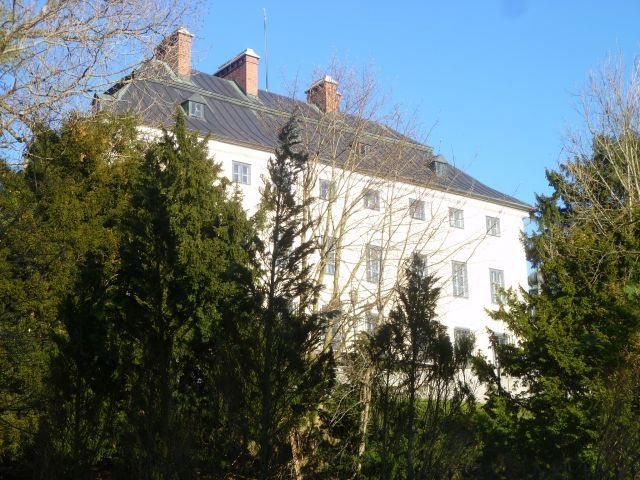
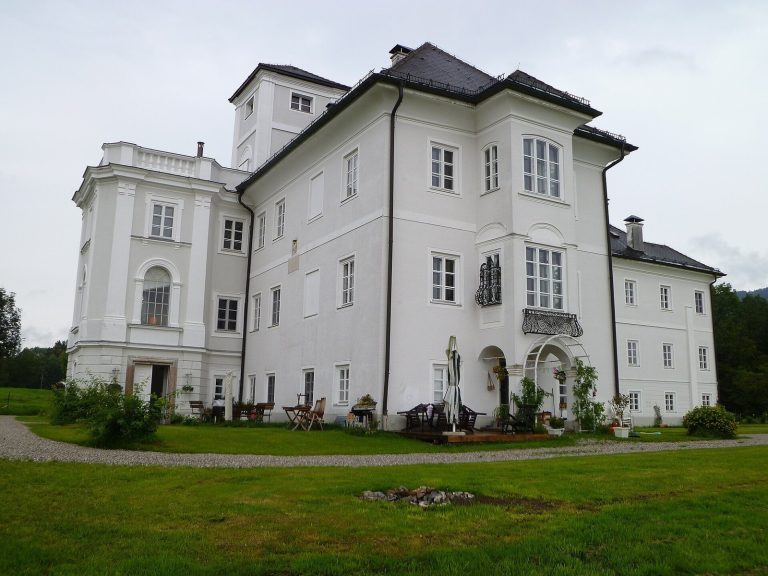
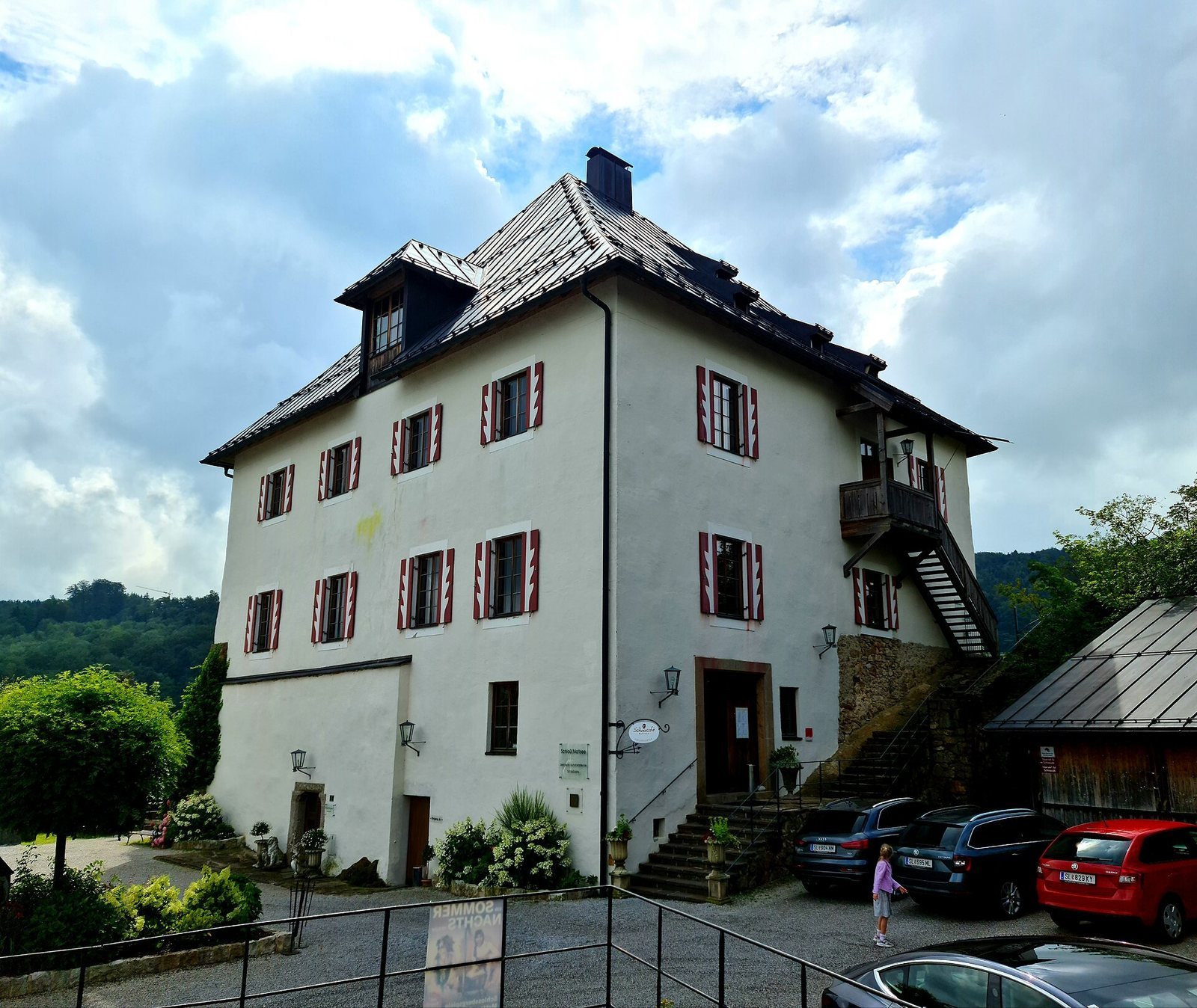
The principal surviving building is the south wing, a three-storey structure with a hipped roof. It is built from quarry stone and covered with white-painted plaster. Its damaged second floor was demolished in 1858, and the first floor was adapted for residential use. The building forms the main preserved part of the restored and reconstructed complex.
Keep and earlier castle remains
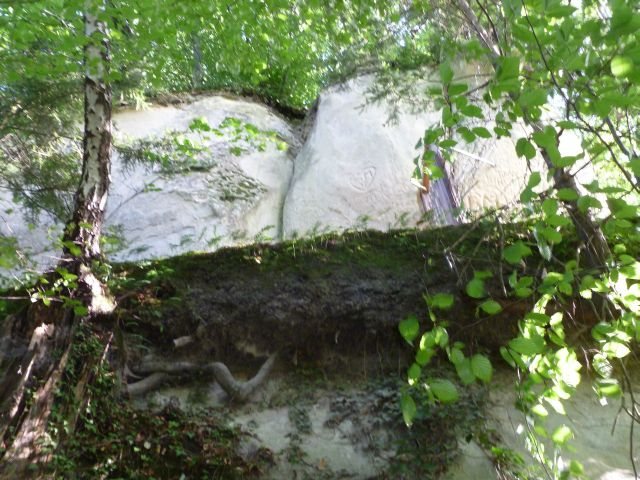
A keep, a strongly built defensive tower, survives at the northwestern corner of the complex. Only a few large stone blocks near the main building now visibly recall the earlier castle structure, while two sandstone columns also remain.
Former court inn and gatekeeper’s lodge
The former court inn, built in 1558 and later known as the Gasthof Iglhauser, is another surviving building. The former gatekeeper’s lodge stood beside the moat and formed part of the entrance area.
Later additions and present uses
Ice cellar
The ice cellar constructed beneath the castle in 1871 survives as part of the complex and is now used as a public toilet.
Attic academy
The attic houses the Leonardo Art Academy, which provides instruction in various artistic techniques. Together with the café and spaces for cultural and private events, these uses occupy the restored complex while its surviving buildings and defensive elements preserve its earlier form.