Burg Wildenburg: Ancestral Castle of the Lords of Wildenburg


Site at a Glance
- Rating
- 3.8
- Popularity
- Very Low
- Country
- Germany
- Primary era
- Medieval
- Eras represented
- Medieval, Early Modern, Modern
- Civilizations
- German, Holy Roman Empire
- Site type
- Military
- Remains
- Castle
On this page9 sections
History
Burg Wildenburg is a medieval hilltop castle in Germany, near Friesenhagen, built by the Lords of Wildenburg in the early thirteenth century as their ancestral seat. The castle stood above a route through the Wildenburger Land and later served as the administrative center of the Wildenburg lordship.
The Lords of Wildenburg
In the early thirteenth century, the Lords of Wildenburg served as bailiffs of Werden Abbey’s possessions in the area. A bailiff was responsible for administering and protecting the property of a lord or ecclesiastical institution. The family built the castle during this period and began using the name Wildenburg in 1239.
The Wildenburg lordship appears in local historical records from the early fifteenth century. Gerhard von Wildenburg then held the lordship, which was administered from the castle. The last Lord of Wildenburg, Hermann von Wildenburg, died in 1418. His property passed by inheritance to the sons of his sister Jutta, who had married Johann von Hatzfeldt in 1387. The von Hatzfeldt family has held the castle ever since.
Administrative change and decline
The political territory around the castle changed several times. In 1806, the Wildenburger Land became part of the Grand Duchy of Berg. From 1808 to 1815, Burg Wildenburg served as the seat of a canton administration in the Département Sieg. The territory passed to Prussia in 1815 and to Rhineland-Palatinate in 1946.
The castle was abandoned in the mid-nineteenth century and then deteriorated. During the later nineteenth century, parts of the complex were quarried, causing the loss of much of the historic structure. Around 1830, however, Burg Wildenburg was still substantially preserved and inhabited.
Remains
Hilltop setting and layout
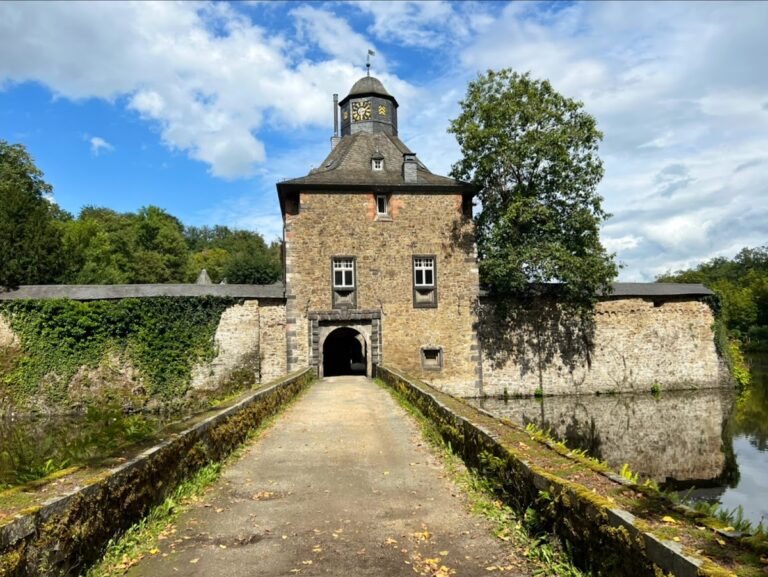
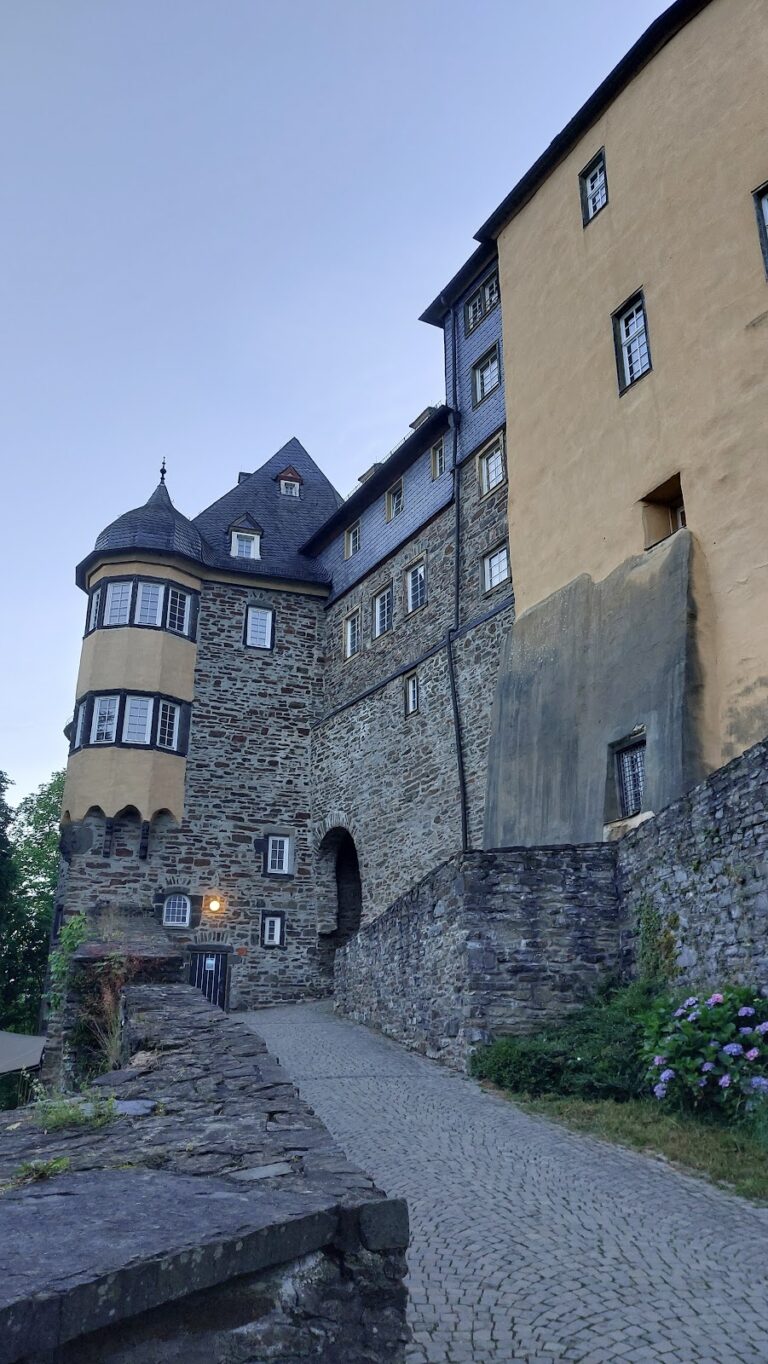
Burg Wildenburg occupies a mountain spur above the valley settlement of Wildenburg near Friesenhagen. Steep slopes protect three sides of the hilltop. The castle controlled the route below, called the Hileweg in 1048 and later known as the Bergische Eisenstraße. The surviving complex includes the outer bailey, sections of enclosing walls, the principal tower, and remnants of buildings dating from the fourteenth to the eighteenth century.
Surviving structures
Round keep
The more than 20-metre-high round keep is the most prominent surviving structure. A keep was the principal defensive tower of a castle and could provide a strong refuge. Burg Wildenburg’s tower survives with a Baroque hood, a curved roof form associated with Baroque architecture, and partial slate cladding.
Walls and bastion
Wall sections and a polygonal bastion survive within the largely ruined complex. A bastion is a projecting fortification designed to strengthen a defensive perimeter and provide positions for flanking fire. This structure dates from the fifteenth or sixteenth century and was enlarged in 1757 and again in 1932–33.
Outer bailey and later buildings
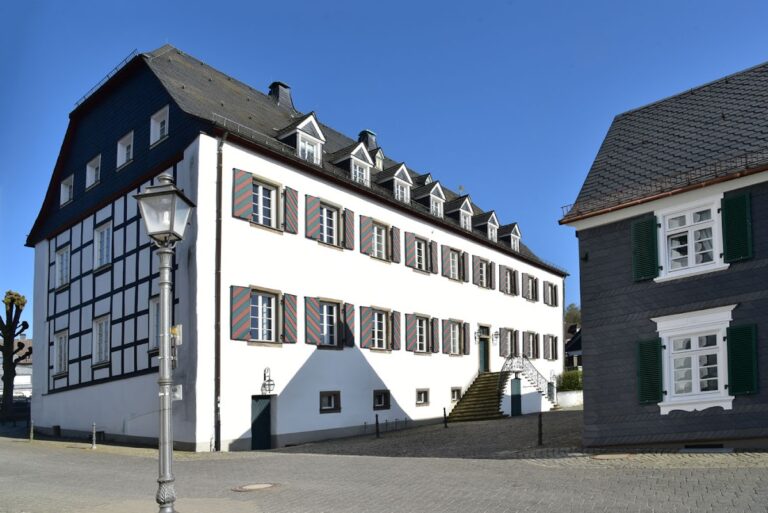
The outer bailey forms part of the surviving castle remains. Buildings dating from the fourteenth through the eighteenth century remain in fragmentary form, while later quarrying has left the complex largely in ruins. The buildings that house the von Hatzfeldt forestry office are privately owned.
Nearby sites