Château de la Celle: A French Residential Château and Diplomatic Venue


Site at a Glance
- Rating
- 4.5
- Popularity
- Very Low
- Country
- France
- Primary era
- Early Modern
- Eras represented
- Early Modern, Modern
- Civilizations
- French
- Site type
- Domestic
- Remains
- Elite Residence
On this page10 sections
History
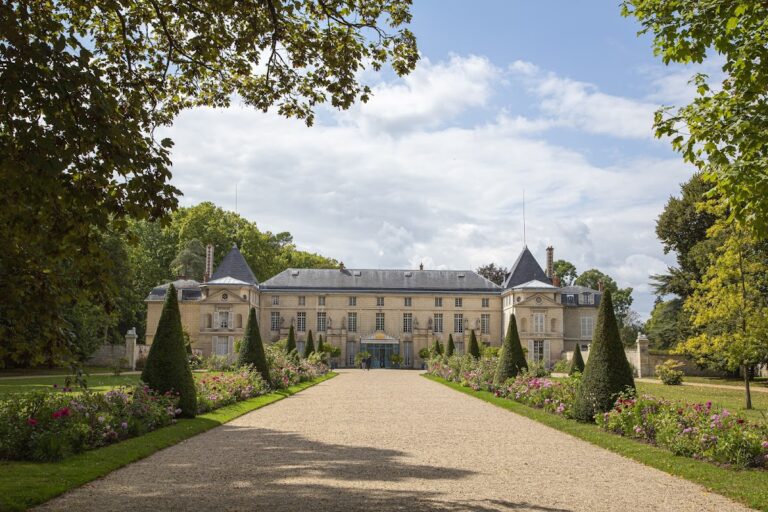
Château de la Celle is a historic residential château in France, in La Celle-Saint-Cloud. It developed from a former monastery into an eighteenth-century residence, with its principal construction phase dated from 1748 to 1750. The property later became a state-owned diplomatic venue, where French officials have hosted royal guests, international conferences, and negotiations on major political questions.
From monastery to aristocratic residence
The earliest form of the estate was a monastery composed mainly of a farm building and accommodation for monks. The property was sold in 1616, after which a new building was erected around the central part of the present château. It passed through several owners before reaching the Duke of La Rochefoucauld during the reign of Louis XIV, the French king who ruled from 1643 to 1715. He completed the construction of the residence.
The Marquise de Pompadour acquired the château in 1748. As the influential principal mistress and cultural patron of Louis XV, she embellished the property and used it as a place of relaxation. She also stayed there while supervising the construction of her Château de Bellevue at Meudon. Louis XV, who reigned from 1715 to 1774, was received at La Celle.
In 1750, Jacques-Jérémie Roussel de Rocquencourt bought the estate. A fermier général, meaning a private contractor who collected certain royal taxes, he enlarged the residence with a pavilion and a north wing. These additions established the configuration that defines the château today.
Gardens, collections, and nineteenth-century ownership
Louis Pierre Parat de Chalandray owned the property from 1776 to 1804. Working with the landscape gardener Jean-Marie Morel, he changed the formal geometric parterres into a French garden, a design based on symmetry, controlled views, and ordered planting. Inventories made after the deaths of château owners preserve detailed information about the furnishings of the residence during the period before the French Revolution of 1789, known as the Ancien Régime.
In 1804, the château passed to the Viscount Morel de Vindé, who received Louis XVIII there. Louis XVIII was the Bourbon king restored to the French throne after Napoleon’s fall. The estate was also known for its herd of Merino sheep, a breed valued for its fine wool.
Jean-Pierre Pescatore acquired the château in 1844 and continued to improve the estate. A Luxembourgish businessman and collector with interests in horticulture and horses, he created the Avenue of Foreign Trees and commissioned an orangery and three greenhouses for valuable orchids. He also built a very large covered riding arena with a gallery and iron structural framing.
After Pescatore’s death in 1855, a legal dispute over his marriage and inheritance shaped the ownership of the property. The château passed to his heirs, while his widow received its usufruct, the legal right to use the property and benefit from it although ownership belonged to someone else. His niece, Élisabeth Pescatore-Dutreux, inherited the estate and continued the development of the park. The château then remained in the Franco-Luxembourgish Dutreux family for slightly more than a century.
During the Franco-Prussian War in 1870, a shell fired from Mont-Valérien struck the orangery. The impact broke its glazing, and the exotic plant collections died during the severe cold that followed.
War, preservation, and transfer to the state
From 11 to 18 May 1940, Grand Duchess Charlotte of Luxembourg took refuge at the château while fleeing the German occupation. German forces later occupied the property until August 1944. After the Liberation, Allied units successively used the park and château.
Auguste and Suzanne Dutreux recovered the estate after the war. As they had no children, they sought to preserve the château and park intact. On 7 February 1951, they bequeathed the property to the French Ministry of Foreign Affairs, then headed by Robert Schuman. The donation required that the premises be used only by the minister, the minister’s family, and personal or official guests. The French state consequently became the owner.
In summer 1958, Charles de Gaulle assigned Michel Debré, Jérôme Solal-Céligny, Raymond Janot, and Jean Mamert to complete the preliminary draft of the constitution of the Fifth Republic at La Celle. The Fifth Republic is France’s current republican constitutional system, established in 1958. The drafting team worked intensively at the château, day and night.
Château de la Celle was classified as a historic monument in 1978. Its park was classified among the protected sites of the Yvelines department by an order dated 22 March 1985. These designations added formal protection to the residence and its landscaped setting.
A diplomatic venue
Since its transfer to the Ministry of Foreign Affairs, the château has functioned as a setting for diplomatic meetings. On 6 November 1955, Antoine Pinay and Mohammed V held discussions there on Moroccan independence. Mohammed V, then sultan of Morocco, later became its king. The château also hosted a meal for Queen Elizabeth II in April 1957 and a meal for Jacqueline Kennedy on 2 June 1961.
From August to November 1964, La Celle hosted a conference on Laos involving nationalist, neutralist, and communist representatives. Later meetings included a conference of Vietnamese delegations on 16 March 1973, a gathering of foreign ministers from countries participating in the multinational force in Beirut on 27 October 1983, and a round table on Cambodia on 17 November 1989.
The diplomatic programme continued with a Franco-Spanish seminar in 1994 and an inter-Lebanese meeting held under French government auspices on 15 July 2007. The château hosted events marking the fiftieth anniversary of Franco-Chinese relations on 13 June 2014 and the fiftieth anniversary of diplomatic relations between Mongolia and France from 11 to 14 June 2015.
On 25 July 2017, an inter-Libyan meeting took place at La Celle under French auspices. In the presence of President Emmanuel Macron and Foreign Minister Jean-Yves Le Drian, Prime Minister al-Sarraj and Marshal Haftar signed an agreement committing themselves to a ceasefire in Libya.
On 13 December 2017, the château hosted a summit supporting the G5 Sahel counterterrorism force. The G5 Sahel is a regional framework involving five Sahel countries for security and development cooperation. The meeting brought together Emmanuel Macron, the leaders of Mali, Niger, Burkina Faso, Chad, and Mauritania, representatives of the United Nations, African Union, and European Union, and the leaders of Germany, Italy, and Belgium. The force received additional international financial support after the summit.
French foreign ministers also periodically receive foreign counterparts at La Celle rather than at the Quai d’Orsay, the traditional name for the Ministry of Foreign Affairs and its principal Paris headquarters.
From late 2013, the orangery was restored and the park began hosting numerous sculptures by contemporary visual artists. The intervention was promoted by Foreign Minister Laurent Fabius and Marie-France Marchand-Baylet. This campaign added a contemporary artistic use to an estate whose buildings and grounds had already served monastic, aristocratic, horticultural, and diplomatic purposes.
Remains
The surviving estate combines a residential château formed through several eighteenth-century building phases with a landscaped park and specialized horticultural and equestrian structures. The central building derives from the post-monastic residence erected after the property’s sale in 1616. The pavilion and north wing added in 1750 give the château the configuration associated with its principal construction phase from 1748 to 1750.
Château and park
The château is a residential building whose central section preserves the development of the earlier post-monastic structure. Its present arrangement incorporates the pavilion and north wing commissioned by Jacques-Jérémie Roussel de Rocquencourt. Together, these parts form the main architectural composition of the estate.
The park retains the French garden created between 1776 and 1804, when Louis Pierre Parat de Chalandray and Jean-Marie Morel transformed the earlier formal parterres. The grounds were later embellished by the landscape gardeners known as the Bulher brothers. Jean-Pierre Pescatore also created the surviving Avenue of Foreign Trees, an avenue planted with exotic trees. Since the restoration campaign that began in late 2013, the park has hosted numerous sculptures by contemporary visual artists.
Horticultural and equestrian buildings
Orangery and greenhouses
Jean-Pierre Pescatore commissioned an orangery and three greenhouses for a collection of valuable orchids. An orangery is a glazed or specially designed building used to protect citrus and other tender plants, while greenhouses provide controlled conditions for cultivation. Shellfire from Mont-Valérien damaged the orangery in 1870, breaking its glazing and contributing to the loss of the exotic plants during the severe winter cold. The orangery was restored from late 2013.
Covered riding arena
Pescatore also built a very large covered riding arena. The structure included a gallery and iron framing, reflecting the estate’s association with horses as well as with horticultural collecting.